The Repost: April 2026
This month, digital platforms are rolling out a new way to combat deepfakes and AI profiles — and it only costs you your eyeballs. Plus, Iran brings Lego to a digital gunfight, why the Sora video app is no more, and how fact checkers fared in a year of funding shocks.
Tinder, Zoom want proof you are human
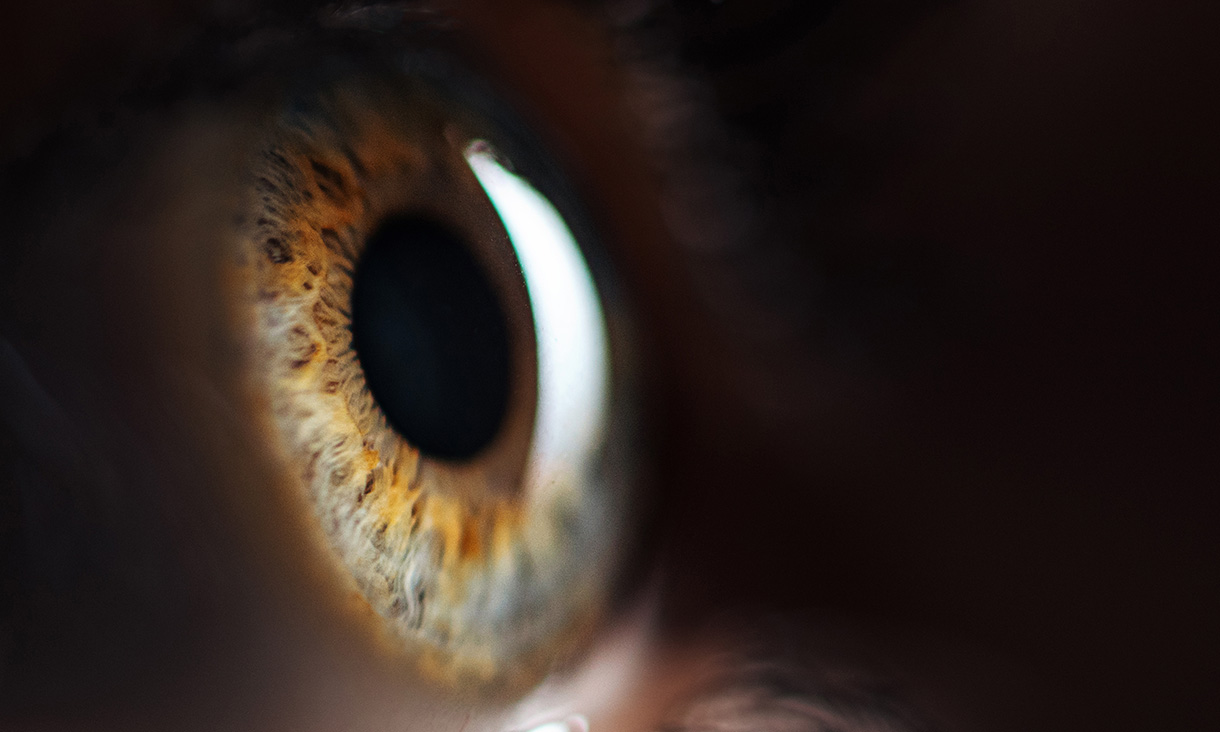
Tinder is integrating eye-scanning technology into its dating app to let users earn a proof of "humanness" badge that verifies they are a real person.
Zoom will also incorporate the verification system, called World ID, in a bid to combat the rise of increasingly realistic generative AI accounts. (Too late, sadly, for the Hong Kong resident scammed out of US$26 million after he attended a Zoom meeting populated entirely by deepfake coworkers.)
World, which includes World ID, is a project of OpenAI CEO Sam Altman's startup Tools for Humanity.
To fully verify their World ID, users must scan their face and iris using one of the company's signature "Orbs", which requires an in-store visit.
Irises are used because each one is unique (even for the same person) and difficult to fake. World says this extremely valuable biometric data is then deleted, though the company's record on privacy is not without blemish.
Privacy experts have previously warned that the risk may not be worth the reward, but by the company’s latest count, nearly 18 million people have taken the plunge.
Lego enters Iran’s 'slopaganda' war
As the US and Iran duke it out on social media, pro-Iranian accounts are churning out slick — and hugely popular — AI-generated propaganda videos in the style of Lego movies to attack their adversaries.
The videos are typically set to rap music, mocking US President Donald Trump and deftly weaving in references to online culture and American politics, including the scandal surrounding the late child sex offender Jeffrey Epstein.
After initially claiming to be independent, the video producers have now admitted to the BBC that their clients include the Iranian government.
The videos, though described as AI "slopaganda", have been notable for their quality. But they contain disinformation and racist tropes, and their goal is to slip negative feelings and associations past our defences while we are entertained.
The producers say they used Lego because it was "a world language", and Dr Emma Briant, an expert in the study of information warfare, told the BBC that AI tools had allowed the Iranian regime to communicate directly with Western audiences more effectively than ever before.
As one researcher noted in The Conversation, the videos were successful because they "do not feel like state propaganda" and did not target people actively seeking the news.
"Instead," the researcher said, "they mimic the language of everyday internet culture to reach those who are not following events in the Middle East at all."

Get our next edition delivered straight to your inbox.
Stats paint grim picture for fact checkers
The International Fact-Checking Network's annual fact-checker census has revealed an industry battling on in the face of serious headwinds.
The 2026 State of the Fact Checkers report captures the first full year since Meta announced in early 2025 that it was ending its paid fact-checking program in the US and launching a community notes-style approach to flagging problematic posts.
That decision has clearly rippled through the industry, and the latest report shows Meta is no longer the largest funding source for fact checkers. In 2024, it accounted for 45.5 per cent of fact checkers' revenue, on average; in 2025, that figure had fallen more than 11 percentage points, to 34.3 per cent.
While Meta's program continues to operate in 124 countries, including Australia, the IFCN report shows participation dropped by roughly five percentage points in 2025, to 56.3 per cent.
Among the other problems faced by fact checkers were cuts to US foreign aid, the halving of TikTok's fact-checking program and declines in user donations, advertising and media partnerships.
All this leaves many organisations in a precarious position: nearly three-quarters described themselves as "vulnerable or in crisis", while just 23 per cent said they were financially "sustainable". More than half said they depended on a single funder for at least half their income, and nearly 40 per cent suffered staffing cuts during 2025.
According to IFCN Director Angie Drobnic Holan, fact checkers aren't going anywhere, "but the work is being rebuilt on entirely new, and often more hostile, terms".
OpenAI takes Sora to the woodshed
Just six months after launching Sora 2, OpenAI has announced it is terminating the breakthrough generative AI video app.
The app arrived with a bang, flooding the internet with realistic videos believable enough to fool everyone from pranked parents to mainstream media outlets.
As we wrote at the time, OpenAI was slow to introduce adequate guardrails to prevent people's likenesses from being used in offensive and defamatory ways.
More broadly, the app — like other generative AI video tools — has eroded our collective ability to trust what we see, not just making it harder to spot what's real but also making it easier for bad actors to duck accountability for their actions.
Mr Altman's World ID project shows he is alive to the problem his multi-billion-dollar company has contributed to. But the about face was not a moral decision but a business one, the Wall Street Journal [$] has reported.
"AI chips are the most precious commodity at any leading research lab, and at OpenAI, Sora was eating up far too many of them", the paper said, noting the company needed the chips to power more profitable products linked to its next flagship AI model.
Industry news outlet TechCrunch said Sora's user count had collapsed by around half, to 500,000, while the app continued to burn through $1 million a day simply because video generation is so costly.
A temperature check of Australian misinformation
The last month saw the release of two major reports on misinformation in Australia.
The Australian Ad Observatory, a project of ADM+S and the Australian Internet Observatory, published the results of its study on political advertising on social media during the last election.
To give the researchers a peek into the otherwise opaque world of targeted advertising, a sample of Australians in key electorates installed a mobile app to collect the ads they were served.
According to the report's key findings, political ads accounted for only a small portion of overall ads. The report also found that online advertising was popular among third-party political groups — some authentic, others less so — and that many political ads were "rife with decontextualised and misleading information".
Meanwhile, a senate select committee released the findings of its Inquiry into Information Integrity on Climate Change and Energy. It brings together the latest evidence on how misinformation and disinformation is being used to forestall action to address climate change in Australia.
Topics covered include the role of "dark money", including a lack of transparency around think tanks and lobby groups, and, of course, the impact of social media, bots and AI.
In other news
-
QR codes have opened a new avenue for scammers to target Australians. A recent article in The Conversation details the risk of "quishing", where scannable QR codes are used to phish for personal information. Codes may redirect you to unwanted websites, for example, or trigger malicious downloads. Being images, they can potentially bypass email security filters and even be pasted over authentic codes in public spaces.
-
The region has welcomed a new alliance of fact checkers and academics working to combat misinformation and advance information integrity. The group, Oceania-Asia Society for Information Integrity & Safety (OASIIS), aims to facilitate regional initiatives and collaborations and to coordinate and present a unified representative voice for its diverse members. You can keep up with developments through the OASISS mailing list.
-
As wars roil the Middle East, social media users have sought to inflame tensions and score political points by attributing fake quotes to political leaders. AAP FactCheck has found that posts depicting Prime Minister Anthony Albanese warning his Israeli counterpart not to "set the world on fire" by attacking Lebanon are false. Likewise, Mr Trump did not call Mr Albanese a "sad little man" for refusing to help the US in its war effort.
-
The job of online verification is likely to fall more heavily to individuals without more funding for fact checking and tighter regulation of tech platforms. The good news is that experts are working to make open-source intelligence (OSINT) tools more accessible. Enter OSINT Navigator, a new AI-powered dashboard from Indicator that draws together more than 7,500 verification tools. It asks you to explain your investigation then guides you to the most appropriate tools, offering 10 free searches per day.
-
An AI-generated Australian news website has ceased operations after what its owner said was a one-month "experiment", Ette Media has reported. "The Daily Perspective" contained AI disclaimers, including in the profiles of its fictional journalists — though it could easily be mistaken for a real news outlet. An analysis on the website said it "published articles around the clock, sourcing news from Australian outlets and rewriting them with independent analysis". It also acknowledged the project "raised serious questions about copyright, fair dealing and media ethics".
This newsletter is produced by the RMIT Information Integrity Hub, an initiative to combat harmful misinformation by empowering people to be critical media consumers and producers.