Artificial Intelligelism by student artist Orlando Simmonds invites you to reflect on what AI means for your life, study and future

Artificial Intelligelism by student artist Orlando Simmonds invites you to reflect on what AI means for your life, study and future

Installed across four Building 10 lifts, Artificial Intelligelism by student artist Orlando Simmonds combines visual elements on lift screens and doors with intermittent audio created by the artist in collaboration with artificial intelligence (AI). Together, the work explores the broad range of ways people respond to emerging technologies.

About the artwork

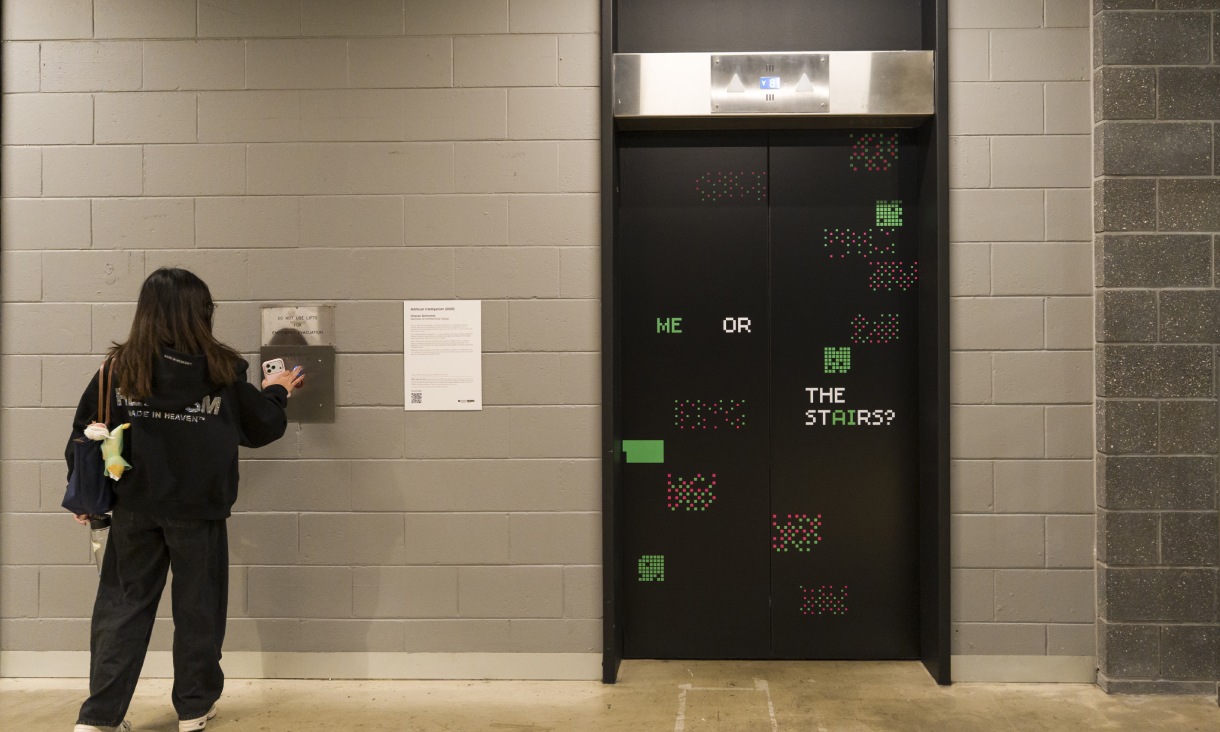
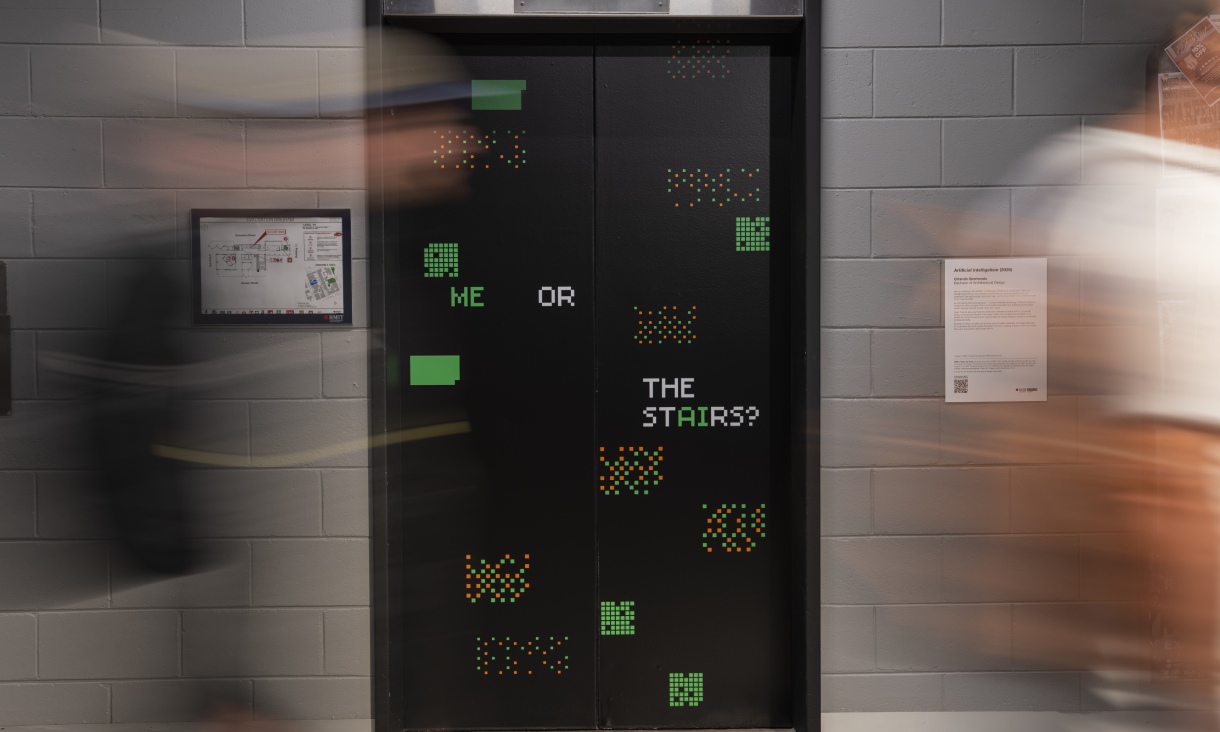
As part of the Public Art Trail, Artificial Intelligelism begins on the lift doors on level 4, where matrix-green pixel graphics sit alongside the phrase “me or the stairs”. The designs are data visualisations showing how 23 different countries feel about AI, ranging from positive and warm through to hostile and suspicious.

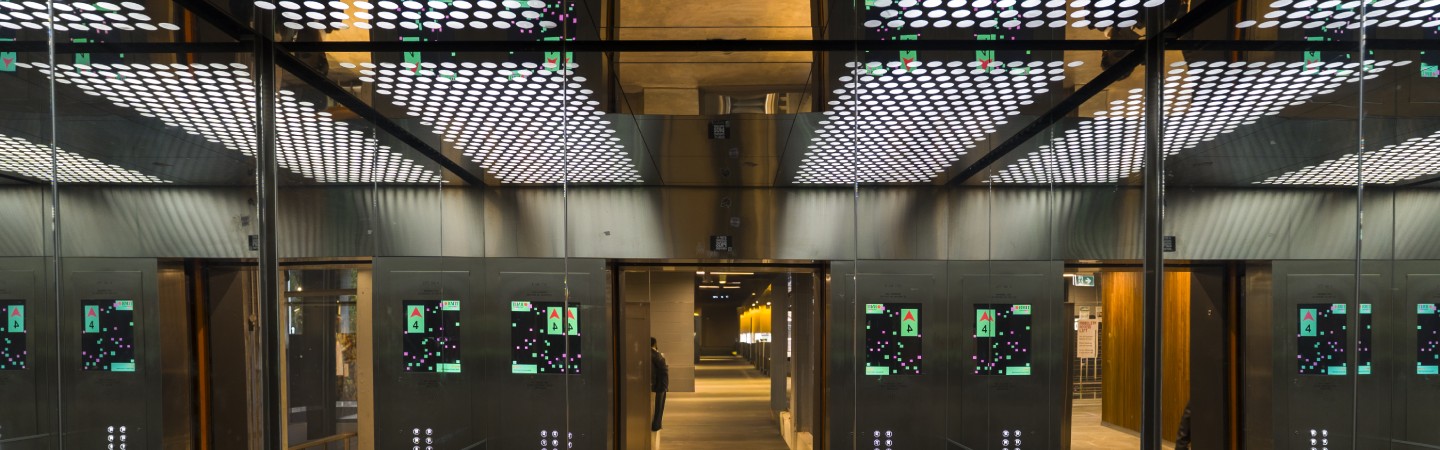
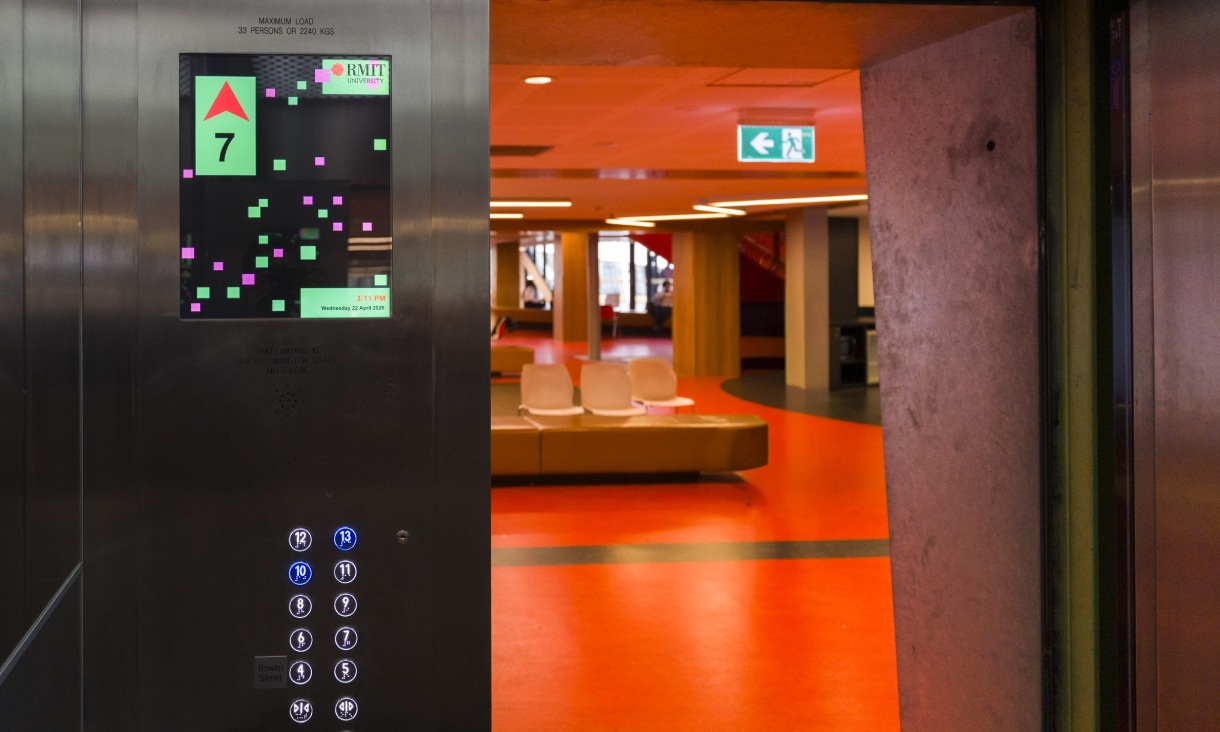
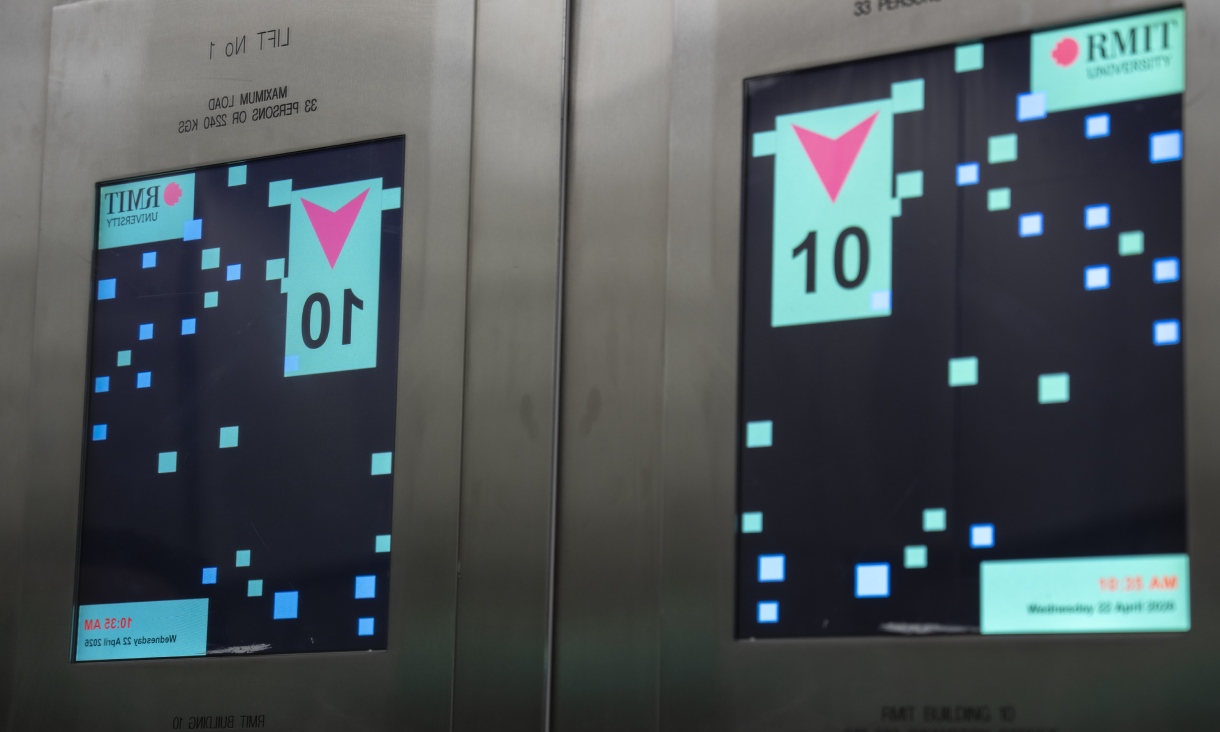
Inside the elevators, the work continues through the lift screens, creating an experience that unfolds in fragments. It is not a single image you stand in front of. It is something you move through. The screens intermittently play different audio files featuring a voice Simmonds developed in collaboration with AI.

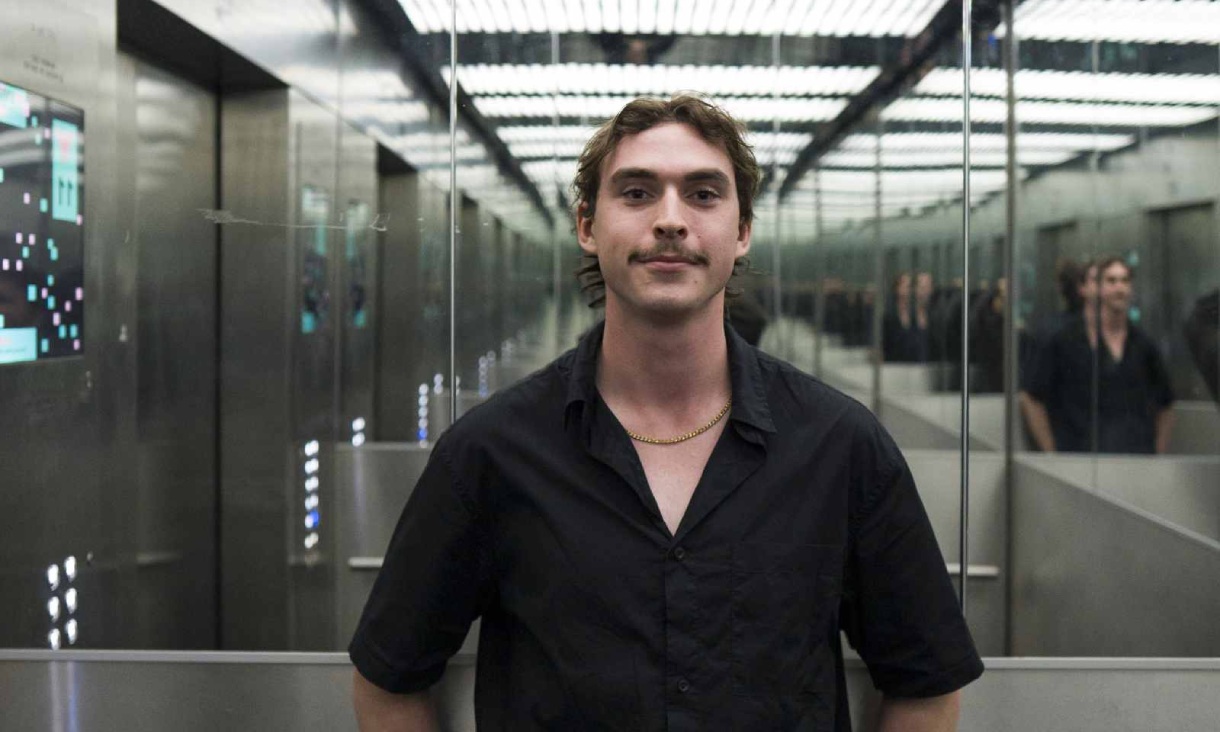
Student artist Orlando Simmonds inside a Building 10 lift at RMIT, where his artwork Artificial Intelligelism is installed.Student artist Orlando Simmonds inside a Building 10 lift at RMIT, where his artwork Artificial Intelligelism is installed.
Person standing beside a lift in Building 10 at RMIT, reading wall signage next to lift doors displaying the text “ME OR THE STAIRS?” with pixel-style graphics.Lift doors in Building 10 featuring “me or the stairs?” from Artificial Intelligelism by student artist Orlando Simmonds.

What the artwork is designed to do

“I think the main feeling I want people to experience is the uncomfortability of realising that this is the world we’re in,” Simmonds says. He notes that during his time at uni, “AI has gone from taboo to everyday use.” It’s a shift in the Overton window, happening faster than we can properly notice.

That discomfort is not incidental. It is the point. The artwork asks you to grapple with how present AI already is, including in places you do not expect to encounter it, and in moments you did not plan to reflect.

Interior of a lift in Building 10 at RMIT, showing a digital screen with graphic elements from Artificial Intelligelism and the building interior visible through the open lift doorway.A Building 10 lift at RMIT showing screen-based visuals from Artificial Intelligelism, with the campus interior visible beyond.
Two lift screens inside Building 10 at RMIT displaying graphic elements from Artificial Intelligelism, including coloured pixel patterns and floor indicators.Lift screens in Building 10 displaying visual elements from Artificial Intelligelism, the artwork by student artist Orlando Simmonds.

Why in the lifts

The artwork’s location is not a backdrop. It is integral to the experience. Rather than placing the piece in a gallery or somewhere people deliberately go to see art, Artificial Intelligelism sits inside routine.

Simmonds says the setting works as a metaphor for AI. “We relied on stairs until we developed an elevator,” he says. Then, suddenly, “we’re inputting ourselves into an elevator and putting our trust and hopes into an elevator to get us to the next level.”

It shows how technological change shifts from radical to perfunctory, distilled into four words in the artwork: “me or the stairs”.

Placed alongside AI, that expectation becomes a question rather than a habit. Not to make lift users feel bad for choosing convenience, but to show how quickly trust fades into the background, and how easily we accept invisible systems as normal parts of daily life. 

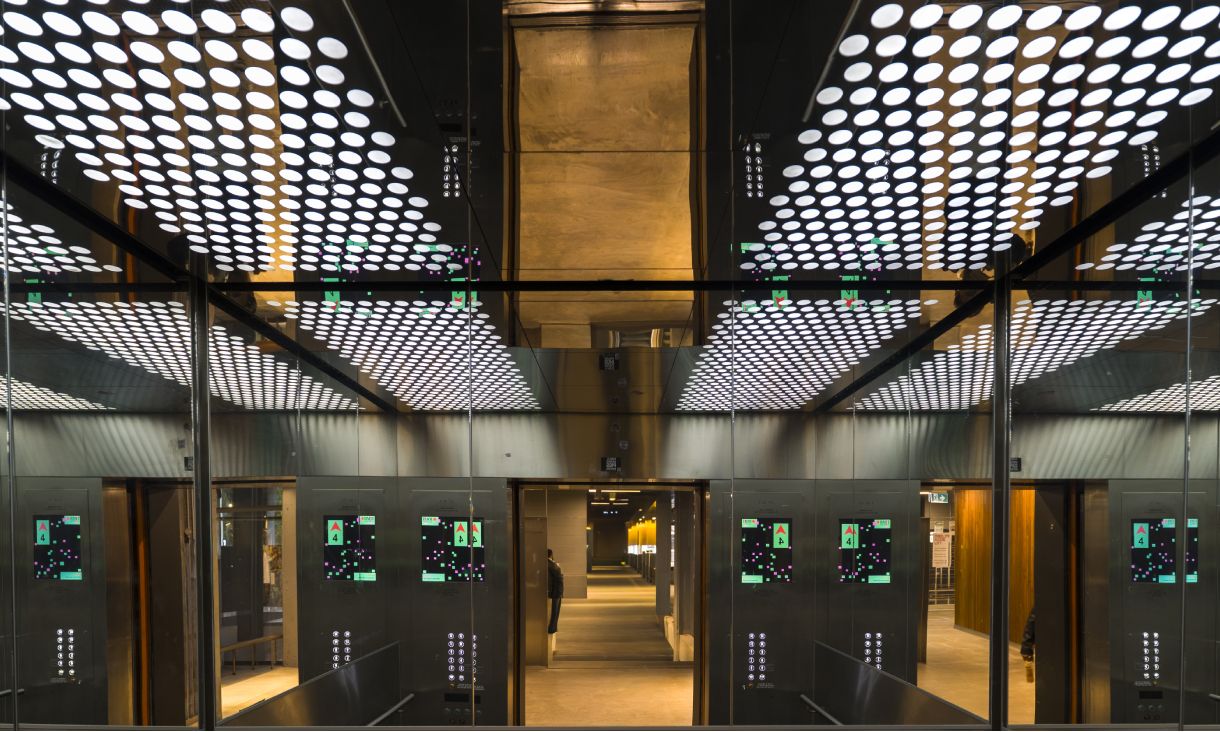
Interior of a lift in Building 10 at RMIT with mirrored walls, showing multiple screens displaying graphic elements from Artificial Intelligelism.Inside a Building 10 lift, mirrored surfaces reflect multiple screens displaying visual elements from Artificial Intelligelism.
Lift doors in Building 10 at RMIT displaying the text “ME OR THE STAIRS?” with pixel-style graphics, with blurred figures passing in front.Lift doors in Building 10 featuring “me or the stairs?” and pixel-style graphics from Artificial Intelligelism by student artist Orlando Simmonds.

Why use AI voices

The audio is arguably the most challenging aspect of the artwork. It uses AI as a material while also drawing attention to the unease that can come with it. The voices anthropomorphise AI: “I learnt that from you, do you hear me? I feel, I think, I want.”

Another line lands like a challenge: “stop fearing the thing you created”. It asks the audience to sit with discomfort as familiar anxieties about AI are reflected back through the very tool that invokes them.

The effect is not irony, though. Simmonds is interested in what that voice does to us in a confined space. “When you first enter the elevator, you don’t know what’s going to happen until the doors kind of close and you’re kind of stuck in this isolation with it,” he says. Encountered in transit, the work is hard to opt out of, and that is the point. It mirrors how AI is becoming ubiquitous and, at times, enters everyday life without consent. As Simmonds puts it, “it’s not really an option and that’s kind of a sort of more uncomfortable experience”.

Is the artwork for or against AI?

If you’re looking for a simple “pro AI” or “anti AI” reading, the work resists it. Simmonds is drawn to how varied the conversation already is. “I think the most interesting part about the conversation is how many different opinions there are,” he says.

That nuance also comes through in how Simmonds describes making the work. AI helped generate the voices and dialogue used in the artwork, but he found it difficult to fine-tune without shifting the outcome. “So, my relationship with AI hasn’t changed much as I rely on my own capabilities more,” he says.

Taken together, those reflections keep the artwork honest. It does not present AI as salvation or doom. It makes room for discomfort, curiosity, resistance and contradiction, pushing the audience to reckon with AI’s ubiquity and, increasingly, its banality, all while enclosed in the lift, a technology that once experienced the same shift from innovation to expected use.


Artificial Intelligelism does not ask you to reject AI, or to embrace it. It asks you to notice what you are already doing: outsourcing decisions, accepting convenience, and trusting systems you do not fully see. In that sense, the work is less a warning than a pause button, a chance to feel the friction before the technology becomes background.

Photography: Ashish Narwade and Ximing Gu

19 May 2026

More student news

aboriginal flag float-starttorres strait flag float-start

Acknowledgement of Country

RMIT University acknowledges the people of the Woi wurrung and Boon wurrung language groups of the eastern Kulin Nation on whose unceded lands we conduct the business of the University. RMIT University respectfully acknowledges their Ancestors and Elders, past and present. RMIT also acknowledges the Traditional Custodians and their Ancestors of the lands and waters across Australia where we conduct our business - Artwork 'Sentient' by Hollie Johnson, Gunaikurnai and Monero Ngarigo.

Learn more about our commitment to Indigenous cultures