Student prototypes address disability needs

Student prototypes address disability needs

Through an industry partnership with Freedom Solutions, biomedical engineering students are prototyping adaptive technologies to solve problems faced by people living with disabilities.

The students, who are studying the Bachelor of Engineering (Biomedical Engineering), developed prototypes of adaptive technologies to solve problems faced by people living with disabilities.

The project was part of a year-long collaboration with industry partner Freedom Solutions.

The students sought feedback from the disability community in the early stages of development and worked with industry and academic mentors to turn their ideas into reality using innovative techniques such as 3D printing.

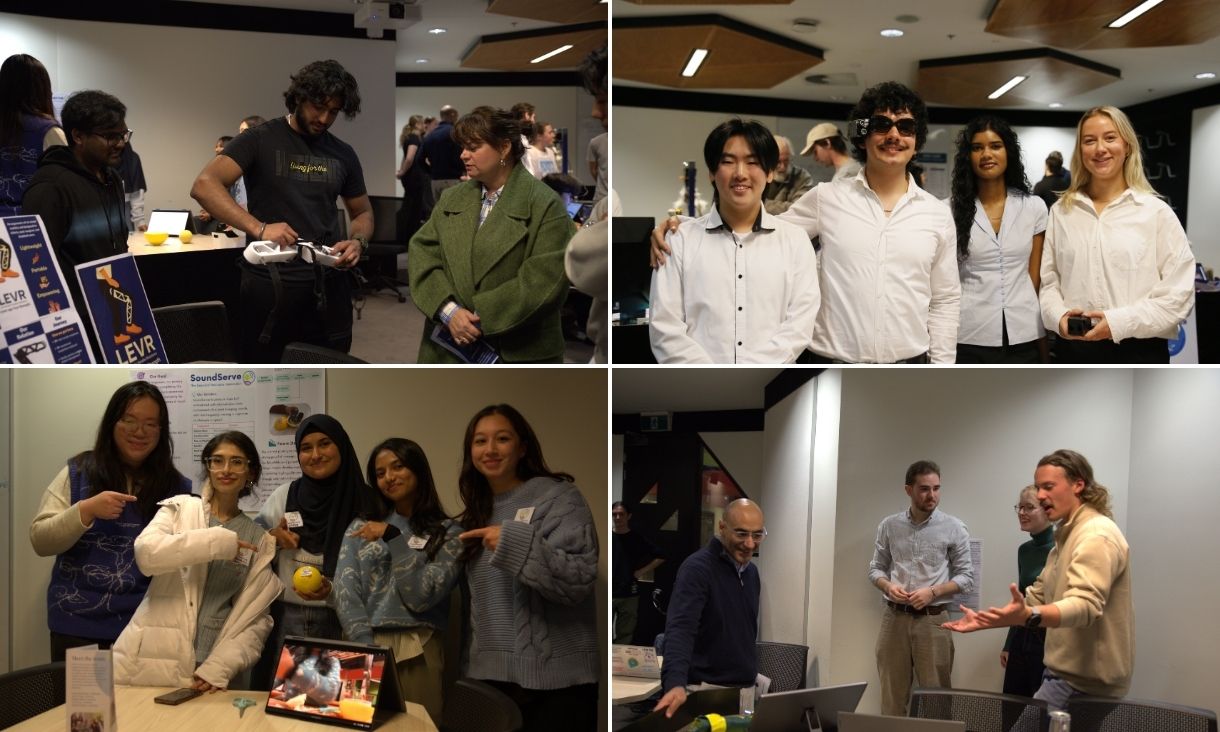
11 prototypes were showcased at an exhibit in June that was attended by industry, including an eye-tracking device for wheelchair users, a blind tennis ball with improved sound output, and a smart mobility aid with the ability to detect obstacles above waist level.

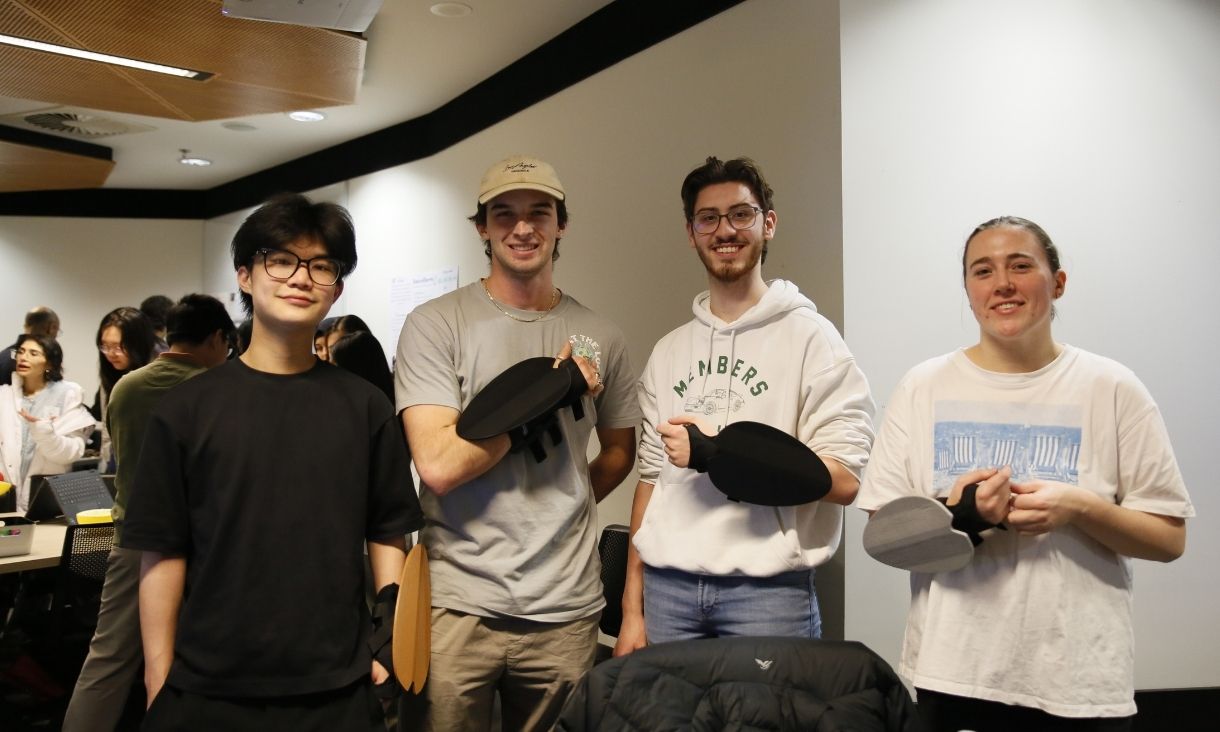
Biomedical engineering students showcasing technology Students presenting their projects at the showcase.

Students gain real-world experience

The showcase was the end of a long journey for student Lochlann Sacco, whose team created Project Paddlefish, an arm propulsion device to assist divers with lower limb paralysis.

Lochlann said that the experience was instrumental in shaping his understanding of the industry as an emerging engineer.

“Helping people, solving problems and creating my own solutions from the ground up is the sole reason I joined engineering,” Lochlann said.

Project Paddlefish has been a huge area in our team's growth and development as engineers. 12 months ago, I couldn't even imagine designing something like what we've been able to.
Biomedical engineering students showcasing technology Lochlann (centre right) and his team members showcasing Project Paddlefish.

The students also gained insights into how biomedical engineering can improve lives.

Laiba Ashraf Khatri said that researching blind tennis for her project made her more aware of the gaps in adaptive sports technology.

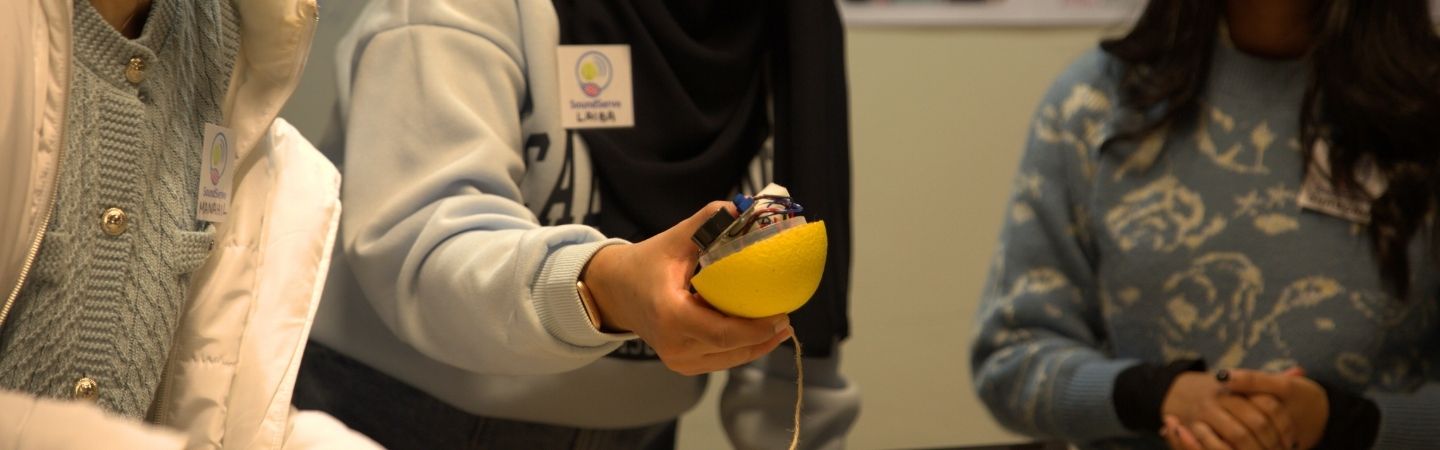
“Our system uses a small speaker and motion sensor to vary the frequency of the beeping sound emitted by a blind tennis ball, helping players better gauge speed and movement compared to the existing rattle design,” Laiba said.

I believe more projects like this are essential in increasing visibility and access, and in turn, empowering individuals with disabilities to feel supported, included and celebrated.

Program coordinator, Associate Professor David Garrett said that he was incredibly proud of what his students achieved.

“The students really embraced the brief, and the ingenuity and attention to detail they showed is exceptional. Their projects not only provide practical solutions but also illustrate the potential of assistive technology to transform lives.”

Watch the prototypes in action below:

06 August 2025

More student news

aboriginal flag float-start torres strait flag float-start

Acknowledgement of Country

RMIT University acknowledges the people of the Woi wurrung and Boon wurrung language groups of the eastern Kulin Nation on whose unceded lands we conduct the business of the University. RMIT University respectfully acknowledges their Ancestors and Elders, past and present. RMIT also acknowledges the Traditional Custodians and their Ancestors of the lands and waters across Australia where we conduct our business - Artwork 'Sentient' by Hollie Johnson, Gunaikurnai and Monero Ngarigo.

More information