Just Me

Just Me

RMIT student, JW, shares their story of coming out, transitioning and finding peace for RMIT's upcoming zine, Transzine Vol 1, which will launch for Trans Awareness Week in November.

Staff and students are invited to tell their story about being transgender, gender-queer, or the parent of a transgender/gender-queer child, for inclusion in the Zine. Find out more here.

I didn’t always have the words for it. I just knew something felt different – like I was trying to fit into a shape that didn’t feel like mine. Growing up, I’d get my younger brother’s hand-me-downs, and it never felt wrong. There were signs. Like trying to pee standing up when I was little. Like doing homework on the toilet – don’t ask, I was a weird kid. Later, I’d stumble across a word online, and fall into a rabbit hole of research. Suddenly, everything clicked. Like someone handed me a mirror that showed the inside, not just the outside. 

In high school, I stayed quiet, but I didn’t exactly conform, either. I hated wearing dresses, I didn’t want long hair. Then COVID hit. Year 11 and 12 were already messy – now I was stuck in a house that didn’t know me. I’d figured myself out, but I couldn’t live it yet. I came out at work first. Told my brother. Then the rest of the family had to know. 

Coming out isn’t one moment. It’s a slow unfolding. Some friends at school said, “Yeah, that makes sense,” and that gave me strength. Others asked questions – about names, about pronouns – in the last days of Year 12, as if something in me had already spoken before my words did. I just answered. Quietly. Honestly. I probably wasn’t going to see most of these people again, so I wasn’t hiding anymore. 

Uni was different. No one knew me before, so I got to start as me. My friends didn’t care – in the best way. At work, most people don’t know either. They just treat me like a guy. Like a person. That’s what affirms my gender: not being reminded of it. Being invisible in the way that means I belong. 

At uni, I finally felt safe. There was annoying, frustrating bureaucracy with the systems – updating names and gender markers always seems harder than it should be – but socially, I was just me. I started going to the neurodiverse study sessions and at first, I barely spoke unless someone spoke to me. But now? I've found community. A group of people where I feel like I can be my full self – no pretending, no overthinking. Just being. 

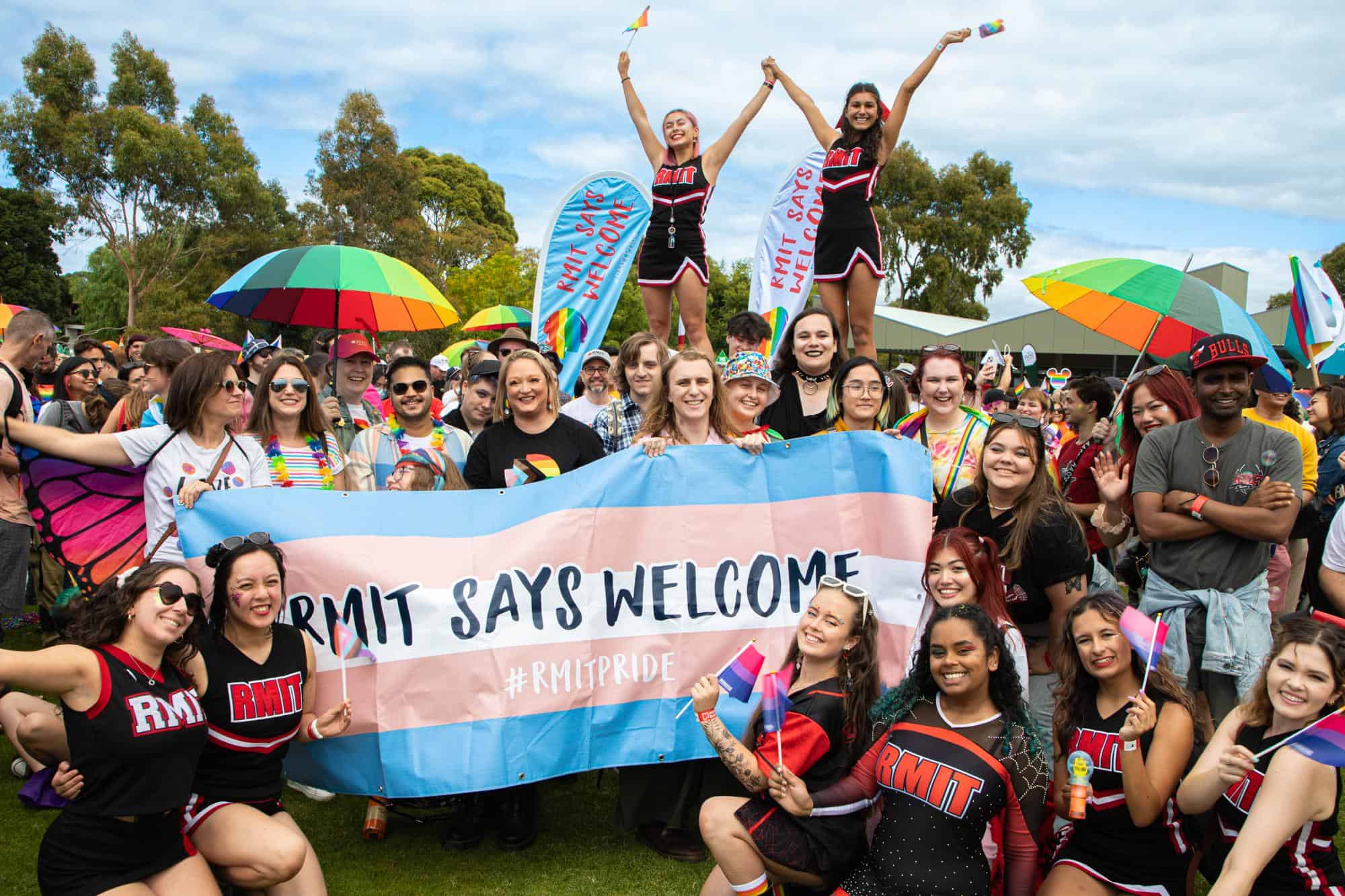
group of people gathered around a trans banner in pink, blue and white

But family? That’s messier. My mum doesn’t always get it right. She won’t use my chosen name, although she did use it on some random paperwork I received on my birthday one year. I guess that’s something? My granddad still uses my old name and wonders what Granny would’ve thought. Maybe so do I. My brother says he’s still the eldest son. But my dad? He’s come around. If he slips up, he corrects himself. He uses my real name, backs me up when Mum doesn’t, and makes it clear he sees me for who I am. On my last birthday, when my family sang happy birthday and the song got to my name, Mum muttered “whatever it is,” but my dad didn’t let it slide – he said my name louder and prouder, like it was never in question. That mattered. 

Other things changed too. Binding, for one. I started with sports bras – sometimes layering them, tight across my chest. Then came binders. They were painful. Heavy. Sensory hell. Eventually I tried transtape. It was a steep learning curve, but when I got it right, it changed everything. I could wear shirts that used to betray me. I could breathe and felt free, even though I was constricted. That, too, gave me confidence. 

Medical transition gave me a kind of confidence I never had before. It wasn’t just the changes in my voice or body – it was the way people saw me. I could finally look in the mirror without flinching. I could walk into a room and not second-guess how I’d be read. It was in the small things too – handshakes at the drive-through, being called “mate,” joking around with guys who don’t know and don’t care. I learned that sometimes, joy looks like being forgotten – because in forgetting, they’re seeing me just as I am. 

There were losses. I used to play premier women’s cricket. But I left – not because I wasn’t good, but because I heard how they talked about queer and trans people behind closed doors. I didn’t want to stay in a space that wouldn’t want me. 

And there are things I’m still untangling. Like how some of the most affirming moments come from the strangest places – walking home at night and seeing a woman glance back and speed up. It’s awful that she’s afraid, but the reason she is? She sees me as a man. It shouldn’t mean anything – but it does. Because for so long, I wasn’t seen at all. 

If you’d asked me to describe my gender back then – or even now – I’d just say: me. That’s all it’s ever been. Not a category. Just me. 

If I could speak to my younger self, I’d say this: you don’t have to hide forever. It gets easier. Not always. Not everywhere. But the journey won’t stay stuck. You’ll find your people. Some family might come around. Some won’t. You’ll build your own. 

One day, you’ll laugh at what used to make you cry. Someone will make a dumb joke about balls and you’ll just grin. Because it won’t sting anymore. Because you’ll love yourself more than you hate the weight of what the world tried to make you carry. 

You’ll look in the mirror and finally recognise the reflection. 

And you’ll think – yeah. That’s just me.

Words by Adam Ferris, Academic Skills Advisor at RMIT Library, on behalf of JW.
27 August 2025

More student news

aboriginal flag float-start torres strait flag float-start

Acknowledgement of Country

RMIT University acknowledges the people of the Woi wurrung and Boon wurrung language groups of the eastern Kulin Nation on whose unceded lands we conduct the business of the University. RMIT University respectfully acknowledges their Ancestors and Elders, past and present. RMIT also acknowledges the Traditional Custodians and their Ancestors of the lands and waters across Australia where we conduct our business - Artwork 'Sentient' by Hollie Johnson, Gunaikurnai and Monero Ngarigo.

More information