RMIT’s Art for Social Change project Metropolis has won the 2026 International Green Gown Award in the Diversity, Equity and Inclusion category.
The award recognises institutions that embed equity, social justice and inclusion in their work, including by addressing barriers and involving diverse communities in shaping a more sustainable future.
“A unique, creative and collaborative initiative that has achieved significant recognition and influence in its sector, expanding on the very meaning of sustainability in human terms. A really innovative, unique and inclusive project easily replicable for other institutions.”
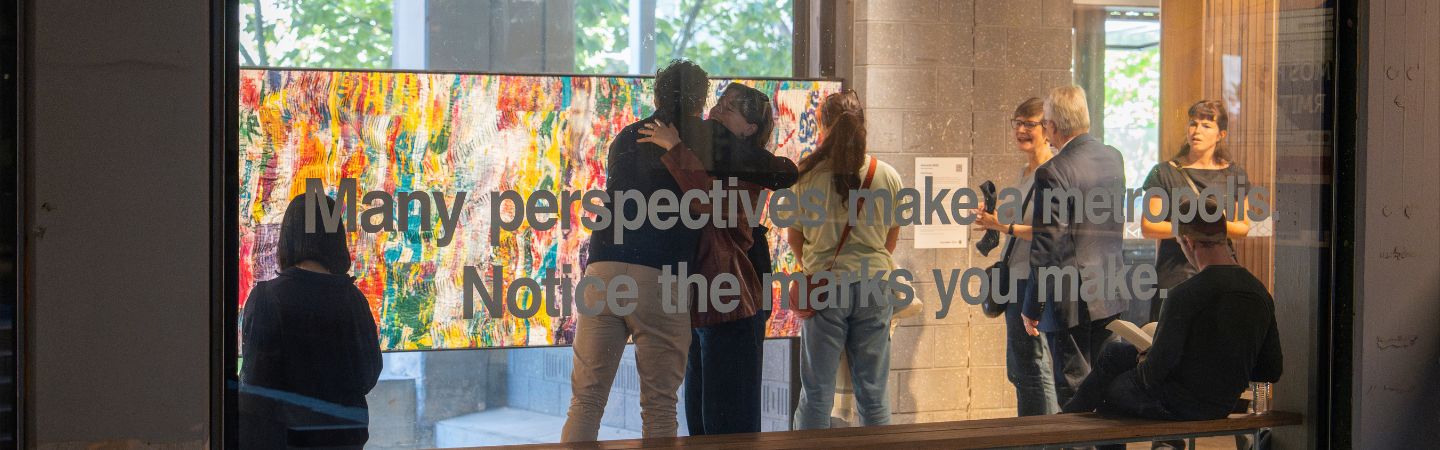
.jpg "Long artwork covered in colourful paint")
Art for Social Change was a three-part series of participatory artworks exploring social justice issues affecting the student experience at RMIT. Delivered through a partnership between RMIT Student Life and the RMIT University Student Union (RUSU), the program invited students to contribute to each artwork through workshops and events.
Each project was led by an artist whose lived experience informed the work. Rather than encountering a finished work, students became part of the creative process and the conversations about respect, belonging and social change that emerged from it.
Metropolis, the third work in the series, was led by RMIT alumna and artist Rachel Shugg. The 4.2-metre-long pleated fabric artwork explores accessibility, allyship and belonging through the experiences of d/Deaf and Disabled students.
More than 200 students contributed to its development via an immersive installation.
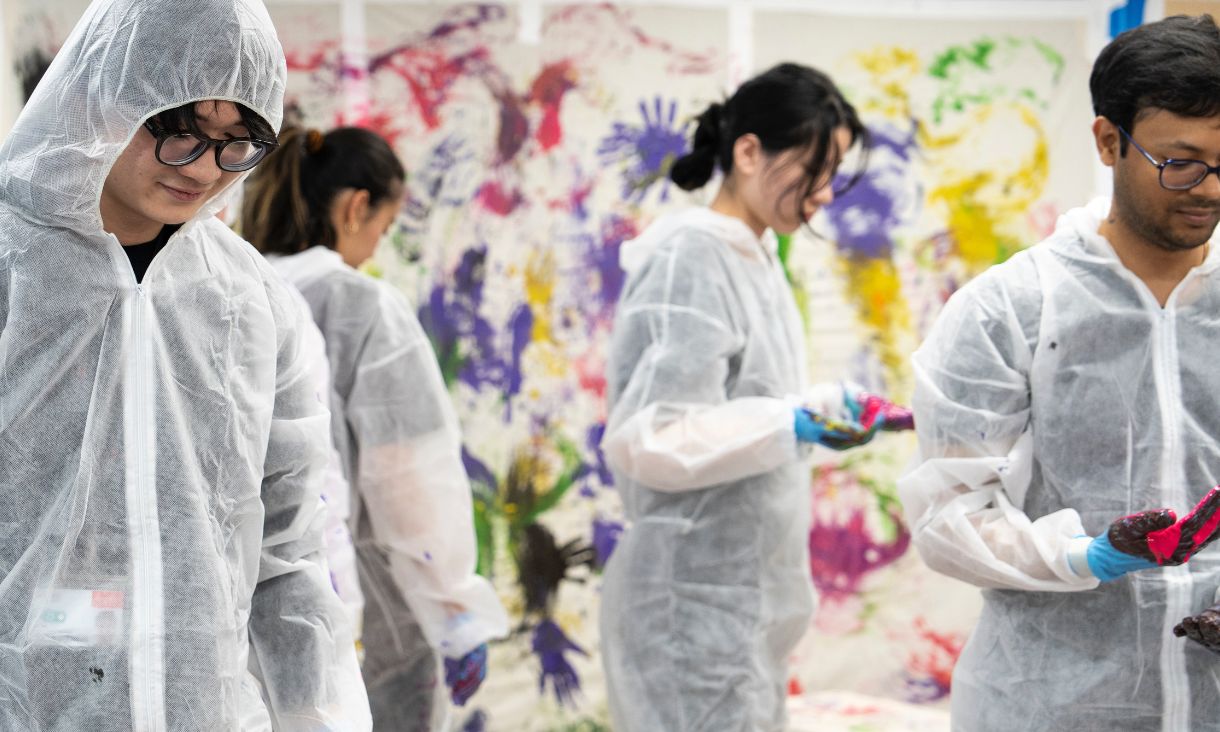
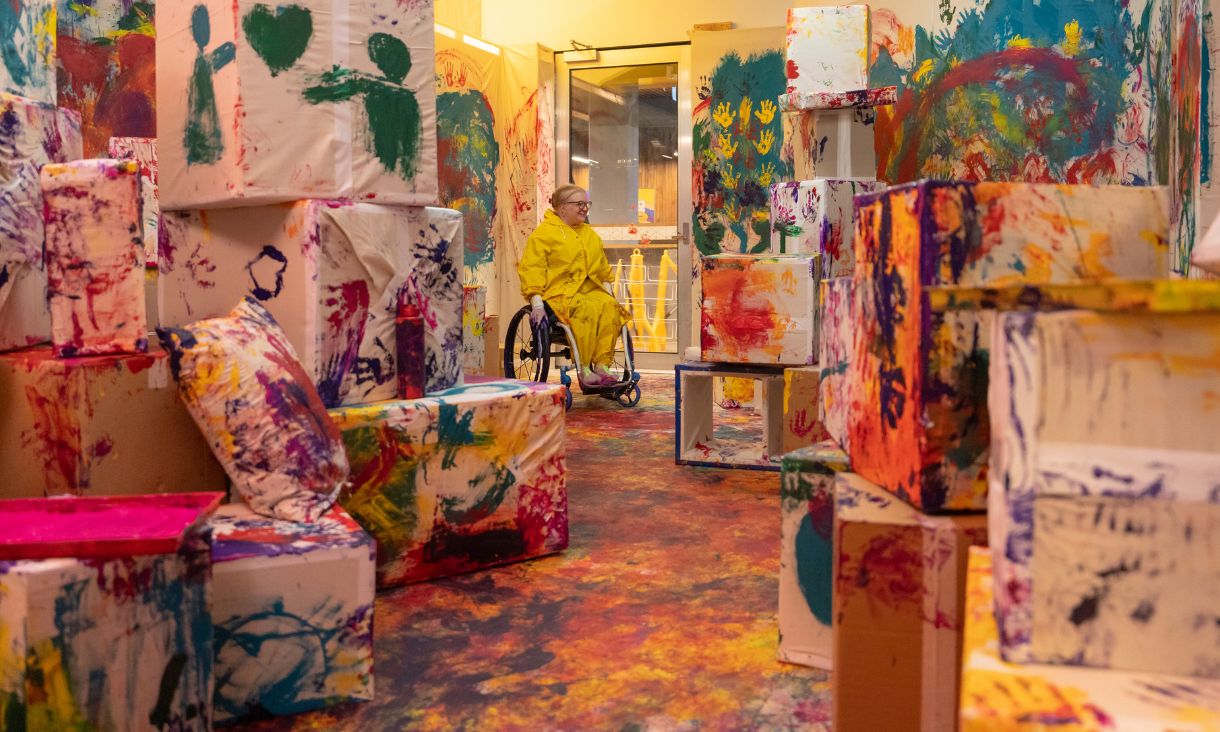
The process began with d/Deaf and Disabled students entering a calico-lined room and making full-body marks in paint as they moved through the space. The wider student community was later asked to navigate obstacles using a map that did not correspond with the room, encouraging participants to encounter access from a different perspective.
Students recorded reflections on their experiences on a window nearby, before performer Grey (Caitlin) Dear brought the participatory stages together through a final performance. Rachel Shugg then transformed the painted calico by tearing, marking, pleating and reassembling the material.
Students’ movements and marks were not simply responses to a completed artwork. They became part of its material, bringing together many contributions without presenting a single experience of accessibility.
As Rachel Shugg said, “you can’t build a city from just one perspective”.
In comments shared as part of the Green Gown Awards submission, RMIT Vice-Chancellor and President Professor Alec Cameron said the recognition reflected the university community's contribution to sustainability, equity and inclusion:
"At RMIT sustainability, equity and inclusion, are fundamental to our civic contribution and embedded in the way we educate, engage and work together as a university community. All our people play a part in living up to our high standards and should feel proud to be recognised in this way."
The international win builds on the project’s success at the 2025 Green Gown Awards Australasia, where Art for Social Change won the Diversity, Equity and Inclusion category.
Metropolis remains on display at RMIT City campus in Building 10, above the stairwell near the café. The artwork can be experienced from several positions, including up close through its textures, from the bench opposite, above the nearby stairs or from Swanston Street.
Learn more about Art for Social Change
View the International Green Gown Awards winner profile
The recognition comes at a timely moment, with RMIT Sustainability Week 2026 running from 14 to 18 September across the City, Brunswick and Bundoora campuses and online.
This year’s theme, Grounded: in place and community, considers connections to Country, community and the world around us as part of working towards a healthy, connected and sustainable future.


RMIT University acknowledges the people of the Woi wurrung and Boon wurrung language groups of the eastern Kulin Nation on whose unceded lands we conduct the business of the University. RMIT University respectfully acknowledges their Ancestors and Elders, past and present. RMIT also acknowledges the Traditional Custodians and their Ancestors of the lands and waters across Australia where we conduct our business - Artwork 'Sentient' by Hollie Johnson, Gunaikurnai and Monero Ngarigo.
Learn more about our commitment to Aboriginal and Torres Strait Islander peoples

