The commissioned student artists work with RMIT Creative and the broader student community to transform our campus into a living platform for creativity. Public Art Trail demonstrates that creativity belongs to everyone, and that public art can build confidence, connection, and belonging across the university.
This initiative was originally developed as part of a cross-college undergraduate elective, Public Art Projects, within the School of Art, and has been funded by Student Services and Amenities Fee (SSAF).
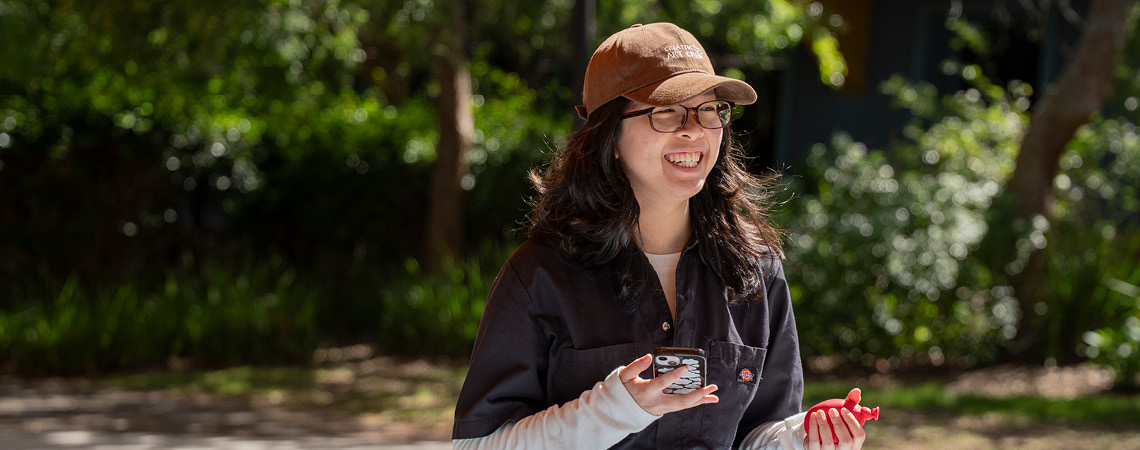
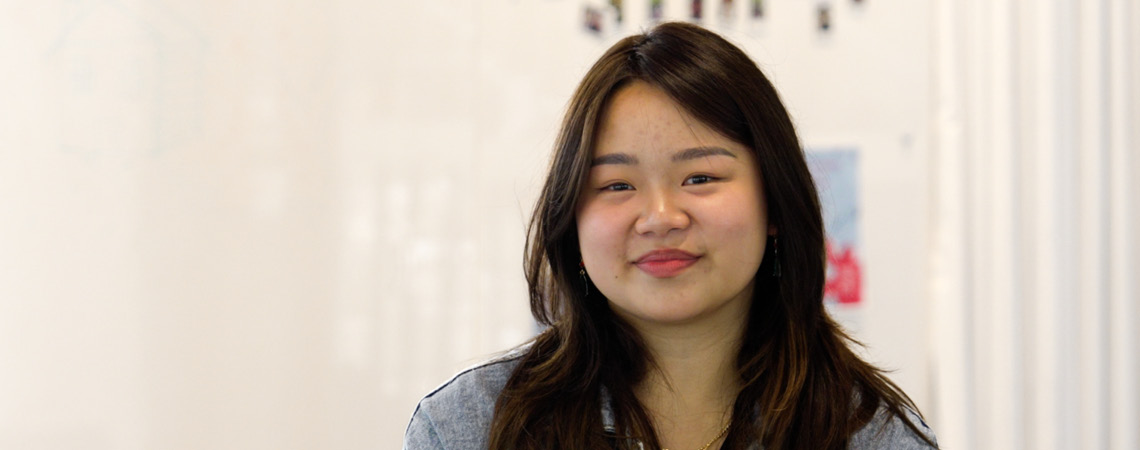
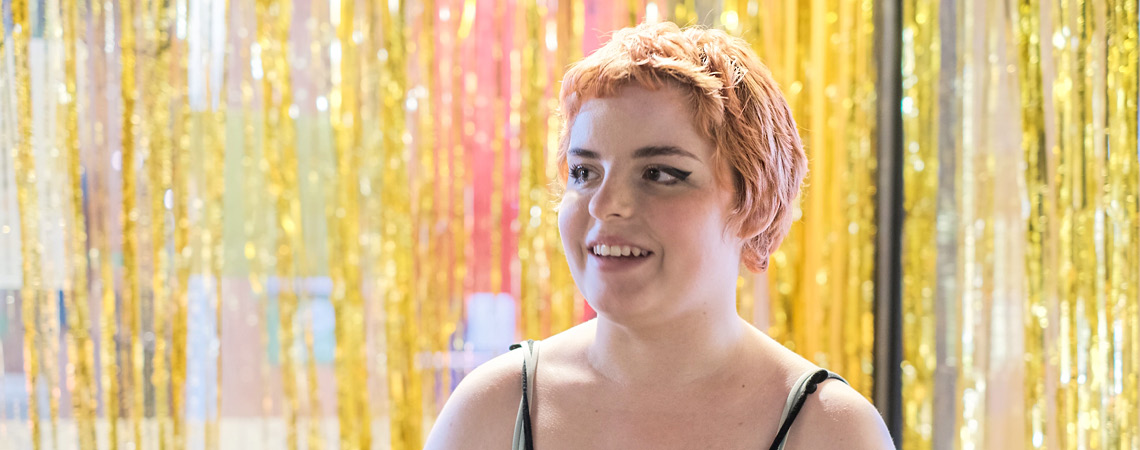
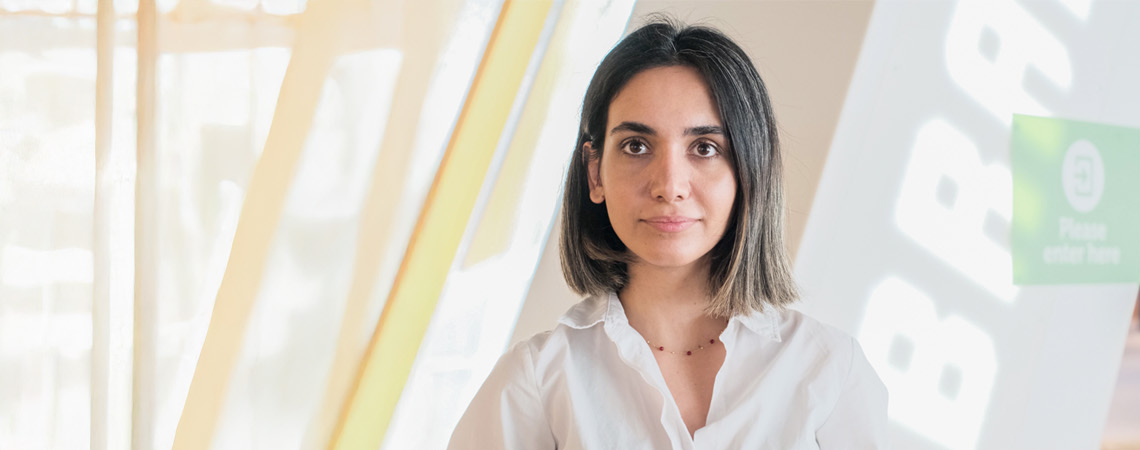
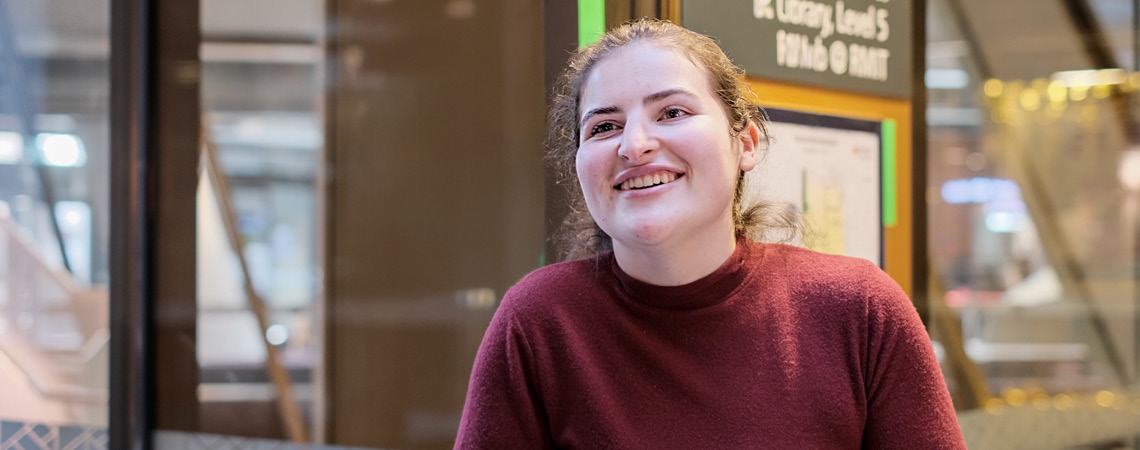
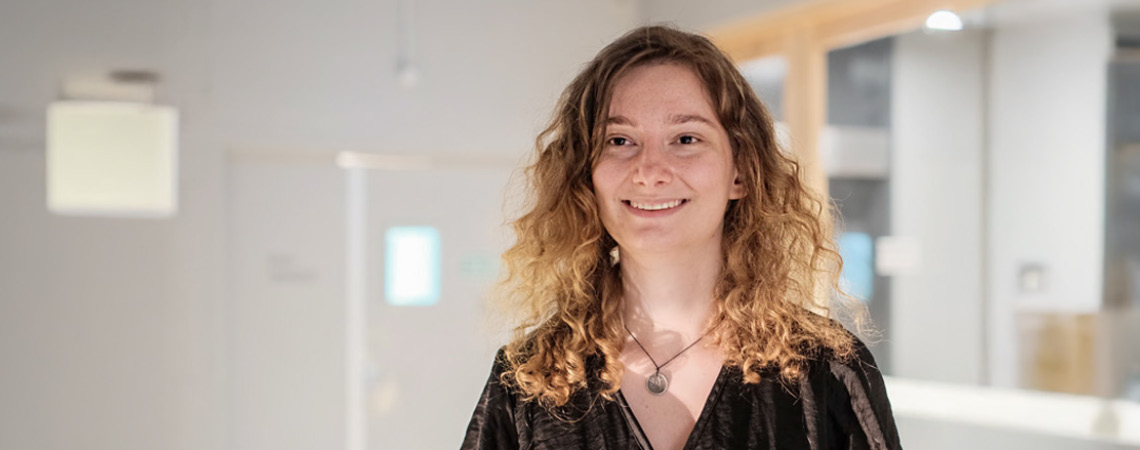
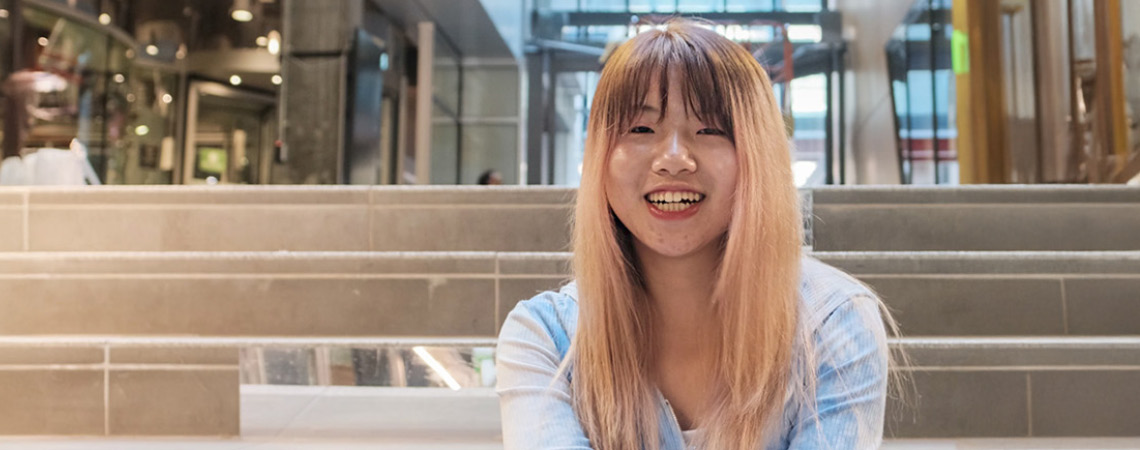
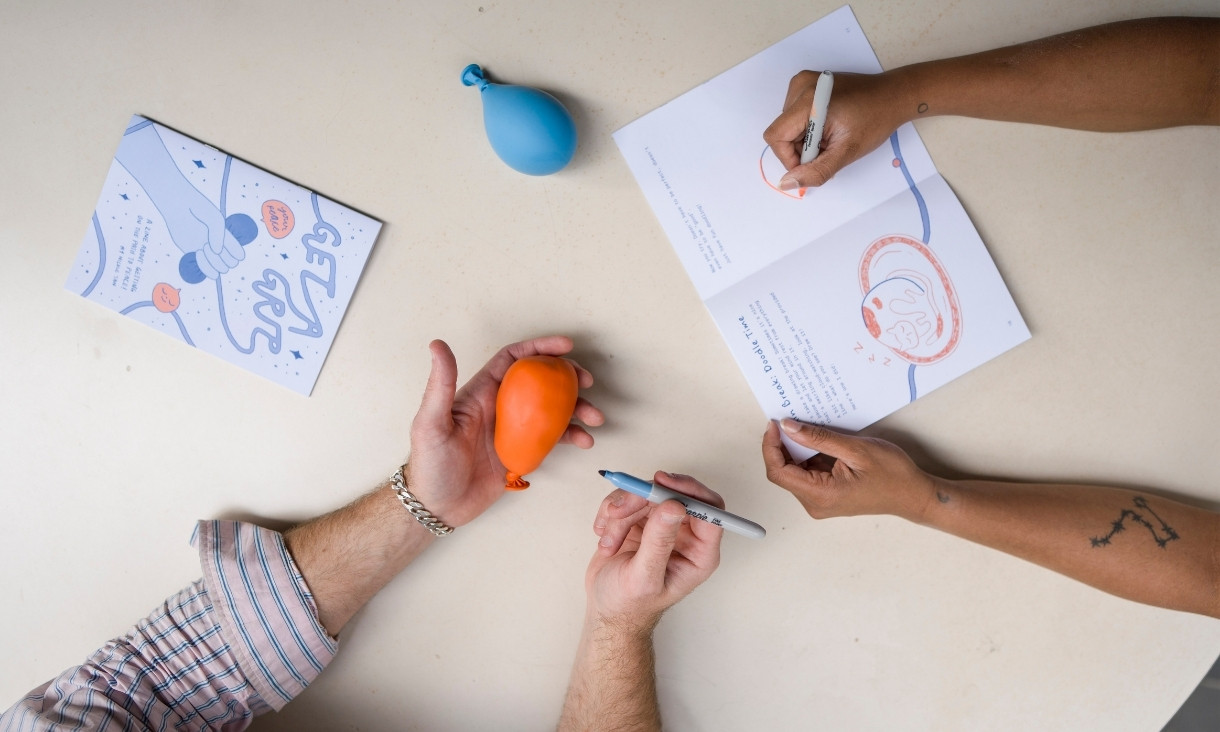
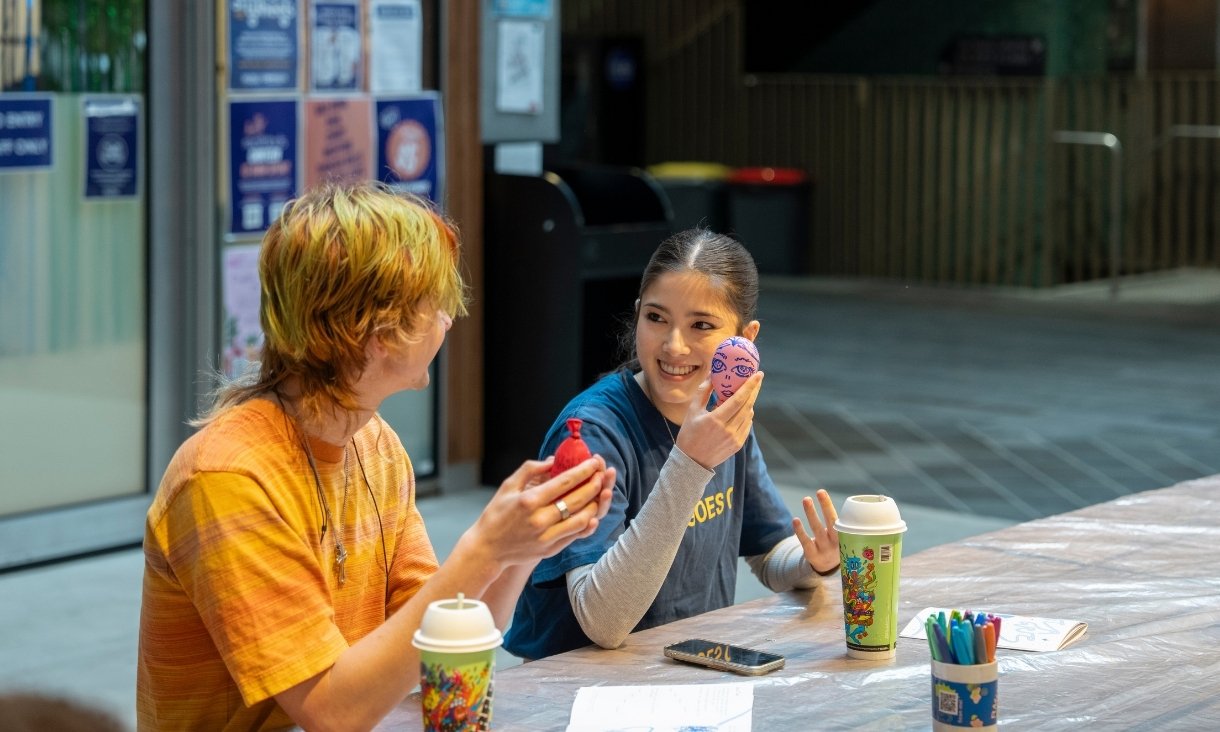
Get a Grip is a project for anyone who has ever felt the pressures of uni, work, social life and just existing (if you haven’t, you’re a unicorn)! Created by RMIT student and artist, Nicole Tan, Get a Grip includes a wellbeing zine and DIY stress ball decorating workshop! It’s all about learning how to get a grip on managing your stress and starting — or continuing - your journey on the path to peace!
To meet students where they were, Nicole developed multiple ways to participate. In person workshops using printed zines and stress balls encouraged peer interaction and connection on campus. Take-home packs allowed students with pressing commitments to engage at a time and place that suited them. A digital version extended access to students from other campuses and anyone unable to attend in person.
The zine’s subtitle, “A Zine About Getting on the Path to Peace!”, inspired the visual metaphor of a path connecting through every page of the zine. An orange ball rolls along it, reiterating that wellbeing is an ongoing journey, not destination.
Read the digital zine here.
Artist: Nicole Tan (she/her), Bachelor of Design (Communication Design)
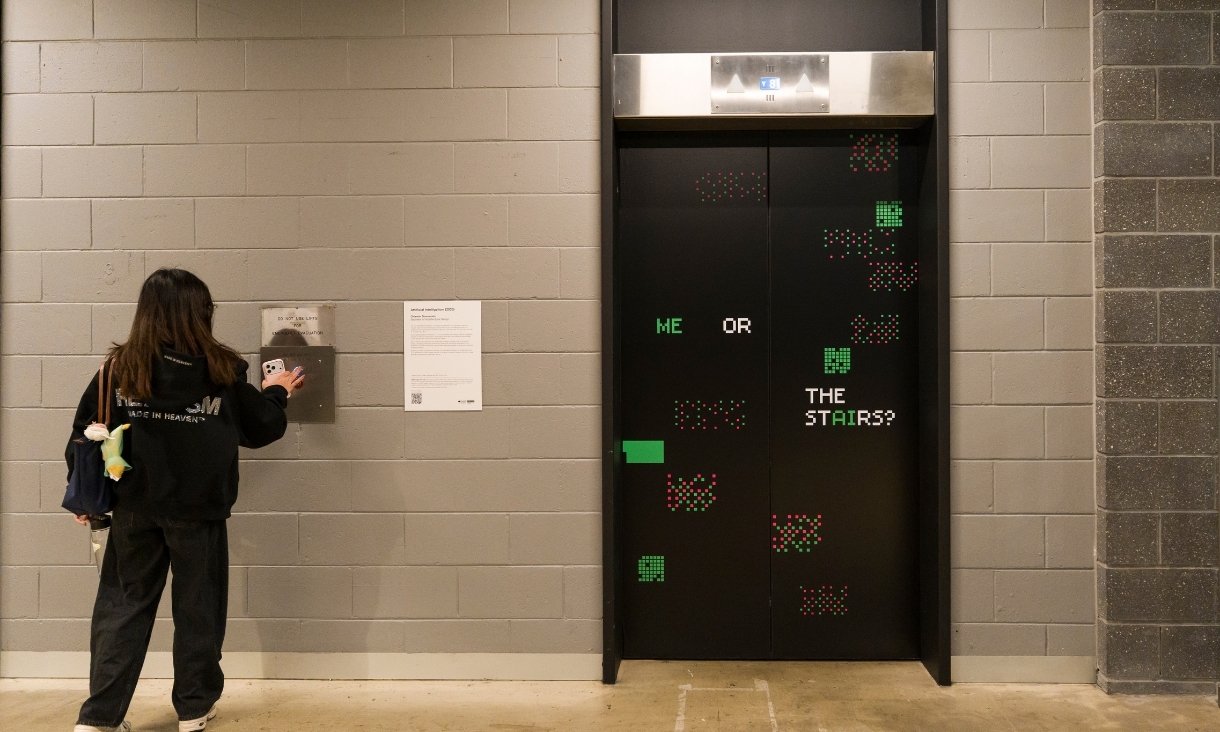
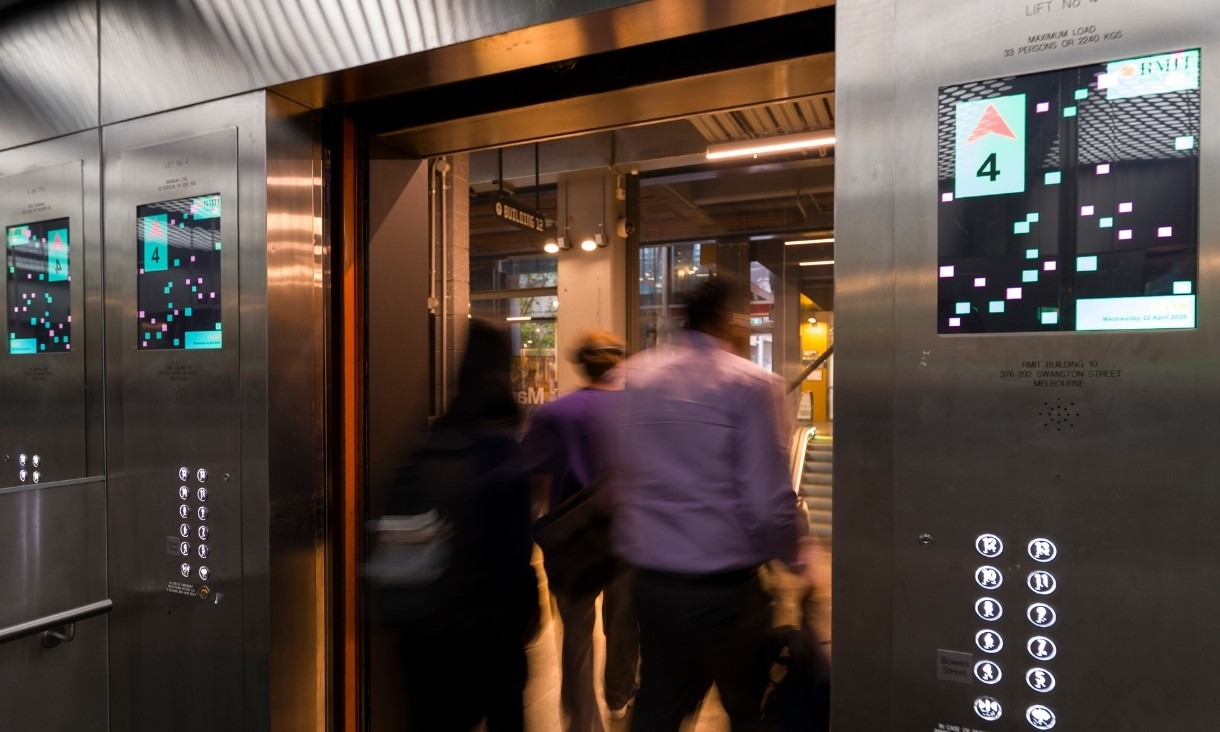
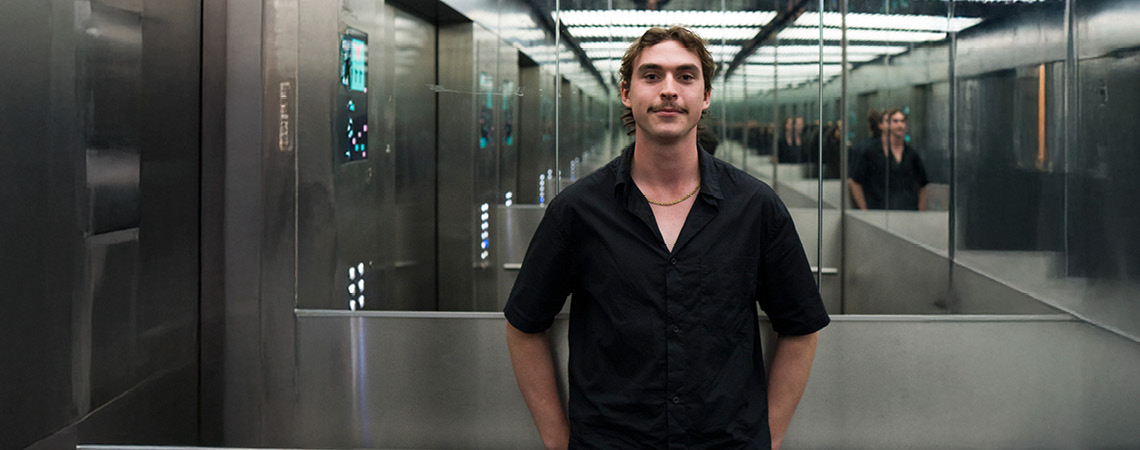
Artificial Intelligelism is a public artwork exploring the broad range of complex responses we have to the advent of AI. Some think AI is here to save us and others think it’s the end of the world. Whatever your stance on AI, Artificial Intelligelism draws you into a dialogue with all these hopes, fears and speculations. By drawing an analogy between the stairs, and elevators which — like AI — were once a brand new and possibly terrifying technological innovation, this artwork provokes us to examine AI in the context of millions of years of human evolution and new tool inventions.
Like many students, Orlando is facing a shifting industry landscape where early-career jobs may get automated largely out of existence by AI. On the other hand, Orlando is also aware of the many opportunities AI offers to enhance existing professions and create new ones. This artwork invites RMIT students to engage with the ambiguities present in our relationship with AI.
Artist: Orlando Simmonds (he/him), Bachelor of Architectural Design
Location: Building 10, Level 4 (Elevators), City Campus
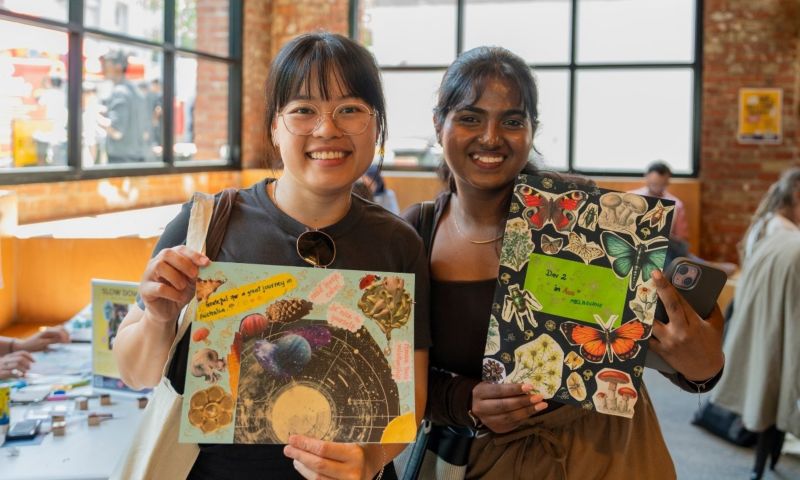
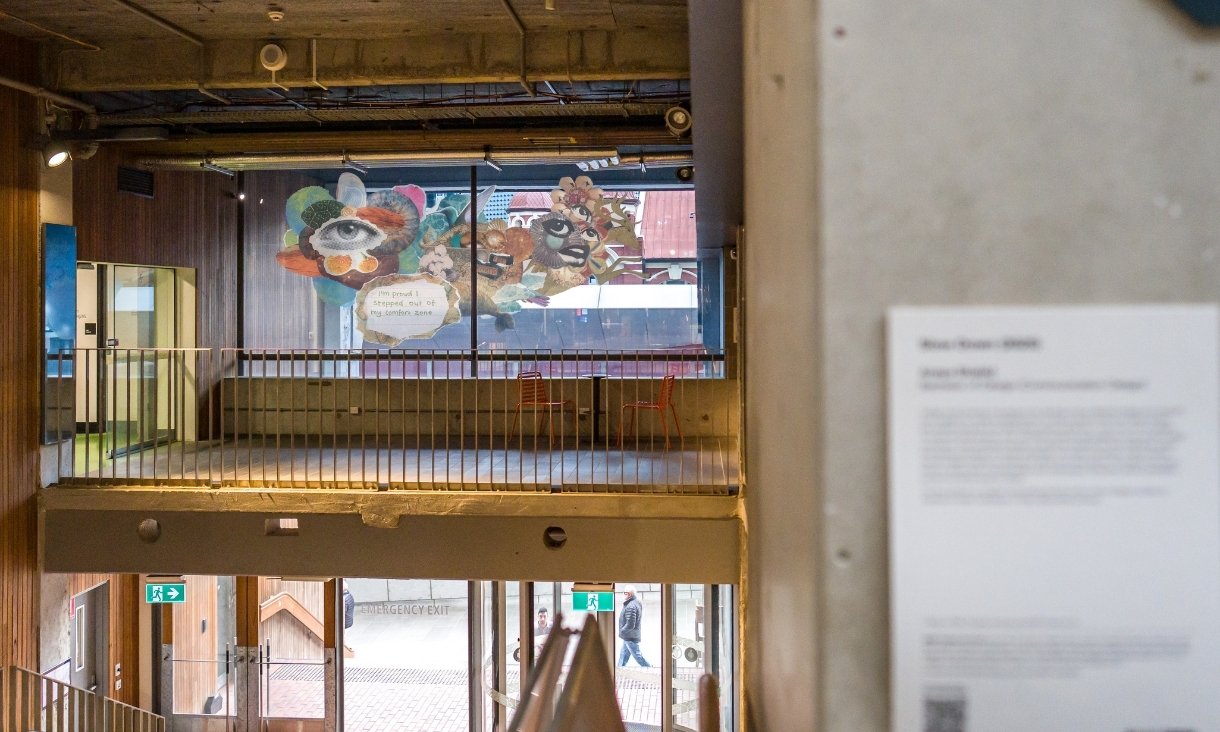
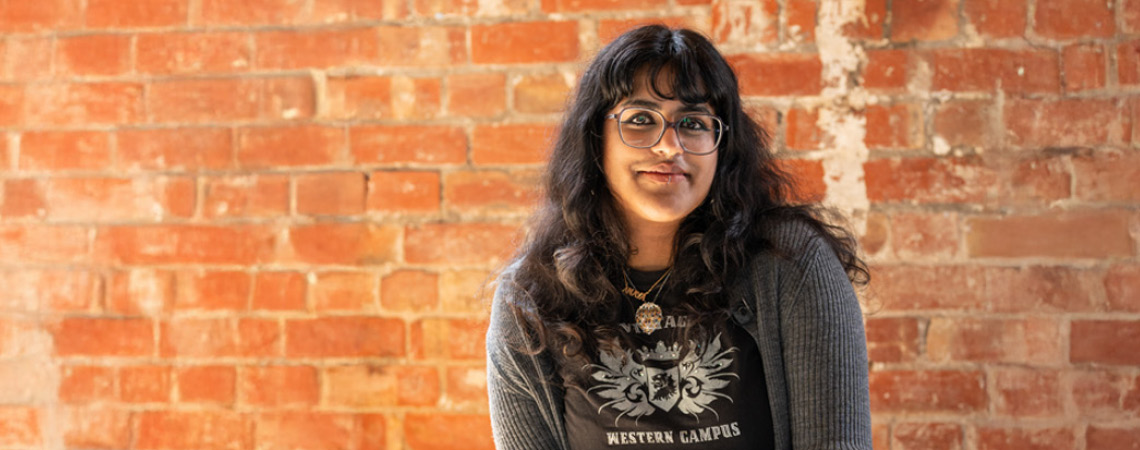
Collage is the practice of creating art by sticking various different images and materials together to create something new. It’s also a great practice for being mindful and present because as student artist, Anaya will tell you, "you can’t rush a collage”. Over one hundred RMIT students participated in slow mindful collage workshops to create the final artwork. Each participant began by setting an intention for their wellbeing, giving themselves permission to create uncritically. For these workshops, Anaya curated thousands of images drawing on themes of nature and outer space. For Anaya, the colours found in nature have a calming effect and outer space represents infinite possibilities, just like the infinite ways to create.
The final artwork is created using elements from some of the collages created by students in these workshops. A truly collaborative process.
Artist: Anaya Shahid (she/her), Bachelor of Design (Communication Design)
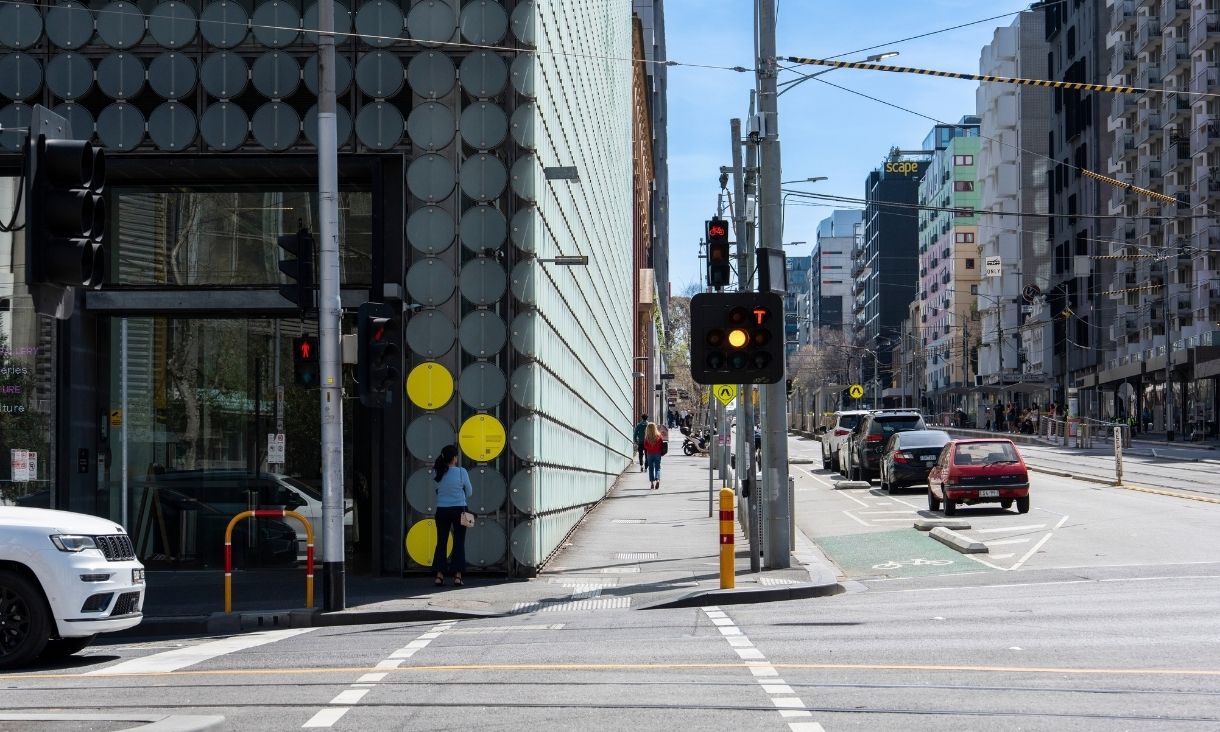
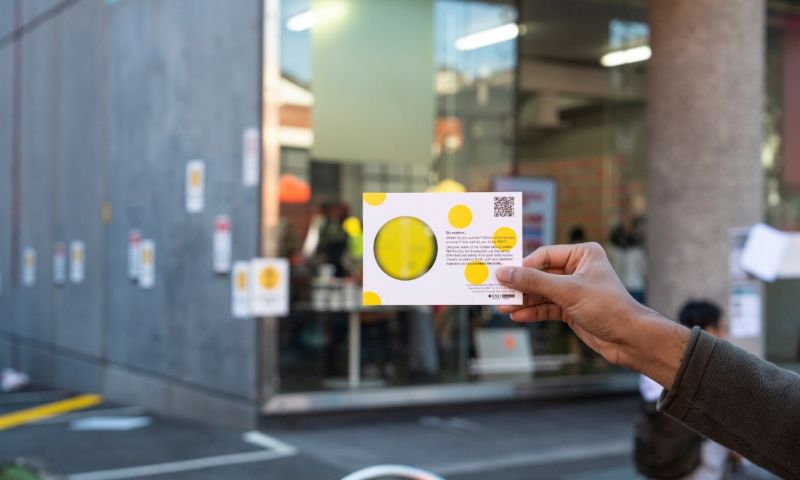
Connect the Dots is an interactive public artwork that embraces the spirit of adventure and curiosity! Stories from people who study, work, and share knowledge in RMIT’s City North Precinct have been made visible on bright yellow dots scattered over the precinct! You may even find some dots in unexpected places where stories are yet to materialise. You are invited to go exploring! Let the yellow dots lead you astray from your daily routine. Follow your curiosity. There's no start or finish. What emerges is your unique trajectory as you connect the dots...
"I spent three years of my degree in the same circled building and my understanding of RMIT as a campus was limited to a singular footpath: the five-minute route to the Design Hub from Melbourne Central. It wasn’t until I was in my final year of uni that I strayed off my well-trodden track to go exploring... and I’m so glad I did!
The yellow circles of Connect the Dots are a visual reference to the RMIT Design Hub – Building 100 – where I attended nearly all of my classes throughout my Bachelor of Architectural Design. One day, a mysterious bright yellow puddle of paint appeared right out the front of the Design Hub and suddenly my well-trodden path was covered in other people’s yellow footprints. The footprints of the people who shared this space, this path, this journey with me. I began to wonder about the lives of the people who had created them. What were their stories? What are they studying? Working on? Researching? Thinking about? The yellow paint became a metaphor for all those unseen lives and untold stories."
Artist: Sophie Yvette Stavrakis (she/her), Bachelor of Architectural Design
Location: RMIT City North Precinct
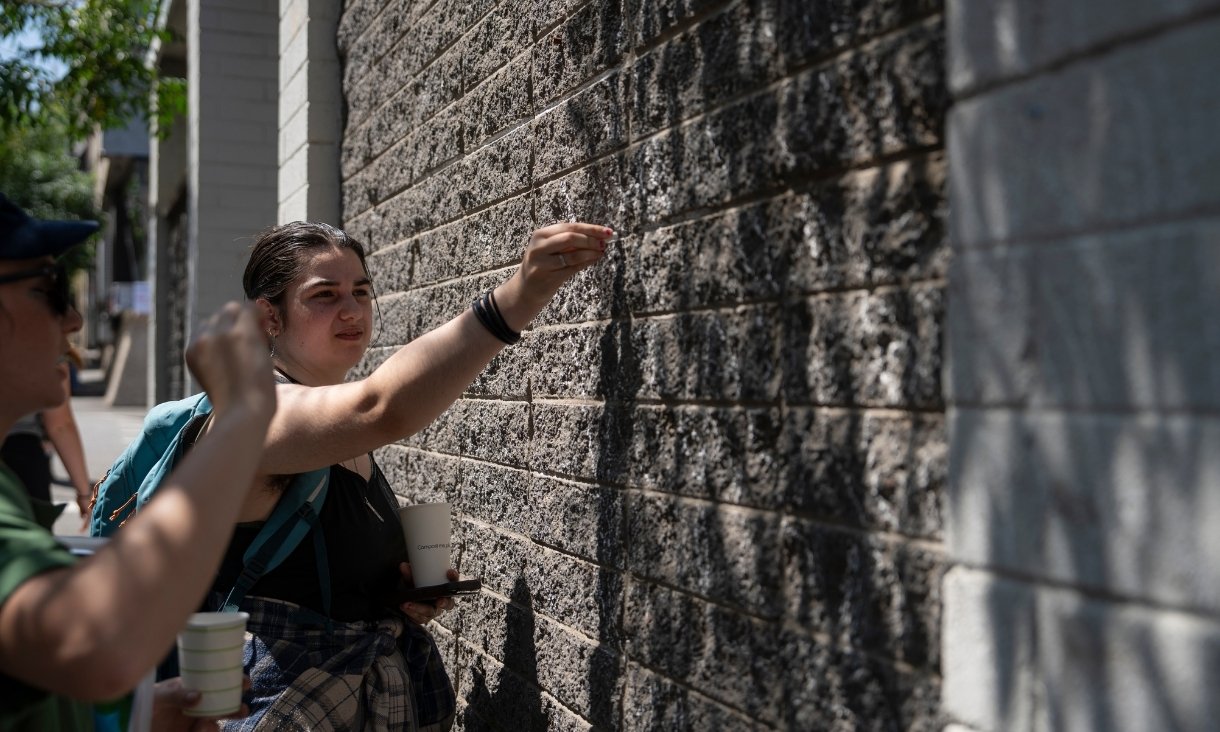
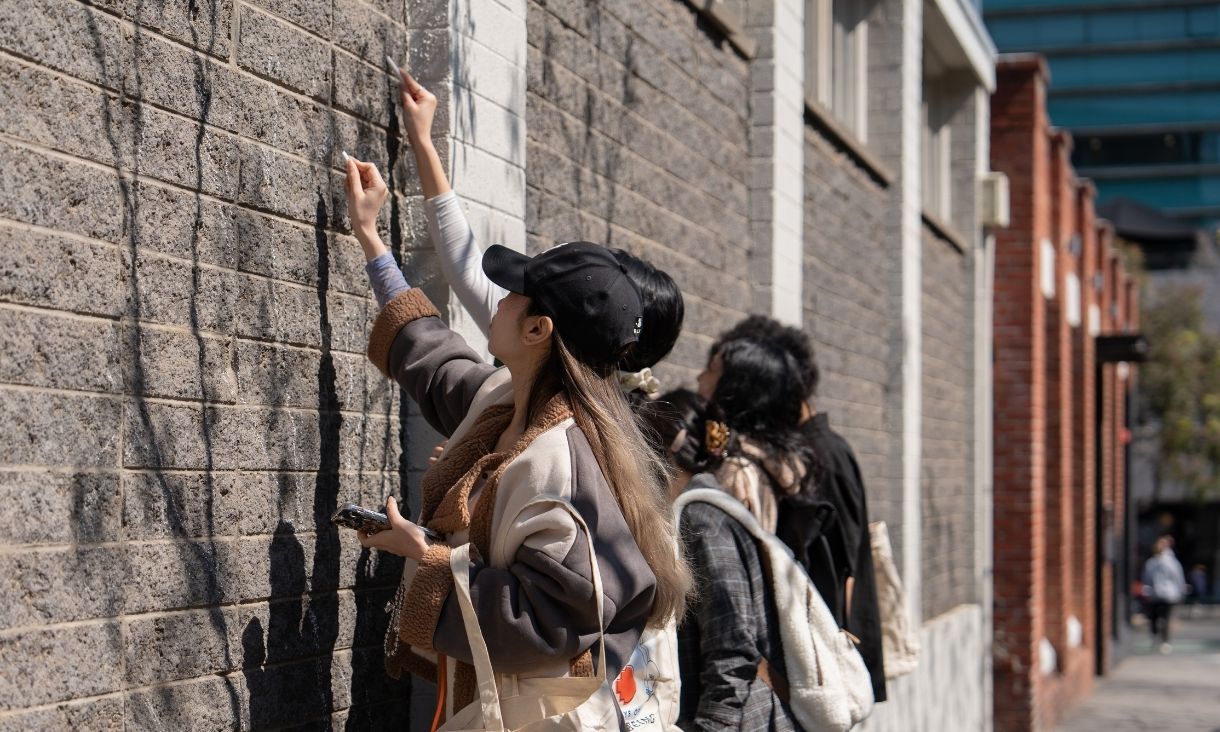
Light Lines is a nature-inspired creative meditation practice that invites students to take time to notice the beauty of the natural world. The artwork consists of a facilitated experience where participating students observe the movement of shadows cast by trees, nature and each other across the architecture of RMIT and trace these shadows using chalk creating a topographical map of the movement of light and shadow through time and space.
"I am very interested in exploring light and shadow. When I take a moment, I can feel the sunlight shine on my face, I can feel relaxation and comfort seep into my body. In a world where the speed of life may feel unrelenting, I found myself drawn to slow deliberate actions, feeling the warmth of the sun and the coolness of shadow on my body, observing the shapes cast by the trees onto the wall, noticing their movement over time. I cherish these moments of stillness, connecting with nature, the small pleasures of seeing and sensing the world around us."
Artist: Chunting Wu (Tin) (she/her), Bachelor of Landscape Architectural Design
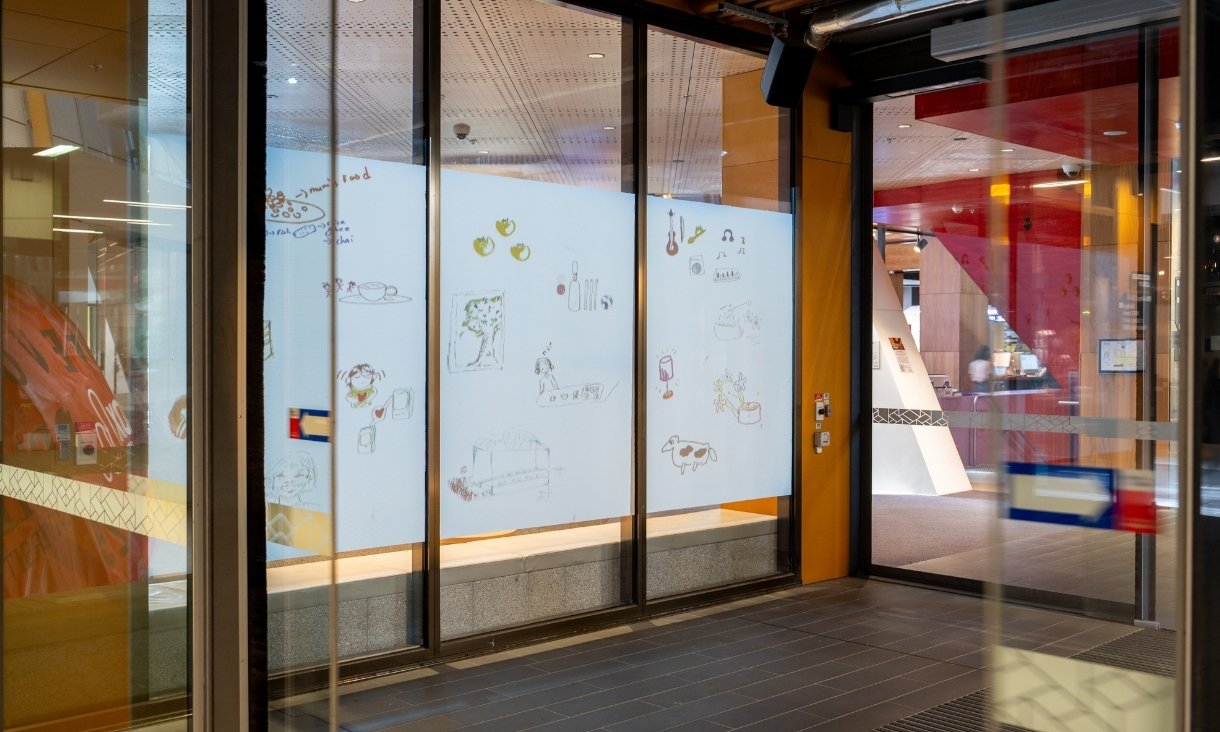
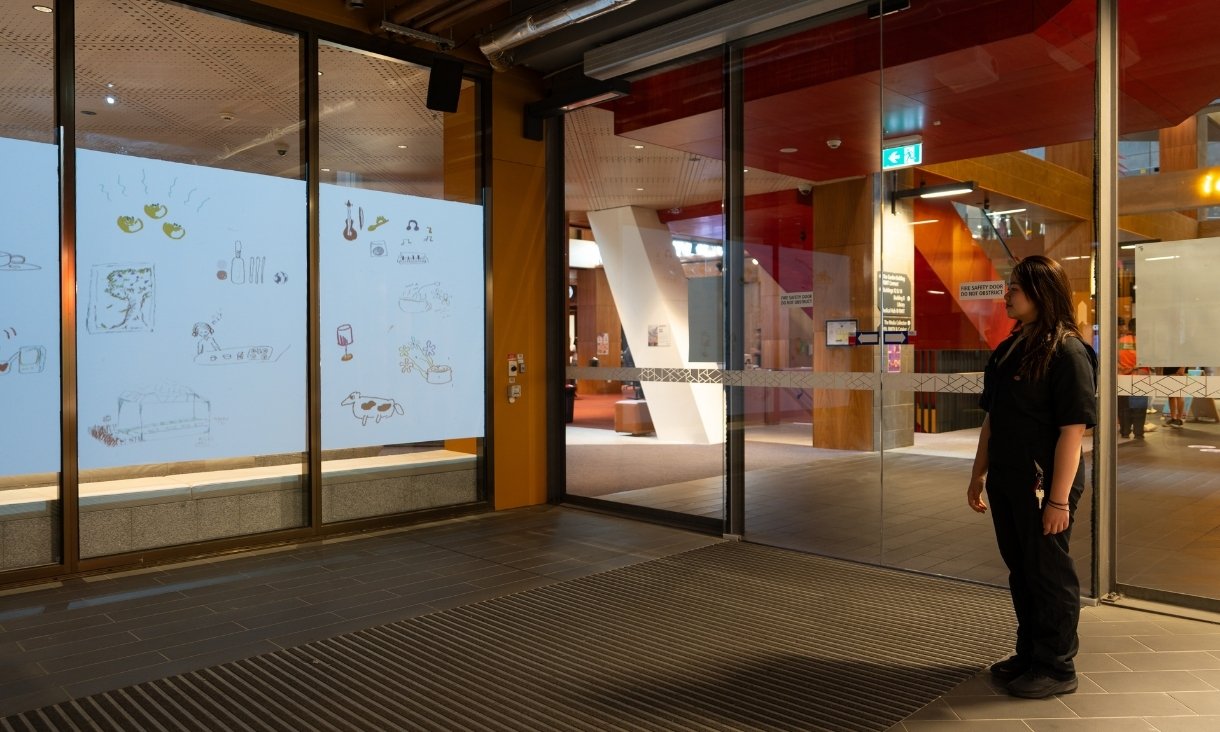
Glimpses of Home was a sound and video projection work made in collaboration with RMIT students who shared the sights, sounds and experiences of home. The project began with collaboration sessions led by student artist Caryn, where RMIT students reflected on what home meant to them and created doodles and shared stories about their personal sense of home. Together, we celebrated what is unique and different about each person's home as well as what we have in common. The doodles and audio recordings were transformed into an audiovisual installation installed on campus celebrating the things that make us feel like home.
“As an international student, moving away from home has impacted me in so many ways. Arriving in Melbourne for uni felt overwhelming at first and it took some time for this new city to feel like home,” says Caryn, “It's been heartwarming to discover so many students who relate to this experience. Glimpses of Home has brought us together to connect and share each person’s experiences of home.”
Artist: Caryn Vianka (she/her), Bachelor of Design (Animation and Interactive Media)
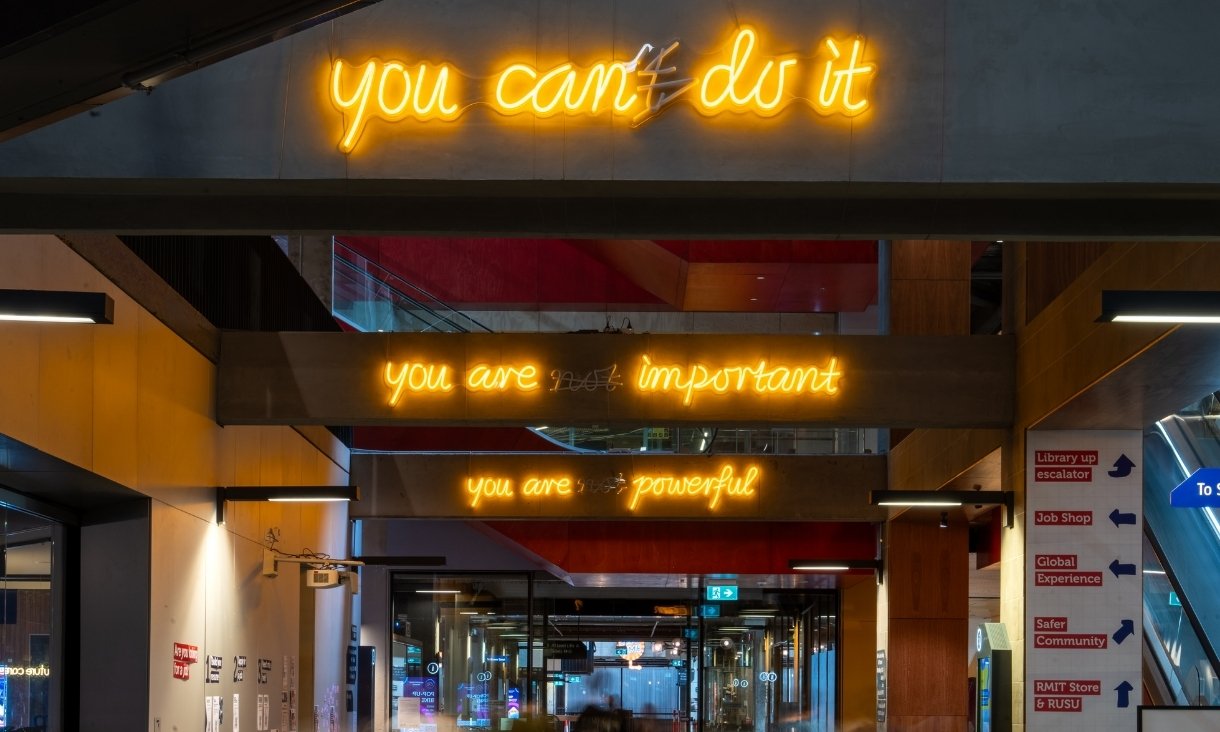
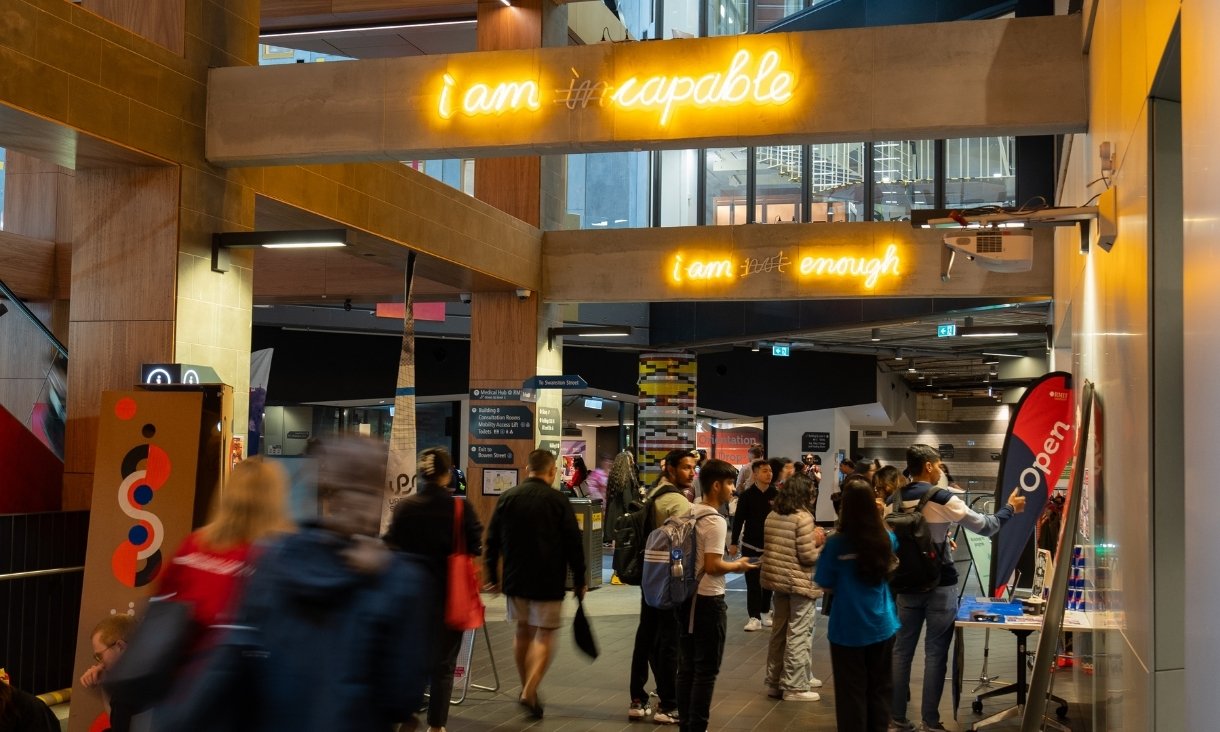
The Bright Signs is an installation artwork for anyone who has ever felt disheartened or doubtful. Our inner monologues including self-talk and the internalised voices of others can shape our emotions and actions and leave a lasting impact. So, it’s important to catch the negative thoughts and turn them into something positive. The Bright Signs seeks to empower students to believe in themselves and practice positive self-talk. Emi’s signs are metaphorically glowing with positivity and the negative aspects of each phrase have been silenced. If you’re looking for a sign to be kind and believe in yourself, this is it!
“When I was a teenager, I was told I would never be good enough to be an architect. I let that statement affect my future decisions,” Emi says. “It took me a few years before I could move past the fear and self-doubt and decide to come to RMIT to study Architecture and create a new narrative for myself. Now I’m working towards fulfilling my dreams!”
Artist: Emi Uili (she/her), Bachelor of Architectural Design
Location: Building 8, Level 4, City Campus
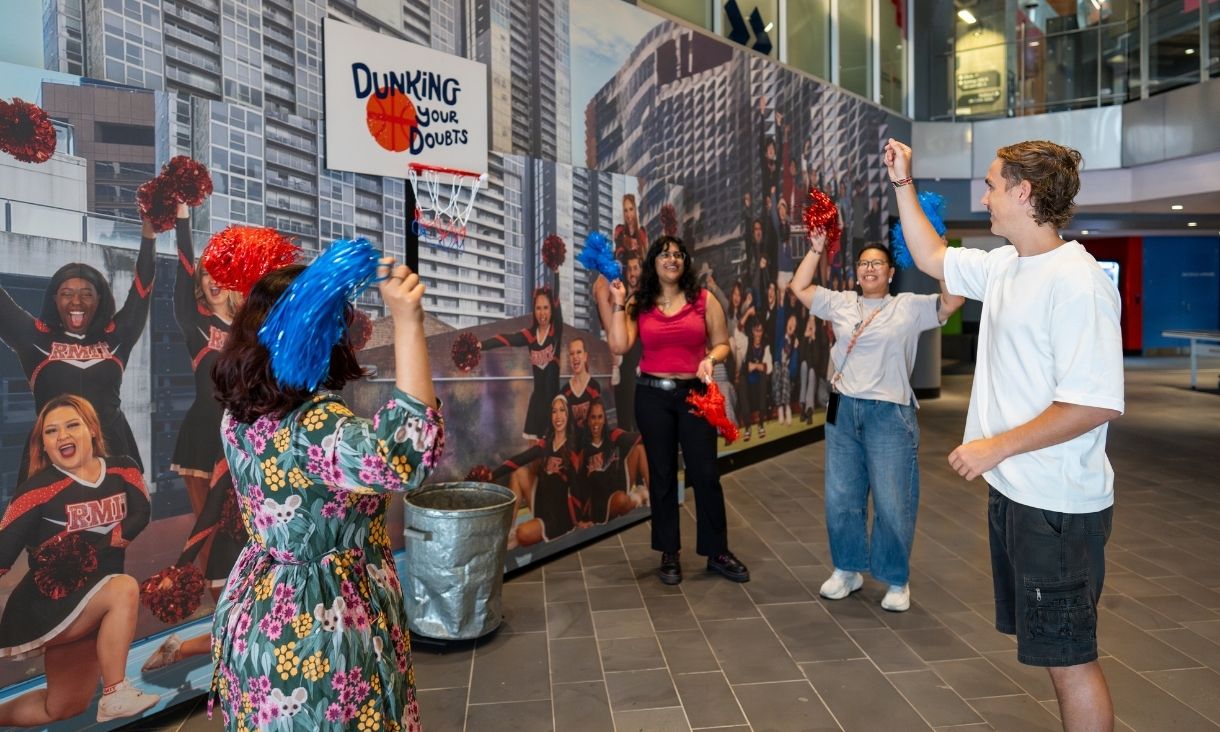
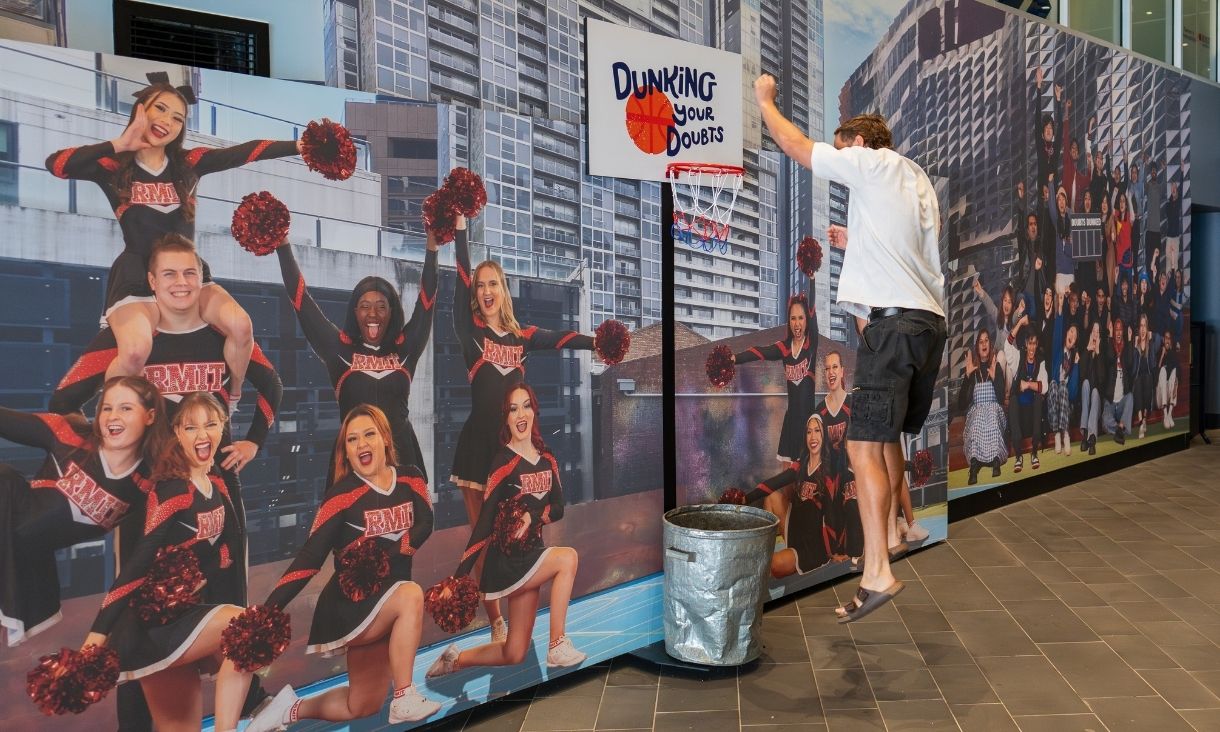
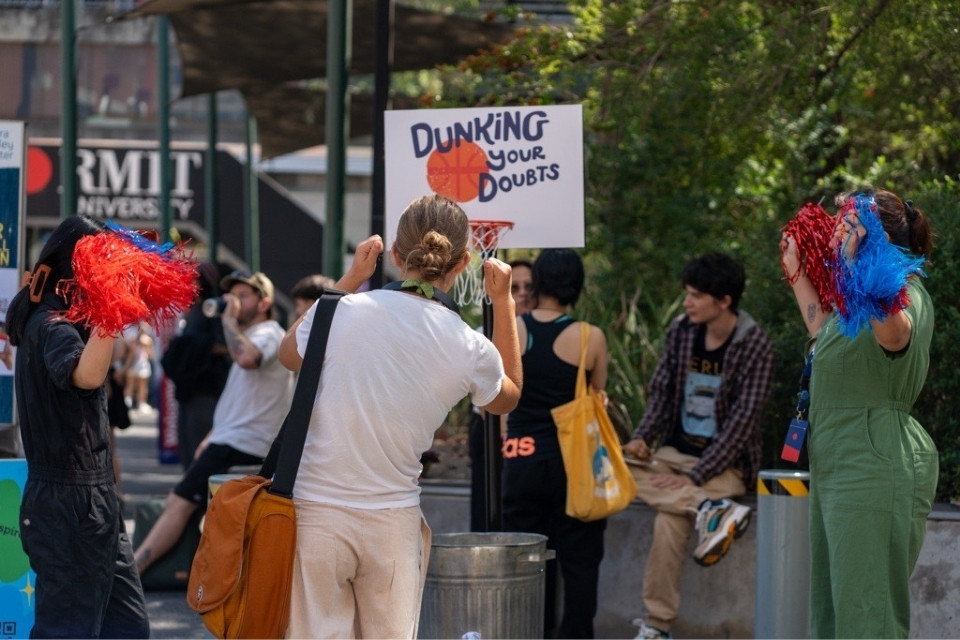
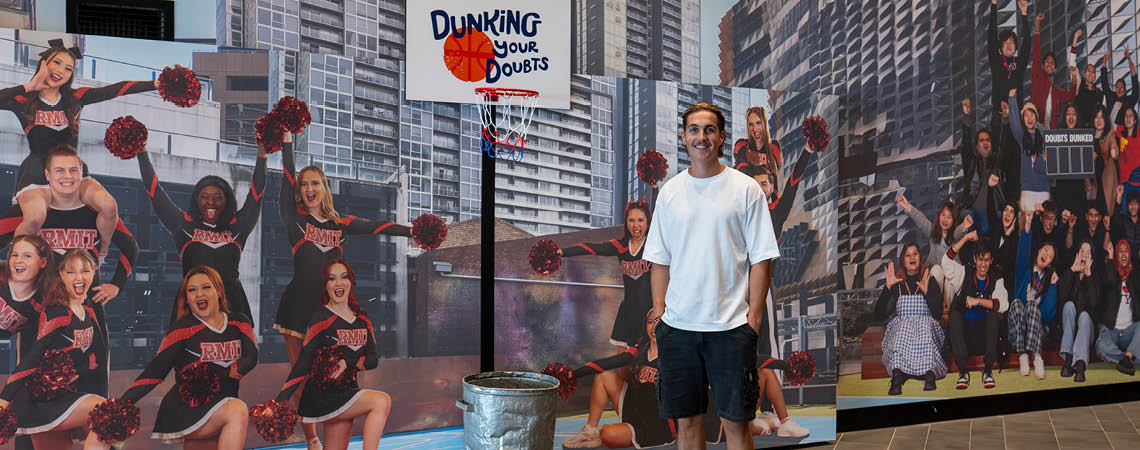
We all have doubts from time to time – that inner critic who never seems satisfied. While self-reflection can help us develop skills and become better versions of ourselves, unchecked doubts can have a negative impact on our wellbeing. Dunking Your Doubts invited RMIT students to exorcise any negative thoughts, worries or doubts by writing them down on a piece of paper, scrunch up that paper and dunking it through the basketball hoop and straight into the bin where they belong! Take that, inner critic!
"I drew on my love of sports and fitness to develop a public artwork with a powerful wellbeing technique to help RMIT Students take better care of our mental health. As one of the “sporty boys”, I know this is a demographic that often struggles to take care of or talk about our mental health. Even though there is science to show it works, doing something like journalling can feel a bit out of our comfort zone so framing that by dunking your doubts into a basketball hoop makes this wellbeing technique feel a lot more fun. After all dunking is the most powerful thing you can do in basketball."
Artist: Joshua Sullivan (he/him), Bachelor of Business, majoring in Economics and Finance
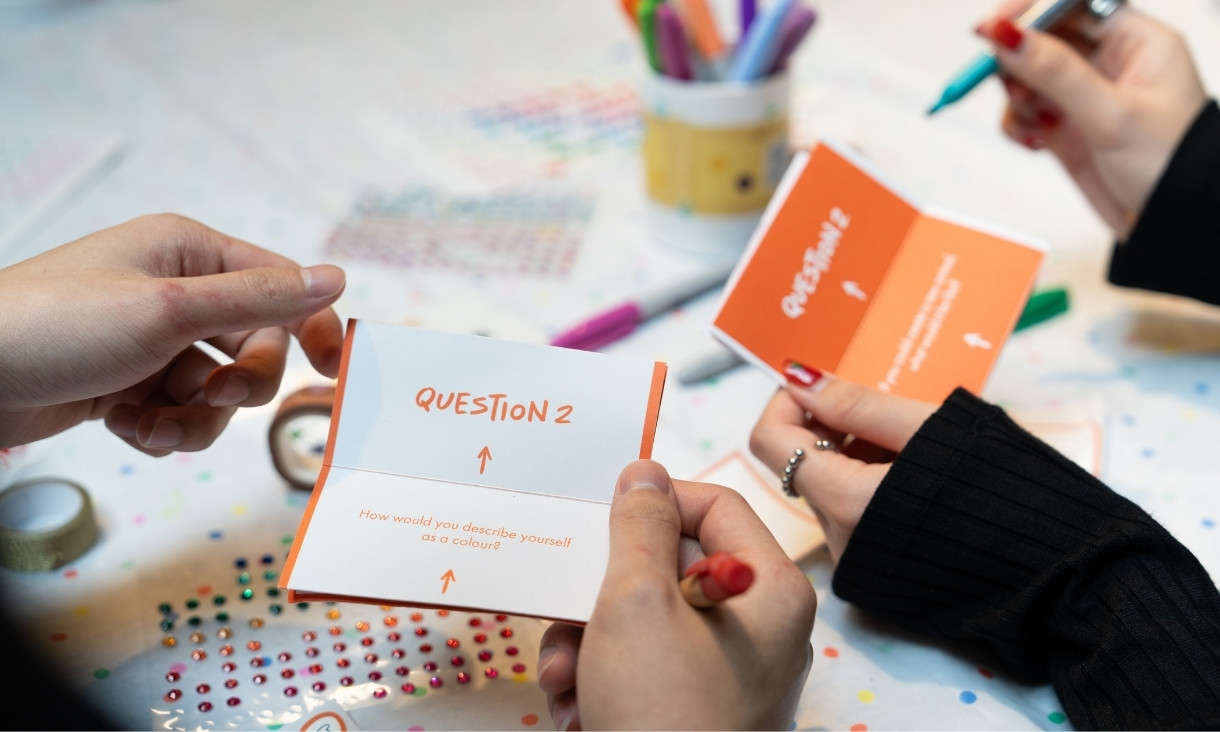
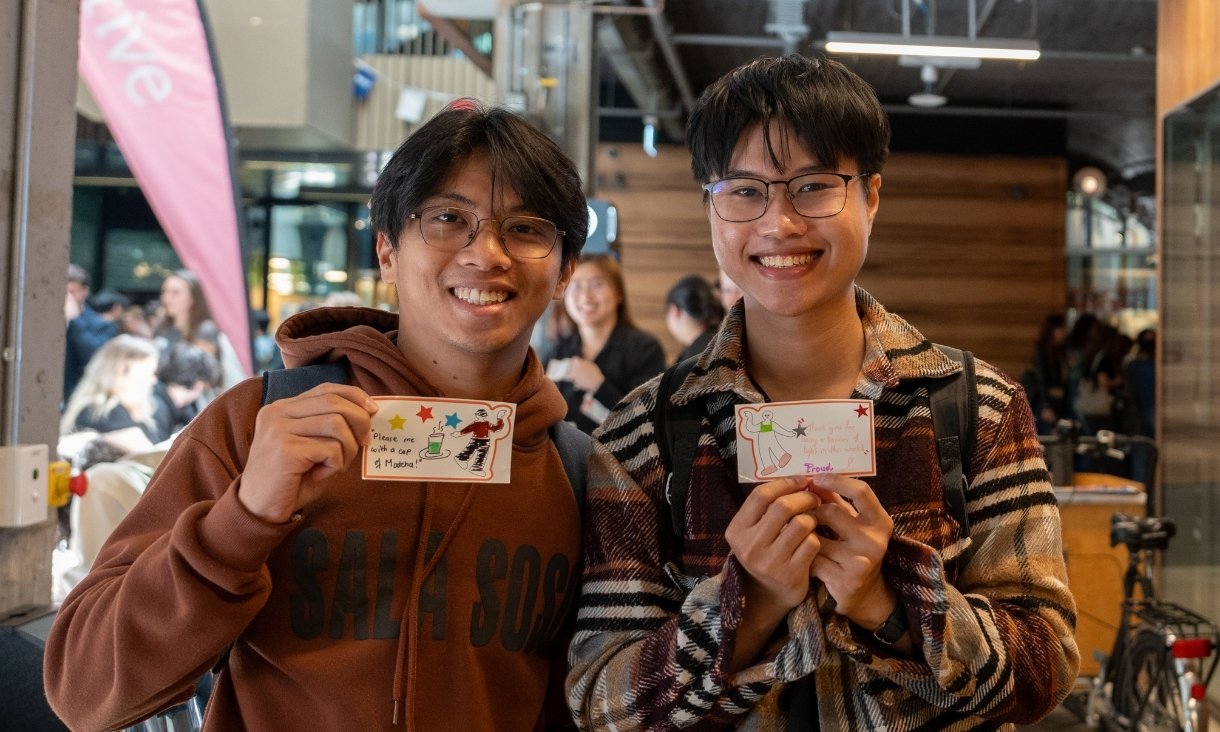
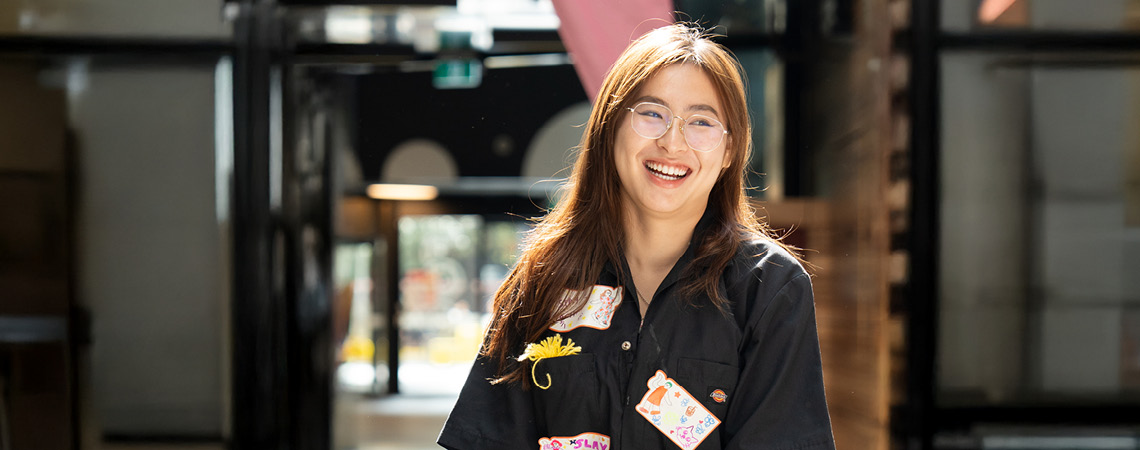
Sticking Together is a participatory art experience that uses the act of personalising and gifting stickers as an adhesive to cement new friendships.
Popping up at events across campus including Orientation welcome events and the Creative Long Table Sessions, Sticking Together invites students to meet a new friend, ask each other some playful ice breaker questions in the Sticking Together booklet and then make a unique gift for their new friend using the sticker template and abundance of creative materials. This act of connection and giving turns new acquaintances into firm friends.
“Friendship is a gift in itself - that's the essence of Sticking Together. Gifting is truly important to me, and I want to share the power of gifting to our student community, especially to those who are new to RMIT and looking to make new friends. With a background in Communication Design, I used cute little stickers as a tool to strengthen friendships and explore creativity in each student. And the gift for me as a creator is seeing beautiful connections formed through my project!”
Artist: Ngoc Khanh Truong (Marvis) (she/her), Bachelor of Design (Communication Design)
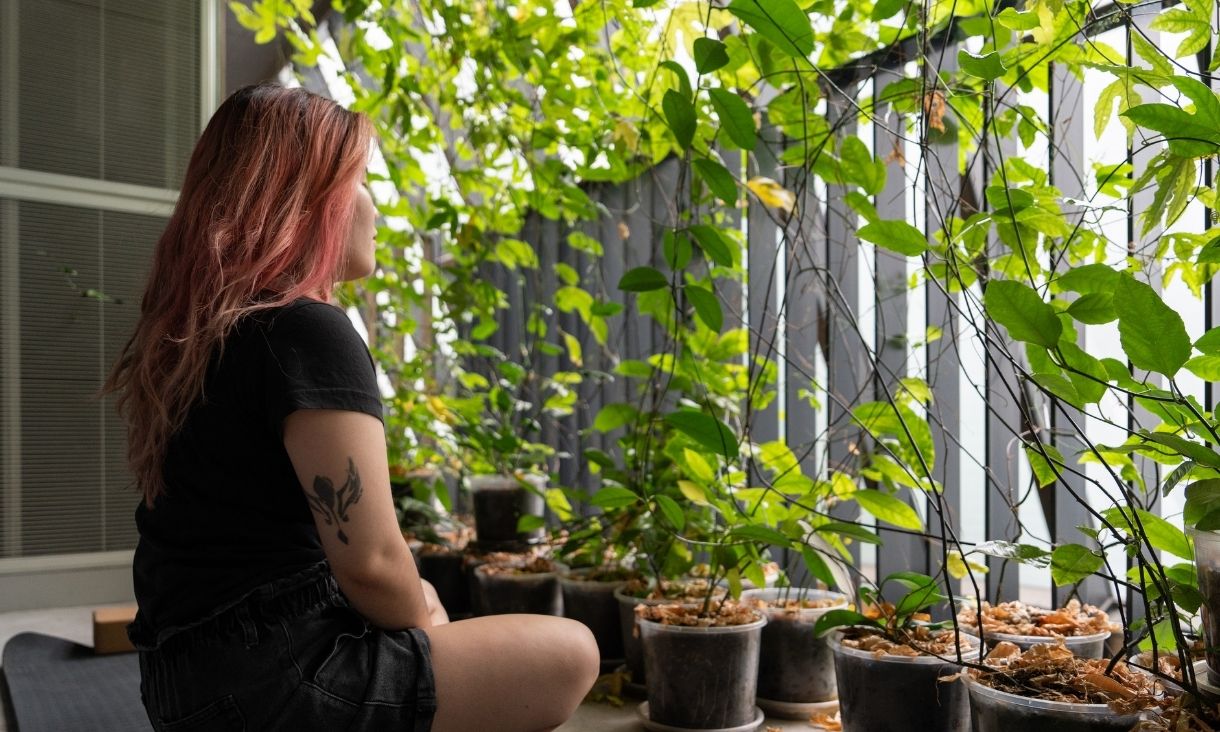
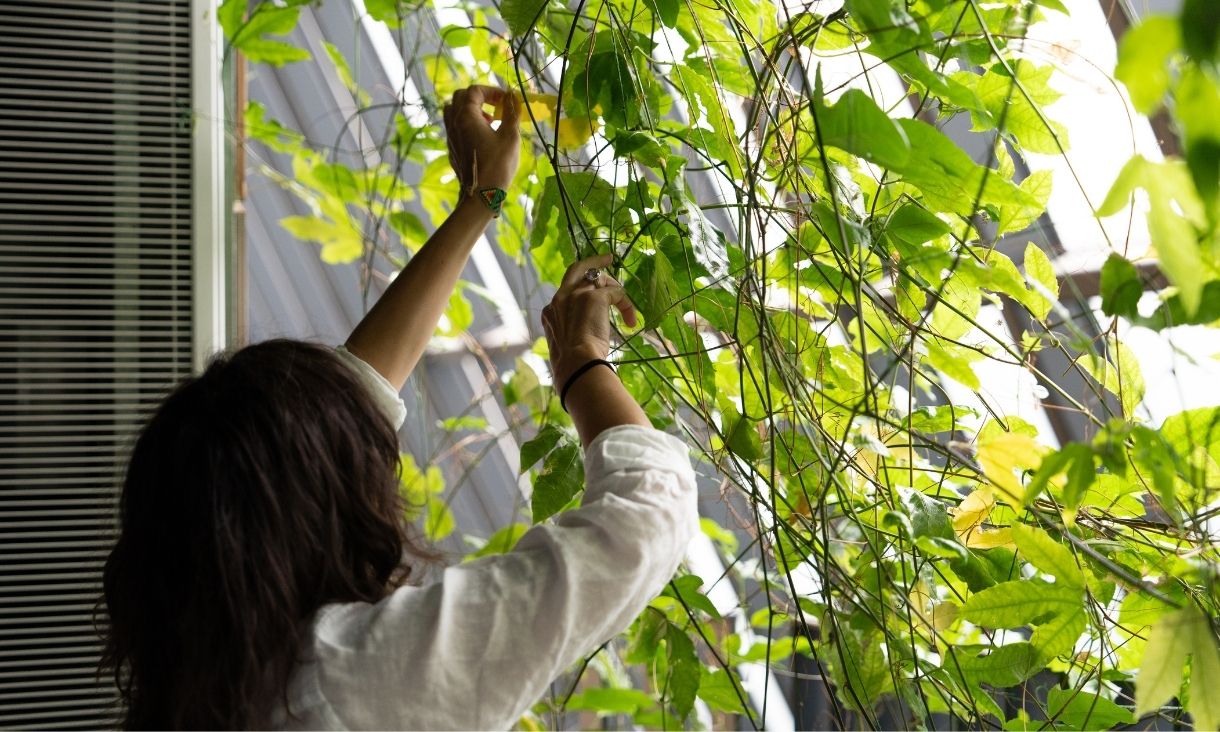
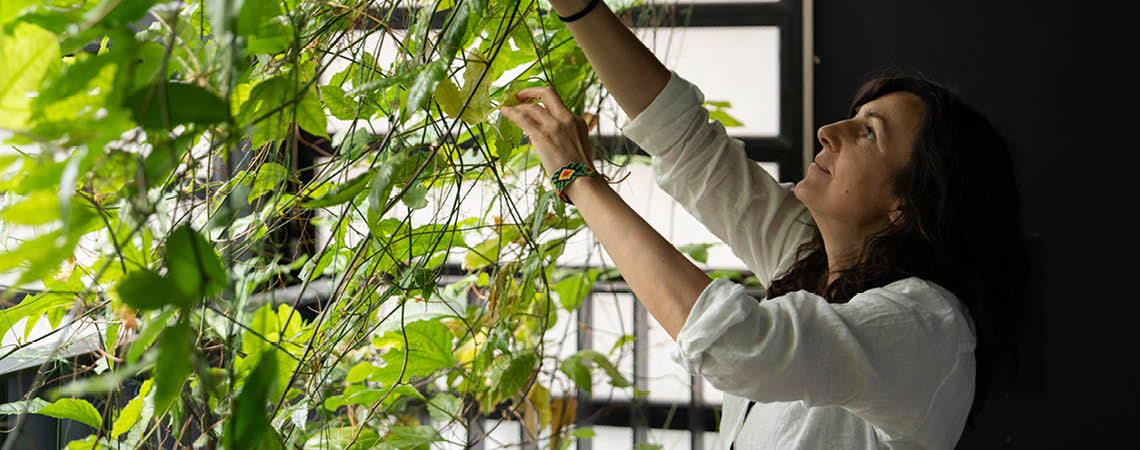
This project started when Nataša Čordašić was invited to participate in the Posthuman Lecture Theatre Hack and decided to grow passionfruit plants on the balcony/fire exit of the Lecture Theatre in question. Nataša chose this spot because it was sunny and close to the kitchen/water source. Without expectation but with openness, Nataša tended to the plants, visiting them every few days. As they grew, more and more people were drawn to the balcony seeking a moment of peace and respite with the non-human residents on the balcony.
“Life makes sense when I have a relationship with everything around me. I sense my purpose, I have direction, all because I am conscious of being a part of the whole. I feel in union with all that is around me. The plants and I are stronger together,” Nataša says of her co-artists the passion vines. “We invite you to have a break and to open yourself up to the liminal space that we have created. You are not alone - there are more than one hundred passionfruit plants here with you. Can you feel the spaces between them and the spaces that you share together?”
Artist: Nataša Čordašić (she/her), PhD (Art)
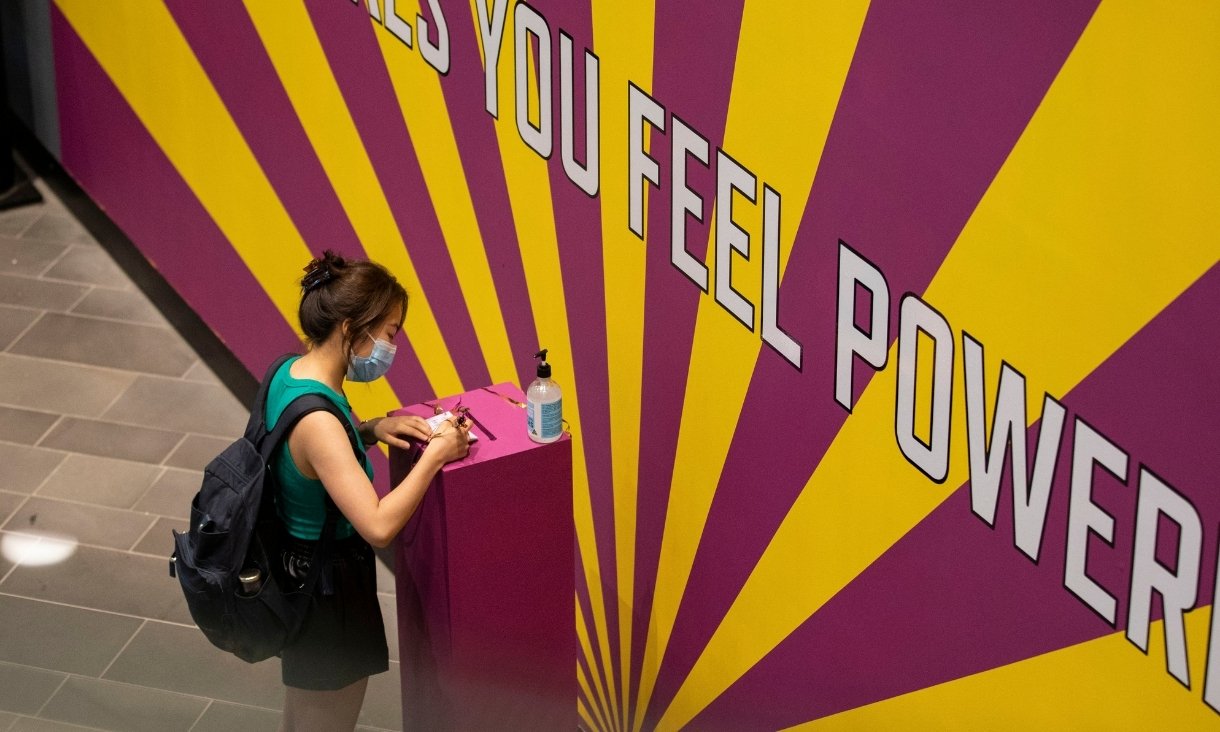
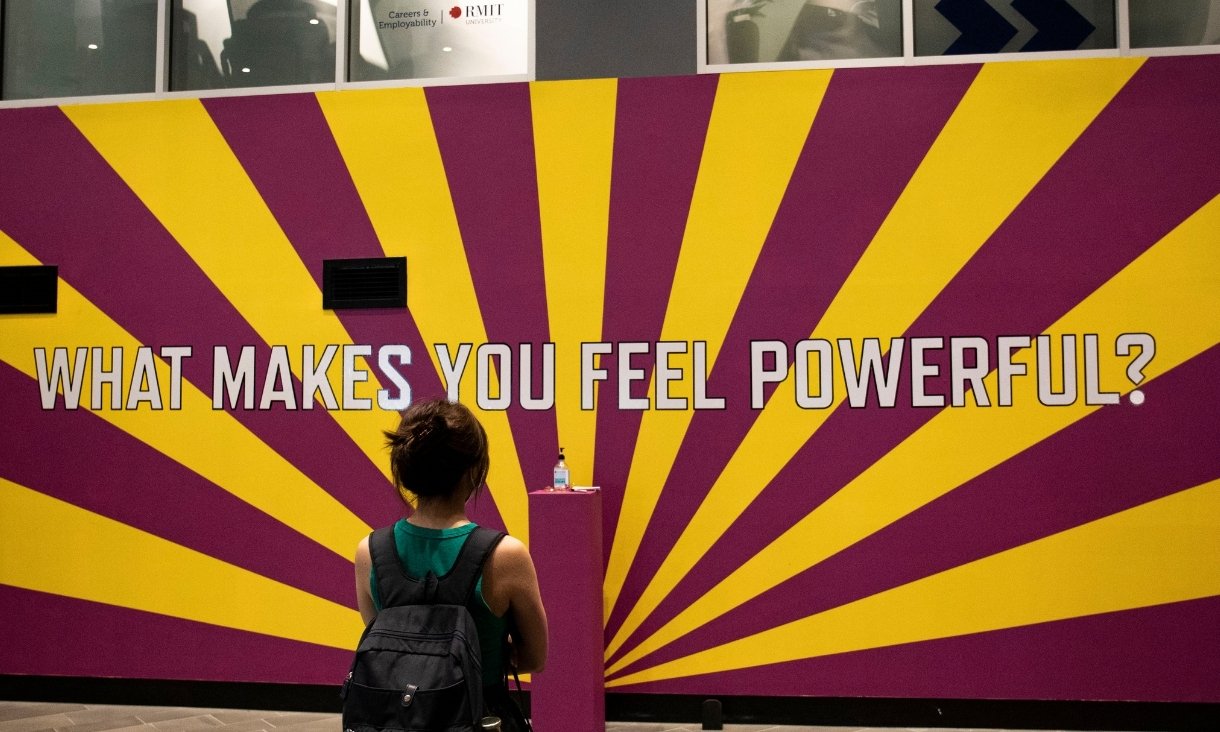
What makes you feel powerful? is a thought provoking and incredibly complex question. This public artwork, inspired by Foucult’s conceptualisation of “knowledge is power”, created a space for students to explore their own self-defined power and reflect on their relationship to power. Students were invited to join the conversation by sharing their thoughts in the response box and via the social media campaign.
Artist: Abby Gray, Bachelor of Arts (Photography)
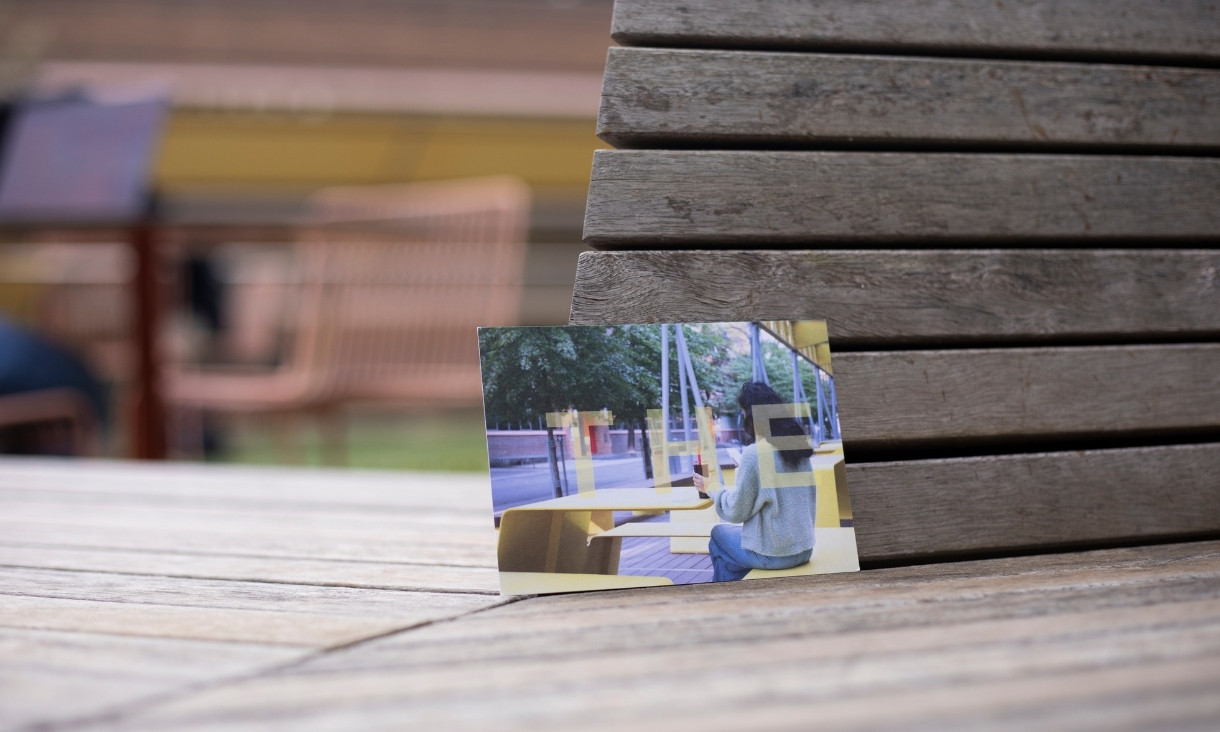
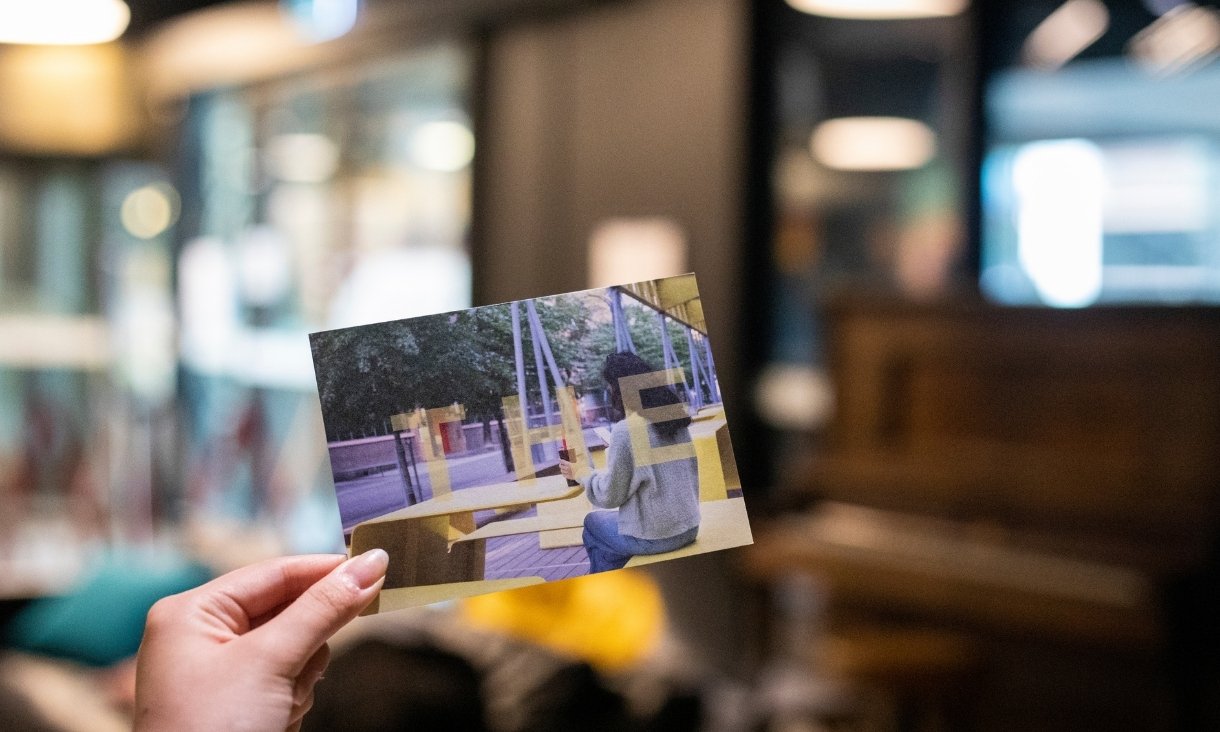
The university is not only about physical buildings, but the experiences we have in these spaces. Message to the Future consisted of six different postcard designs, distributed at various locations around campus. Each postcard featured a different RMIT student’s anecdote in a specific place on campus. The act of passing on and sharing memories with new students offered new students a warm welcome and personal insights into the culture and community of RMIT. Message to the Future viewed the campus as an accumulation of memories. Students who found a postcard were invited to become part of making new memories.
Artist: Chandini Lee, Bachelor of Architectural Design
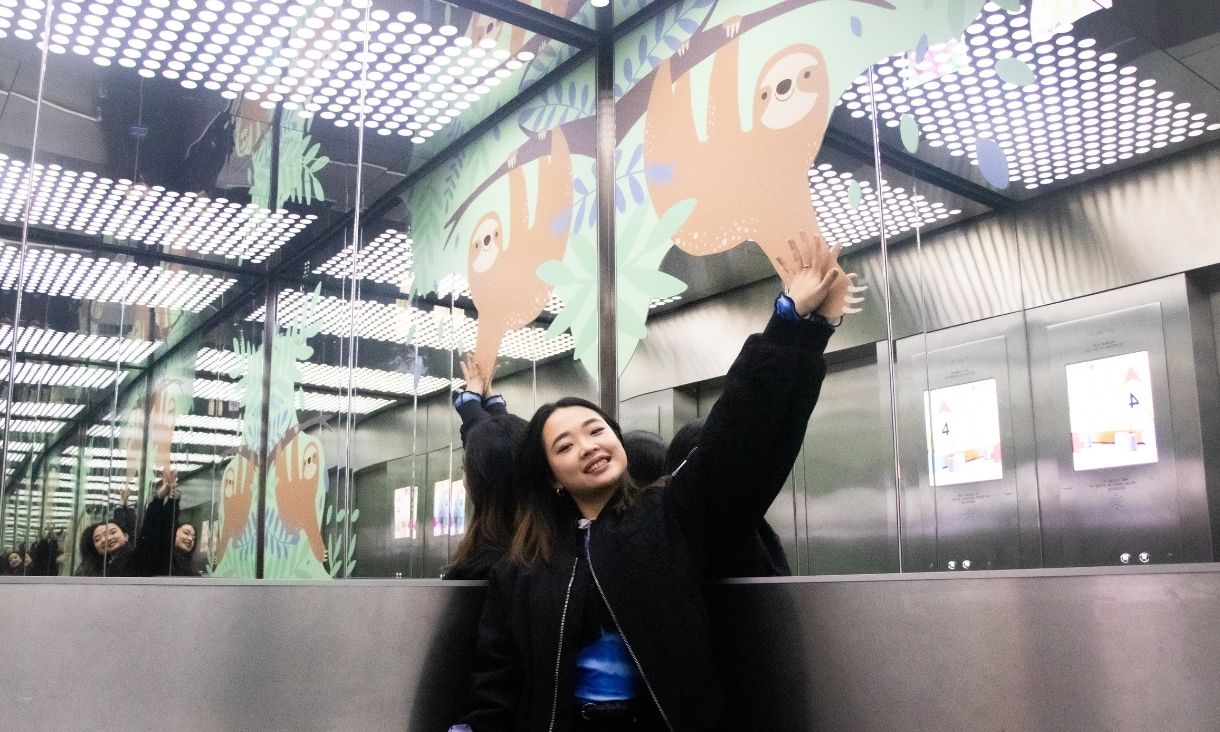
Pass the Joy was an interactive experience using two-dimensional illustrations on mirrors to create a three-dimensional effect. The work offered students a moment of joy and happiness as they returned to campus. Student artist Danqing Huang created each illustration to invite interaction and immersion in its atmosphere.
Artist: Danqing Huang (Zoe), Bachelor of Design (Communication Design)
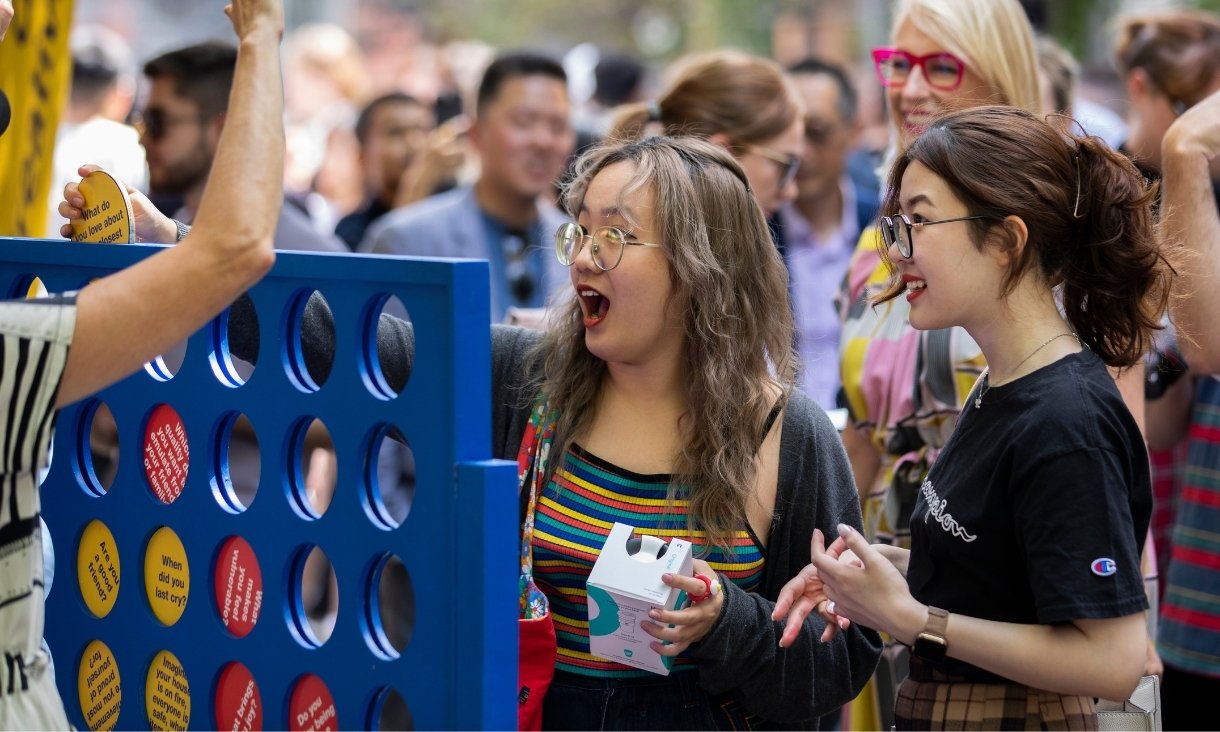
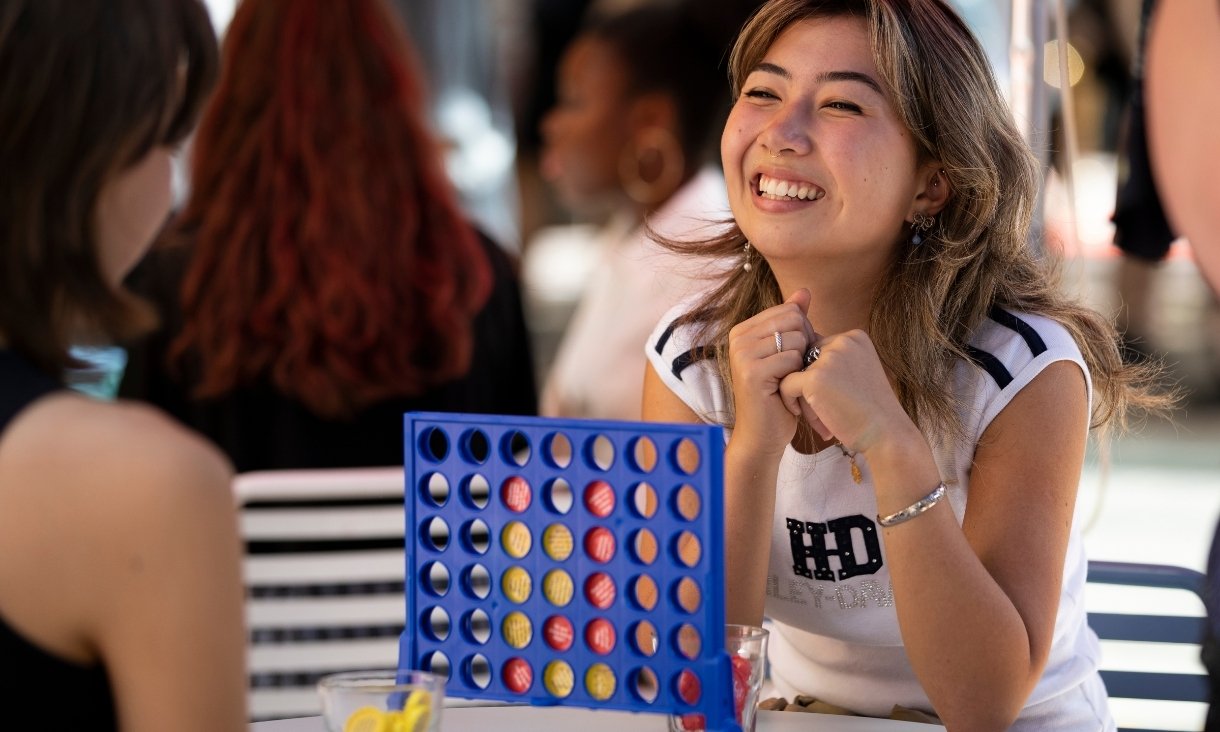
Orientation. Meeting new people. Conversations. These can be overwhelming and daunting. Yet, it’s how new friendships begin. ConnectUs is a bespoke game made using Connect4 as a template with conversation prompts added to each of the tokens. The conversation prompts have been carefully designed by the student artist using psychologists research into forming meaningful human connections. Students are invited to use the game to connect with others in a fun and playful way.
Artist: Jade Armstrong, Bachelor of Fine Art (Sculpture)
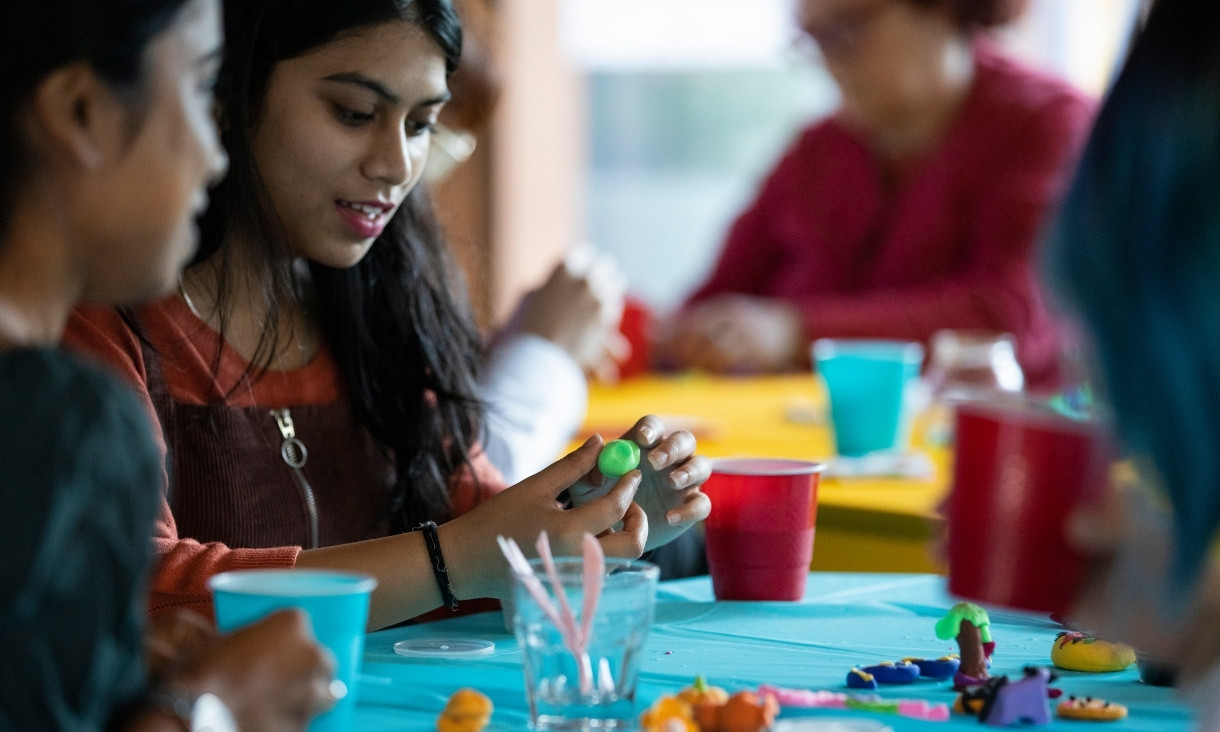
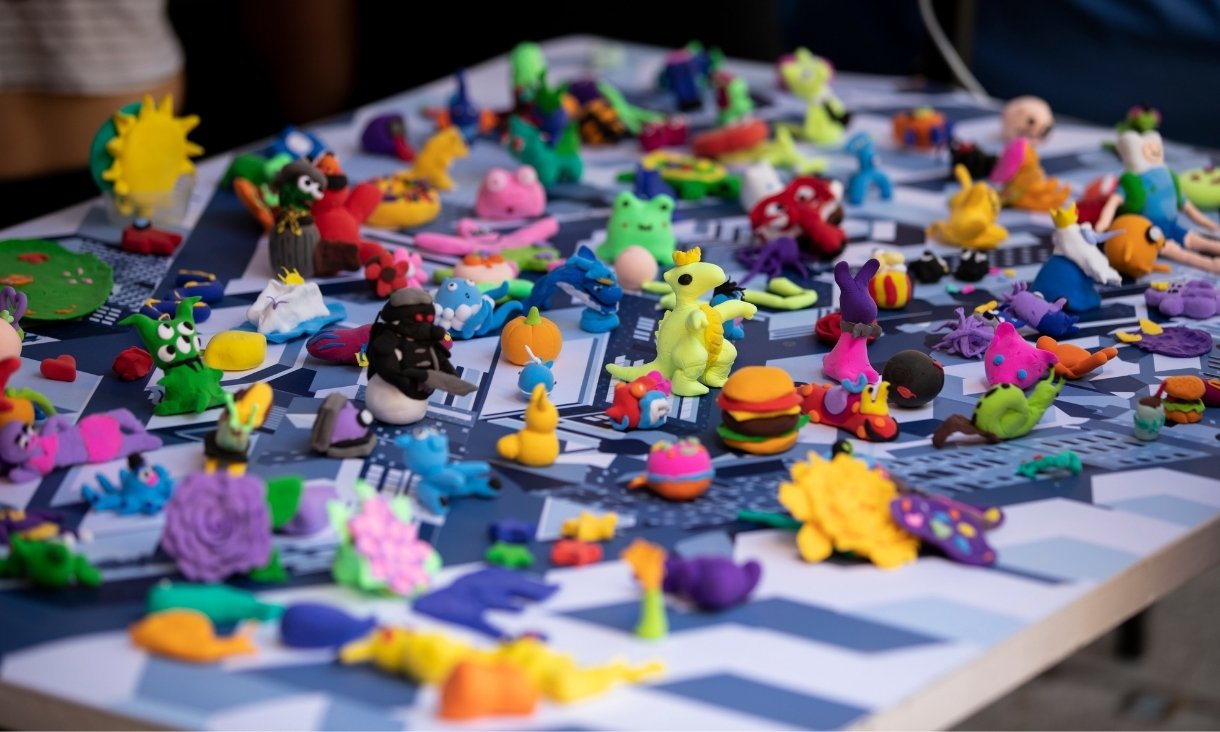
Clay Play invites students to sculpt colourful therapy clay into a form that resonates with them and then place their clay avatar on a map of RMIT City campus as a joyful and performative act of claiming space and belonging. A looping time lapse video of all the colourful clay avatars filling up the campus map was projected on screens around campus.
Artist: Jessica Dybing, Bachelor of Fine Arts (Ceramics)
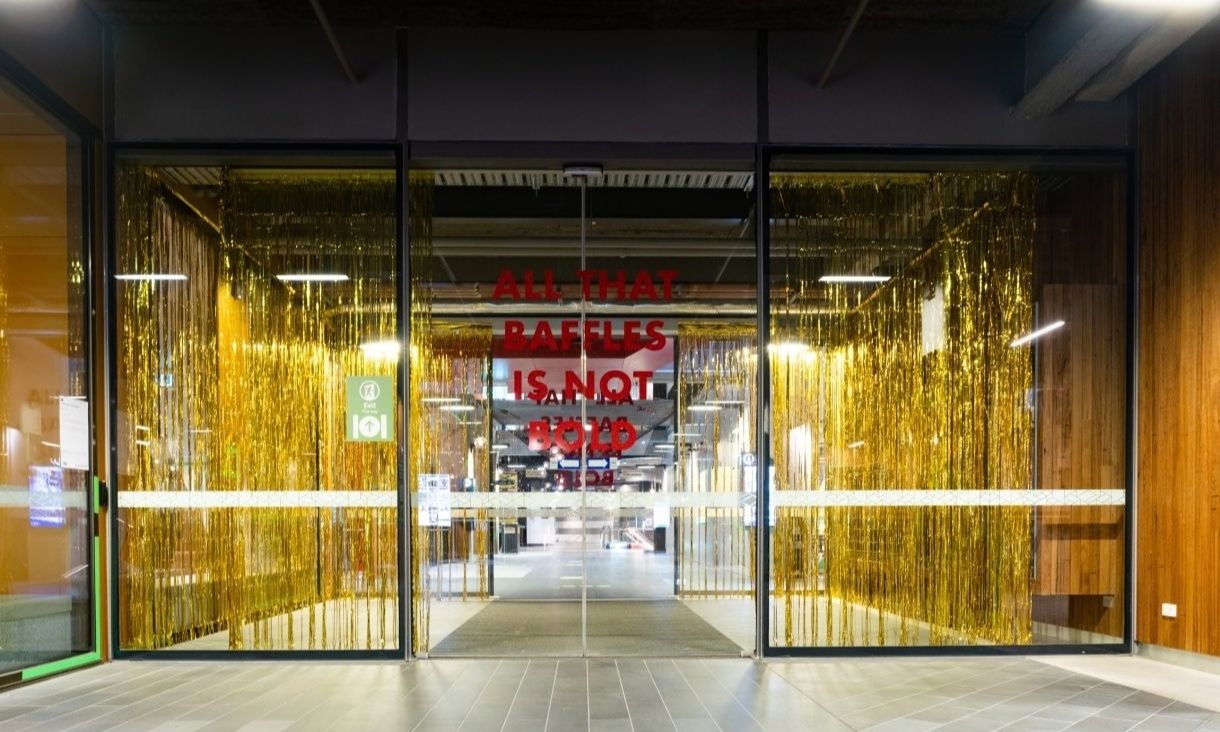
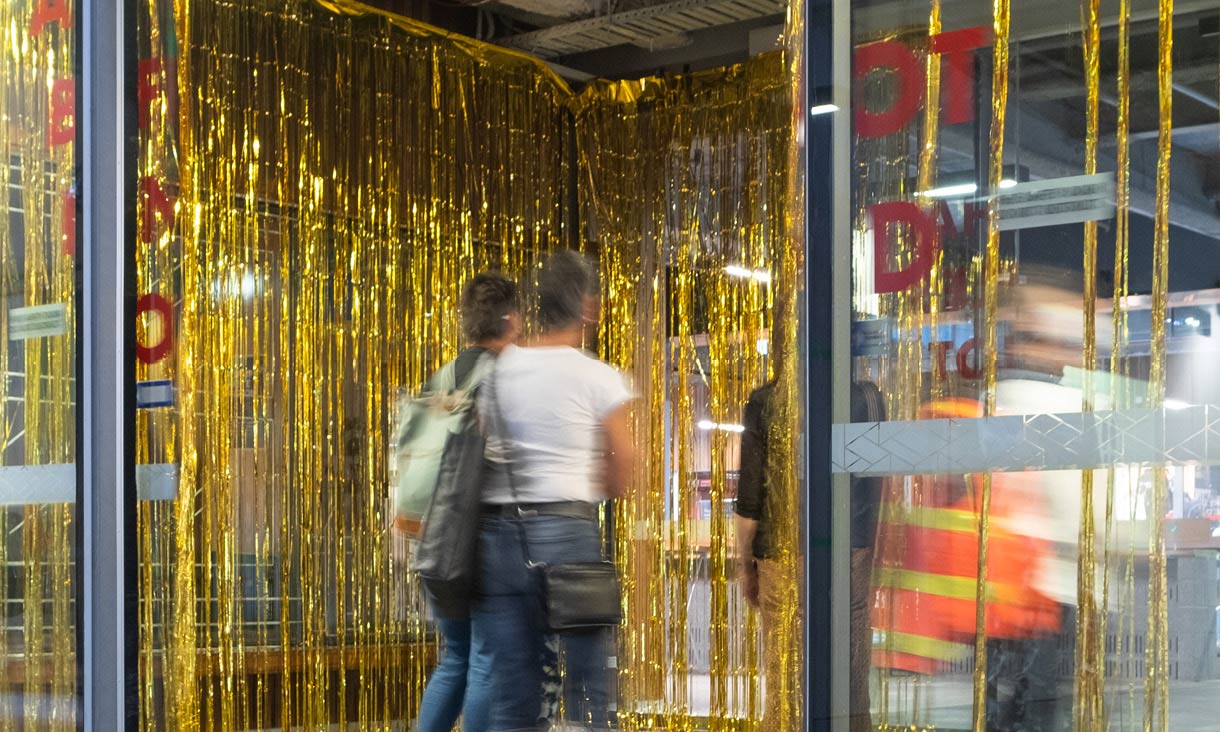
All that glitters is not gold
All that baffles is not bold
All That Baffles Is Not Bold by student artist Celeste Perry created a glittering immersive golden space that subtly questioned the value of academic language. Is it unnecessarily esoteric and inaccessible? How does it include or exclude, especially students whose first language may not be English? Celeste Perry observed that while Australian universities have built their reputation on being progressive and their business model around international students, the choice of language used by many academics often confounds and stunts student progress.
Artist: Celeste Perry, Bachelor of Fine Arts (Drawing)
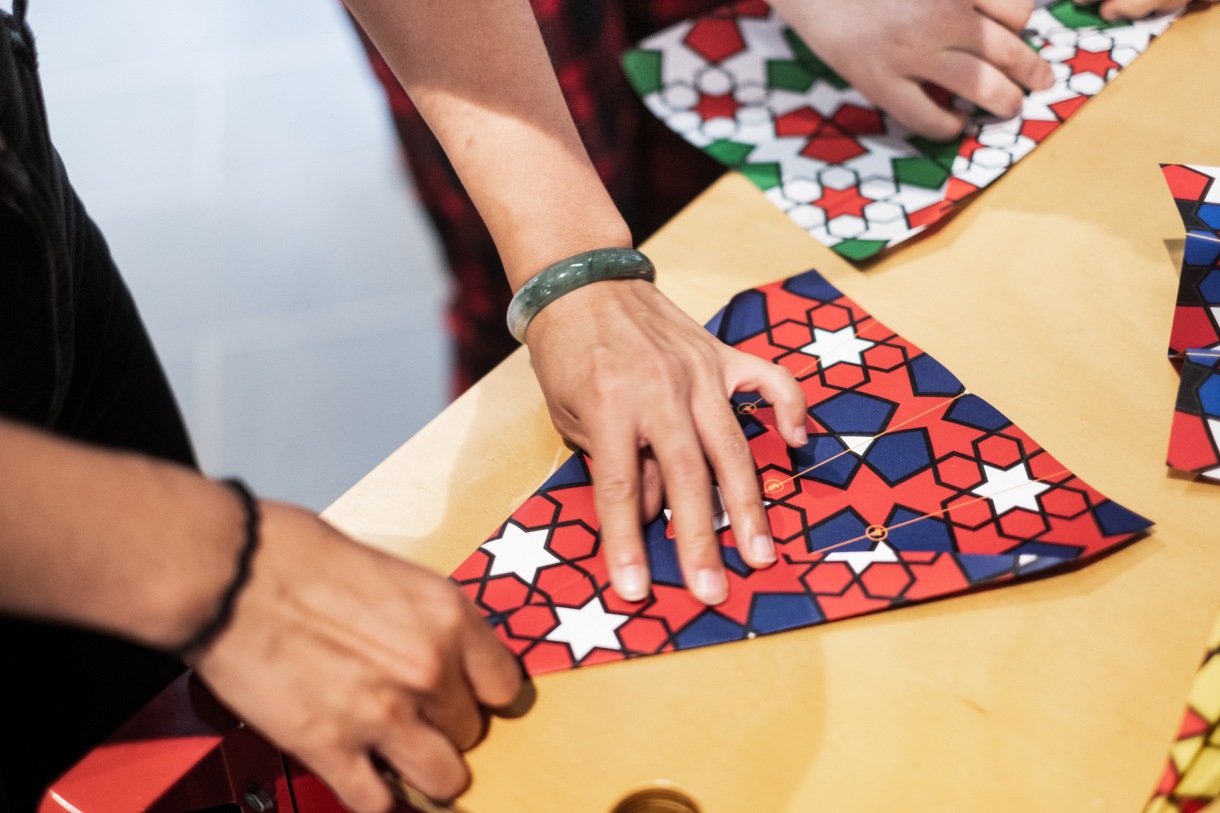
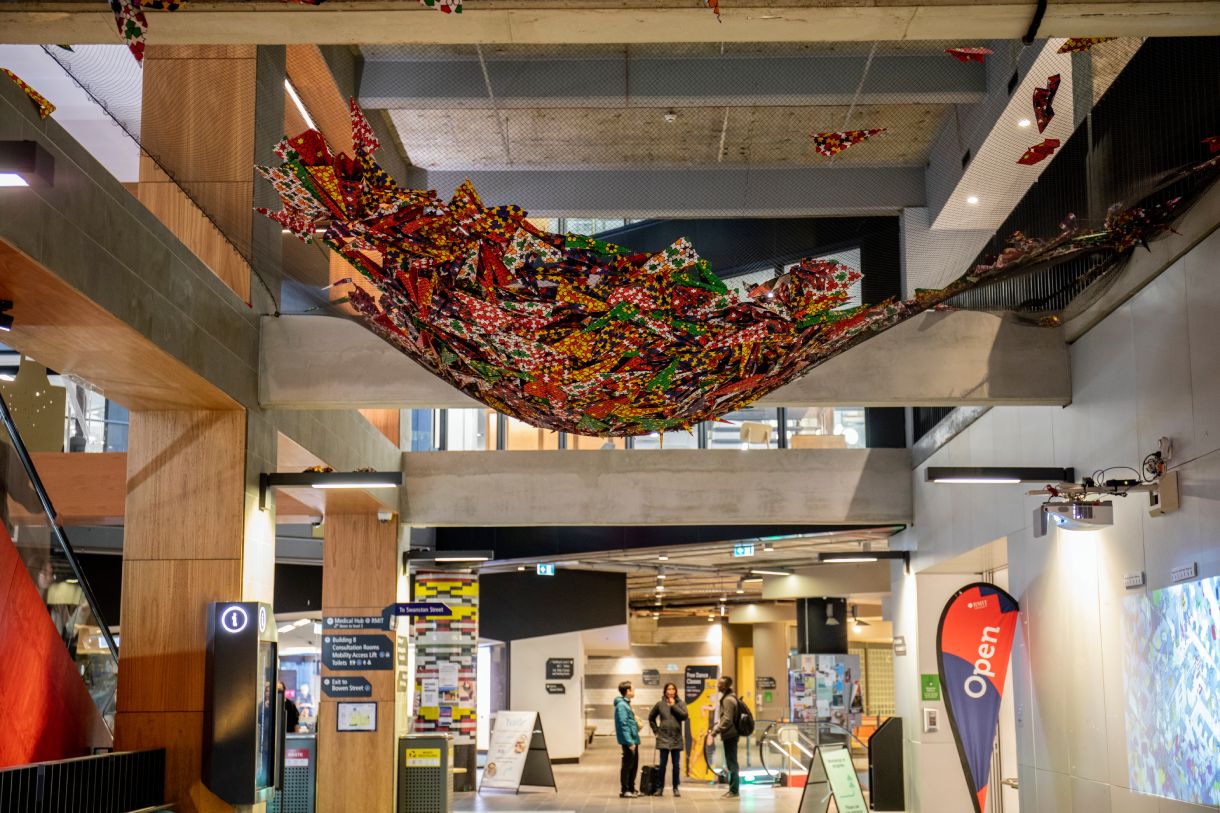
Inspired by Elaheh’s personal journey, Paper Planes represented the complex emotions international students experience when they leave home to commence their studies at RMIT. Students were invited to select a paper plane pattern that reflects their country’s colours or simply resonates for them. After folding their paper plane, they ride up the escalator and launch their plane into the net hanging over New Academic Street to land safely and securely with all the other planes of different colours and origins. This artwork was a meaningful participatory metaphor celebrating cultural diversity though a shared experience.
Artist: Elaheh Momeninejad, Bachelor of Architectural Design
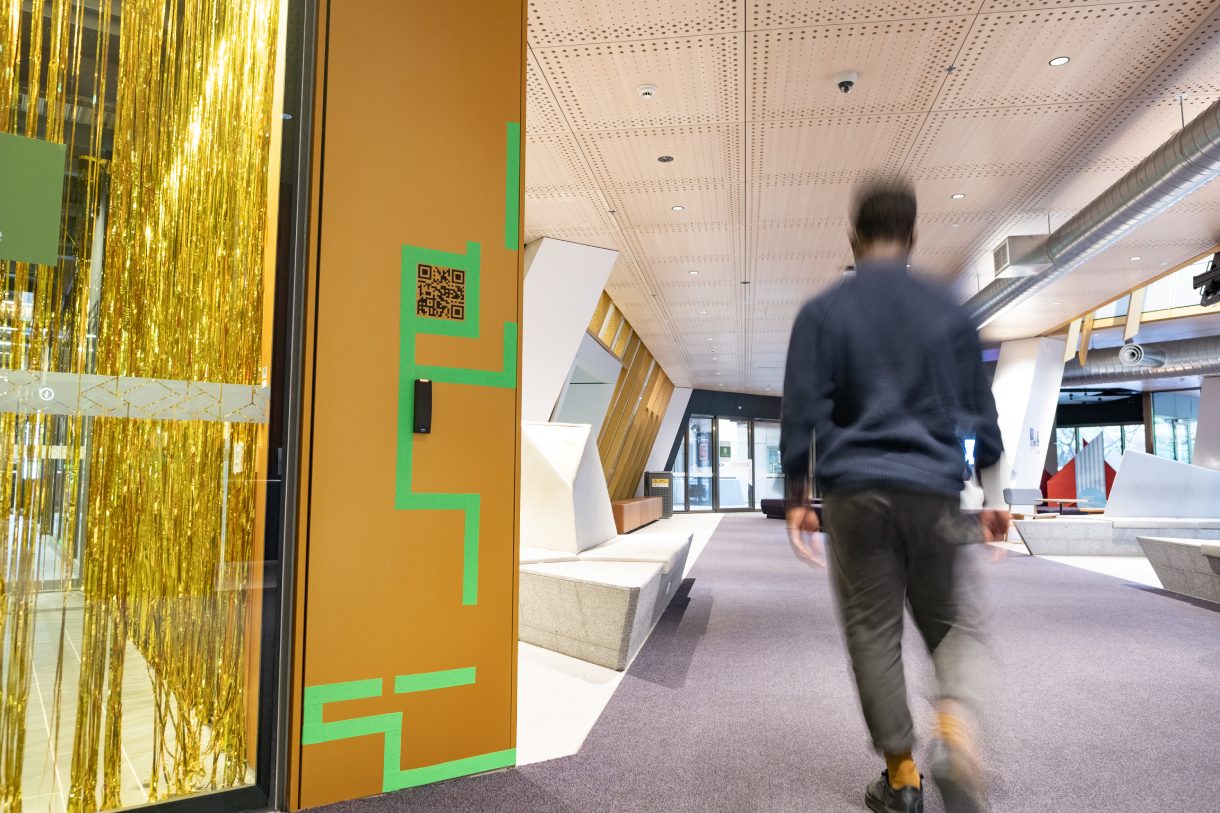
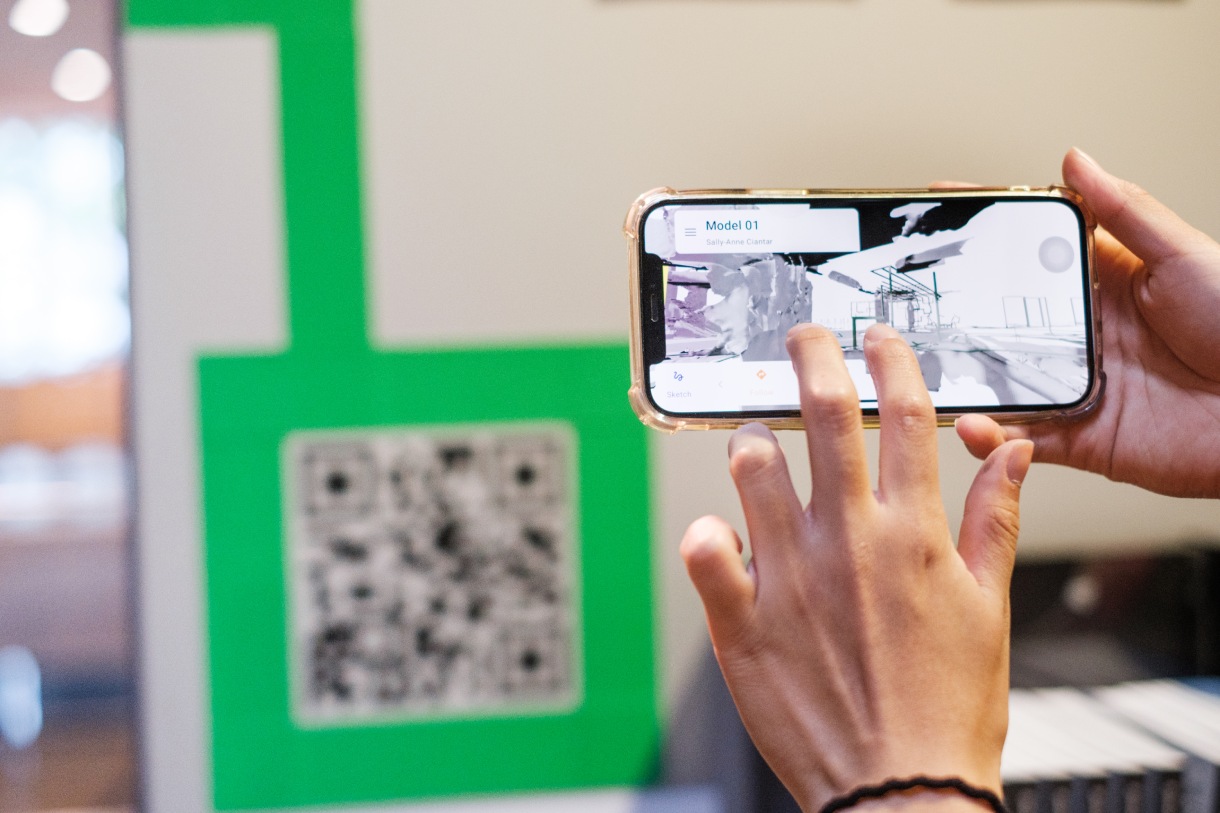
Referencing the iconic line from the film Ghostbusters, Crossing the Streams by student artist Sally-Anne Ciantar was an interactive mobile-media work exploring the space between the campus and virtual student experience. Inspired by Richard Greene’s work on 'Invisible Universities' and the COVID19 pandemic, Crossing the Streams speculated how future students might interact with the physical RMIT campus if courses were primarily learnt from home.
Greenscreen chromakey lines were installed playfully engaging with the existing architecture of New Academic Street and linking to a virtual campus with the same green lines throughout, inviting curiosity and exploration both online and on campus.
Artist: Sally-Anne Ciantar, Bachelor of Architectural Design
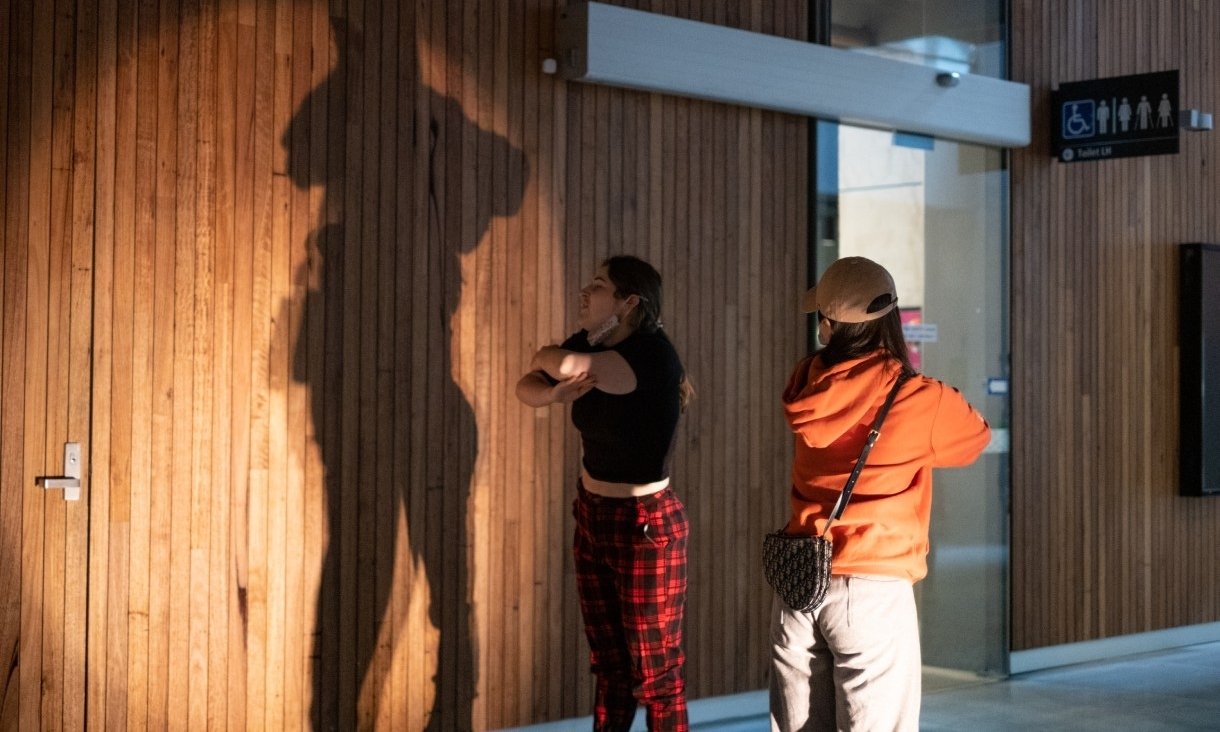
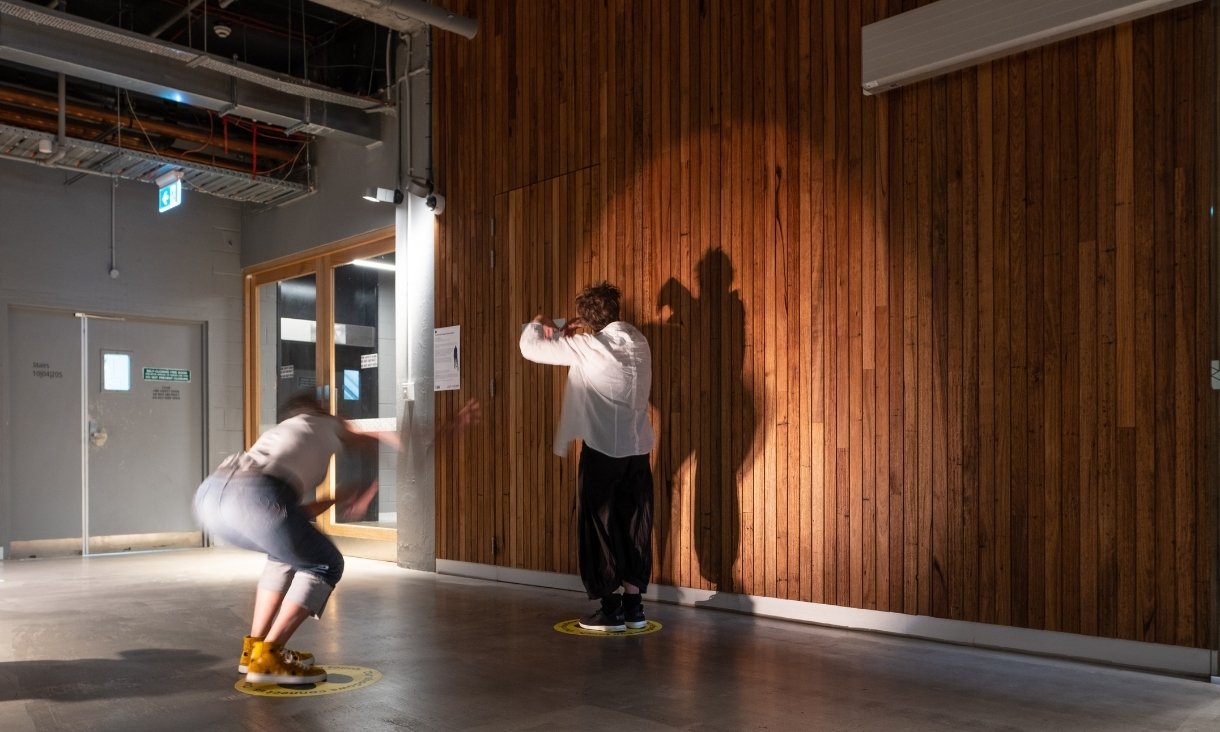
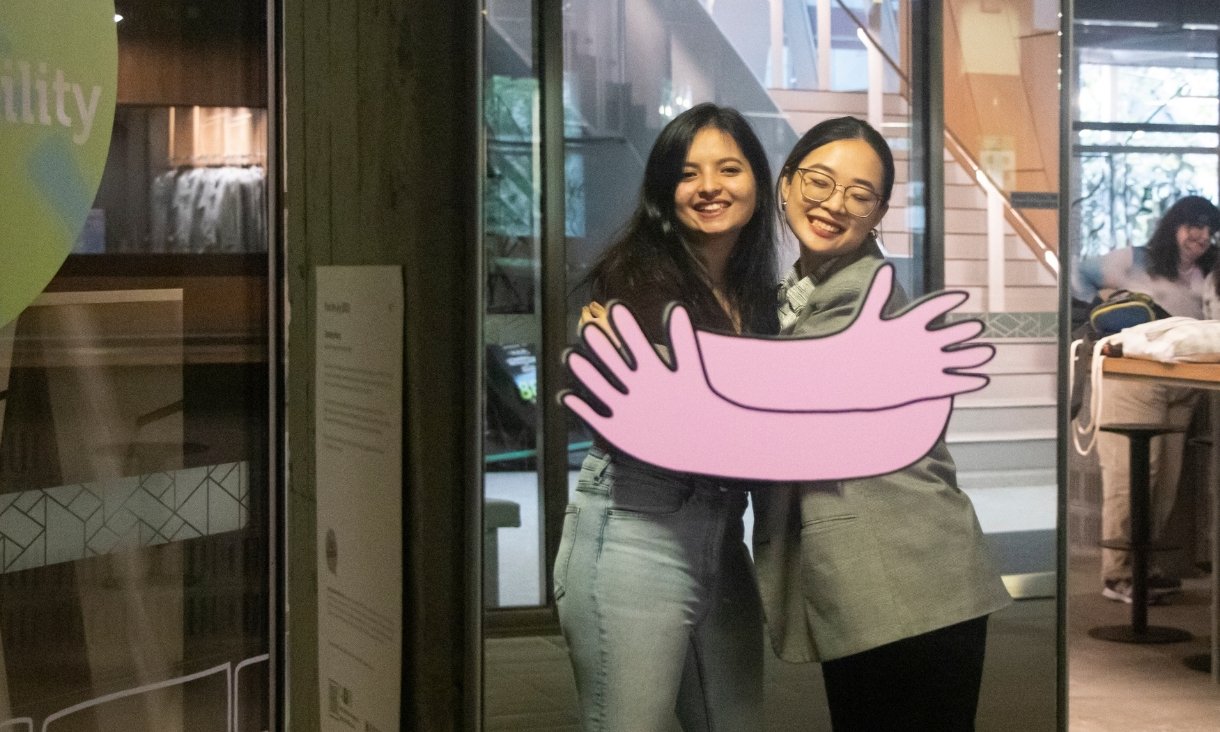
During the COVID19 pandemic, calls to mental health helplines in Victoria increased up to 60%* with many students carrying these challenges with them as an intangible, hidden shadow in their daily lives. Early advice about COVID19 encouraged people to stay safe by remaining 1.5metres from other humans. Student artist Yara Ueltschi reflected on what this means for serotonin-boosting practices like hugging friends. Connected Through Shadows sought to bring mental health out of the shadows shining a light on this important conversation. Connected Through Shadows invites friends to position themselves at the safe 1.5m distance from each other using the floor markers. A carefully angled light then cast shadows on the wall behind so that while the humans were socially distanced, their shadows appeared to embrace.
*Source: The Guardian, ‘Calls to mental health services in Victoria double as strain of Covid-19 lockdown shows’
Artist: Yara Ueltschi, Bachelor of Arts (Fine Arts) (Honours)
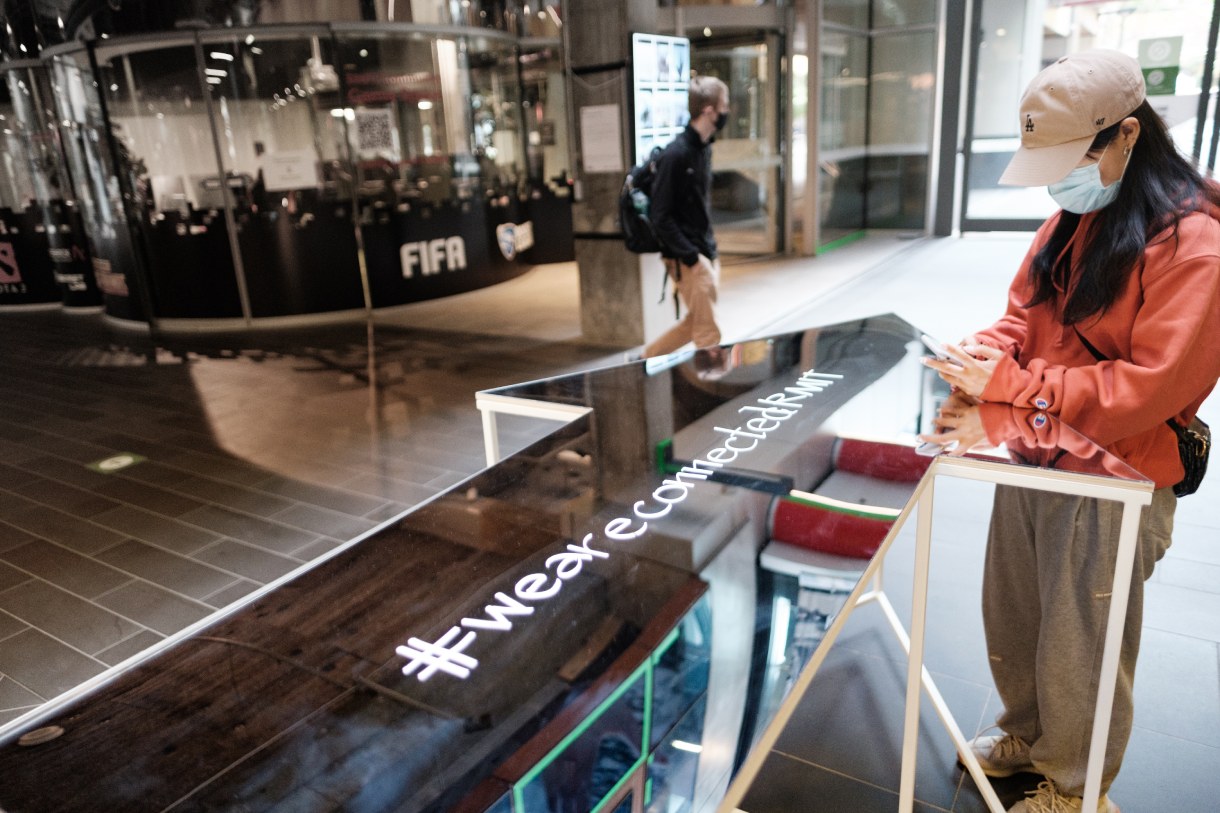
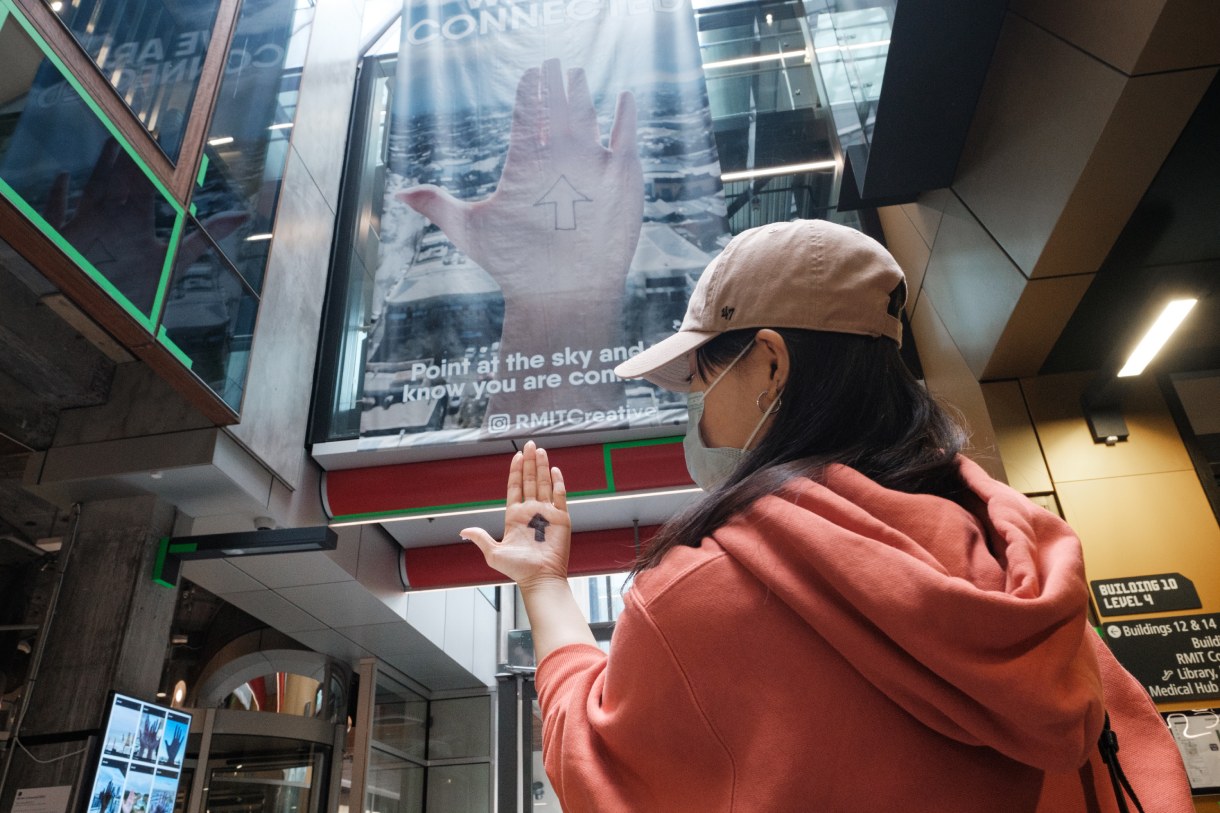
The sky connects all of us.
This social-media based work invited RMIT Students to draw an arrow on their hand and point to the sky that we all share and are united beneath. Each image represents a piece of sky, a location, a person and a second. This work collected moments from all over the world and gathered them together to demonstrate that even during the COVID19 pandemic, when the RMIT student community was forced to stay home, often alone, We Are Connected.
Artist: Yoko Mengting Zou, Bachelor of Fine Arts (Gold and Silversmithing)
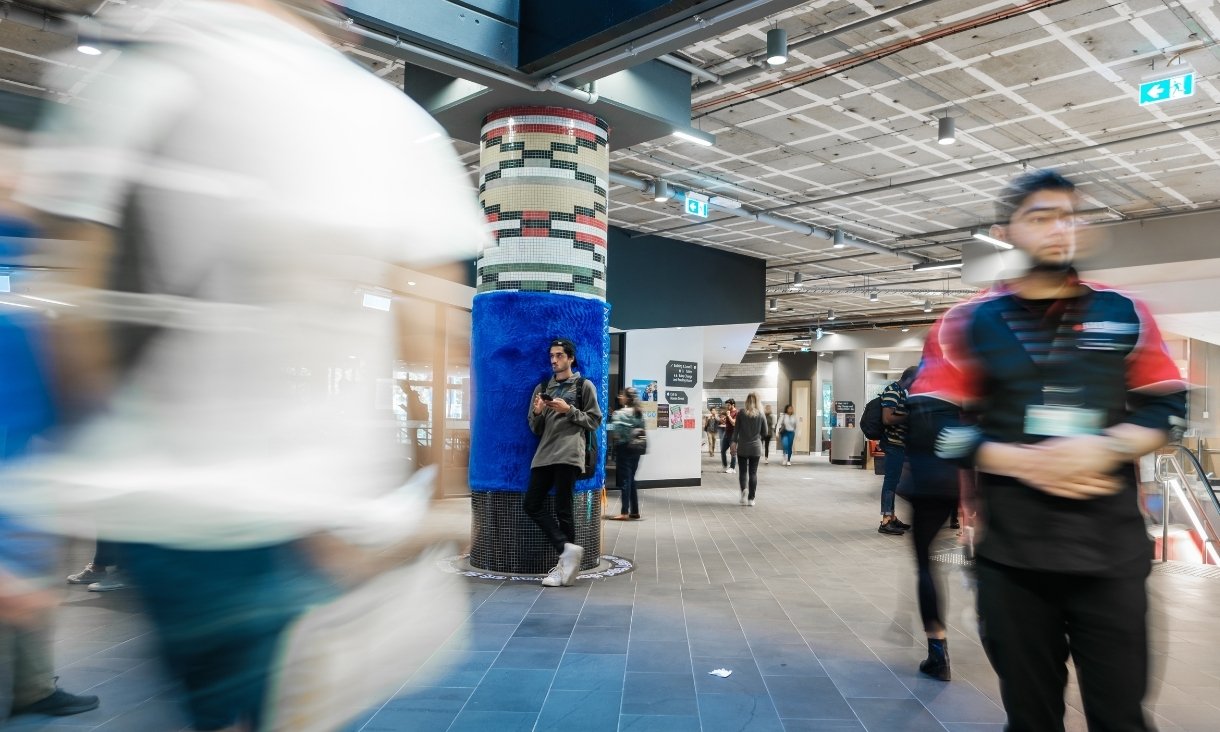
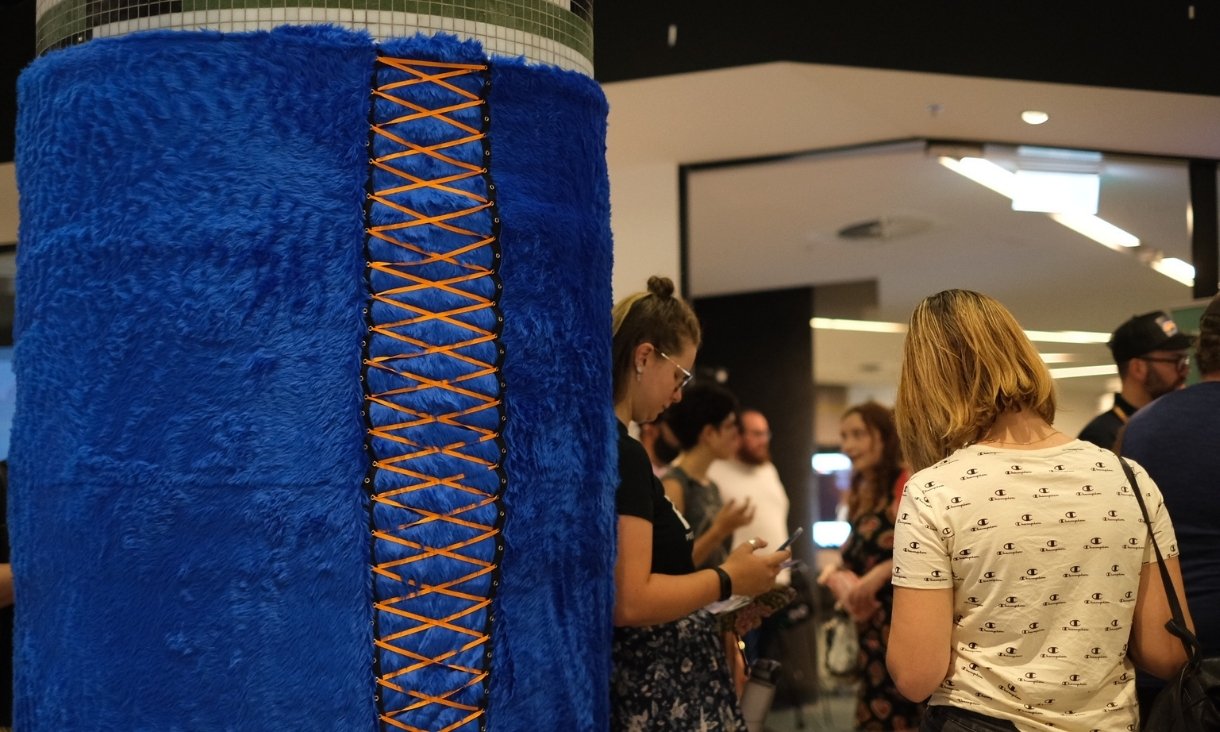
Covered in soft fluffy fabric and embedded with calming scents such as sage and lavender, Hug Pole by student artist Bobzii offered RMIT Students a soft sculptural space to lean, to embrace, to bury their face in if feeling overwhelmed. Hug Pole transformed one of the hard cold tiled pillars of New Academic Street into something soft, playful and friendly.
Artist: Bobzii, Bachelor of Fine Art (Painting)
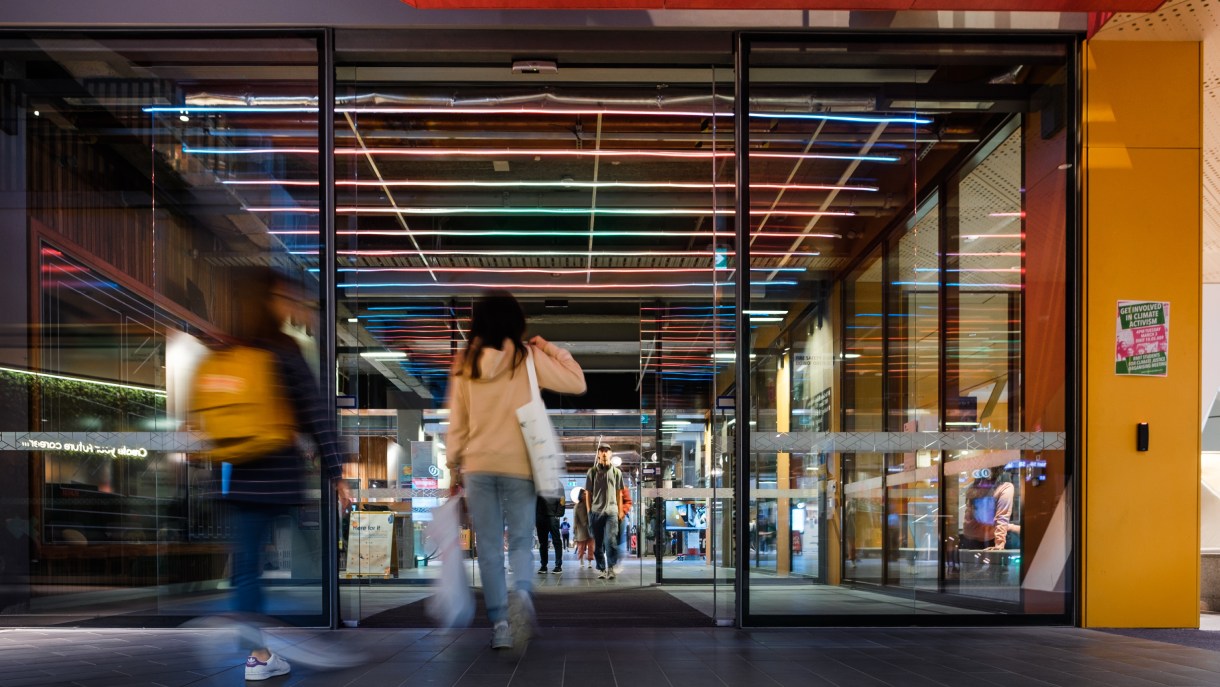
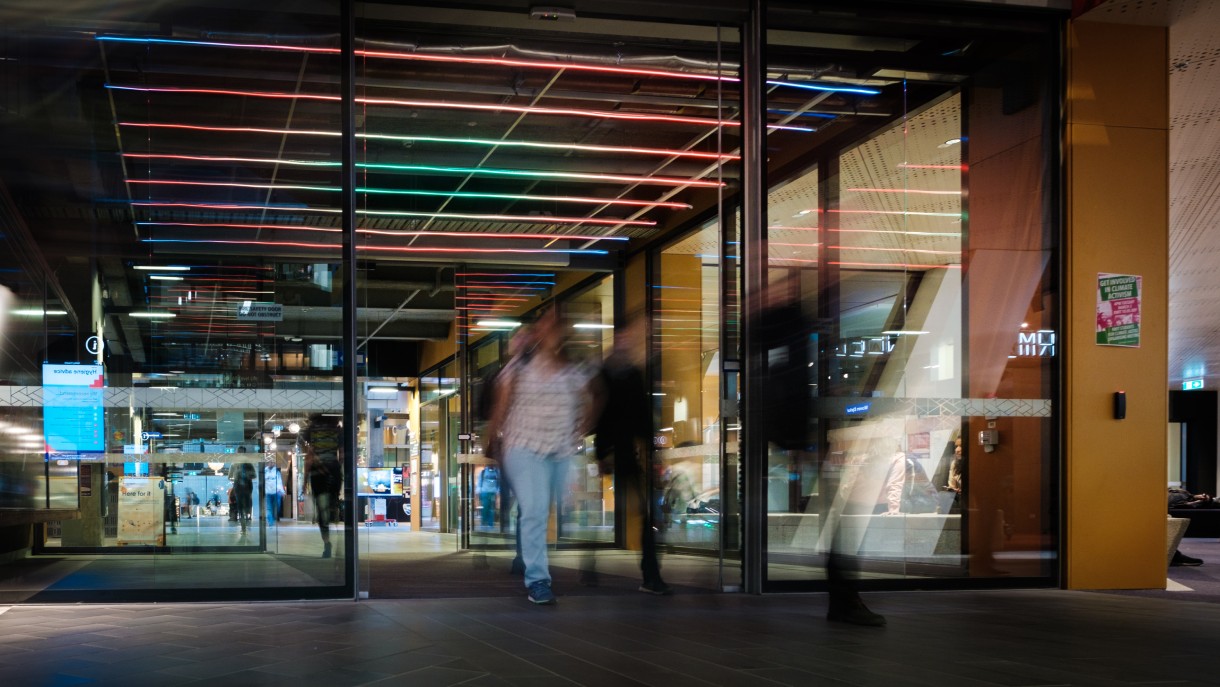
Student artist Chris Forwood’s work Gateway transformed the New Academic Street airlock into a futuristic portal using customisable LED lights. Gateway highlighted the significance of university as a transitional and transformative point in students’ lives. Whether it is professional work, academic study or personal growth, walking into the RMIT campus as a student represents change and development.
Artist: Chris Forwood, Bachelor of Design (Digital Media)
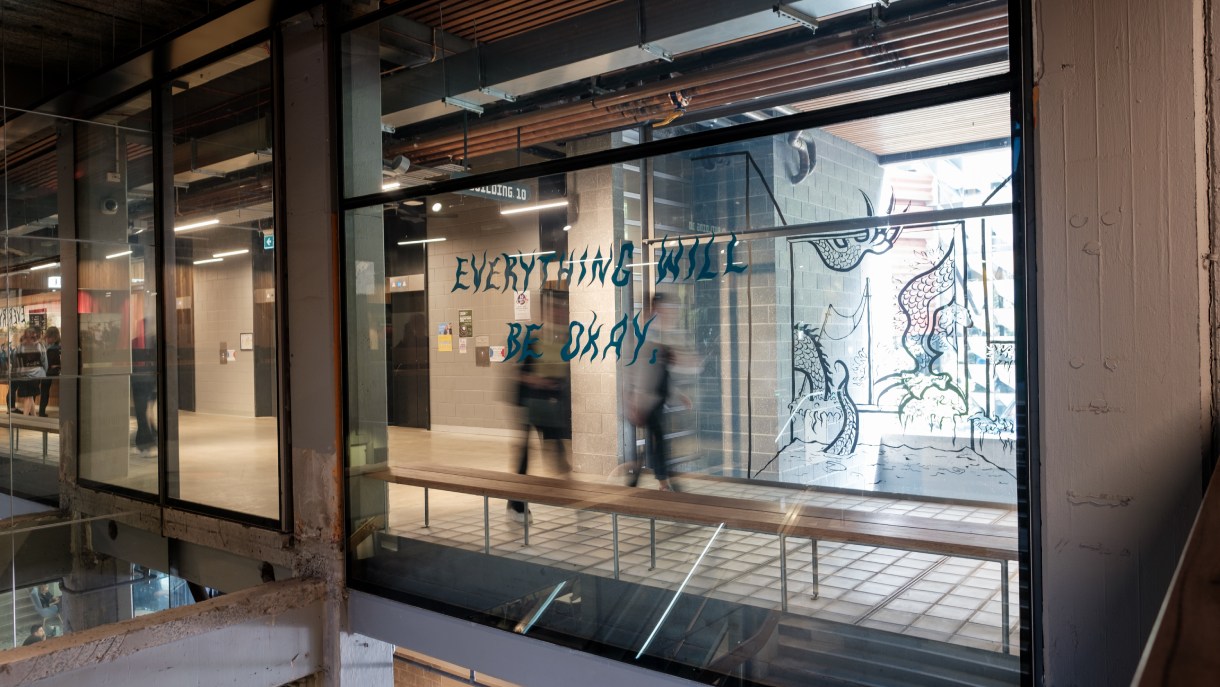
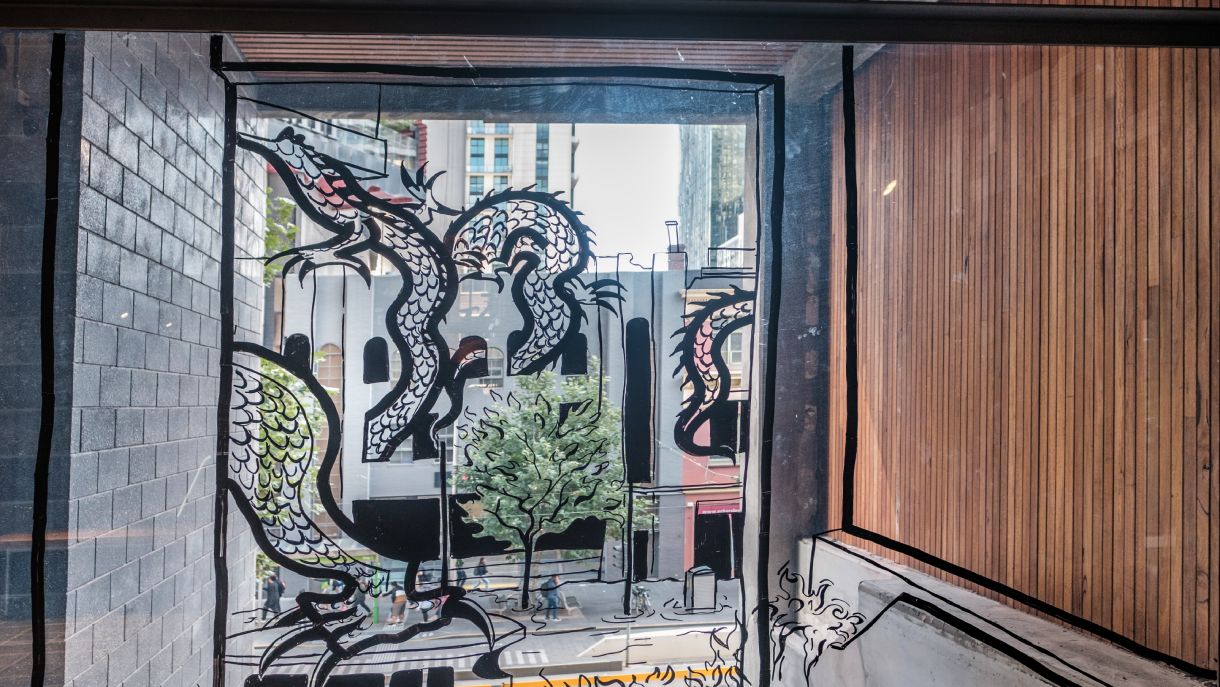
Everything Will Be Okay by student artist Emma Finucane consisted of two illustrative works juxtaposed with an ironically motivational message, encouraging new students to consider changing perspectives. Up close, Emma Finucane’s work depicts dragons and destruction bursting from the windows of New Academic Street – acknowledging new Students’ future worries, such as university workload stress and feelings of being overwhelmed. However, if viewed from further back, the bigger picture comes into focus with the message “Everything Will Be Okay”. Drawing on Emma’s practice investigating tattoos and body modification, the work explores the act of layering and editing to create a site of reinterpretation, while recognising the university as a place for reframing your worldview.
Artist: Emma Finucane, Bachelor of Design (Communication Design)
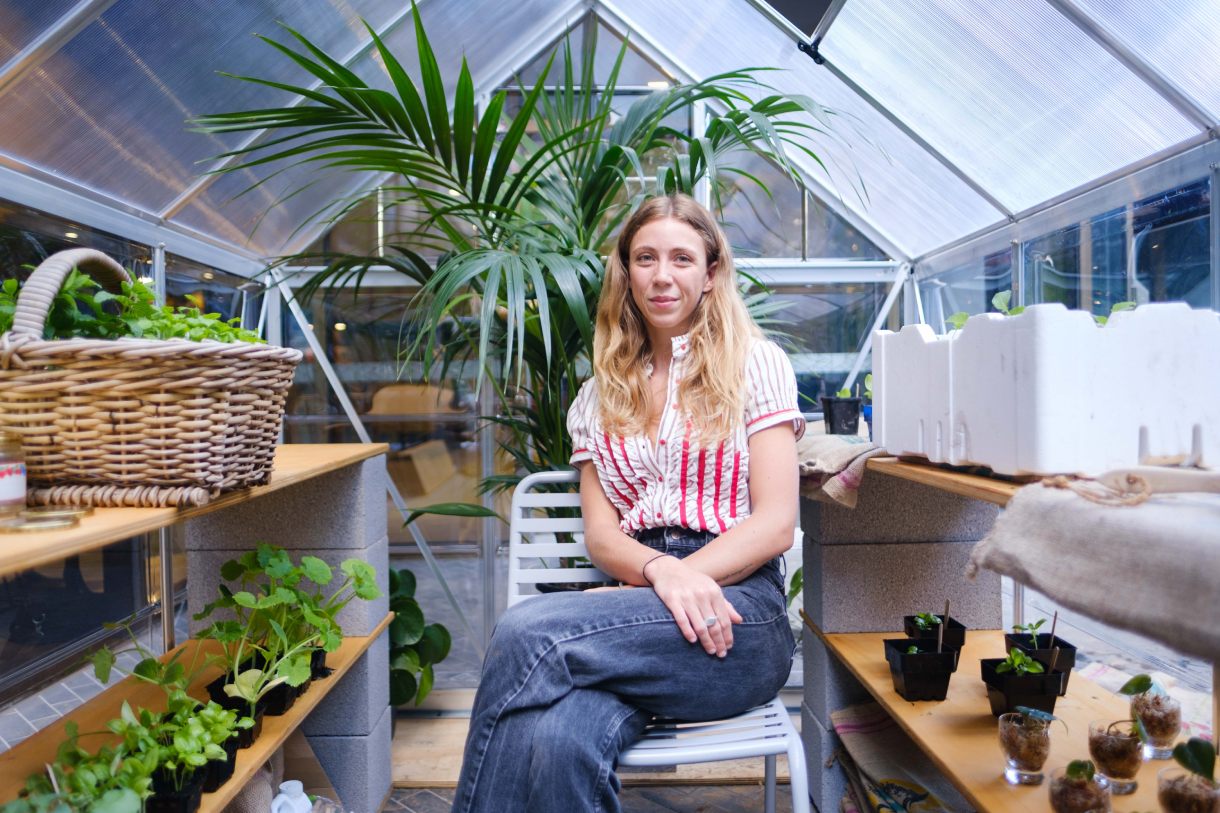
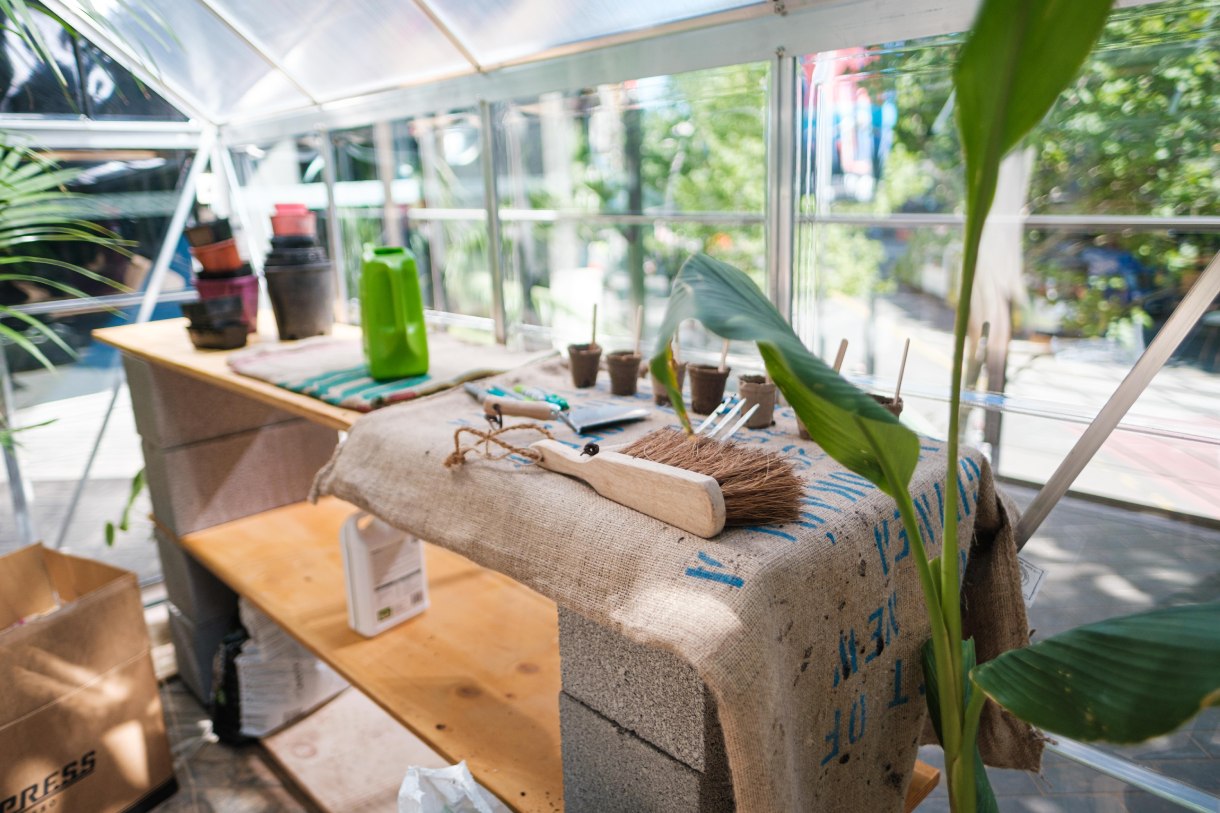
Greenhouse Project was an immersive urban growing space that provided solace and hands-on experiences for RMIT Students to develop a stronger connection between self-care, cycles of growth and life at university. Student artist Madeline Oldjohn understood the challenges of balancing study, career and socialising. Greenhouse Project gently affirms the importance of nourishing your body and brain to enrich your overall wellbeing and studying capabilities.
This artwork featured free lunchtime workshops sharing practical skills for growing and propagating plants, the cognitive health benefits of specific plants and nature-based wellbeing practice.
Artist: Madeline Oldjohn, Bachelor of Arts (Photography)
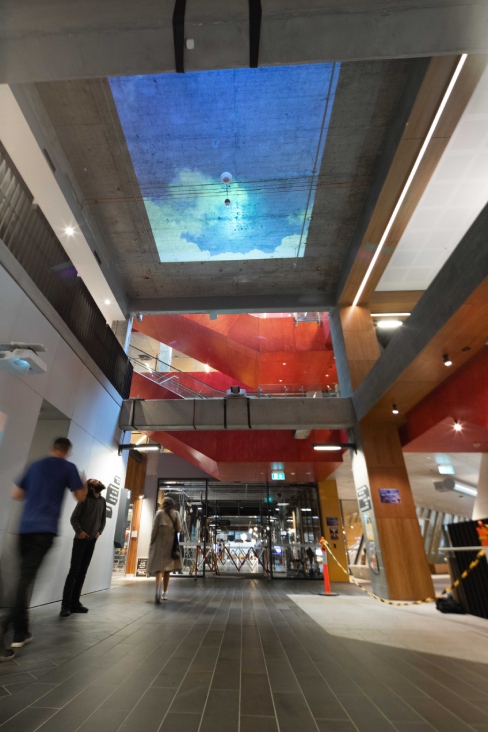
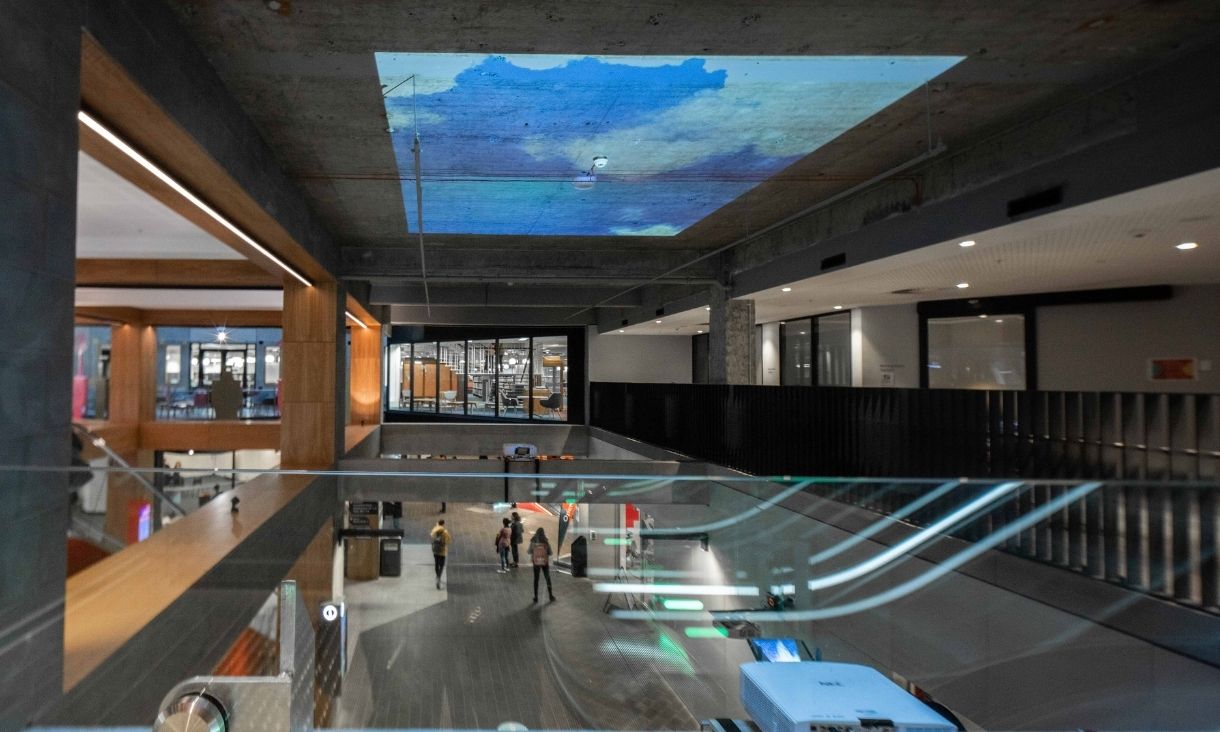
Bringing Melbourne’s sky inside New Academic Street, this live video installation celebrated the sky as something that each person on our planet has in common. Under the Same Sky by student artist Portia Sarris welcomed new and returning staff and students with a familiar view, overlaid in a space that can often seem impersonal and intimidating. The projection visualised the idea of transparency and openness within the university, and emphasised the significance of natural elements, such as light, and how it directly affects us physically, socially and mentally in the art of learning.
Artist: Portia Sarris, Bachelor of Arts (Photography)
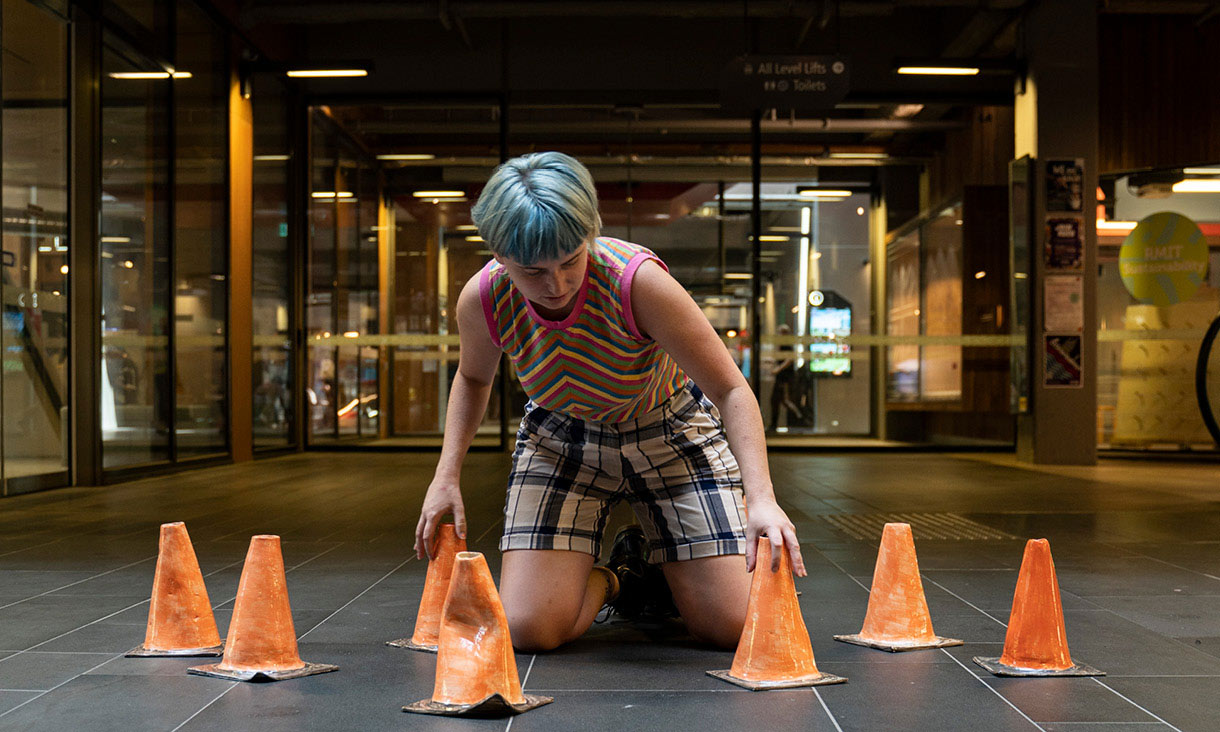
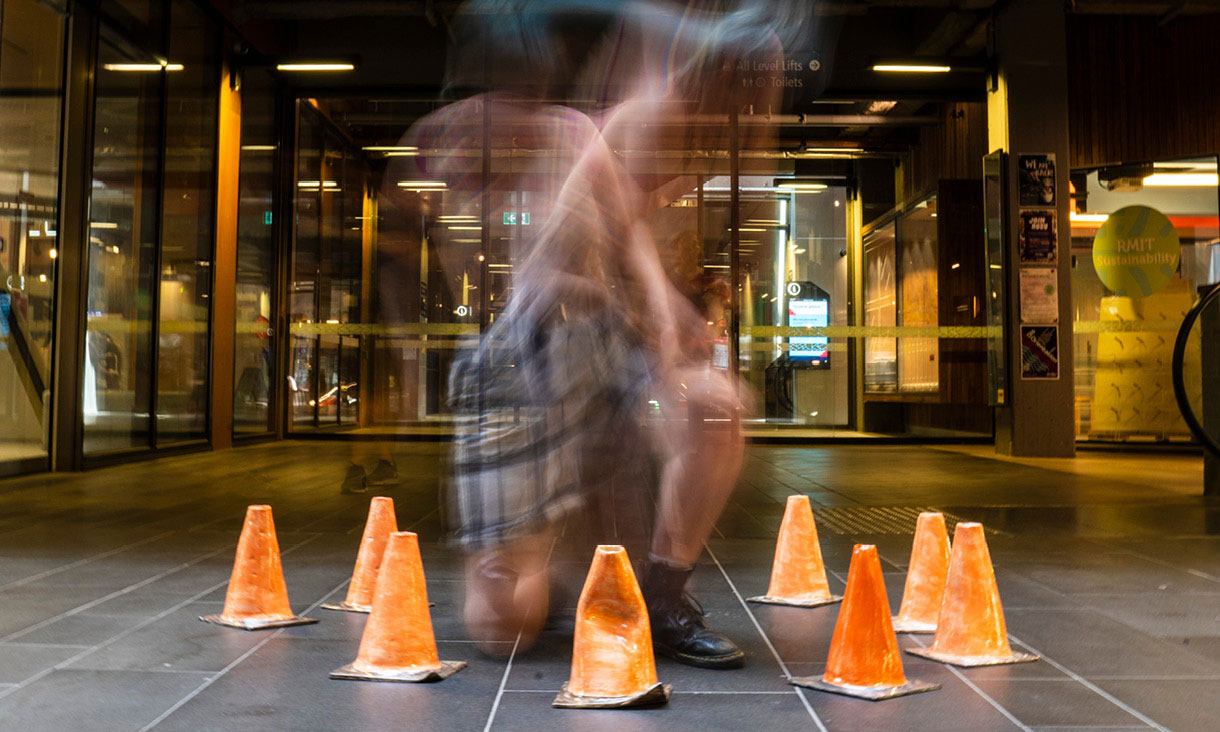
At the time of this artwork, RMIT City campus was surrounded by large-scale construction as part of the metro tunnel works as well as general urban renewal. Please be Careful responded to this context, identifying the ubiquitous traffic cone as a symbol of authority and control in public space. As a porous barrier, its power exists not in the object itself, but in a collective agreement of what it represents.
In this work, student artist Sarah Douglass used ceramic traffic cones to recontextualize an ordinary object and to explore notions of the handmade versus the mass produced. Activated through a series of pop up performances, the ceramic traffic cones were placed to mark out various ‘protected zones’ in New Academic Street, testing the boundaries of the artist’s implied agency in these public spaces. Through absurdly elongated and elaborate performances, Sarah Douglass highlighted the contested grounds of public space and provoked reflection on our relationship to authority.
Artist: Sarah Douglass, Bachelor of Fine Art (Ceramics)
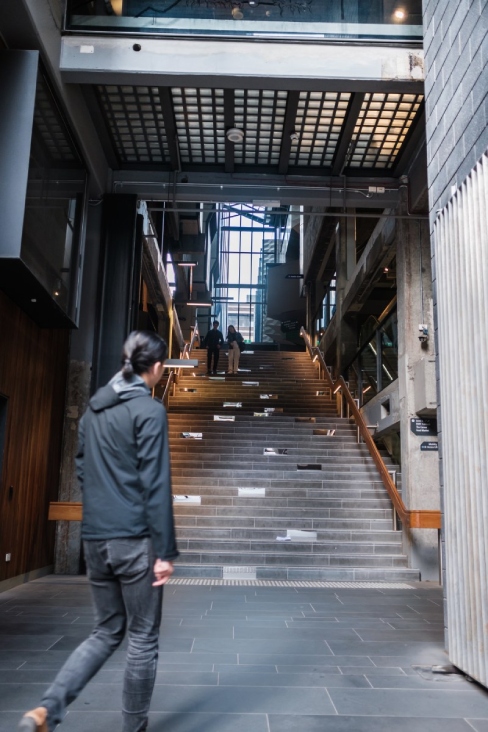
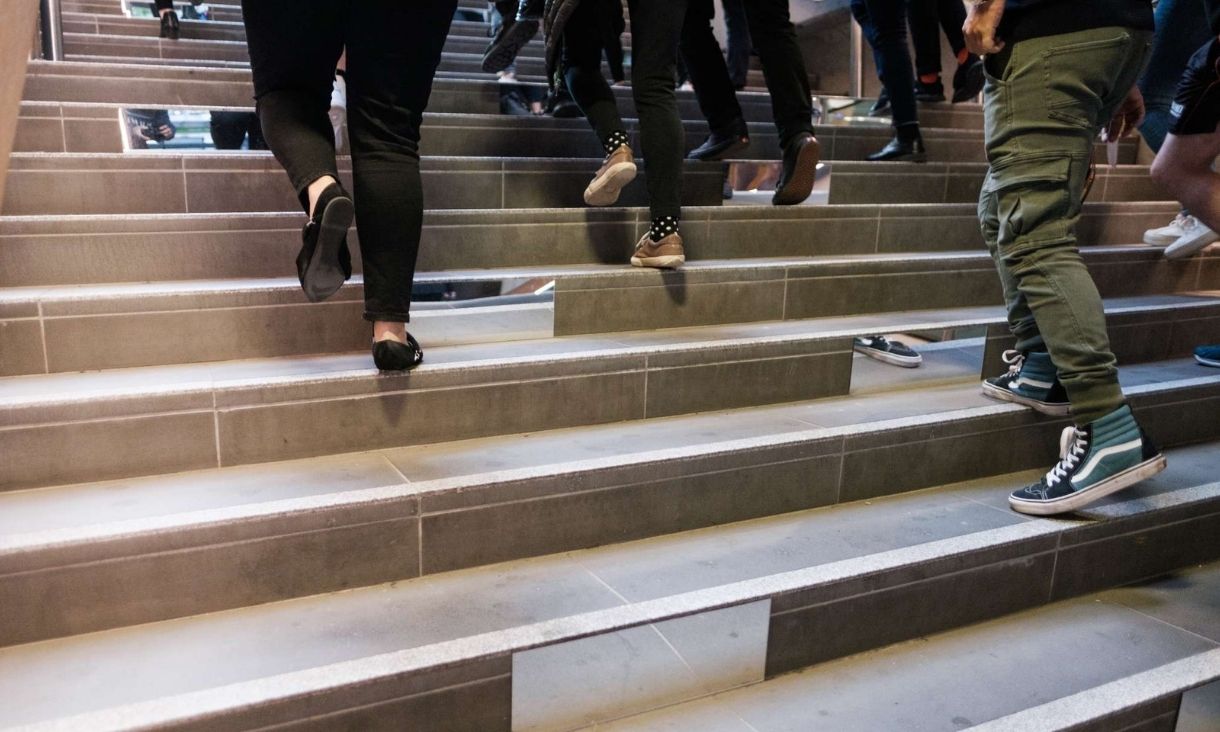
Stairlight by student artist Xiaoyin Huang placed a constellation of mirrors on the front of the stairs in the entryway from Swanston Street to New Academic Street, so that students would literally and metaphorically see themselves reflected in the architecture or RMIT as they walked in.
Xiaoyin Huang was influenced by the Buddhist philosophy of ‘clear light’ or ‘luminosity’, a central concept in Esoteric Buddhism, Tibetan Buddhism and Bon. Clear light refers to an innate condition of the mind in perfect stillness, free of thoughts and distractions. The goal of meditation is to achieve this state of mind and embody clear light. By positioning reflective surfaces in the transitional spaces of RMIT where they could reflect both internal and external light sources, Xiaoyin created moments of contemplation and clarity for students and staff moving through the institution.
Artist: Xiaoyin Huang, Bachelor of Fine Arts (Sculpture)

RMIT University acknowledges the people of the Woi wurrung and Boon wurrung language groups of the eastern Kulin Nation on whose unceded lands we conduct the business of the University. RMIT University respectfully acknowledges their Ancestors and Elders, past and present. RMIT also acknowledges the Traditional Custodians and their Ancestors of the lands and waters across Australia where we conduct our business - Artwork 'Sentient' by Hollie Johnson, Gunaikurnai and Monero Ngarigo.
Learn more about our commitment to Aboriginal and Torres Strait Islander peoples