Ari’s future is up in the aerospace

Ari’s future is up in the aerospace

Having your head in the clouds isn’t usually a skill you’d highlight on your resume, but for Aerospace Engineering student Ari, it’s a necessity.

It came as no surprise when Ari Milke gravitated towards engineering. Although he’s the first in his family to study the subject at university, his father worked on building two-seater light aircrafts straight out of high school, and his grandfather handled airborne logistics in the army. Ari credits his family's aviation background as the inspiration for his specialisation. 

Since I was 16, I’ve wanted to study aerospace engineering. Learning about RMIT’s rich aerospace history meant it was my natural choice.
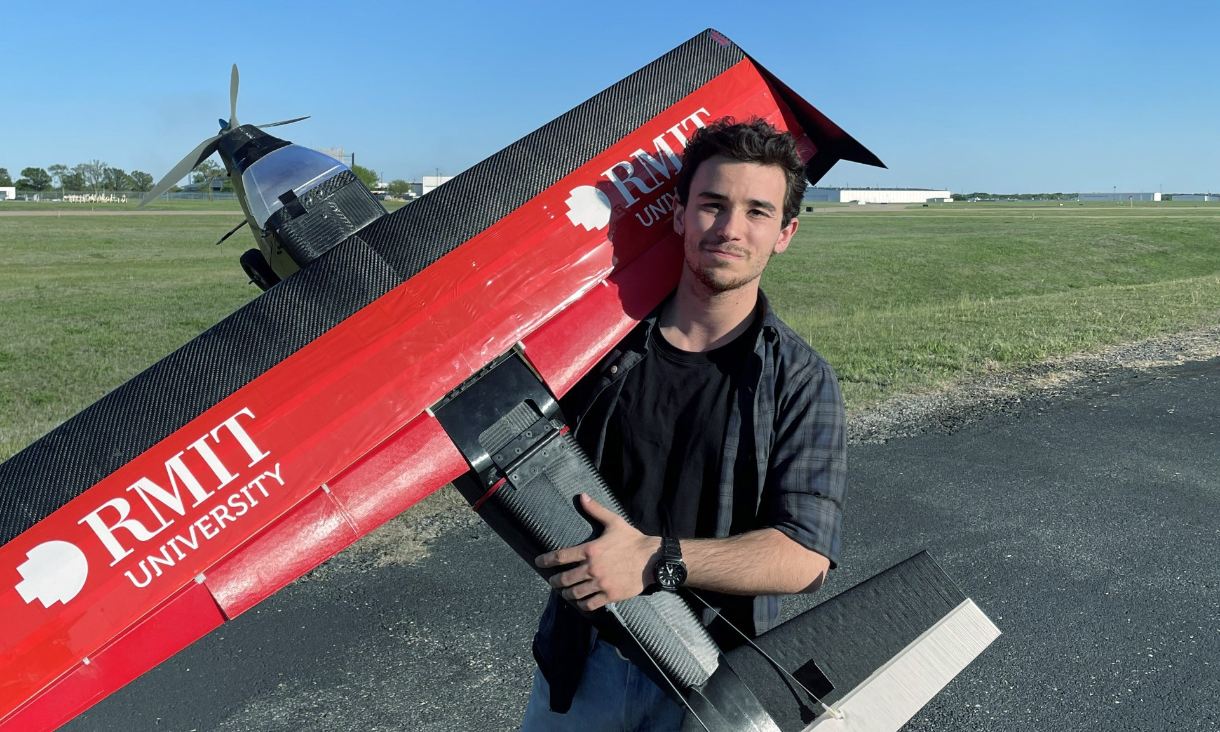
Ari Milke holding a red plane that says RMIT Aerospace Engineering student, Ari Milke.

During his time at RMIT, Ari has won the Boeing Aerospace Engineering Prize twice. The award is given to the best Aerospace Engineering student in the cohort and Ari was awarded with it during the first and second year of his degree.

The American Institute of Aeronautics and Astronautics (AIAA) Design-Build-Fly Competition

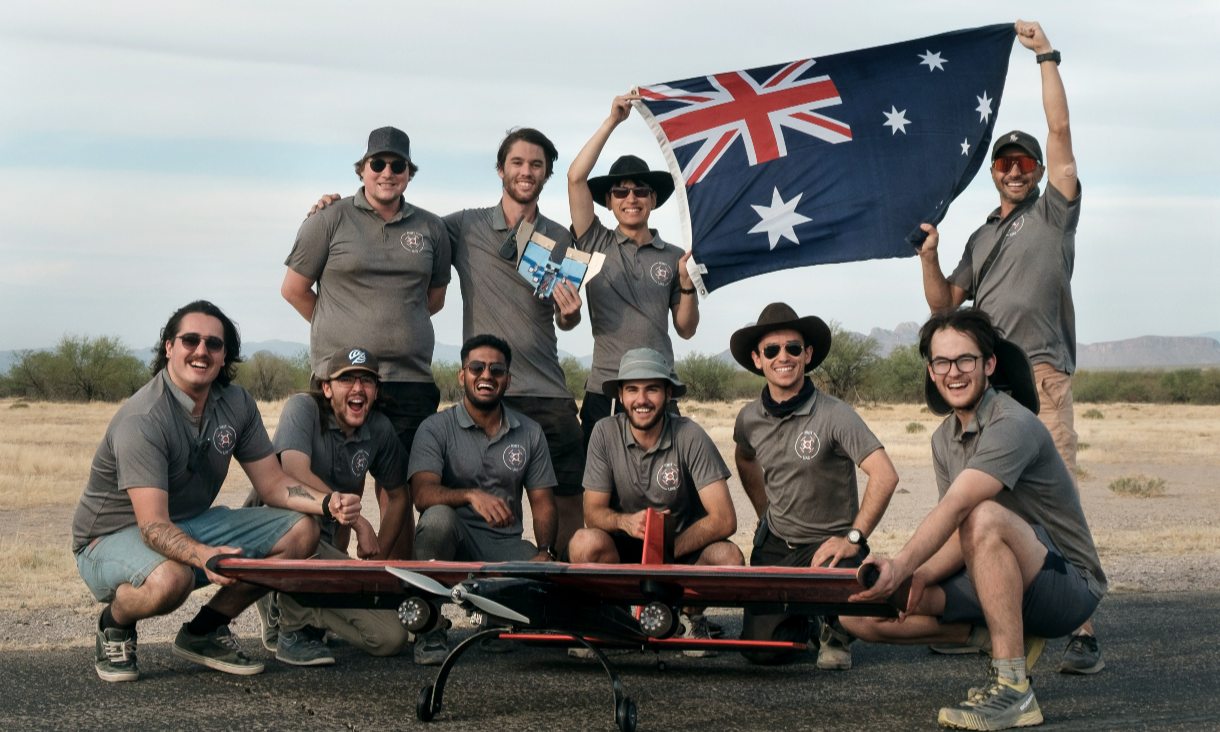
In April 2025, the RMIT Uncrewed Aircraft Systems Research Team (RUASRT) travelled to the United States to compete against 110 other universities in the AIAA Design-Build-Fly Competition. RUASRT finished second and became the first Australian team in the competition’s 30-year history to achieve a podium finish.  

It took the team eight months to design and build their aircraft, Black Widow. Ari, who became a Leader of RUASRT in 2025, fully immersed himself in the project.  

For those eight months, I was living and breathing this project. I constantly thought about problems to solve and improvements to be made, even while I was falling to sleep.
The whole team on the day of the competition standing outside with the aircraft. RUASRT at the AIAA Design-Build-Fly competition with their aircraft, Black Widow.

As a result of his critical role in the 2024-2025 AIAA Design-Build-Fly Competition, Ari was presented with the Best Capstone Award, which celebrates the best final-year project across all of RMIT’s engineering disciplines.  

Beyond engineering, being a RUASRT leader and managing a team of over 60 members allowed Ari to develop other skills, like project planning, documentation, and good communication.  

“These skills are critical when running teams and projects. I’m grateful I had the opportunity to learn them at university rather than having to think about them for the first time when I’m in the industry.”  

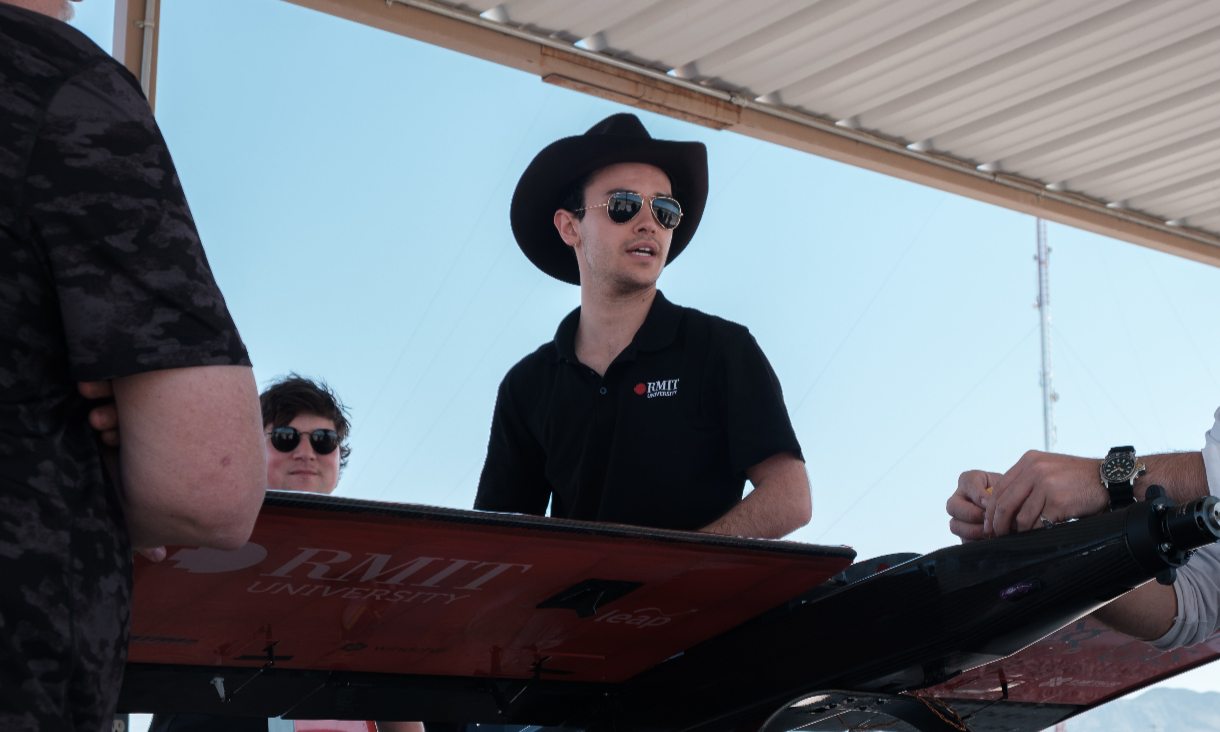
Ari outside at the competition wearing a hat and talking to the team. Ari in action during the AIAA Design-Build-Fly competition.

Passion projects

In his own time, Ari is working with other engineering students to break the record for the fastest quadcopter flight. A quadcopter is a remote-controlled aircraft with four propellers. The world record has been broken twice this year and currently sits at 580km/h.  

We’re aiming to beat it by building a quadcopter that goes 600km/h, or roughly half the speed of sound.

After graduation

The number one pre-requisite Ari has for his future is that he’d like to work somewhere he can learn and grow. He’s looking forward to getting an industry job where he can put his university theory into practice.  

“Obviously, I’d like to work in the aerospace industry, but other areas are interesting too. It would be amazing to design racing yachts like they use in America’s Cup or Sail GP. Working on anything that is at the top of a field would be fantastic.”  

--

Find out more about Ari on his LinkedIn.

grad-parade-student-candid-flags-1220x732.jpeg

Celebrating our 2025 graduates

To read about more exceptional RMIT students graduating this year, go to Celebrating our 2025 graduates

21 November 2025

More student news

aboriginal flag float-start torres strait flag float-start

Acknowledgement of Country

RMIT University acknowledges the people of the Woi wurrung and Boon wurrung language groups of the eastern Kulin Nation on whose unceded lands we conduct the business of the University. RMIT University respectfully acknowledges their Ancestors and Elders, past and present. RMIT also acknowledges the Traditional Custodians and their Ancestors of the lands and waters across Australia where we conduct our business - Artwork 'Sentient' by Hollie Johnson, Gunaikurnai and Monero Ngarigo.

Learn more about our commitment to Indigenous cultures