
Design graduate Trishla is radically re-thinking how we can make use of ‘forgotten’ public spaces

Design graduate Trishla is radically re-thinking how we can make use of ‘forgotten’ public spaces

Underutilised car parks, the spaces beneath elevated walkways – Master of Design Innovation and Technology graduate Trishla is interested in the existing space most of us overlook.

Across the cities of our globe, overlooked spaces are going underutilised. Trishla Yadav sees an opportunity for design-aligned disciplines to regenerate and transform these areas to better serve our community and planet.  

After studying a Bachelor of Architecture in India, Trishla was working as an architect in Delhi on commercial, workplace, and strategy-oriented projects, with a strong focus on applying technology and methodologies to improve design processes. While she enjoyed her work, she saw challenges in our built environments that architecture alone couldn’t solve. 

“No design discipline works in isolation,” says Trishla. “I became fascinated by how multidisciplinary thinking can spark entirely new ways of seeing and solving problems.” 

Trishla image 1: headshot Trishla graduated as Valedictorian from the RMIT Master of Design Innovation and Technology program in Semester 1 2025.

This led her back to university to Study a Master of Design Innovation and Technology at RMIT in Melbourne. The dynamic program focuses on the intersection of several disciplines including engineering, architecture, interior design, industrial design, sound and media, animation and more. The learning structure allows students to work within a studio-based model on briefs from industry partnered projects.  

“I was drawn to the program because it encouraged experimentation across disciplines and gave me the tools to think about design in new ways. Studying in Melbourne gave me an international perspective and a collaborative environment that really shaped my approach.”  

Learning through collaboration

Trishla graduated as Valedictorian of the program in Semester 1 2025. Reflecting on her experience, she notes the impact having a collaborative cohort made on her education.   

What made the experience so transformative was the community itself, people from diverse fields, all driven by one goal: to rethink how we design and create through innovation. That collaborative energy and openness to experiment was exactly what I wanted to be part of.
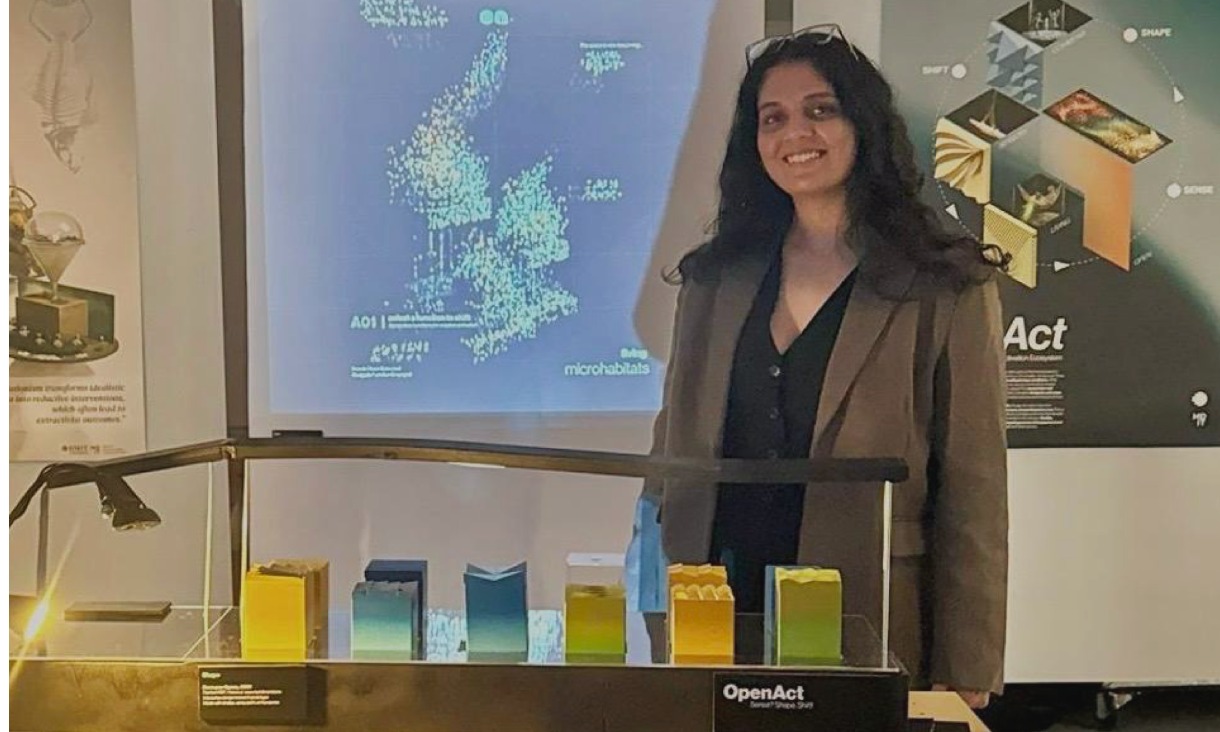
Trishla with her project, OpenAct Trishla with her design project, OpenAct.

Elevating forgotten spaces through innovation

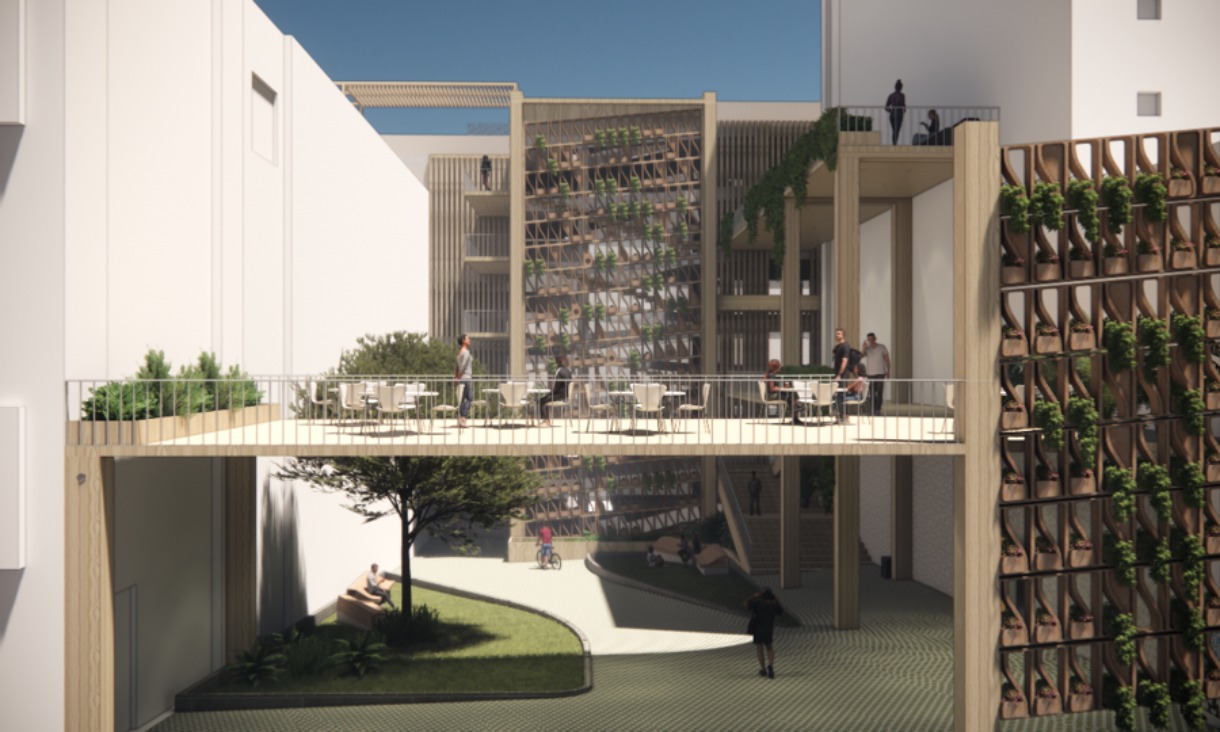
Shining a light on neglected spaces is a repeated theme in Trishla’s work. During her degree she created a project, The Nook, which imagined transforming an underutilised car park on Cardigan Street in Carlton into a space that could be used for more than just SUV storage. 

The Nook proposes retrofitting the existing structure of the car park with green spaces to support the landscape’s biodiversity and outdoor seating to encourage socialising and community.

Trishla says she finds the idea of uplifting utility spaces exicting and inspiring.

I love finding hidden potential in places or objects we see as single-use or ‘done’. Rather than viewing them in a negative light, I see it as a challenge to make them better.
Trisha image 2, the nook A design rendering of The Nook: transforming an underutilised car park into a regenerative third space.

Exhibiting at SXSW

Another of Trishla’s university projects, OpenAct, is about to be shown at the SXSW Sydney Tech and Innovation Showcase in October 2025. The exhibition invites companies and innovators to share new projects and reimagine the future of tech and innovation.   

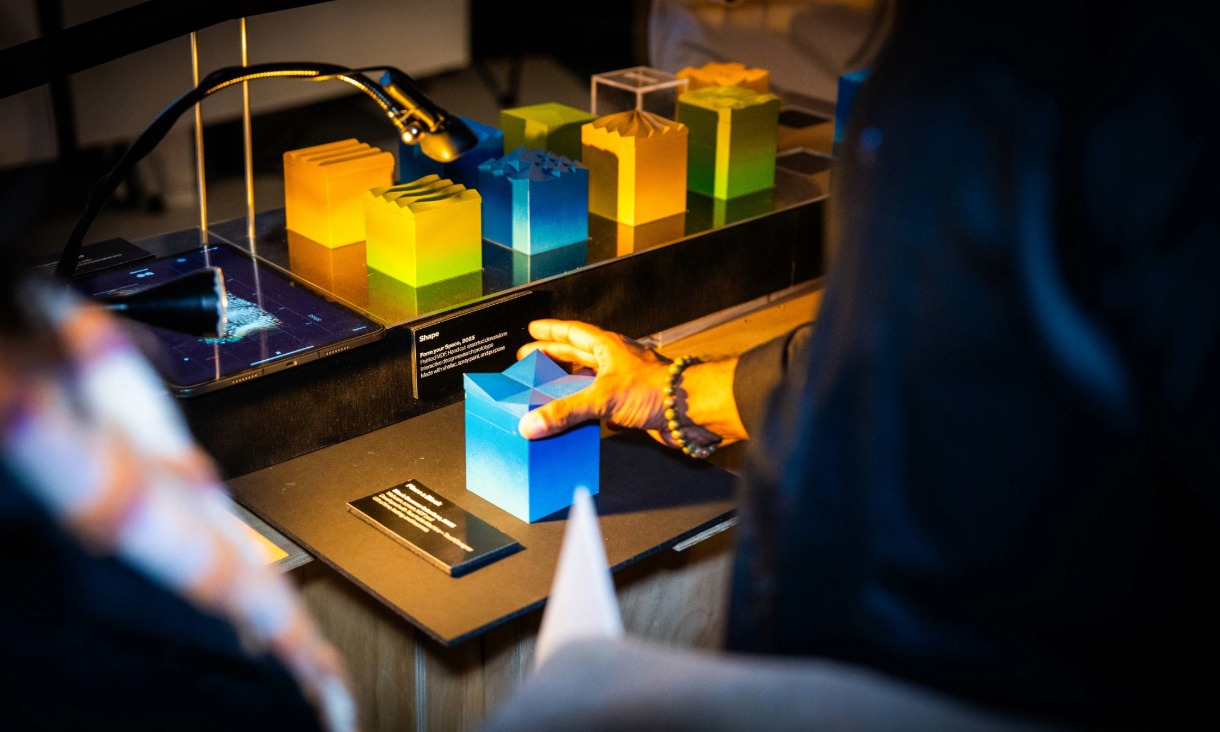
OpenAct is a practical tool made to rethink underutilised urban spaces. Trishla created it to address the disconnect between the design and planning of a space and the lived experience of those who were going to utilise it.  

“OpenAct is a radical rethink of how we design spaces and engage community. Instead of showing people static plans or reports, OpenAct shows how we could use tactile blocks and reactive projections to really help people understand what a space will be like and turn decision-making into a live, sensory experience,” says Trishla.   

“Communities, councils, and designers can use the blocks and instantly see how neglected spaces could transform; from pocket gardens to shaded gathering points.”  

Incorporating community into the design process is another repeat theme in Trishla’s work, as well as in her approach to her design network.   

“That mindset ‘help me help you’ has shaped how I build relationships. It makes ideas richer, challenges lighter, and work more meaningful. It’s helped me form a community of designers I deeply admire and care about, and those connections are something I’ll always be grateful for,” she says.  

Trishla image 3: OpenAct OpenAct: an interactive tool that encourages users to shift design elements to better suit the social and physical environment.

After graduation

Since graduating in Semester 1 2025, Trishla has been preparing for the SXSW Sydney Tech and Innovation Showcase, while also looking for her next project or role.  

“I’m actively seeking opportunities to join the design workforce and apply everything I’ve learned,” she says.  

“I’m also exploring exhibitions around Melbourne, to stay inspired.”  

--- 

Find Trishla on her website and LinkedIn.

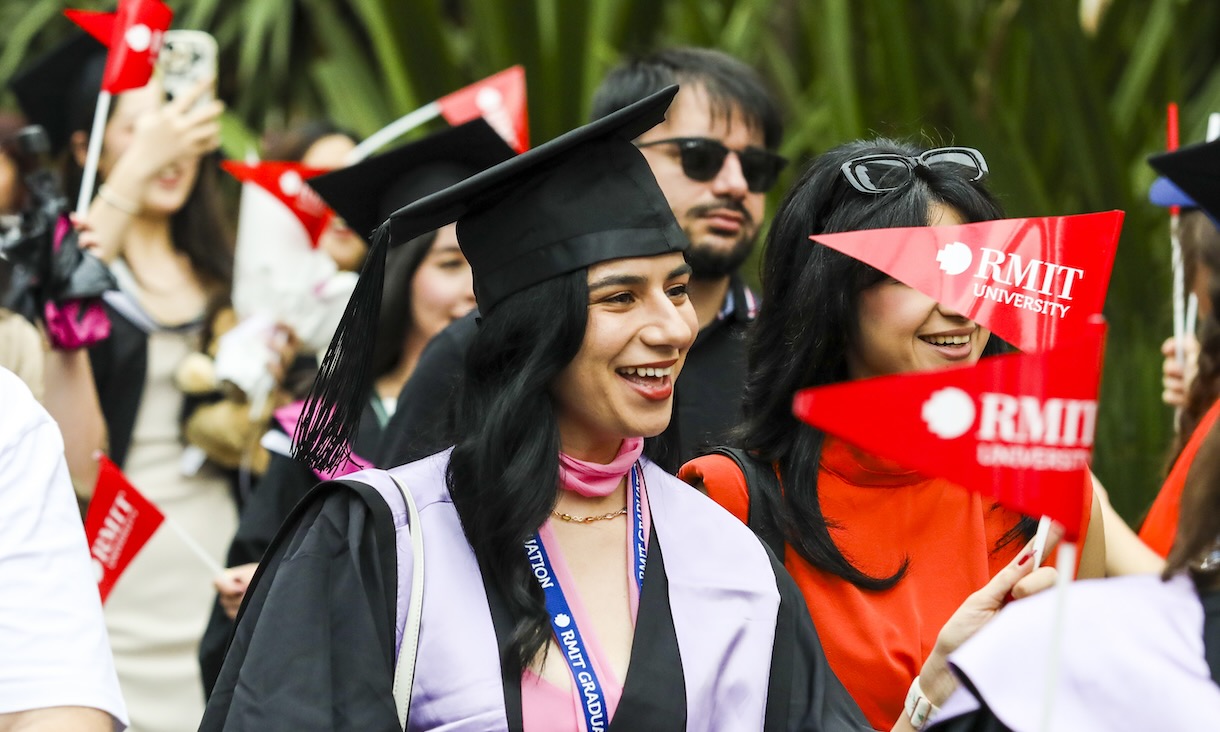
grad-parade-student-candid-flags-1220x732.jpeg

Celebrating our 2025 graduates

To read about more exceptional RMIT students graduating this year, go to Celebrating our 2025 graduates

09 October 2025

More student news

aboriginal flag float-start torres strait flag float-start

Acknowledgement of Country

RMIT University acknowledges the people of the Woi wurrung and Boon wurrung language groups of the eastern Kulin Nation on whose unceded lands we conduct the business of the University. RMIT University respectfully acknowledges their Ancestors and Elders, past and present. RMIT also acknowledges the Traditional Custodians and their Ancestors of the lands and waters across Australia where we conduct our business - Artwork 'Sentient' by Hollie Johnson, Gunaikurnai and Monero Ngarigo.

More information