From Antarctica to the classroom: Alison Lester brings storytelling to life for RMIT’s Primary Education students

From Antarctica to the classroom: Alison Lester brings storytelling to life for RMIT’s Primary Education students

Best-selling children's author and illustrator, Alison Lester, talks to RMIT students about creative process, her time in Antarctica and the importance of storytelling.

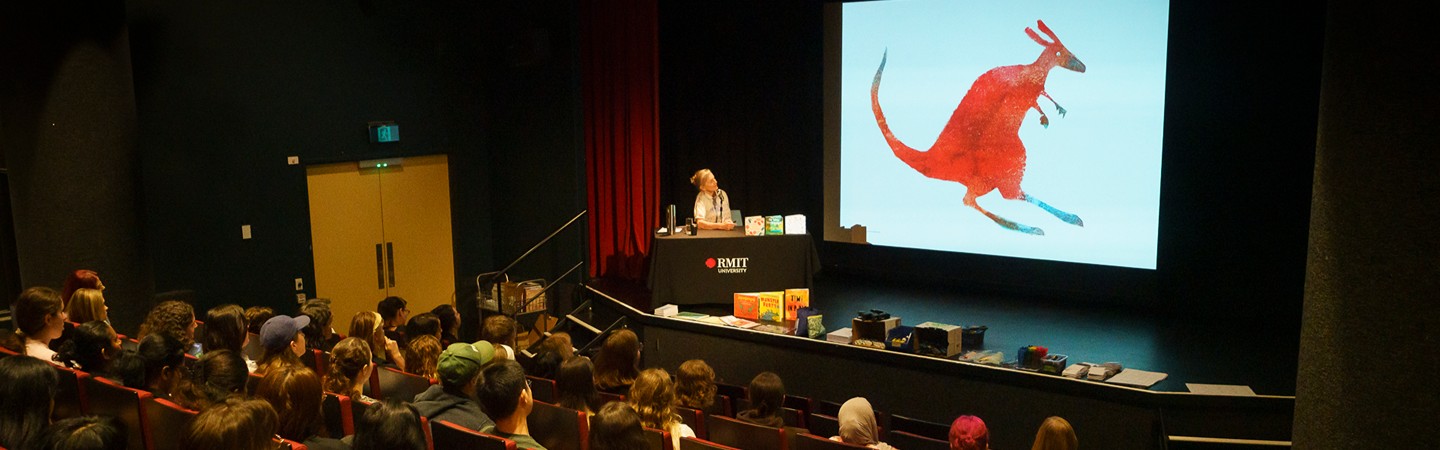
Master of Teaching Practice (Primary Education) students from RMIT's School of Education recently had the opportunity to hear from one of Australia's most celebrated children's authors and illustrators, Alison Lester, in a workshop held as part of RMIT Galleries’ Creative Antarctica: Australian Artists and Writers in the Far South exhibition. 

Alt Text is not present for this image, Taking dc:title 'Alison Lester image 3'Workshop with Alison Lester and RMIT Galleries in the Kaleide Theatre, 2026. Photograph by MJ Bentley. 

Known for beloved works including Are We There Yet?, Magic Beach and Kissed by the Moon, Lester shared insights into her creative and professional life—from growing up on a farm near Wilsons Promontory in southern Victoria, to her partnership with the Royal Children’s Hospital and her work with the Indigenous Literacy Foundation. 

Lester spoke candidly about how her childhood influenced her creative process. “My imagination was formed when I had freedom and time to myself” she said, adding that a story can live in her head for years before she writes anything down. 

She then walked students through her illustration technique - tracing sketches, scanning them, and painting by hand with watercolours. “I don't let the truth get in the way of a good colour," she said.

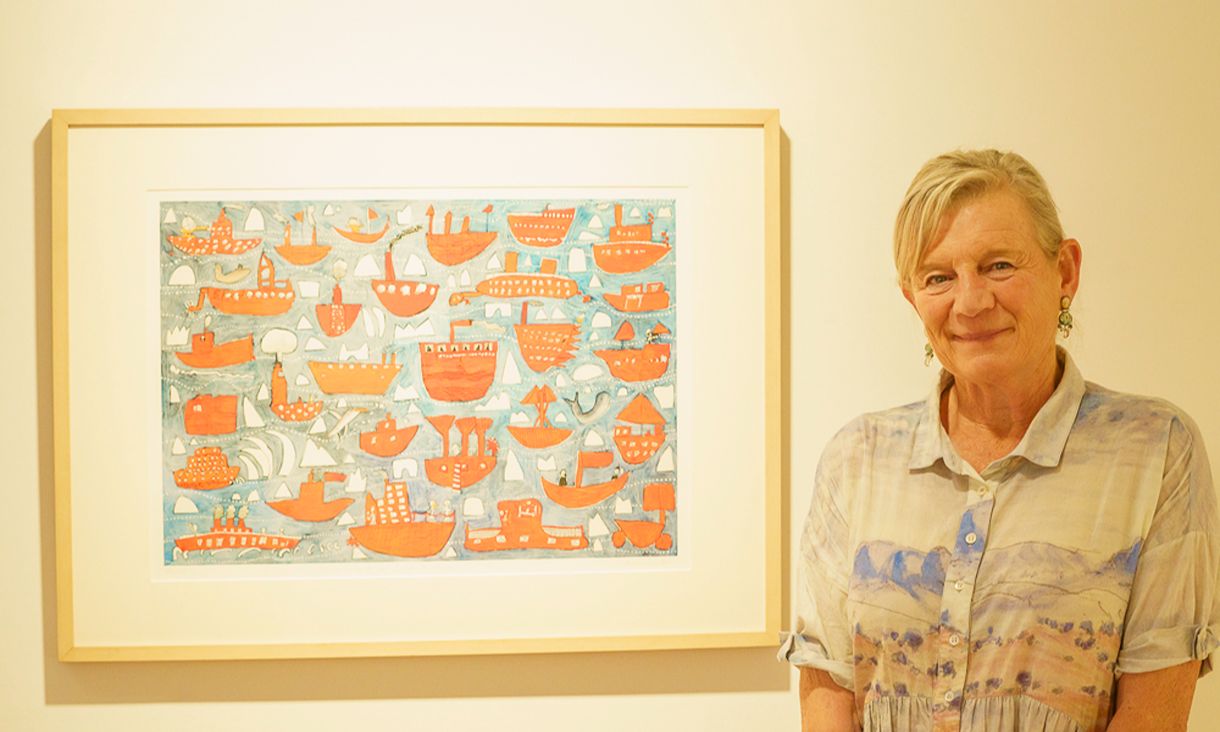
Alison Lester standing in front of illustrationInstallation view, Alison Lester, 'All the Tracks of the Aurora Australis (for Sophie Scott Goes South)', 2012 in the ‘Ice Salon’ in 'Creative Antarctica: Australian Artists and Writers in the Far South', RMIT Gallery, Melbourne, 2026. Photograph by MJ Bentley.

In 2005, Lester travelled to Antarctica as an Australian Antarctic Arts Fellow on a six-week voyage aboard the Aurora Australis. Each day she wrote an online diary and maintained a photographic journal of her experiences for children around the world to track her adventure. In turn, she asked them to draw, paint and create interpretations of her stories. 

“I was going to be the eyes and ears of children around the world,” she reflected.  

Lester returned home to thousands of drawings, particularly of the Aurora Australis ship, which she turned into a collaged work titled All the Tracks of  the Aurora Australis which features in the exhibition, Creative Antarctica: Australian Artists and Writers in the Far South, currently showing at RMIT Gallery and Design Hub Gallery. 

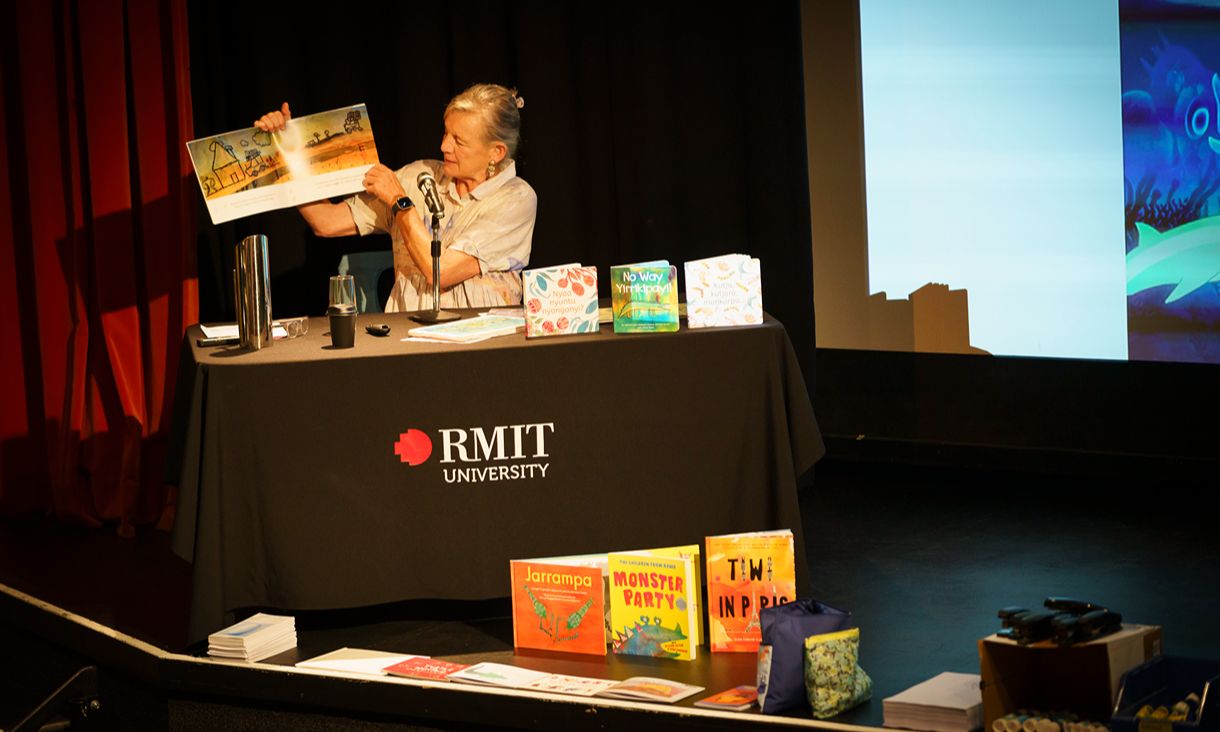
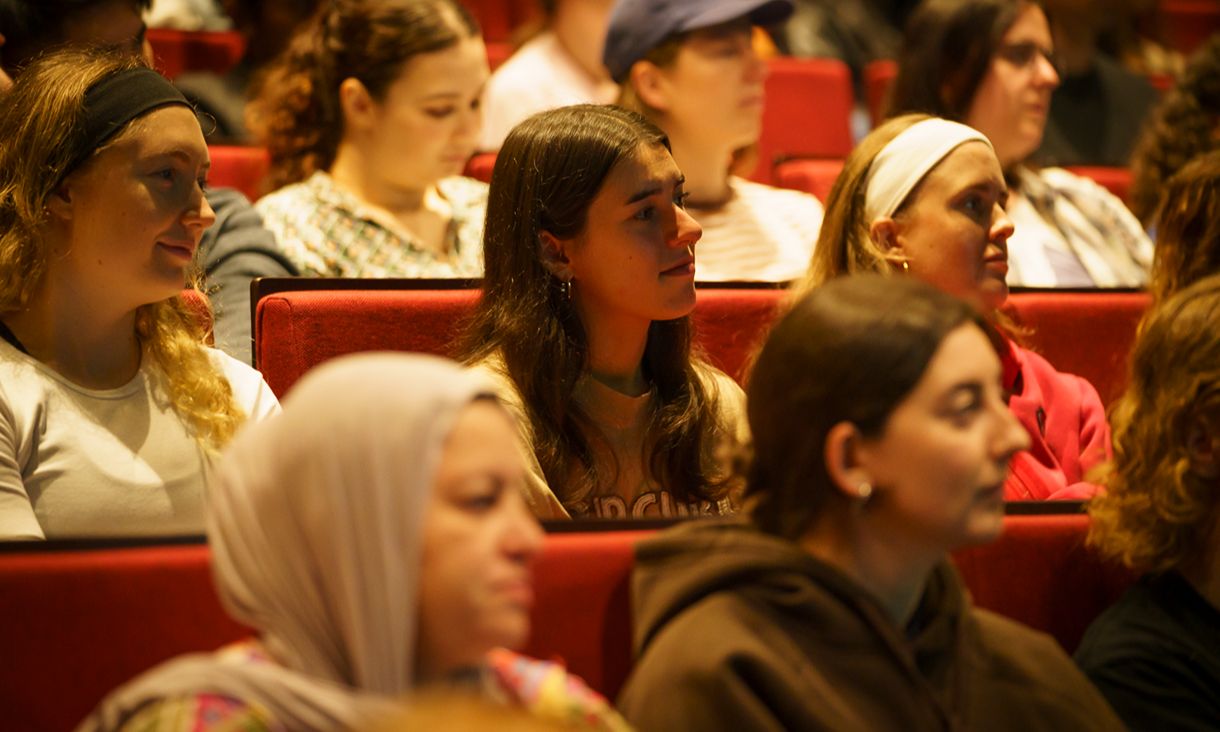
Alt Text is not present for this image, Taking dc:title 'Alison Lester image 5'Workshop with Alison Lester and RMIT Galleries in the Kaleide Theatre, 2026. Photograph by MJ Bentley.

For RMIT students Ruby Mills and Bridget Chianta, the workshop offered an insight into how reading and hearing stories can shape children’s lives. “Her reflections highlighted the profound impact that storytelling can have on identity, belonging and environmental understanding,” they said.  

“Alison’s commitment to amplifying children’s voices, honouring Indigenous perspectives, and fostering deep connections to place resonated strongly with us as future educators,” they continued.  

"We left her workshop inspired to create classrooms where every child's story is valued.” 

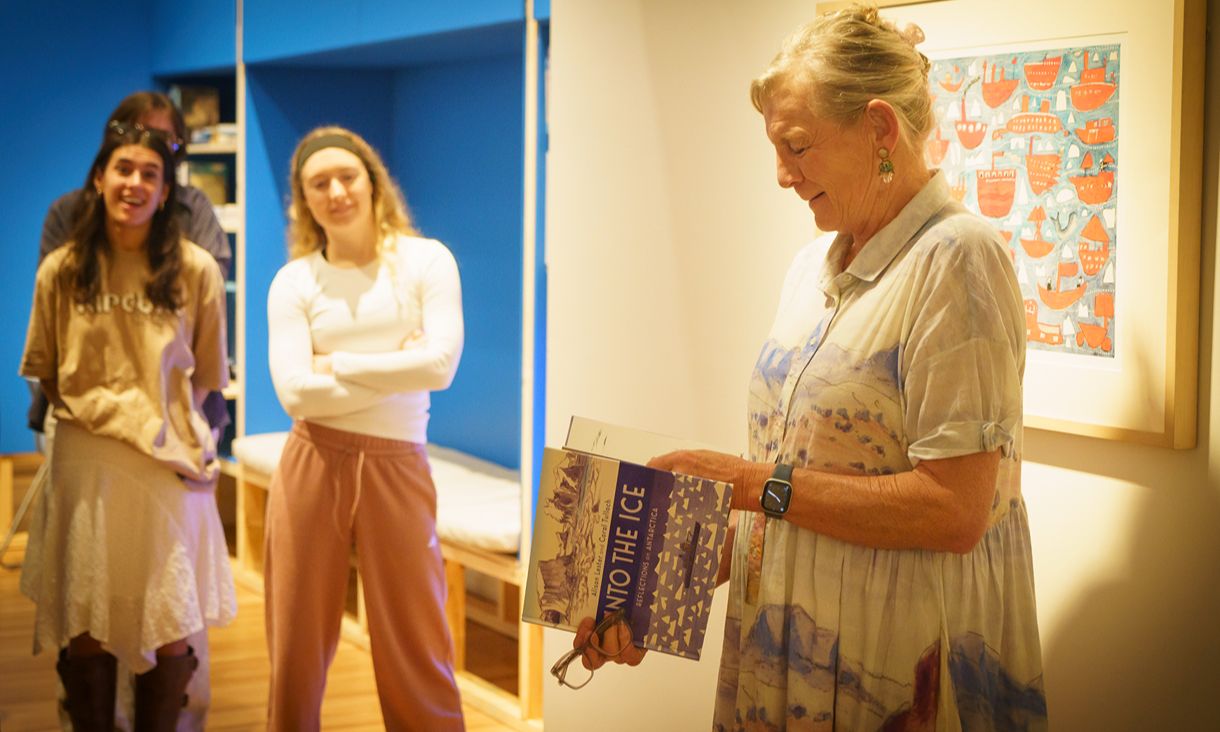
Alison Lester reading in front of illustration at galleryWorkshop with Alison Lester and RMIT Galleries. Alison Lester and Coral Tulloch, 'Into the Ice,' 2024 (left) and  'All the Tracks of the Aurora Australis (for Sophie Scott Goes South)', 2012 (right) in the ‘Ice Salon’ in 'Creative Antarctica: Australian Artists and Writers in the Far South', RMIT Gallery, Melbourne, 2026. Photograph by MJ Bentley. 

Dr Kellie Picker, Lecturer in Literacy, explains that promoting reading of all kinds at all ages is an important part of their coursework, saying, “across our literacy courses, we emphasise the importance of quality literature doing more than just teaching reading to primary aged students—it can show children how their classroom learnings connect to other parts of the curriculum and the real world”.  

“For our master’s students who will soon be bringing literature into their own classrooms, hearing from someone who has spent a career connecting children to the world through stories, is a unique and invaluable experience,” she continued. 

--

This workshop was presented as part of the Creative Antarctica: Australian Artists and Writers in the Far South wider program. Creative Antarctica is curated by sound artist and three-time Australian Antarctic Arts Fellowship recipient, Professor Philip Samartzis.  

The exhibition runs until 2 May at the Design Hub Gallery and RMIT Gallery. Free entry, no registration required. For more information visit the Creative Antarctica event page

Read more about Creative Antarctica and the Australian Antarctic Arts Fellowship.

Story: Duncan Scott 

14 April 2026

More student news

aboriginal flag float-starttorres strait flag float-start

Acknowledgement of Country

RMIT University acknowledges the people of the Woi wurrung and Boon wurrung language groups of the eastern Kulin Nation on whose unceded lands we conduct the business of the University. RMIT University respectfully acknowledges their Ancestors and Elders, past and present. RMIT also acknowledges the Traditional Custodians and their Ancestors of the lands and waters across Australia where we conduct our business - Artwork 'Sentient' by Hollie Johnson, Gunaikurnai and Monero Ngarigo.

Learn more about our commitment to Indigenous cultures