
RMIT students design workplaces of the future for Melbourne Design Week 2026

RMIT students design workplaces of the future for Melbourne Design Week 2026

In partnership with HOW Group, RMIT design students present a curated window installation that turns the street into a gallery of future workplace thinking.

RMIT students from the College of Design and Social Context’s Architecture, Industrial Design and Interior Design disciplines are teaming up with Melbourne-based commercial furniture designers, HOW Group to present an installation for their Southbank showroom that speculates on future workplace environments. 

Through images, video, models and prototypes Future Workplace Thinking: Systems, Spaces, Cities invites passersby to consider how consumption can be reduced, while improving experience across the built environment value chain from sourcing and manufacturing through to use, reuse and recovery. It’s also a window into how iterative processes of designing, testing, refining and remaking build from speculative concepts to near market prototypes and integrated material systems that respond to the circular economy. 

Visitors can encounter work at multiple scales, from furniture designed for upgrade over obsolescence, to interior schemes that explore shared resources and future patterns of consumption, through to the scale of the city, where the office is understood as more than a workplace: as a cultural and urban catalyst. 

Stratum: ergonomic design for the open office

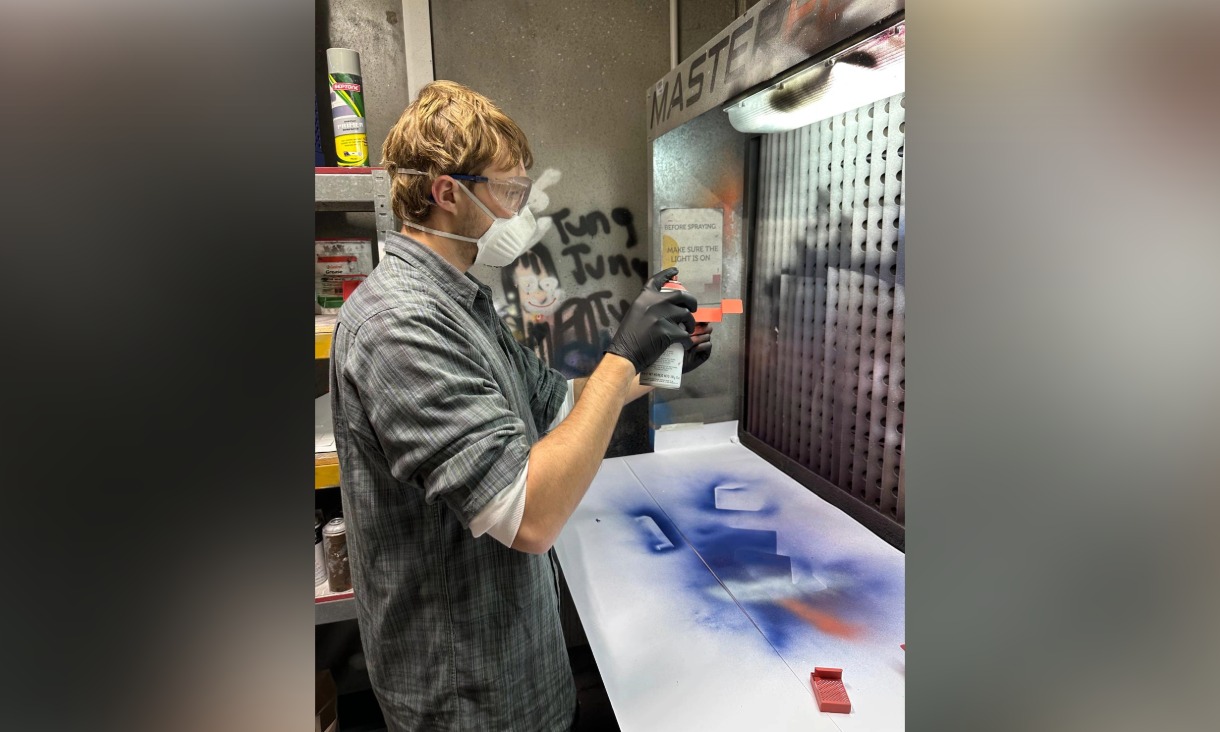
Man spray painting in booth Jeremy Riminton in spray booth. Photo by Mayukh Dhiman.

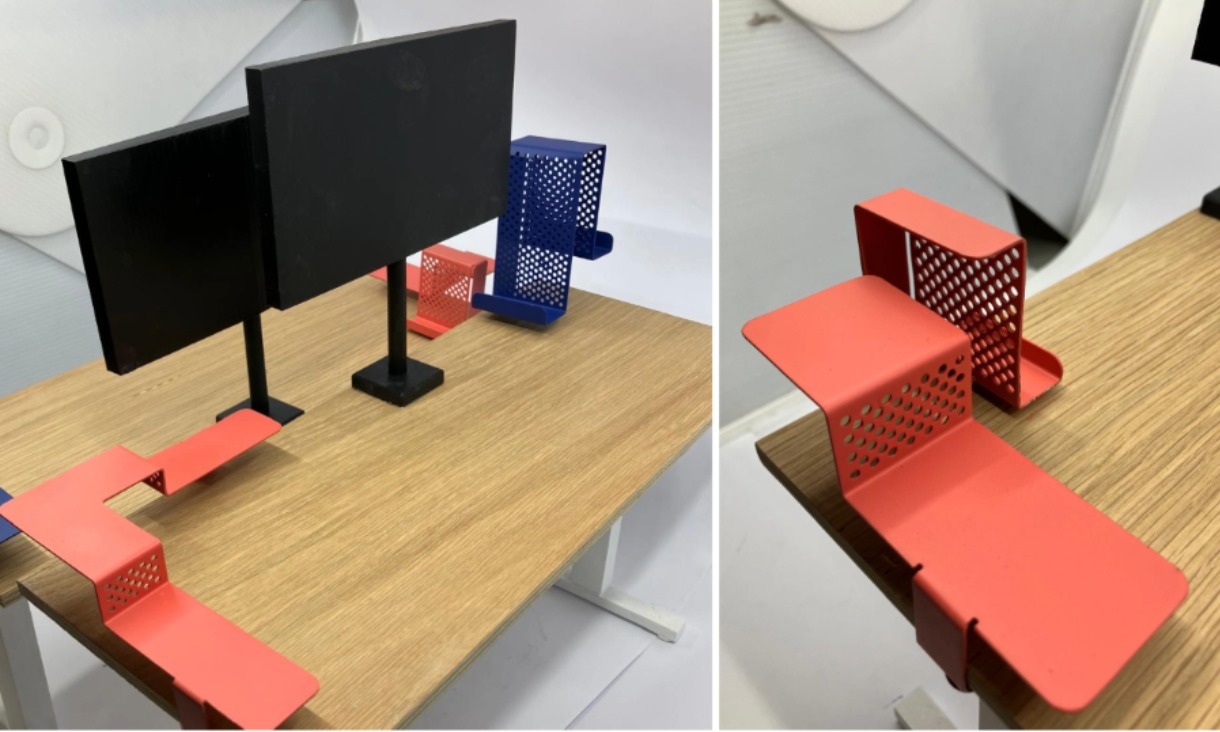
Third-year RMIT Bachelor of Industrial Design student, Jeremy Riminton’s project Stratum will be featured as part of the installation. His set of ergonomically designed floating shelves are modifiable based on the user’s personal requirements and don’t require permanent fastening methods, allowing the shelving to be moved, re-used and re-adapted. The shelves have also been designed with minimal environmental impact in both their production and end-of-life stage, where they can be easily recycled and repurposed. 

Riminton developed ‘Stratum’ in collaboration with ergonomic furniture designers, Humanscale, as part of an internship coordinated by RMIT.  

By working with an industry partner, I was able to challenge my own ability and work around feedback and deadlines that pushed me to design better.

For Riminton, the opportunity to tailor the degree to his interests and take part in opportunities like the Humanscale internship have been the key drivers in developing his design practice and preparedness for industry. 

"RMIT has been extremely refreshing for me," he said. "These opportunities are examples of how the staff truly push for the best for students."

orange and blue metal sculptures on deskJeremy Riminton’s project, ‘Stratum’.

A Day at the Park: speculative retail in an AI-shaped future

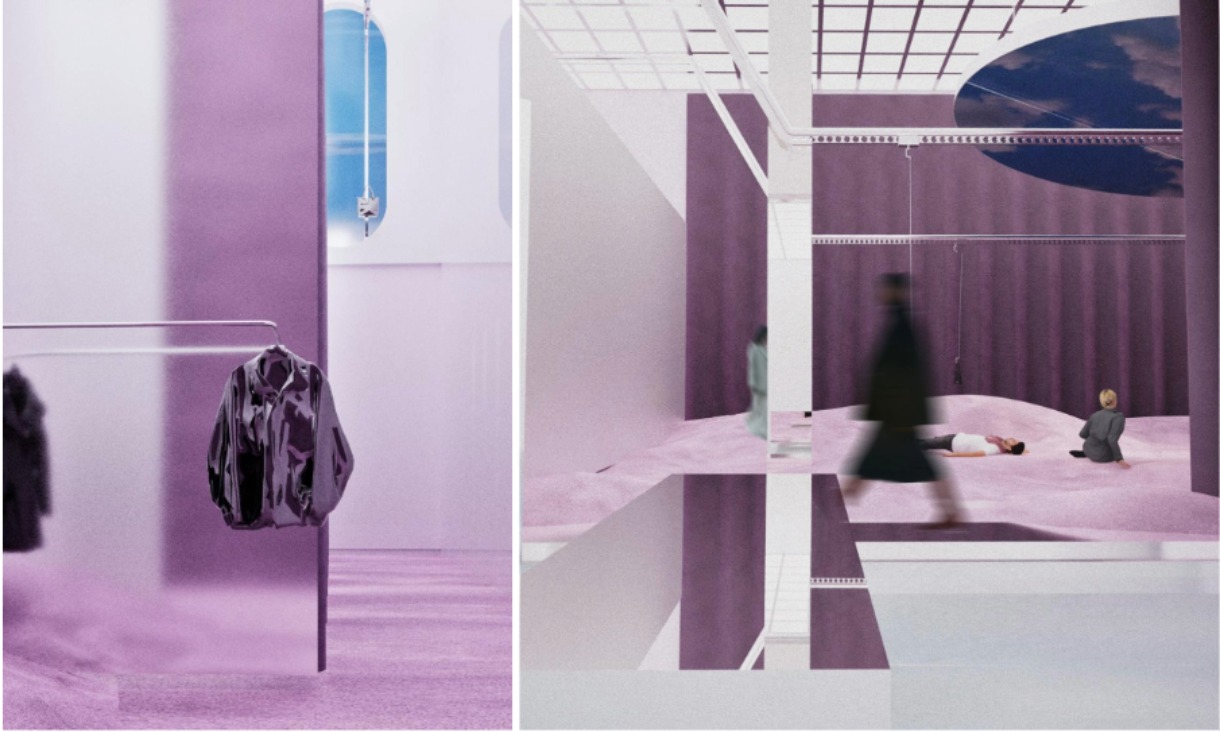
Fourth-year RMIT Bachelor of Interior Design (Honours) student Jasper Hamilton’s work, A Day at the Park will also be showcased. Hamilton’s speculative retail project is set in a near future shaped by AI, where dopamine chasing replaces labour as humanity’s main pursuit.

Purple and white collage with a jacket on the left and pink carpet with people laying on it on the right.Jasper Hamilton’s ‘A Day at the Park’ project.

For Hamilton, the breadth of the curriculum and diversity of skills taught throughout the program have developed his understanding of what design can be, beyond the physical.  

“The curriculum is so diverse, spanning everything from physical model making to digital publications, and has encouraged me to explore my own self-directed interests in design,” said Hamilton. 

“Studying at RMIT has given me a broad and adaptable understanding of what an interior can be, from the micro scale of detail and materiality to the macro scale of site and spatial experience. It has encouraged me to think of interior design not just as decoration or enclosure, but as a way of creating relationships between self, site and experience.”  

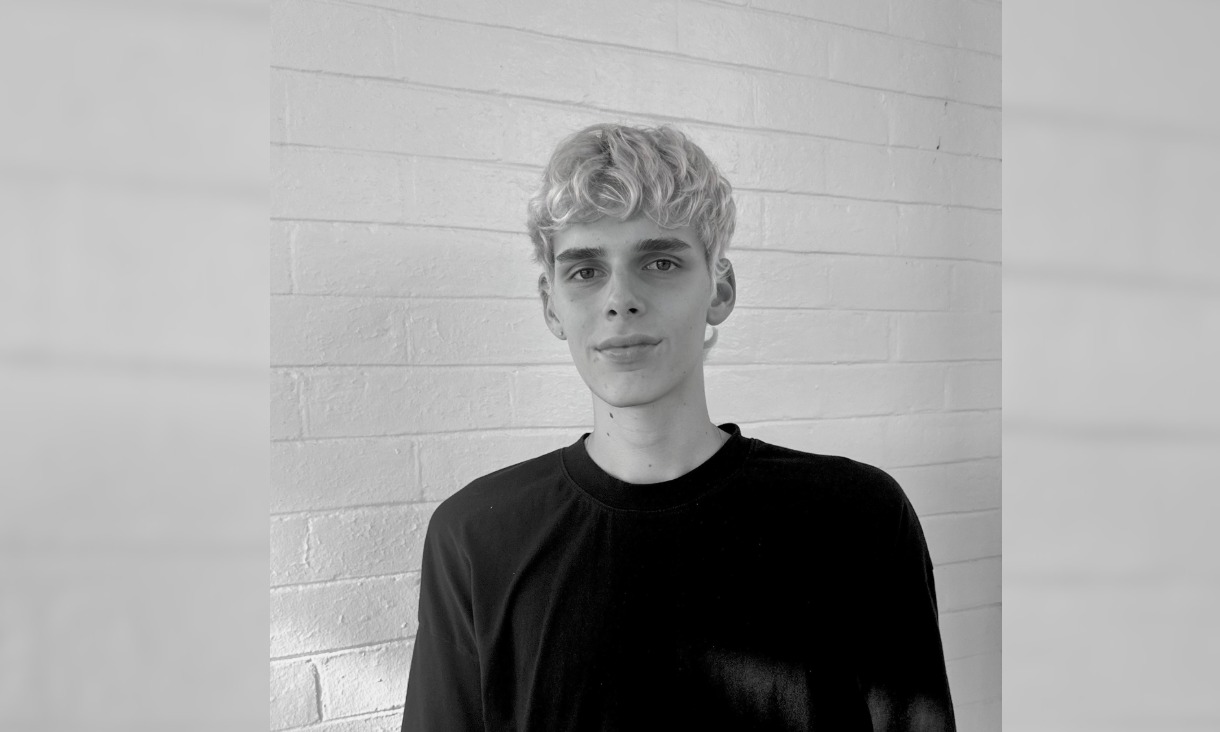
Black and white headshot of Jasper HamiltonJasper Hamilton.

For Hamilton, being included in Melbourne Design Week carries a particular personal significance.  

"For a long time, this kind of institutional recognition felt like something that might only become possible much later in my professional career, so to experience it now feels both surreal and deeply motivating." 

A Field of Exposure: architecture written by its site

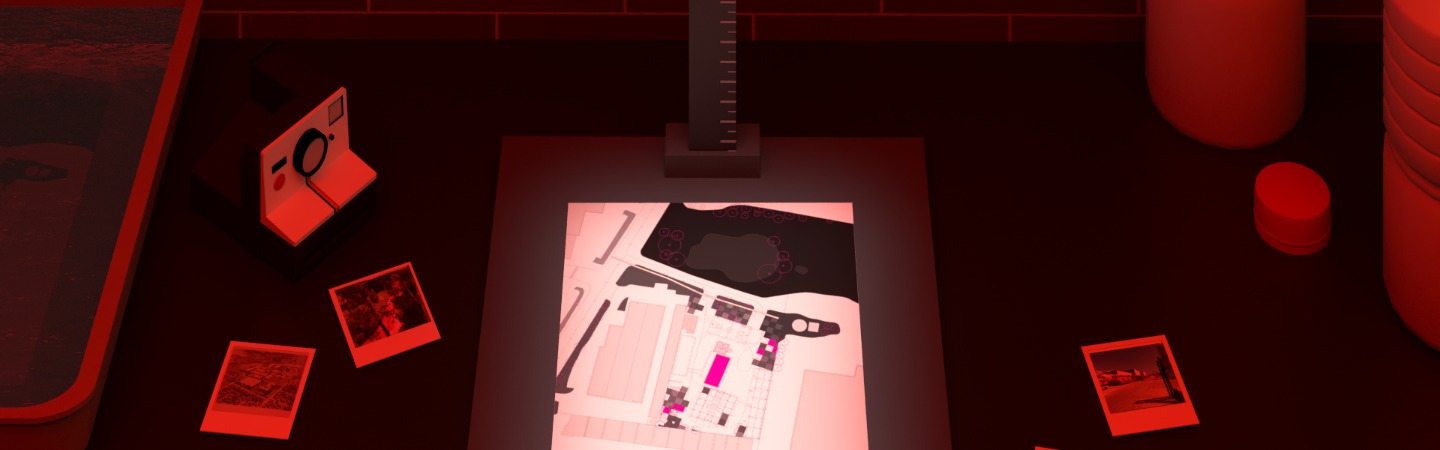
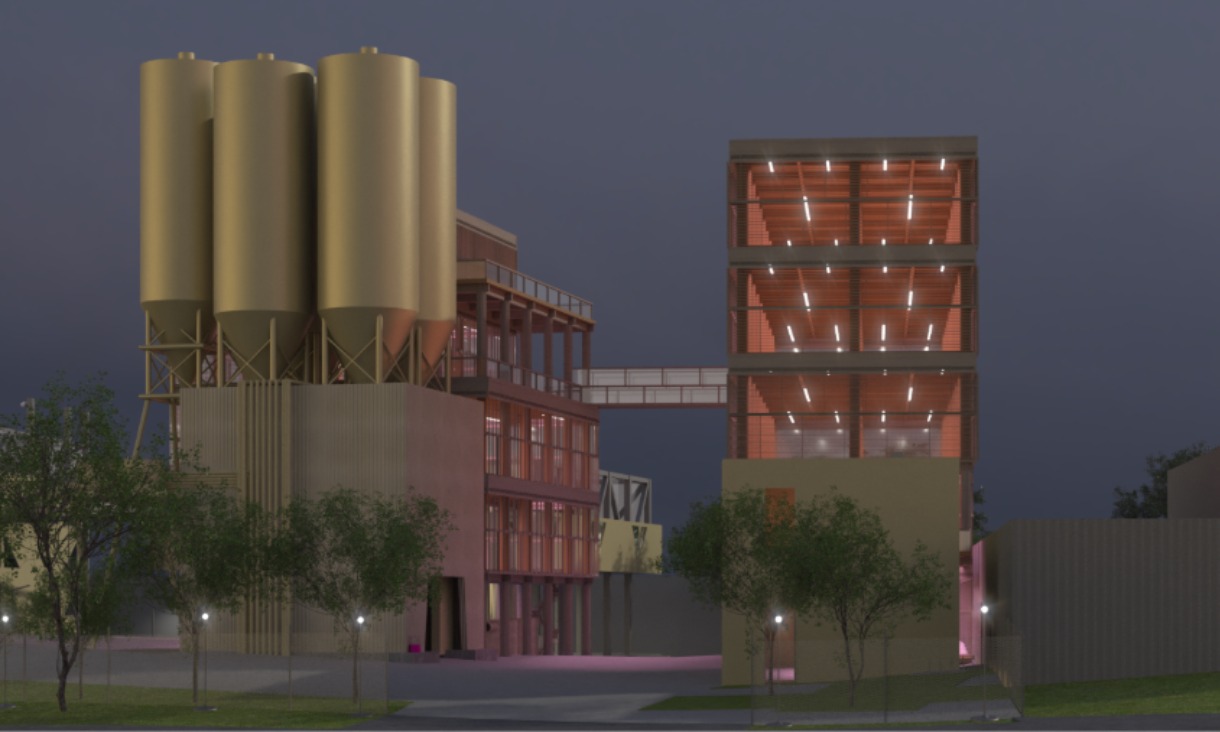
Samantha Ruckel, a final-semester RMIT Bachelor of Architectural Design student, brings a strikingly poetic sensibility to the installation. Her project reimagines an employment office on a former Coburg concrete plant using the site's environmental phenomena as its architectural framework, which she describes as a Field of Exposure

Corrugated iron skins catch light and scatter it across the yard, while the site holds the memory of a pink chemical bloom from a historic Kodak factory spill. Timber structures show signs of silvering and decay from years of exposure. Minerals bleed into one another in stepping stones made of mixed concrete overpour. As the sun sets, glass glows a faint rose tint before dissolving again by morning – an after image of the chemical spill written back into the building itself. 

Computer aided drawing of buildings and infrastructure at nightSamantha Ruckel’s ‘A Field of Exposure’ project.

"The project positions architecture as an active participant in environmental processes, where time is absorbed into materials, filtered through surfaces and rearticulated in the conditions around them," Ruckel explains, "allowing the site to continuously renew itself through cycles of exposure, weathering and erosion." 

Ruckel credits RMIT's discussion-based studio environment as central to developing this approach.  

The most interesting ideas can often be found in the unexpected conversations and sources of inspiration shared by peers.

Her studies have also reshaped how she understands the discipline itself. "I now view architecture as something intrinsically connected to landscapes, labour, culture and time. This studio encouraged me to work with what already exists while finding opportunity in the often-forgotten void spaces. This approach that feels increasingly important in the context of dense urban futures." 

Headshot of Samantha RuckelSamantha Ruckel

RMIT returns to Melbourne Design Week 2026 as NGV’s ‘Futures Partner’, reaffirming the University’s commitment to nurturing the next generation of design practitioners, thinkers and leaders.   

Future Workplace Thinking: Systems, Spaces, Cities is presented at the HOW Group Southbank showroom as part of Melbourne Design Week 2026. The external window display is visible at all times from 22-29 May from the pedestrian area in front of the Melburnian on St Kilda Road. The internal display is also open May 27-29, from 2-5 pm. 

05 May 2026

More student news

aboriginal flag float-starttorres strait flag float-start

Acknowledgement of Country

RMIT University acknowledges the people of the Woi wurrung and Boon wurrung language groups of the eastern Kulin Nation on whose unceded lands we conduct the business of the University. RMIT University respectfully acknowledges their Ancestors and Elders, past and present. RMIT also acknowledges the Traditional Custodians and their Ancestors of the lands and waters across Australia where we conduct our business - Artwork 'Sentient' by Hollie Johnson, Gunaikurnai and Monero Ngarigo.

Learn more about our commitment to Indigenous cultures