
Designing regenerative futures: RMIT community leads the conversation at Melbourne Design Week 2026

Designing regenerative futures: RMIT community leads the conversation at Melbourne Design Week 2026

RMIT returns to Melbourne Design Week 2026 as NGV’s ‘Futures Partner’, reaffirming the University’s commitment to nurturing the next generation of design practitioners, thinkers and leaders.

Running from 14 – 24 May, the tenth annual Melbourne Design Week (MDW) will platform design innovation and imagination through a suite of 400+ events across Victoria, including talks, tours, exhibitions, launches, installations and workshops.  

This year’s theme, ‘Design the world you want’, explores the myriad ways design practices influence everyday life and culture. More than 30 RMIT-affiliated projects will feature in the 11-day program, which showcases the future of food, fitness, furniture, architecture and more. 

"Melbourne Design Week has become the landmark event in the Australian design calendar and RMIT is proud to have taken part since its inception in 2017. As the NGV's Futures Partner, our involvement reflects a genuine alignment of purpose and belief that design has a critical role to play in building regenerative futures,” said Professor Naomi Stead, Associate Deputy Vice Chancellor, Engagement, RMIT College of Design & Social Context.  

“RMIT students, academics and alumni play a critical role in Melbourne’s design ecosystem. As we mark the 10th anniversary of this premier event, they continue to build Australia’s design legacy and push the boundaries of what design can do. We’re also thrilled to continue our support for Melbourne Art Book Fair and celebrate bold and experimental independent publishing from across Australia and the globe," she continued. 

Welcome to the Symbiocene

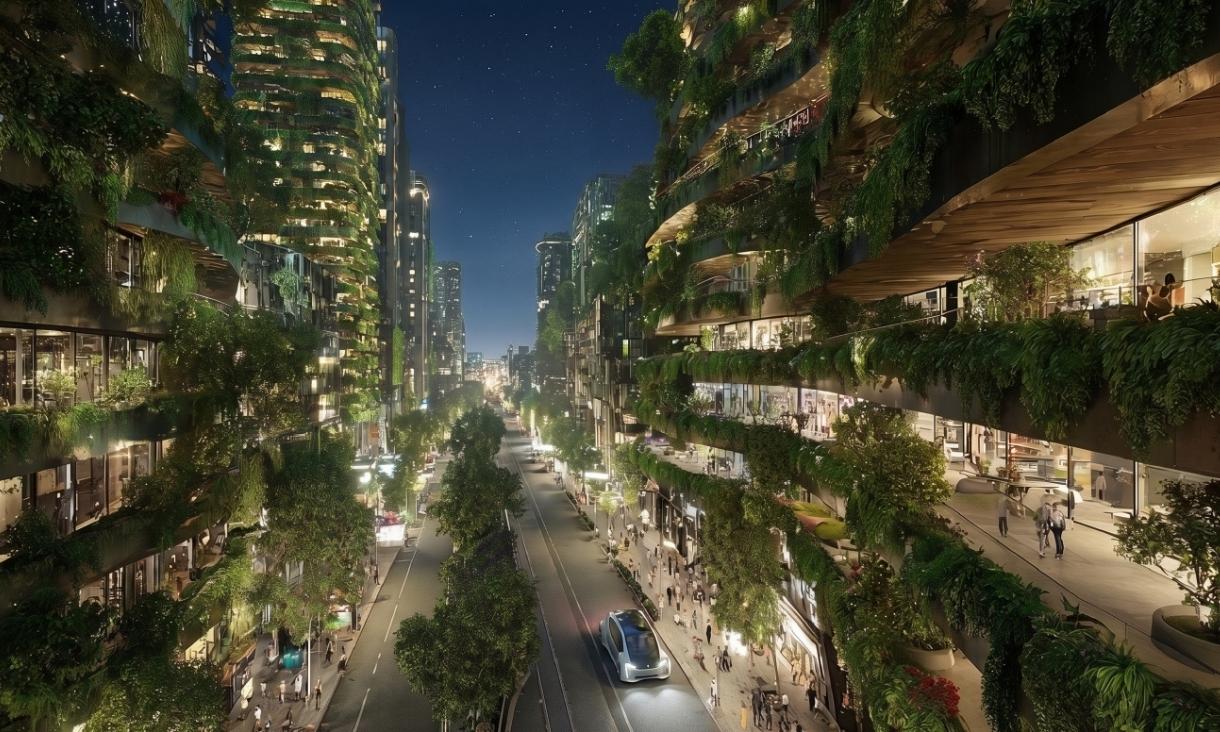
Presented by RMIT, the Symbiocene Institute and NGV, this symposium invites participants to inhabit a future shaped by the Symbiocene — a concept by eco-philosopher Dr Glenn Albrecht — envisioning an era where human culture, technology and economy exist in service of life on Earth. Using speculative design, three panels will explore Culture, Technology and Economy, examining the values and choices needed to navigate today's polycrisis — climate change, biodiversity loss, economic instability and social fracture — toward a thriving, symbiotic civilisation by 2100. The event closes with a conversation with David Holmgren, co-originator of permaculture and a defining voice in symbiotic thinking (It’s 2100. Welcome to the Symbiocene, NGV Great Hall, 20 May). 

An AI generated image of a beautiful city, with lush greening at duskYushan Wei, Master of Design Innovation and Technology student at RMIT University, Symbiotic City 2100, TapNow AI, Tammer AI, April, 2026

Other RMIT-affiliated program highlights

  • RMIT launches the Regenerative Futures Institute, a new interdisciplinary initiative advancing regenerative practice through education, research, and collaboration, weaving together expertise across design, science, technology and First Nations knowledges to explore how universities, industry, and communities can respond to complex environmental and societal challenges (Launch of the RMIT Regenerative Futures Institute, The Capitol, 14 May).  
  • RMIT Design Archives and RMIT Born Digital Cultural Heritage Lab present a screening of the emulation process and live play of the revitalised electronic game Typotronic, originally designed by Senior Lecturer, Typography, Dr Stephen Banham (Letterbox) and architect /macromedia specialist, Peter Hennessy (Drone Pty Ltd) in 1998 to encourage children to more closely observe Melbourne’s unique typographic landscape (Game On! Typotronic Revisited, RMIT Design Archives Gallery Window, 14-24 May). 
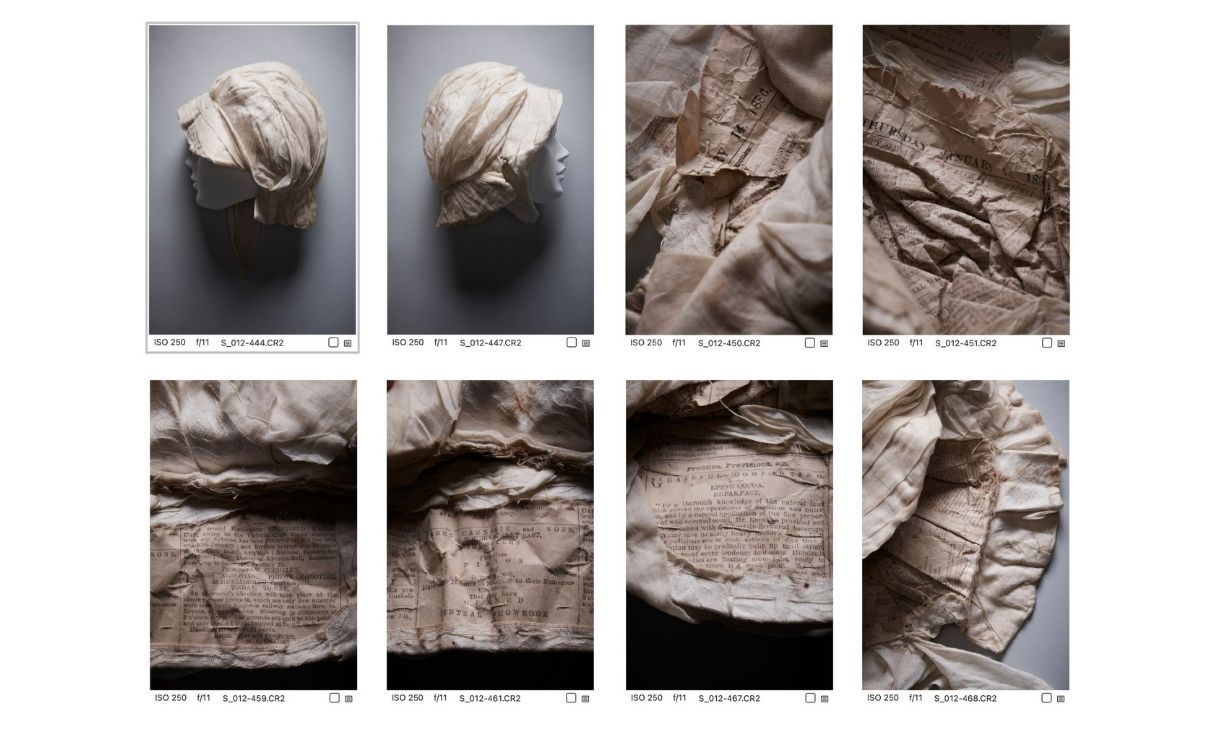
  • A group exhibition featuring RMIT Fashion (Design) staff: S!X (Dr Denise Spryskyj and Dr Peter Boyd); Amanda Nichols; DNJ Paper (Dr Daphne Mohajer va Pesaran and Jake Nakashima-Edwards); and Masters student Hyeonjeong Weon reimagines garment waste as a resource, casting discarded materials into new forms and meanings, through practices of transformation, adaptation and reuse within historical and contemporary contexts (reFashion/transform, Tasma Terrace, 14–23 May). 
a series of eight images are lined up against a white background, featuring different angles of the beige bonnet and it's handiworkreFashion/transform. Image: sun bonnet lined with newspaper, 1880. Photographer Tracey Hayes
  • A team from RMIT's Vocational Education Industrial Design and Furniture department: Harry Zanios; Malcolm Thomas; Jeanie Mulligan; Alex Lesniowski; and Adam Stewart have collaborated with Curve Design to present an exhibition of innovative Australian-made furniture pieces designed specifically for small footprints and multi-functionality (Second Nature, Curve Design, Abbotsford,14-24 May).   
  • A team from RMIT’s School of Fashion & Textiles: Professor Alice Payne, Dean; Associate Professor Rimi Khan; and Dr Rashmita Bardalai facilitate a Living Lab workshop assembling industry, policy makers, educators, researchers and community members to co-create pathways for accelerating circular textiles (A flourishing fashion system for 2040,  RMIT Brunswick, 14-15 May). 
  • An ‘open house’ exhibition of RMIT Master of Animation, Games and Interactivity (MAGI) student works, created by four cohorts who completed the RMIT EPIC intensive course between 2024-2026 features rare, cutting-edge technologies, including 3D holographic screens, haptic feedback devices, motion capture suits and 360° virtual reality motion simulation devices (Playable XR: Extended Reality RMIT Showcase,Virtual Experiences Lab (VXLab) RMIT, Carlton South, 14-15 May & 21-22 May).
  • Caeser Li, PhD Candidate in RMIT’s School of Design, showcases a digital typographic installation at Melbourne Art Book Fair in NGV’s Great Hall, exploring the cultural memory between written English and Chinese languages (ORIENT & RE-ORIENT, NGV Federation Court, 15-17 May). 
Different text is oriented is grey and white text over a yellow background. The grey text reads 'India & China. Emperor's Bouquet Tea Company'. The white text reads 'even leaf. delicious flavour. never varies'. ⁠ Xinyuan (Caesar) Li, ORIENT & RE-ORIENT
  • World Landscape Architecture present the winners of the Design the World You Want International Student Ideas Competition in this exhibition featuring shortlisted designs by landscape architecture students around the globe that reimagine Melbourne’s Victoria Harbour (Design the World You Want International Student Ideas Competition exhibition, RMIT Design Hub, 15-16 May). 
  • Brunswick Design District hosts four days of hands-on, collaborative design and screen-printing workshops by Pavement Print Studio at MPavillion RMIT @ Brunswick, culminating in an exhibition of outputs at nearby Balam Balam Place (Open Edition, workshops: MPavillion, RMIT Brunswick Campus, 15-18 May; exhibition: Balam Balam Place, 20-24 May).
  • Tania Ivanka, Lecturer in Communication Design, leads a workshop, facilitated through co-design tools, on ‘evolutionary organisations’ (also termed ‘self-managing teams’) (Co-designing evolutionary organisations, RMIT City Campus 16 May; and online 20 May)
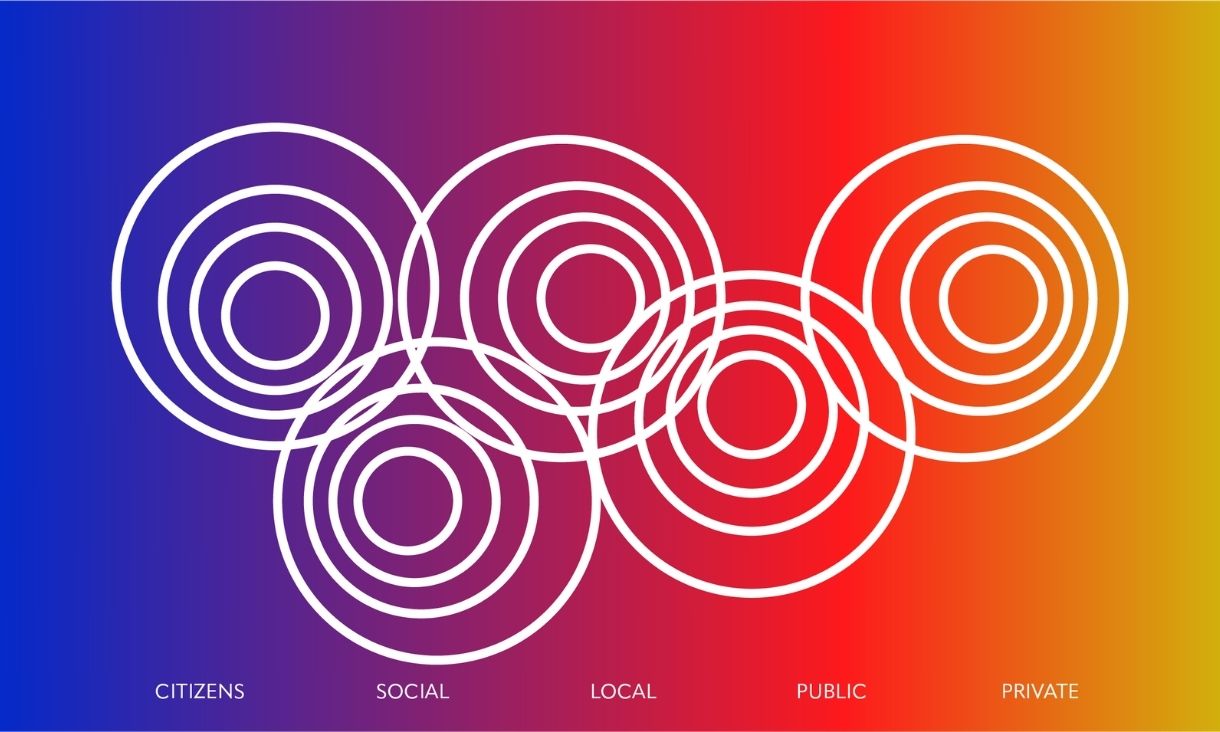
  • A panel of policy design practitioners, including Professor Andrea Siodmok, Dean, RMIT School of Design; Dr Natalia Radywyl, RMIT School of Design; Amanda Good, Director, Innovation and Futures, Aurecon; and Dr Marius Foley, RMIT Master of Design Futures Program Manager, present guiding principles for the future of policy design to a public audience, to discuss and develop in subject circles and ultimately develop a white paper (AMPLIFY >> FUTURE POLICY DESIGN, RMIT City Campus, 18 May).
A gradient background from blue to red to yellow. Over the gradient are five circles with four rings inside, underneath is text saying 'citizens, social, local, public, private'.Governance As A System (loosely based on a diagram by Andrea Siodmok) Image by: Marius Foley
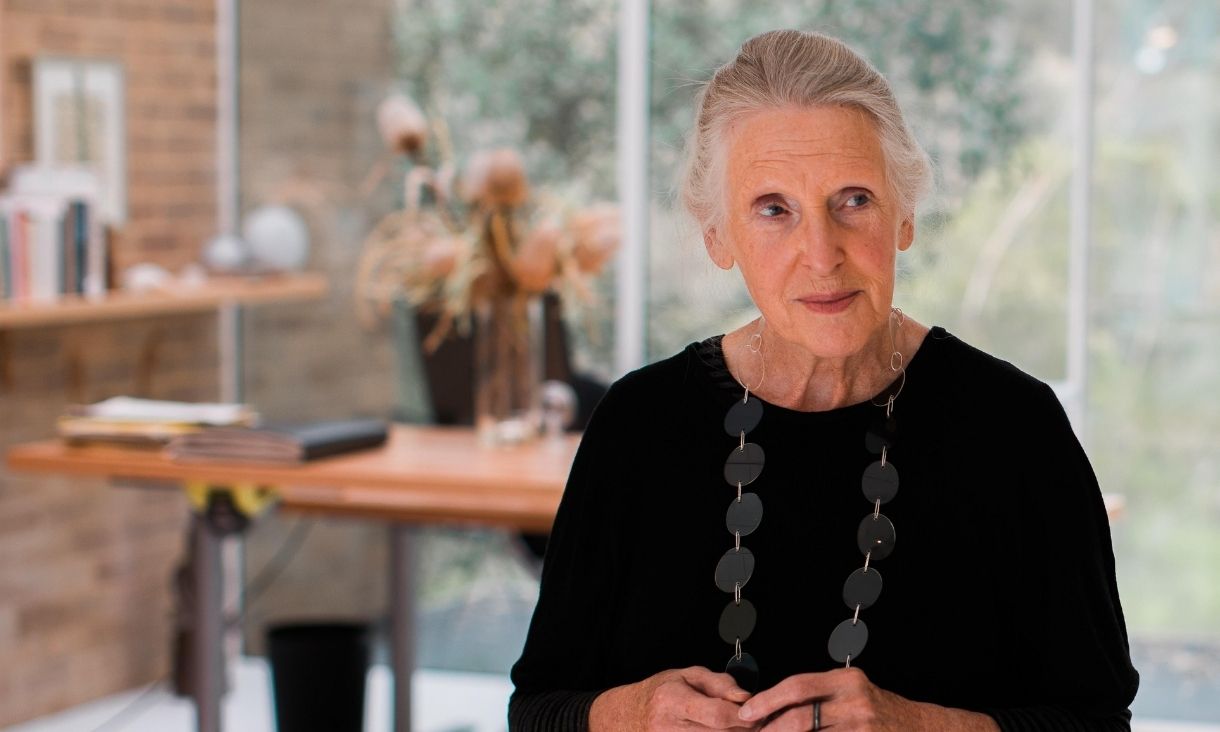
  • Interior Design Adjunct Professor and RMIT alumna Mary Featherston joins Grand Designs Australia presenter, Professor Anthony Burke to discuss her creative practice with her late husband, Grant Featherston (Mary Featherston in Conversation, NGV International, 20 May).
Mary stands in front of a large room with a spacious window, she is wearing black with a long necklace.Mary Featherston. Image courtesy of designer
  • Professor Sarah Teasley, RMIT Born Digital Cultural Heritage Lab, leads a collection viewing of original archival documents and CAD drawings from the Joyce Nankivell Collection, animated through a panel discussion (Born Digital: the Joyce Nankivell Collection, RMIT Design Archives, 20 May). 
  • Sandra Githinji, Associate Director, Interior Design appears as part of the What I Wish I Knew Then lunchtime talk series that pairs emerging designers with experienced industry leaders for candid, cross-generational conversations (Lunchtime Talk: What I Wish I Knew Then (Interior Design), Ian Potter Centre, 20 May). 
  • Designers from RMIT’s Master of Design, Innovation and Technology contemplate design in Melbourne’s vibrant food culture as a restorative practice: slow, accountable and built with the communities that extraction-led design has most often overlooked. Addressing topics ranging from the erasure of First Nations foodways knowledge to the invisible labor of migrant growers, they prototype regenerative, decolonial alternatives to the industrial food machine (Sociable Designer, RMIT Media Portal, exhibition: 21-22 May; talk 22 May). 
  • RMIT Fashion (Design) Associate Lecturer Kate Reynolds and Amanda Cumming co-founders of multidisciplinary fashion practice PAGEANT, present a retrospective exhibition featuring installation-based fashion, design, visual art and film (PAGEANT: A retrospective (2010 to 2025), Abbotsford Convent, 21-24 May). 
  • RMIT Immersive Futures Lab in the School of Architecture & Urban Design present a game-based architectural installation and participatory experience that invites visitors to enter a custom-designed gaming environment of RMIT’s City North Precinct and explore speculative worlds developed with RMIT Master of Architecture students, researchers and collaborators (Gaming Futures: Civic Worlds for City North, RMIT Design Hub, 22 May). 
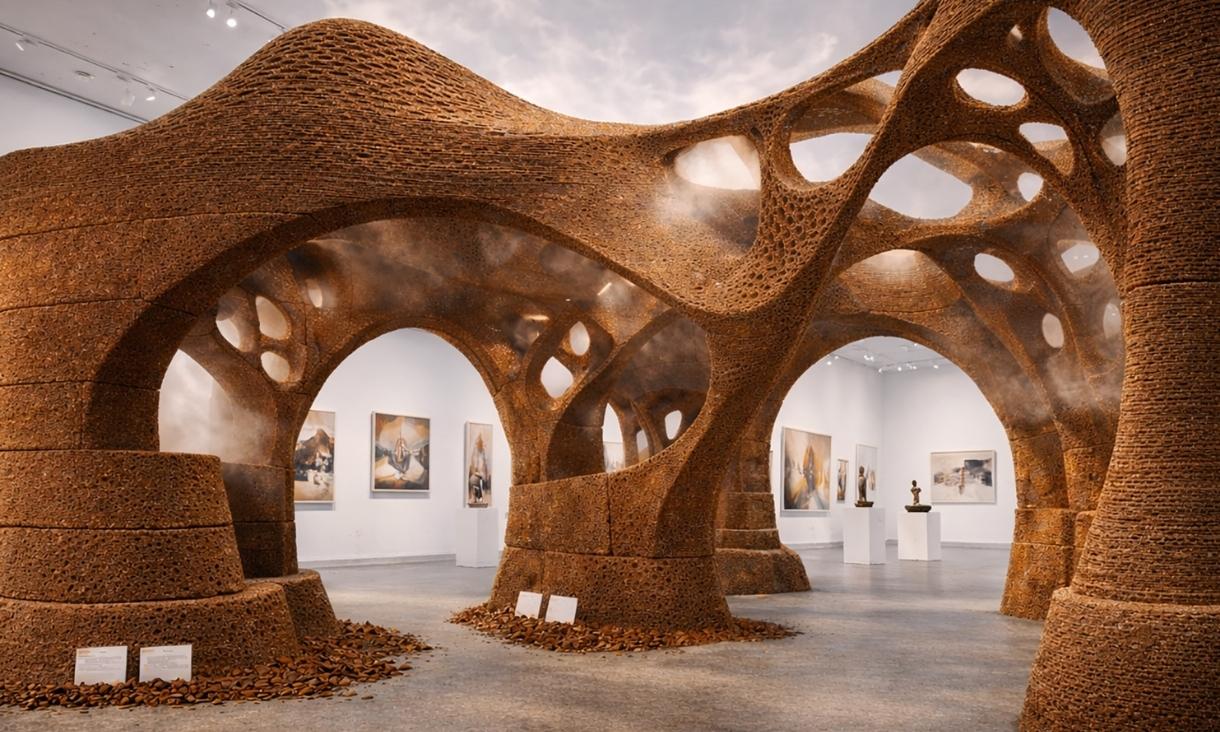
  • RMIT’s School of Architecture and Urban Design; and School of Science and the School of Engineering, in partnership with Hohai University and Beijing University of Civil Engineering and Architecture, present an immersive, modular 3D-printed installation that reimagines locally collected coffee waste as a material for multisensory architecture (Waste to Form, RMIT Design Hub and Building 3, 22-24 May). 
an organic structure is displayed in a white room. Its roof is shaped like moving water Waste to Form concept image by Nic Bao
  • Olivia Hamilton, Associate Dean, Learning & Teaching, RMIT’s School of Architecture and Urban Design, leads Collective Curriculum 2 - an evolving, open-source archive of pedagogical exercises that respond to the climate crisis through creative practice (Collective Curriculum 2, 22-23 May, 3553 Collingwood).
  • HOW Group and RMIT present a curated window installation that reimagines the street as a live gallery of future workplace thinking; showcasing circular economy projects by RMIT Architecture, Interior Design, and Industrial Design students, from speculative proposals to near-market prototypes (Future Workplace Thinking: Systems, Spaces, Cities, 22 - 29 May, HOW Group Showroom). 
  • Two PhD candidates from RMIT’s School of Design, Suxuan Tian and Xinyuan (Caesar) Li, supported by Senior Lecturer and Program Manager of the Master of Communication Design, Dr Noel Waite, demonstrate examples of community design to restore relationships between people and place and support belonging in Naarm/ Melbourne (Wayzfinding, RMIT City Campus, 23-24 May).
  • Dr Stephen Badham, Senior Lecturer in Typography in the School of Design, appears in a symposia bringing together diverse graphic design practitioners for project-led presentations and conversations exploring how place, culture and lived experience shape visual form and authorship. HERE: Australian Graphic Design – Place and Practice Symposia, Abbotsford Convent, 24 May). 

RMIT alumni program highlights

RMIT alumni feature heavily in the MDW program, highlighting their diverse contributions across architecture, design, photography and art:  

  • Following the success of 100 Lights at Melbourne Design Week 2025, RMIT Architecture alumnus Dale Hardiman presents 100 Chairs, showcasing Australian-made creations by local designers (Abbotsford Convent, 14-17 May).  
  • Emerging and established Australian artists, designers and craftspeople, including RMIT Interior Design alumna Lucy McRae, reinterpret broken objects through innovative repair and reuse practices (Transformative Repair, Useful Objects Gallery, 14-23 May). 
  • RMIT Architecture alumna Cathy Zihan Fan traces the transformation of organic matter into the domestic realm in an exhibition of ‘carbon-based creations’ (The Legacy Objects, 15-17 May). 
  • Presented by RMIT Design Archives, RMIT Art alumni Sarah Murphy and Matt Feder of Troppo Print Studio present a collection viewing and talk on the Jigsaw Factory design archives, focussing on the impact of board games and children’s books on contemporary design and publishing (Spellbound in the Archives, The Jigsaw Factory and Troppo Print Studio, 18 May). 
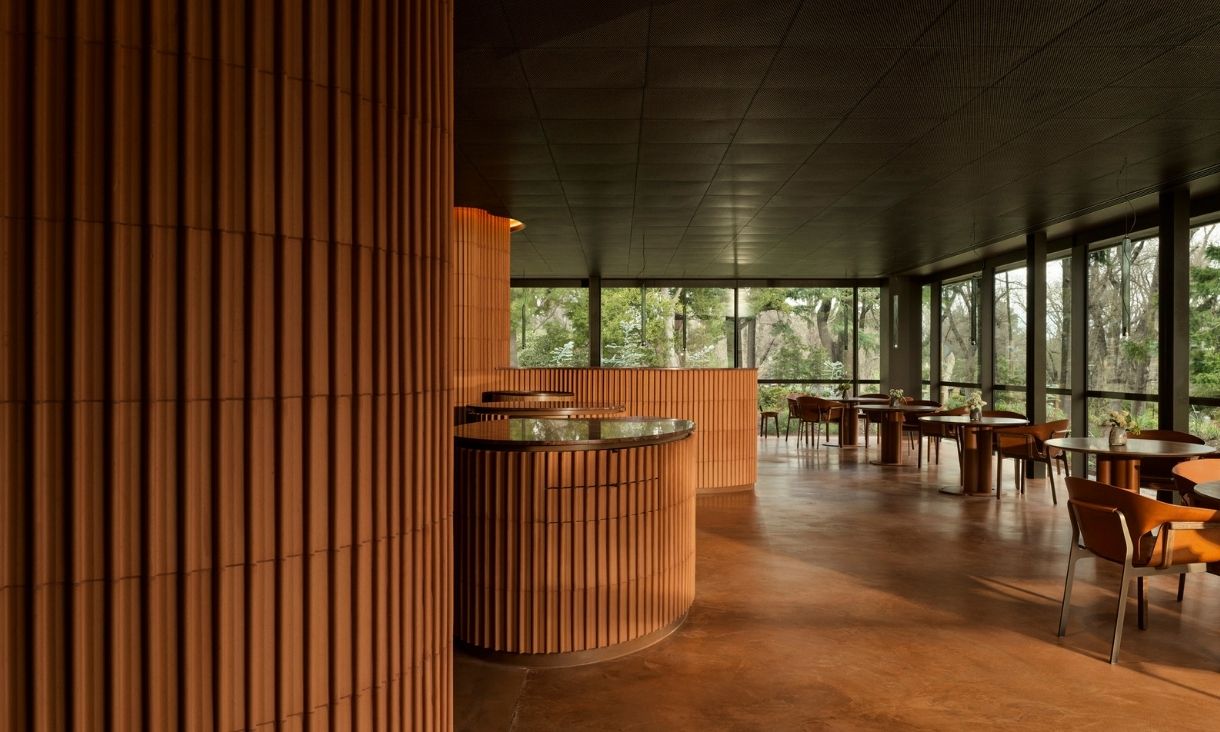
  • Yiaga: The Craft of Place brings together Executive Chef Hugh Allen in conversation with architect and RMIT Architecture alumnus John Wardle to explore how design and craft shape the dining experience at Melbourne’s newest fine dining establishment ( Yiaga Fitzroy Gardens, 20 May).  
A warm building interior, with large windows and wood features. Yiaga by Wardle. Photo: Anson Smart
  • Melbourne-based architectural photographer, artist and RMIT Architecture alumnus John Gollings reflects on his iconic photography of Australian architecture and urbanism in conversation with NGV Curator of Contemporary Design and Architecture, Dr Timothy Moore (Creative Conversations: John Gollings, The Ian Potter Centre: NGV Australia, 24 May).  

An initiative of the Victorian Government and curated by NGV, Melbourne Design Week has grown from just over 100 events in 2017 to more than 400 in 2026. In 2025, over 100,000 people attended the program, underscoring the demand for contemporary design experiences in Victoria.  

RMIT is NGV’s Futures Partner, reflecting the two institutions’ shared commitment to regenerative futures. Read more: RMIT joins NGV as Futures Partner - RMIT University 

Banner: Bianca Spender garments transformed by Lucy McRae. Photo: Traianos Pakioufakis

Share

  • fashion
  • DSC Research
  • Industry
  • Arts and culture
  • Architecture
  • Society
  • Design
  • Sustainability
  • DSC
  • Research
  • Regenerative Futures
  • Urban Design
  • Future World of Work

Related News

aboriginal flag float-starttorres strait flag float-start

Acknowledgement of Country

RMIT University acknowledges the people of the Woi wurrung and Boon wurrung language groups of the eastern Kulin Nation on whose unceded lands we conduct the business of the University. RMIT University respectfully acknowledges their Ancestors and Elders, past and present. RMIT also acknowledges the Traditional Custodians and their Ancestors of the lands and waters across Australia where we conduct our business - Artwork 'Sentient' by Hollie Johnson, Gunaikurnai and Monero Ngarigo.

More information