
RMIT PhD candidate Caesar Li makes his mark on Melbourne Design Week 2026

RMIT PhD candidate Caesar Li makes his mark on Melbourne Design Week 2026

Xinyuan (Caesar) Li is presenting three projects across Melbourne Art Book Fair and Melbourne Design Week 2026 this May, exploring how typography shapes culture, identity, and belonging.

RMIT University PhD candidate Xinyuan (Caesar) Li is among the standout voices at Melbourne Design Week (MDW) 2026, with three separate projects featured across the National Gallery of Victoria's landmark annual program. His work spans a video installation, a community walking exhibition, and a contributor role in an independent publication launch. This remarkable showing reflects years of research at the intersection of typography, cultural history and cross-cultural identity. 

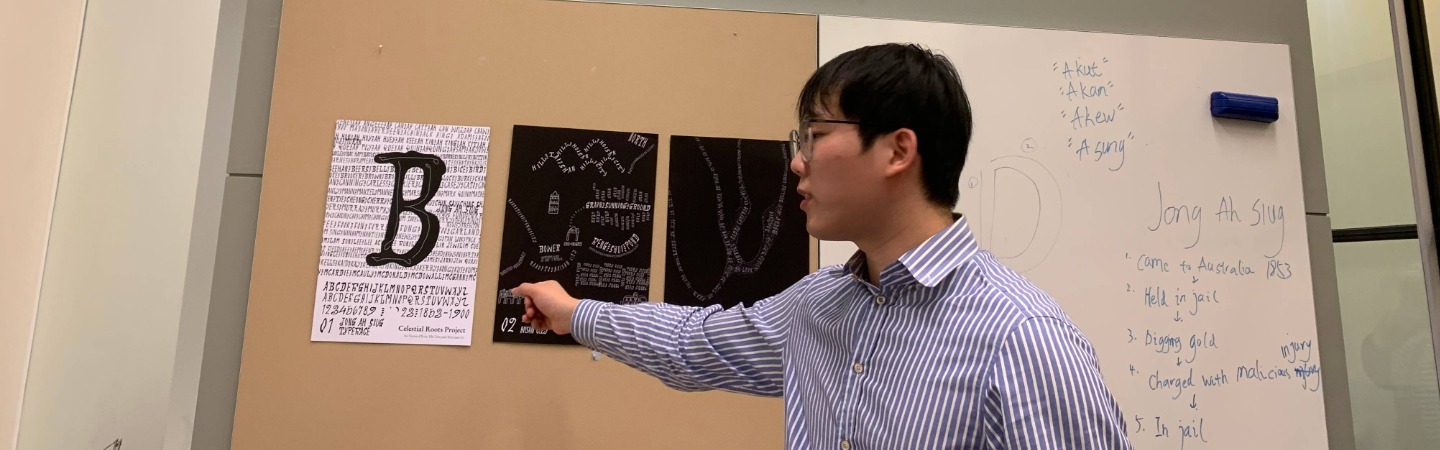
Li's path to a PhD was far from linear. It was during his Master of Communication Design at RMIT that his fascination with typography as a cultural form began to crystallise. A pivotal turning point came when he worked as a research assistant with Dr Fayen d'Evie, Lecturer in Communication Design, on a project analysing and digitalising a diary written by a Chinese gold miner during the Victorian Gold Rush era. 

The experience shifted my perspective and deepened my interest in typography, especially in relation to culture and social contexts. It led me to see typography not just as a design tool, but as a critical and cultural form.

Pursuing a PhD felt like a natural next step that would allow him to continue developing this line of inquiry within Chinese-Australian contexts. 

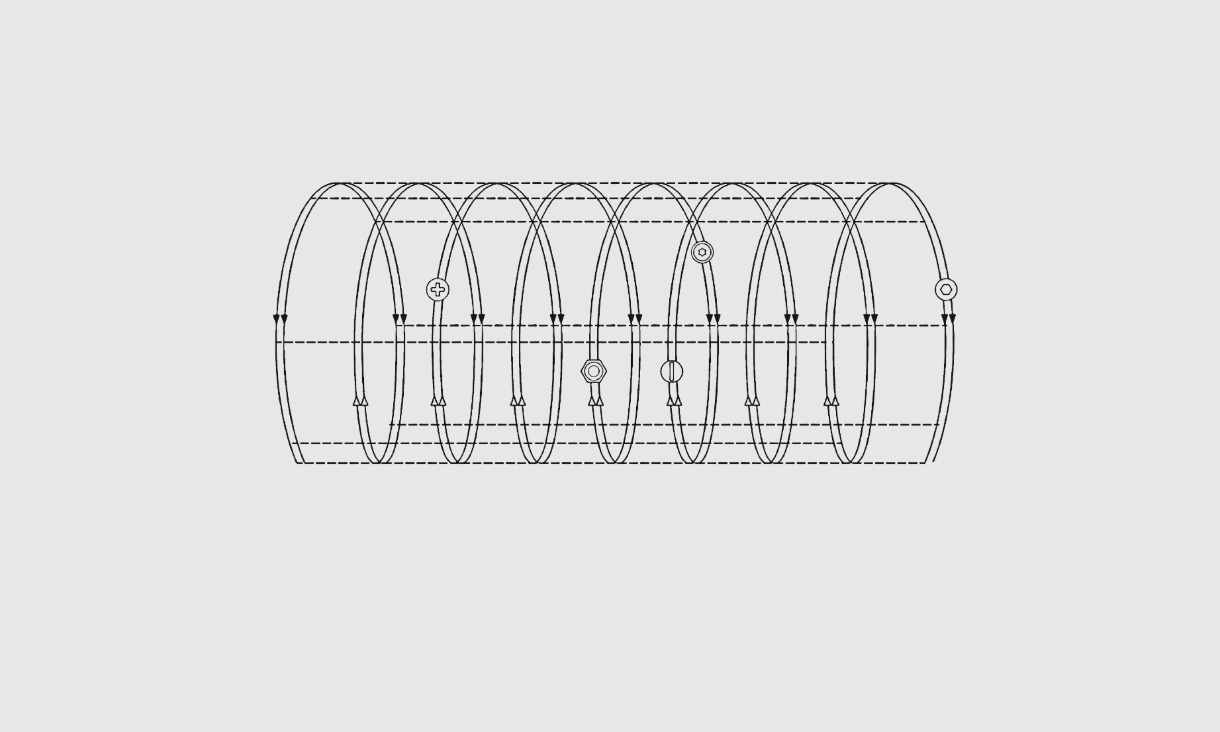
Caesar Li - image 1'ORIENT & RE-ORIENT', Xinyuan (Caesar) Li.

'ORIENT & RE-ORIENT': typography as a political act

The centrepiece of Li's MDW presence is ORIENT & RE-ORIENT, a three-channel digital video installation presented at Federation Court, NGV International, as part of the Melbourne Art Book Fair (15–17 May). 

Ornament is often seen as decorative and neutral, yet it carries inevitable cultural and social connotations. Li’s work confronts this assumption head-on, examining 'chop suey'-style letterforms that have historically mimicked "Chineseness" without any authentic connection to Chinese culture or tradition. Drawing on tea label designs produced by the India & China Tea Company in nineteenth-century Victoria, the installation integrates typography and ornamentation to re-orient the viewer toward the social, cultural and political dynamics and tensions that shaped Chinese-Australian relations in the 19th century. The original promotional phrases of that company are reinterpreted into a typographic manifesto with a clear message that typography is never neutral. 

"The work invites audiences to consider how such ornamental, ethnicised typography purports and contributes to the shaping of Chinese cultural identity," Caesar explains, "while also questioning the role of ornament and design in everyday visual culture." 

His PhD research sits at the heart of this project. "The MDW project is very much an extension of my research," he says. "It builds directly on my investigation into the history of typography within Chinese-Australian contexts, translating this research into a public-facing form." 

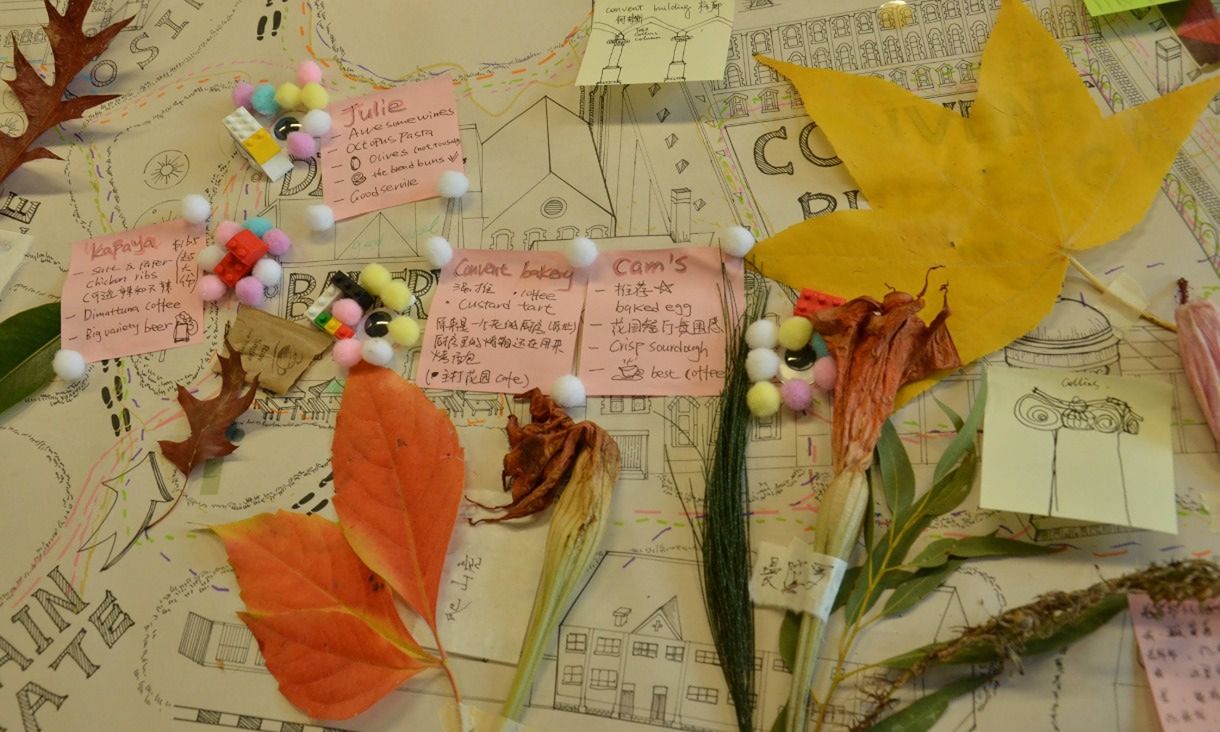
Caesar Li - Image 2Abbotsford Convent 3M workshop map. Image by Suxuan (Luna) Tian.

'Wayzfinding' exhibition and workshop

Caesar is also co-curator and co-designer of Wayzfinding, an exhibition and workshop presented at RMIT's Garden Building (23–24 May), developed alongside fellow PhD candidate Suxuan (Luna) Tian and supported by Dr. Noel Waite. The project explores how walking and play can become powerful methods for building belonging and connection in urban life, inviting participants to reimagine Melbourne through movement, dialogue, and participation. 

Caesar Li - Image 3'Intermediary' cover image.

'Intermediary' publication launch in Brunswick

Rounding out an impressive MDW program, Caesar is a contributor to Intermediary, a new independent publication and curatorial testing ground that examines the networks connecting art, design and craft. The launch takes place at Oddaný Gallery in Brunswick on 22–23 May as part of the Melbourne Art Book Fair program. 

From studying at RMIT to presenting work at NGV

For Caesar, seeing his work connect with the public has been one of the most rewarding parts of the process. 

Presenting at the NGV as part of the Melbourne Art Book Fair allows the work to engage with people from diverse backgrounds. As someone who has moved between cultures, it's especially meaningful to share this work with audiences who may or may not share the same cultural background.

He hopes the project can encourage a more nuanced understanding of typography not as something merely decorative, but as something deeply connected to culture, history, and identity. "I hope it can create a space for conversation, where different experiences can sit alongside one another and lead to greater mutual understanding." 

Caesar credits the ongoing support of his supervisors, Dr Noel Waite and Dr Fayen d'Evie, as well as the broader RMIT School of Design community. 

RMIT has created a space where students can explore ideas, experiment and express themselves in different ways. Beyond the many opportunities I've been given, the supportive community and access to diverse resources have also made it possible to collaborate with a group of talented and creative emerging artists. 

For students looking to follow a similar path, Caesar's advice is to "find something you're genuinely interested in and let that guide your work. And then, be patient and persistent.  These opportunities take time." 

RMIT returns to Melbourne Design Week 2026 as NGV’s ‘Futures Partner’, reaffirming the University’s commitment to nurturing the next generation of design practitioners, thinkers and leaders.

  • ORIENT & RE-ORIENT is on display at Federation Court, NGV International, 15–17 May, 10am–5pm
  • Wayzfinding runs 23–24 May at RMIT Garden Building, Bowen Street
  • Intermediary launches at Oddaný Gallery, Brunswick, 22–23 May. 
xinyuan-li-headshot-1220x732.jpeg

Xinyuan (Caesar) Li is a designer, researcher and artist born in China and based in Melbourne. He is currently a PhD candidate at RMIT University. His practice examines typography as a critical and cultural form that reflects personal experience, identity, culture and history, especially in Chinese-Australian contexts. Drawing on historical materials, he seeks to generate new narratives and interventions.  

29 April 2026

More student news

aboriginal flag float-starttorres strait flag float-start

Acknowledgement of Country

RMIT University acknowledges the people of the Woi wurrung and Boon wurrung language groups of the eastern Kulin Nation on whose unceded lands we conduct the business of the University. RMIT University respectfully acknowledges their Ancestors and Elders, past and present. RMIT also acknowledges the Traditional Custodians and their Ancestors of the lands and waters across Australia where we conduct our business - Artwork 'Sentient' by Hollie Johnson, Gunaikurnai and Monero Ngarigo.

Learn more about our commitment to Indigenous cultures