Next generation of engineers showcase talent at EnGenius

Next generation of engineers showcase talent at EnGenius

Final-year engineering students presented potential solutions to real-world problems, from a warning system to minimise crashes at Melbourne’s infamous Montague Street Bridge, to sustainable materials made from mushrooms.
Last month, over 1,000 final-year engineering students presented their capstone projects at EnGenius, showcasing their innovative solutions to real-world problems.

Projects ranged from an over-height warning system to minimise crashes into the infamous Montague Street Bridge in Melbourne, to modular orthotic 3D printing for children requiring orthotic braces, to renewable and sustainable materials made from mushrooms.

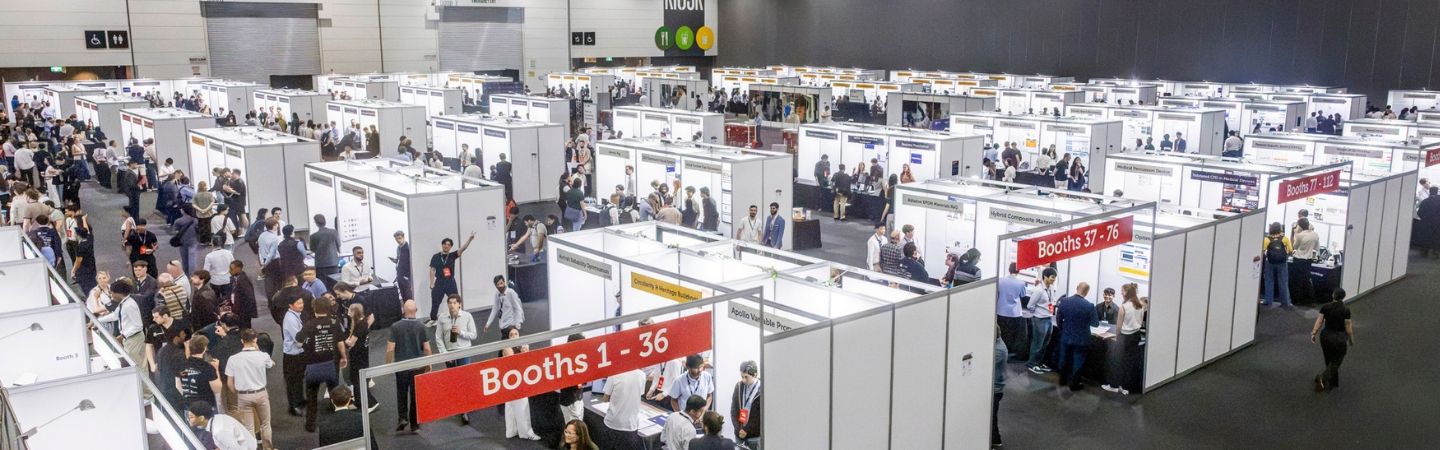
EnGenius is an opportunity for students to present their projects to academic staff, industry partners and other guests in a professional environment, with approximately 800 guests attending on the day.

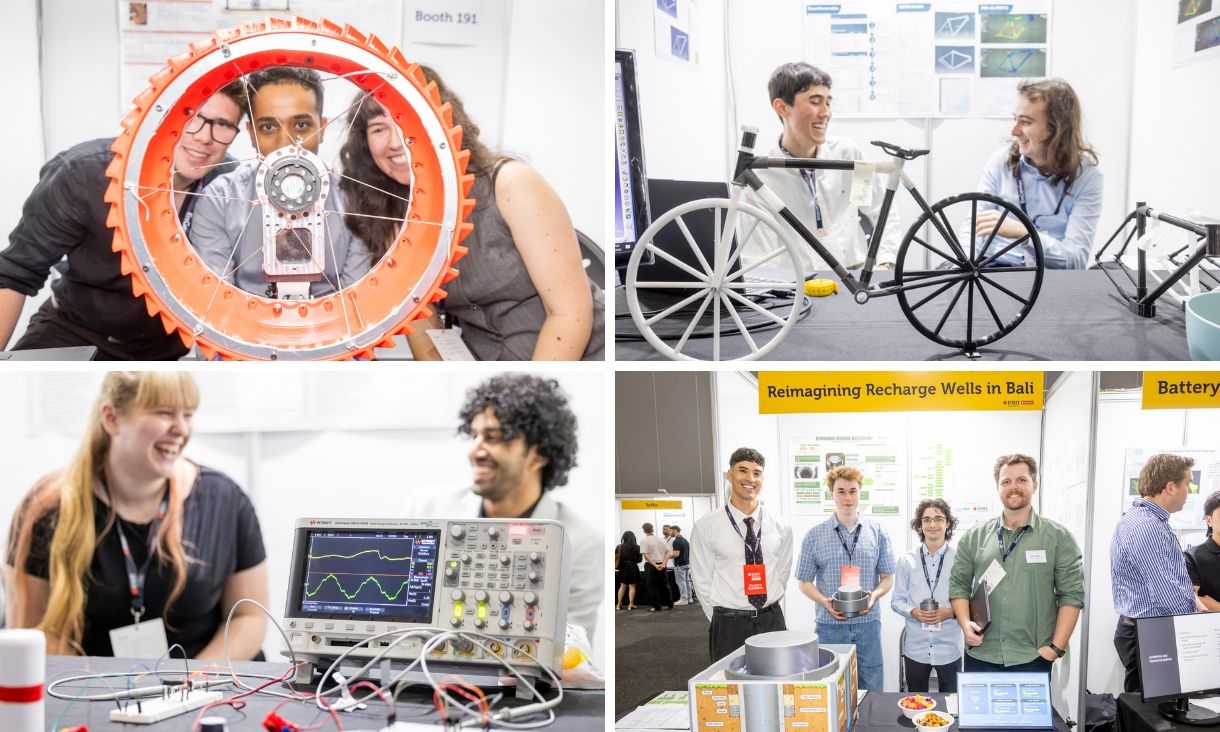
Collage of students at their exhibition booths, showing a large orange wheel, a 3D-printed bike, an oscilloscope and a recharge wells project for Bali.A range of student projects on display.

Professor Kevin Zhang, Dean, School of Engineering, said the projects demonstrated an exceptional level of ingenuity with high impact potential.

“EnGenius demonstrates the value of hands-on, project-based and industry-connected learning, where students apply engineering knowledge to real-world problems and develop solutions with genuine impact,” Professor Zhang said.

“Many projects exhibited this year showed strong potential for commercialisation, highlighting not only our students’ technical capability and creativity, but also their motivation to translate ideas into innovations that can create economic, social and environmental value."

“As Australia continues to face growing demand for engineering talent, events like EnGenius showcase the next generation of engineers who are prepared to contribute from day one.”

Solving a notorious problem

The Montague Street Bridge in Melbourne is known for frequently being struck by oversized trucks, vans and buses due to its low 3-metre height.

This phenomenon fascinated students Leroy King and Samuel Lytras, who developed their own over-height warning system for the bridge and other low-clearance infrastructure.

Samuel said their project expands on existing crash prevention methods, which can have limited functionality.

Part of the reason why a lot of warning systems don’t work is that they target just one sense – either visual or audio. We have combined both visual and audio into one with our sensor

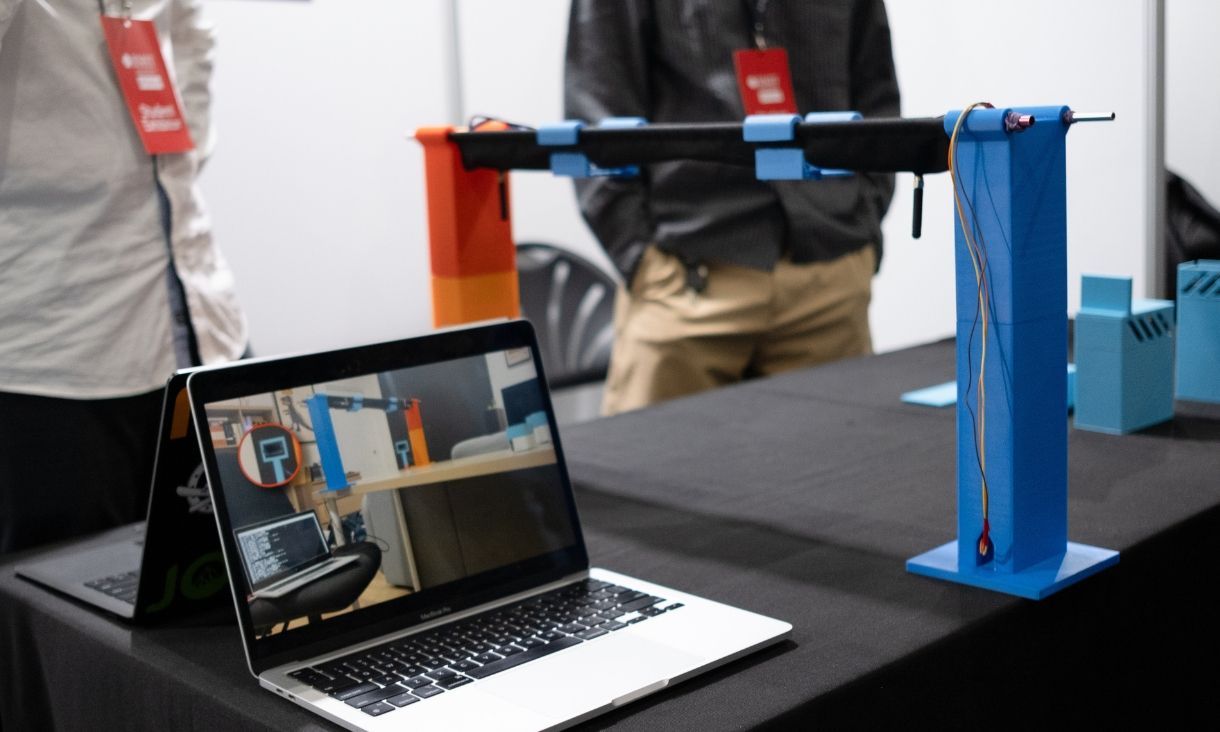
“Our system uses a sensor which scans the roof of a vehicle and identifies the highest point in real time."

“If that highest point is over the height of the bridge, it will send a warning to an e-tag, which will emit an audible warning that tells the driver to stop immediately.”

Leroy said the team spoke with former government representatives about the project to understand the feasibility of their solution.

His hope is for the project to be translated into real-world policy, with the government subsidising e-tag devices so they can be installed in all vehicles. 

3D-printed blue and orange frame on a table beside a laptop showing the project in testing.Model of bridge and sensor.

Industry connections lead to impact

Many of the students worked directly with partners to understand the challenges facing industry.

Nathan Furtado, whose group designed children’s orthotic braces for the spine and ankle using 3D printing techniques, said working with the Royal Children’s Hospital helped shape his team’s design.

According to Nathan, hospitals face the challenge of creating custom orthotics in a timely and cost-effective way. Current methods, which involve casting a patient and taking a negative mould, are time-consuming and generate a lot of waste.

“Using 3D printing is a great alternative, but the problem preventing widespread adoption of this technique is that a full orthotic brace for a spine or ankle is actually too big to fit into a normal 3D printer,” Nathan said.

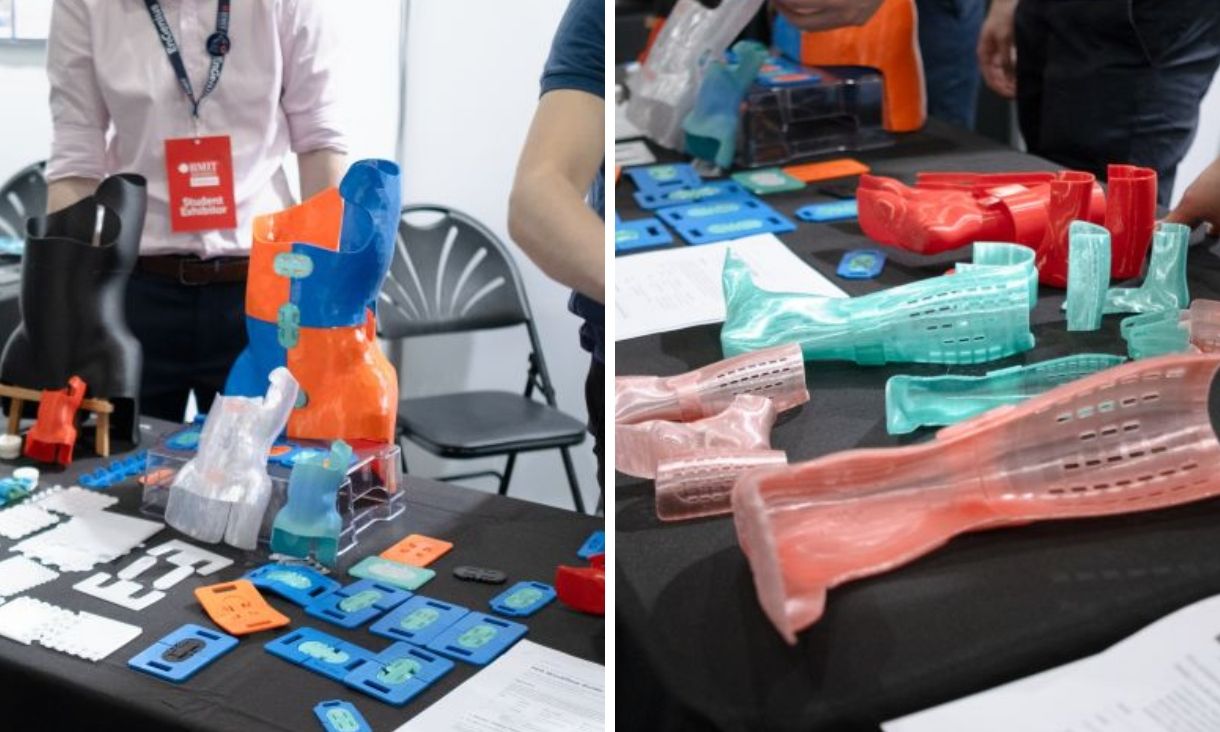
“Our project splits these orthotics into certain parts so that they can be printed in pieces and reassembled when ready for use."

There’s a significant real-world impact that we can see with our project, which is a big part of why we loved making it.
Colourful 3D-printed braces and splints displayed on exhibition tables.3D-printed orthotic braces designed by students.

Another group who collaborated closely with industry was Saanvi Arcot and Rumaysa Faisal.

Their project investigating the use of mycelium composites from mushrooms to create renewable and sustainable materials saw them travel to Indonesia to work with a manufacturing company.

“We worked with a team in Indonesia for about four weeks, who helped us actually produce our own mycelium composites,” Saanvi said. 

“These composites can create products that are made from cheap materials and able to withstand many, many tonnes of weight, making them perfect for construction.” 

“Being able to travel to Indonesia ourselves, we were able to better understand the manufacturing process firsthand, which really enabled this project.”

Congratulations to our engineering students who participated in EnGenius, and a big thank you to our industry partners and award sponsors: nbn, Cleanaway Waste Management, Qatar Airways, KBR Incorporated, Boeing, Bild Group, Siemens, IND Technology and Alluvium Consulting.

View the full list of EnGenius 2026 winners.  

Interested in studying engineering at RMIT? Explore engineering courses and degrees.

10 November 2026

More student news

aboriginal flag float-starttorres strait flag float-start

Acknowledgement of Country

RMIT University acknowledges the people of the Woi wurrung and Boon wurrung language groups of the eastern Kulin Nation on whose unceded lands we conduct the business of the University. RMIT University respectfully acknowledges their Ancestors and Elders, past and present. RMIT also acknowledges the Traditional Custodians and their Ancestors of the lands and waters across Australia where we conduct our business - Artwork 'Sentient' by Hollie Johnson, Gunaikurnai and Monero Ngarigo.

Learn more about our commitment to Aboriginal and Torres Strait Islander peoples