
Audit: Is AI making you sharper or impairing your critical thinking?

Audit: Is AI making you sharper or impairing your critical thinking?

RMIT Online logo

10 min read | 27 May 2026

AI is transforming how we work everywhere, from drafting content and analysing data to automating tasks and helping deliver more than ever before.

RMIT Online's latest research report reveals that workers save up to 9 hours a week using AI, more than a full working day. 
 

Apart from the AI bill, more people are asking if there are any hidden costs behind all this. Is AI improving how we think and work, or is it just doing it for us? Are we going to lose our capacity for critical thinking if we let the machines do the hard work?

The trade-off no one's measuring

Most AI evaluations these days focus on output and speed. Far less attention is being paid to why we're doing more and, critically, whether the way we're using the technology is impacting our own cognition, judgement, and mind habits.

Last year, researchers at Microsoft and Carnegie Mellon University found that knowledge workers who relied heavily on generative AI reported reduced effort and confidence in critical thinking, particularly when they trusted the tool's output too much. Convenience is leading some of us to use our brains less.

This doesn't mean the technology always harms our capacity to think; often, it can improve it. But all depends on how we use it.

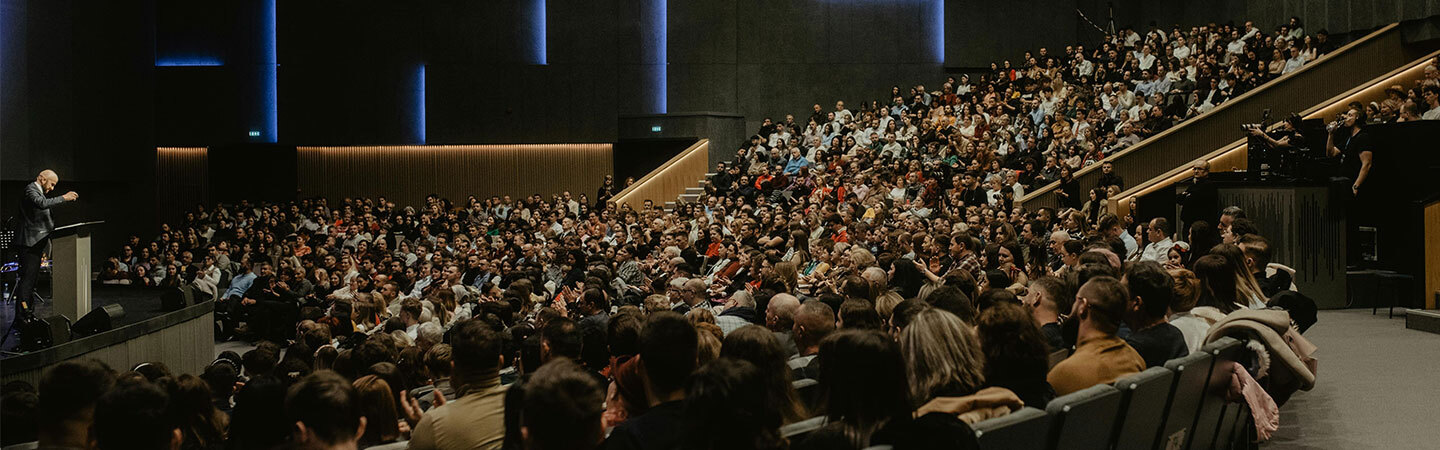
As part of RMIT Online's Future Skills Fest, we organised a session to discuss whether AI is diluting our critical thinking, and created a test to help you evaluate whether the tools are doing more harm than good.

How does the audit work?

First, respond to the questions below. Think about and answer them as honestly as possible. We divided the questions into themes to help clarify the context. 

For each question, score: 

  • Never = 0
  • Rarely = 1
  • Often = 2
  • Always = 3

Here we go.

Thinking before reaching

  • When a problem lands on your desk, how often do you immediately open AI before thinking it through?
  • When you're stuck on a decision, how often is your first move to ask AI rather than reason it out?
  • How often do you skip sitting with a problem because AI can answer faster?

Wrestling with hard concepts

  • When you don't understand something, how often do you ask AI to explain rather than work through the source?
  • How often do you accept an AI explanation you don't fully follow because it sounds right?
  • How often do you move on from a concept without being able to re-explain it in your own words?

Quality control

  • How often do you accept AI output without checking it for errors, weak logic or shaky claims?
  • How often do you take AI's first answer without pushing back, even when something doesn't feel right?
  • How often do you use AI to confirm what you already think, rather than challenge it? 

Owning your reasoning

  • How often do you reach conclusions you couldn't clearly explain without referring back to AI?
  • How often do you present or use AI-assisted work you couldn't fully defend on your own?
  • How often do you lose track of what you actually contributed versus what AI did?

Keeping your skills warm

  • How often do you hand a task to AI that you used to do yourself, without trying it first?
  • How often do you avoid manual work because AI is faster?
  • How often do you finish a piece of work unsure about what you actually thought through? 

Now, add up your answers. The maximum score is 45. After that, check what your score means:

0–15: AI is sharpening you

You're using AI as a thinking partner, not a substitute. You push back on its output, own your reasoning, and keep your hands on the work that matters. AI is making you faster without impairing your ability to do the work. That's the goal.

16–30: Drift

Convenience is starting to displace some habits. You're still doing the work, but the thinking is slipping in a few places, like accepting outputs without checking, deferring on concepts you'd usually wrestle with, and losing track of what you actually contributed. Catch it now, and the drift reverses easily.

31–45: Hollowing out

AI is doing more of your thinking than you are. The output looks fine, which is the problem - you can't tell where your effort ends and the tool's begins. The longer this pattern runs, the more your judgement and skills atrophy. The recovery is slower than the slide. 

Rebuilding the habits

If your score surprised you, don't panic. These habits are recoverable. A few practices that work are:


  • Think first, prompt second. Spend five minutes on a problem before opening AI. Even a rough first take changes how you evaluate what comes back.
  • Re-explain everything. When AI suggests a concept or writes a sentence, ensure you understand and can explain in your own words. If you can't, change it.
  • Read to critique, not to accept. Treat AI output as a draft, not an answer. Make sure a significant portion of the thinking comes from you.
  • Stress test your and AI's work. Don't use AI just to do the work, but also to ask for honest feedback and debate ideas. Use this process with AI content as well. It's quite interesting how critical AI can be of its own output.  
  • Keep one task analogue. Pick something you do regularly and do it without assistance. It keeps the muscle warm. 

The bigger point is that AI fluency isn't about using the tools all the time. It's about using them in a way that sharpens you rather than weakens your ability to think. That distinction shows up in your work, your judgement, and over time, your career.

27 May 2026

Share

Related courses and degrees

No courses match your current filters

Try adjusting them or reset all filters to see more options

Agentic AI

Future skills short course
  • next start date 29 June 2026
  • fees AU$1,000 incl. GST
  • learning mode Online
  • duration 8 weeks

AI for Business Leaders

Future skills short course
  • next start date 29 June 2026
  • fees AU$750 incl. GST
  • learning mode Online
  • duration 4 weeks

AI Product Manager

Future skills short course
  • next start date 29 June 2026
  • fees AU$750 incl. GST
  • learning mode Online
  • duration 4 weeks

AI Programming with Python

Future skills short course
  • next start date 29 June 2026
  • fees AU$1,600 incl. GST
  • learning mode Online
  • duration 12 weeks

Artificial Intelligence in Marketing

Future skills short course
  • next start date 15 June 2026
  • fees AU$1,900 incl. GST
  • learning mode Online
  • duration 6 weeks

Developing AI Strategy

Future skills short course
  • next start date 15 June 2026
  • fees AU$1,900 incl. GST
  • learning mode Online
  • duration 6 weeks

Ethical AI

Future skills short course
  • next start date 29 June 2026
  • fees AU$750 incl. GST
  • learning mode Online
  • duration 4 weeks

Generative AI

Future skills short course
  • next start date 29 June 2026
  • fees AU$1,000 incl. GST
  • learning mode Online
  • duration 8 weeks

Online Master of Business Analytics and AI Strategy

Online postgraduate study
  • fees AU$35,520 (2026 annual)
  • learning mode Online
  • duration 12 courses (2 years part-time)*, 16 courses (2.7 years part-time)

Related Articles

Connect with us

Be part of the conversation and keep in touch with us to find out about study options, campus life and upcoming events on our social media channels.

aboriginal flag float-starttorres strait flag float-start

Acknowledgement of Country

RMIT University acknowledges the people of the Woi wurrung and Boon wurrung language groups of the eastern Kulin Nation on whose unceded lands we conduct the business of the University. RMIT University respectfully acknowledges their Ancestors and Elders, past and present. RMIT also acknowledges the Traditional Custodians and their Ancestors of the lands and waters across Australia where we conduct our business - Artwork 'Sentient' by Hollie Johnson, Gunaikurnai and Monero Ngarigo.

Learn more about our commitment to Indigenous cultures
aboriginal flag float-starttorres strait flag float-start

Acknowledgement of Country

RMIT University acknowledges the people of the Woi wurrung and Boon wurrung language groups of the eastern Kulin Nation on whose unceded lands we conduct the business of the University. RMIT University respectfully acknowledges their Ancestors and Elders, past and present. RMIT also acknowledges the Traditional Custodians and their Ancestors of the lands and waters across Australia where we conduct our business.

More information