The RMIT ASRC is a specialist resource for Australian film and television scholarship. Its holdings encompass a diverse range of research materials and ephemera associated with film and television production in Australia. The RMIT ASRC also cares for and provides access to the AFI Research Collection on behalf of AFI/AACTA.
The RMIT ASRC seeks innovative proposals that explore gaps or inequities in current scholarship, particularly welcoming applications from individuals who identify as Culturally and Linguistically Diverse (CALD), Diverse Genders, Sexes and Sexualities (DGSS), precariously employed people and those living with disabilities. The fellowship underscores RMIT's commitment to fostering a diverse and inclusive research culture.
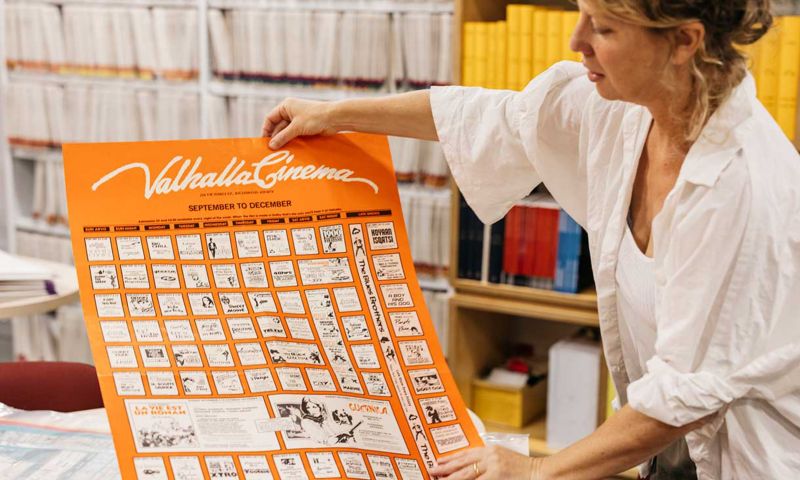
RMIT Australian Screen Research Collection is pleased to announce the 2027 RMIT David Stratton Screen Research Fellowship is now open. Applications close on Sunday 27 September 2026.
The Fellowship supports a wide range of research outputs, including:
Priority may be given to projects that do not have access to other major funding. Proposals demonstrating the greatest potential for enhancing the reputation and reach of the RMIT ASRC may also be given precedence.
Fellows will have access to the RMIT ASRC's unique collection, working closely with staff to develop their research. The successful applicant will receive a $5,000 AUD stipend (which includes travel expenses for those not based in Melbourne).
Depending on the requirements of the applicant, the Fellowship will generally be awarded for the equivalent of a period of between two and six weeks. The Fellowship will include the following in-kind-support:
RMIT ASRC staff will not serve as research assistants to the Fellow. Staff will conduct an orientation tour and staff will be on hand to answer questions but it is expected that the RMIT ASRC Research Fellow will conduct their research independently.
The RMIT ASRC Fellowship welcomes applications from those with a demonstrated interest and experience in Australian screen culture and through evidenced research or AV outputs.
Please note:
The ASRC and RMIT University are committed to embracing and encouraging diversity in all of its forms, striving to create an inclusive community that fosters a positive learning, teaching and working environment.
The ASRC seeks scholars who engage critically with issues of archival representation and who recognise and address gaps or inequities in current scholarship opportunities. It particularly encourages proposals from candidates who identify as First Nations or Indigenous; Culturally and Linguistically Diverse (CALD); Diverse Genders, Sexes and Sexualities (DGSS); precariously employed people; or people living with disabilities. The ASRC welcomes contributions from anyone who can support its commitment to diversity as it strives to grow a vitally inclusive research culture.
The ASRC recognises the cultural significance of Indigenous storytelling. We are particularly interested in proposals from Aboriginal or Torres Strait Islander individuals that aim to amplify Indigenous voices, truth-telling and representation within the ASRC holdings.
Non-Indigenous researchers focusing on Indigenous histories are strongly encouraged to consult the AMaGA First Peoples Roadmap and engage in respectful collaboration, emphasising power-sharing and decision-making with Indigenous researchers and communities utilising Indigenous-led methodology as a guiding principle.
The ASRC Advisory Panel will assess applications according to the following criteria:
The Advisory Panel will also assess each proposal according to:
In some instances, the Advisory Panel may consult external referees to assist in assessing applications.
In assessing applications, the Advisory Panel will also consider the following:
A complete application consists of a three-page proposal and one or two letters of recommendation as outlined below. These materials must be emailed to rmit.asrc@rmit.edu.au as PDF files by the application deadline.
Proposal
Applicants must submit a three-page proposal, as outlined below. The proposal should be in English and saved as a single PDF file, which must be sent via email. Proposals exceeding three pages will not be accepted. Use a minimum font size of 11 points. Each page should have one-inch margins and include your last name in the top-right corner.
When the Advisory Panel reviews your application, they will rigorously evaluate your proposal based on the key criteria. These include the effective use of the RMIT ASRC holdings, the originality and innovation demonstrated in your approach, the relevance and significance of your research and the anticipated contribution to knowledge within the field.
When considering your Fellowship proposal, please take time to look over the RMIT ASRC holdings via the online catalogue to understand the collection’s strengths and limitations.
Applicants are also strongly encouraged to contact the RMIT ASRC at rmit.asrc@rmit.edu.au with specific enquiries about the types of materials they may wish to access during their proposed visit.
All questions about the fellowship program and/or the application process should be directed to rmit.asrc@rmit.edu.au.
Recipients of the fellowship are required to complete their residencies within a 12-month period.
Preliminary outcomes will be discussed during an introductory interview and can be modified, by mutual agreement, during the Fellowship.
If recipients require extension, a written application detailing the reasons for the delay must be submitted at least eight weeks before the end of the 12-month Fellowship period. Extensions will not be offered beyond an additional four weeks with approval subject to the fellowship advisory panel.
During their Fellowship, the RMIT David Stratton Screen Research Fellow will be required to:
*The specific date for the report will be finalised in consultation with the applicant to ensure it aligns with their project timeline. This report should detail the achievements made up to that point, including any milestones reached and challenges encountered. The purpose of the progress report is to provide an update on the project's status and allow for any necessary adjustments to the Fellowship plan to ensure successful completion.
At the conclusion of the Fellowship, the ASRC Fellow will be required to:
Important note: The information contained in this document is provided for general information purposes only and does not have any legal effect. Specific terms of engagement will be negotiated with successful applicants.
2025 – Dr Scarlette Nhi Do
Mapping Asian-Indigenous Relations in Australian and Pacific Cinemas.
2024 – Dr Alicia Byrnes
Exploring the history of women’s film activities in Australia from 1970-1990 through her project In Process: Women's Film Activities in Australia.
2023 – Digby Houghton
Investigating Melbourne’s historic film culture as background to a screenplay titled “Cine-Files”.
2022 – Dr Ruth Richards
Histories of Australian Women In Animation
2021 – Dr James Finlay
Framing the frontier: Australian settler colonialism on television after 1970
2020 – Dr Jessica Balanzategui
Children’s Television Genres in Australia 1960 – 2000 and Changing Paradigms of Quality Child-Appropriate Screen Content: Assessing cultural and policy discourses surrounding paradigmatic shifts in Australian children’s television genre trends
2019 – Dr Whitney Monaghan
Queer Television in Australia: Lesbians, Gays and Bisexuals on the Small Screen from 1970 to 2000
2018 – joint winners
Mark Ryan
Digging up the history of Australian horror cinema: delineating the interwoven strands of horror, transnational-horror, Ozploitation and Australian Gothic movies from the 1970s to now
Stuart Richards
Queer Outwardly Australian Cinema.
2017 – Alexandra Heller-Nicholas
Hidden in Plain Sight: Australian Women’s Film Criticism, 1980 – 1999
2016 – no award
2015 – Alexia Kannas
Dancing with ghosts in the kingdom of shadows
2014 – joint winners
Andrew Nette and Dean Brandum
Policing Melbourne’s television mean streets
Kirsten Stevens
From Film Weeks to Festivals
2013 – joint winners
John Hughes
Filmmakers’ cooperatives in Australia between 1966-1986
Fincina Hopgood
Australian filmmakers’ use of comedy and autobiography to encourage empathy with mentally ill characters
2012 – Dr Catriona Mills
The writer in Australian television history
2011 – Brenda Weber
Research on Australian reality TV


RMIT University acknowledges the people of the Woi wurrung and Boon wurrung language groups of the eastern Kulin Nation on whose unceded lands we conduct the business of the University. RMIT University respectfully acknowledges their Ancestors and Elders, past and present. RMIT also acknowledges the Traditional Custodians and their Ancestors of the lands and waters across Australia where we conduct our business - Artwork 'Sentient' by Hollie Johnson, Gunaikurnai and Monero Ngarigo.
Learn more about our commitment to Aboriginal and Torres Strait Islander peoples
