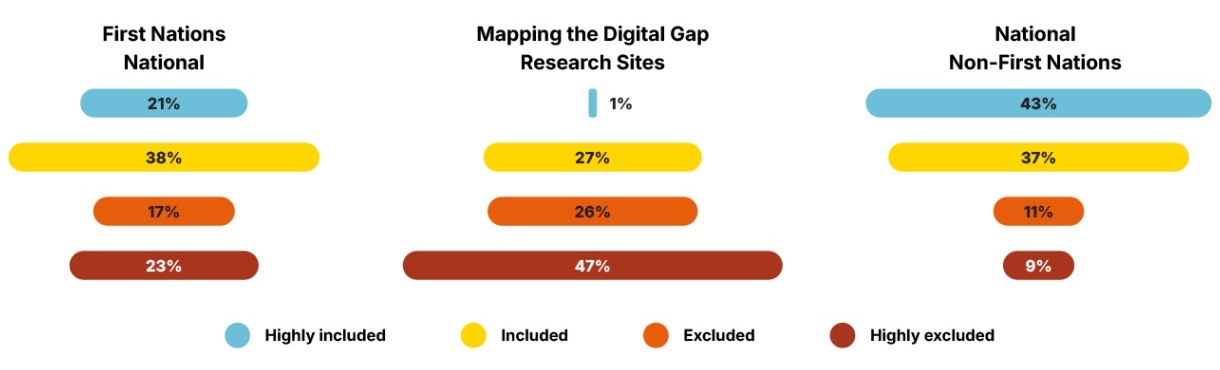

Three in four First Nations people living in remote and very remote communities are digitally excluded according to the Mapping the Digital Gap report by RMIT University and Swinburne University of Technology. This means many face significant barriers to accessing and using online services needed for daily social, economic and cultural life.
This 2025 outcomes report draws on three years of fieldwork to compare digital inclusion levels for First Nations people to nationwide Australian Digital Inclusion Index (ADII) scores by remoteness, location, age and other factors.
Drawing on expanded data, the report found a 10.5 point digital gap for First Nations Australians nationally, with this gap more than doubling in the remote communities surveyed for the report.
But it wasn’t all bad news; the Mapping the Digital Gap research found an 8.7 point improvement in digital ability for First Nations people in very remote communities, rising from 45.8 in 2023 to 54.5 in 2025.
This boost suggests First Nations Australians now have greater access to digital connectivity and support to develop online skills needed for work, education, health, banking and other vital services.
Co-investigator Associate Professor Daniel Featherstone from RMIT said people living in remote communities were rapid adopters of digital technology and innovative in finding ways to connect.
“We found digital participation is on the rise, with more people than ever before trying to get online.” Featherstone said.
“Connectivity is an essential service nowadays, especially in remote communities.
“But there are a range of barriers to having affordable and reliable internet access in these communities – largely due to limited or strained infrastructure, low household connectivity and high reliance on pre-paid mobile services.”