
Indigenous plant could have handy health benefits

Indigenous plant could have handy health benefits

New research suggests an Australian desert plant could help food manufacturers improve protein quality and reduce reliance on added salt in staple foods.

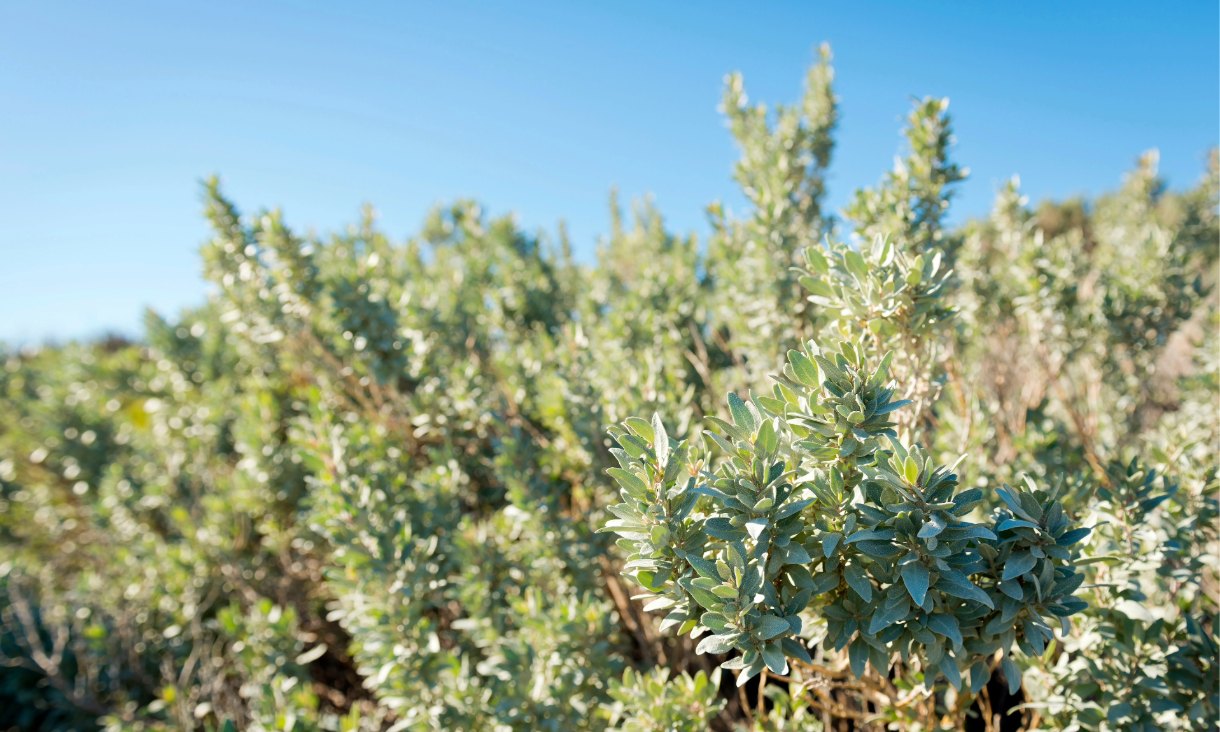
The drought-tolerant shrub affectionately known as Old Man Saltbush is mostly used as stock fodder, but can also be added to salads or cooking and has been used as bush tucker by Indigenous Australians for thousands of years.  

Now, early research suggests it could be a healthy and sustainable alternative many more of us should be eating. 

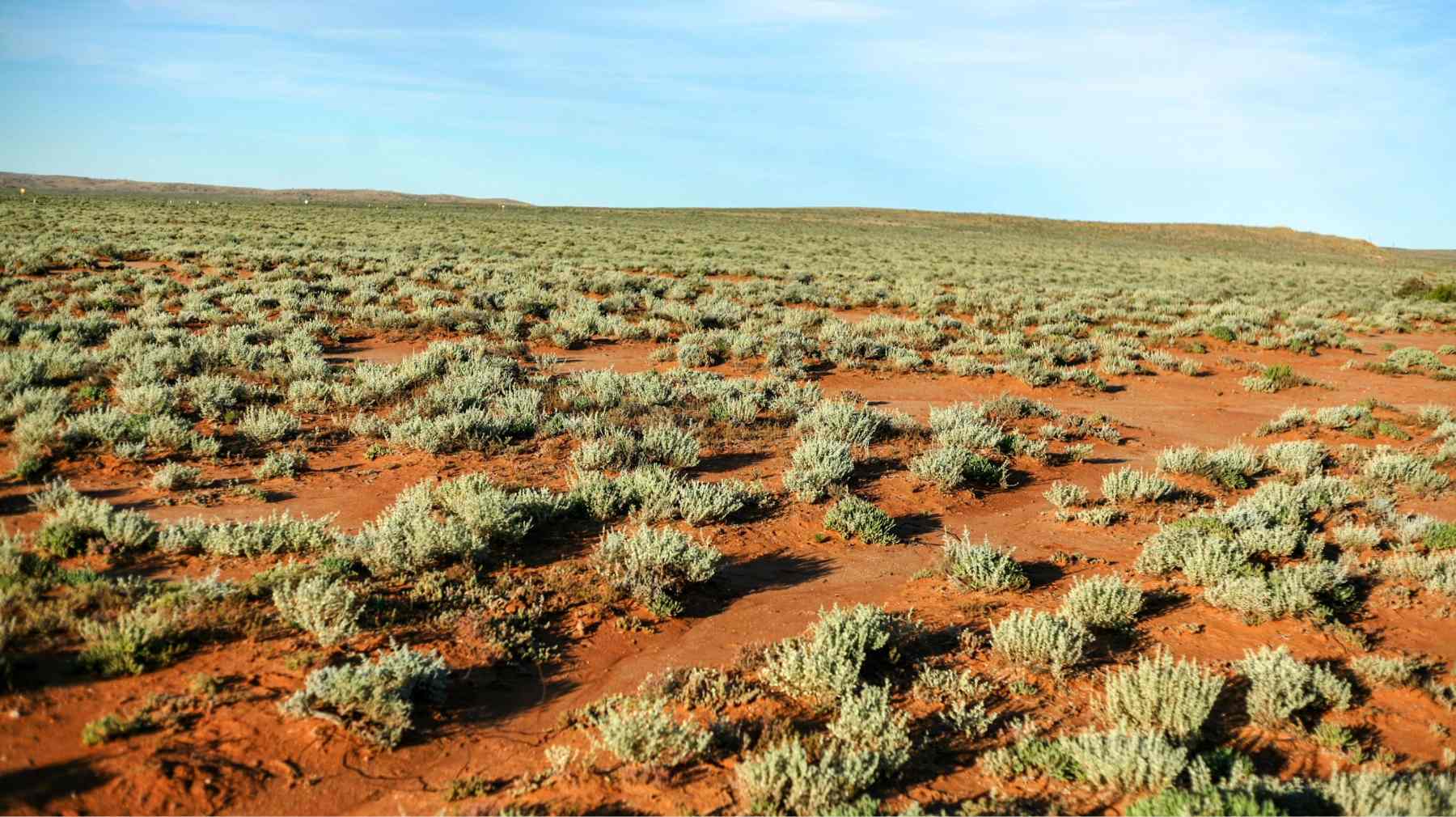
Saltbush (Atriplex nummularia) grows across arid and semi-arid regions of Australia. Saltbush (Atriplex nummularia) grows across arid and semi-arid regions of Australia.

The study by RMIT University food scientists analysed the physical and chemical properties of saltbush to understand how it could be used as a functional food ingredient.

Study first author and RMIT PhD candidate Samiddhi Gunathilake said the protein quality of saltbush nearly matched the ideal amino acid requirements for human nutrition.

“It is notably high in protein for a plant-based source, matching or outperforming other sources such as soy, pea protein and rice protein, underscoring its potential as a high-quality plant-derived protein option,” he said.

Saltbush was also found to be rich in minerals such as calcium, iron, phosphorus, zinc and sodium. 

Although saltbush powder has a higher fat content, this may also contribute to enhanced texture and mouthfeel in some food products, while saltbush’s green colour could also add visual appeal to foods, he said.

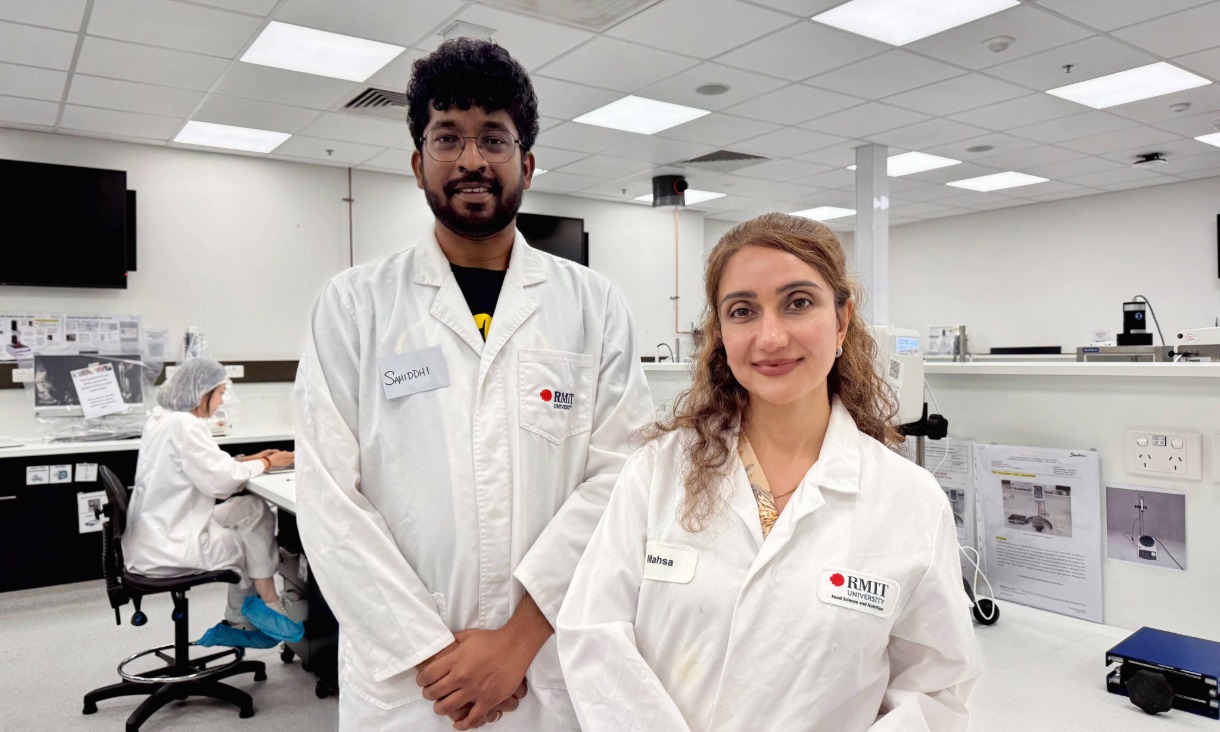
Samiddhi Gunathilake and Dr Mahsa Majzoobi at RMIT's Food Research and Innovation Centre. Samiddhi Gunathilake and Dr Mahsa Majzoobi at RMIT's Food Research and Innovation Centre.

A healthy natural food additive?

To demonstrate its potential, the team added ground saltbush powder to wheat flower noodles where it significantly improved the pasta’s nutritional value while also acting as a natural salt substitute. 

Study lead from RMIT, Dr Mahsa Majzoobi, said the plant had substantial nutritional advantages compared to wheat flour alone. 

“Our analysis showed saltbush powder contained more than double the protein content of wheat pasta and was eight times higher in dietary fibre,” she said. 

“This meant, for example, that one serving of wheat pasta with saltbush powder added provided almost half the recommended daily protein intake for an adult.”

Majzoobi said these compositional differences highlight saltbush powder as a nutrient-dense ingredient that can significantly enrich wheat-based products both nutritionally and functionally.

“While legumes are traditionally valued for their essential amino acids – particularly lysine and tryptophan – saltbush was shown to be a strong alternative source with its high protein content and substantial levels of essential amino acids, notably lysine, which wheat products typically lack,” Majzoobi said.

“Blending wheat with saltbush powder therefore offers a strategy for developing products with a more complete protein profile.”

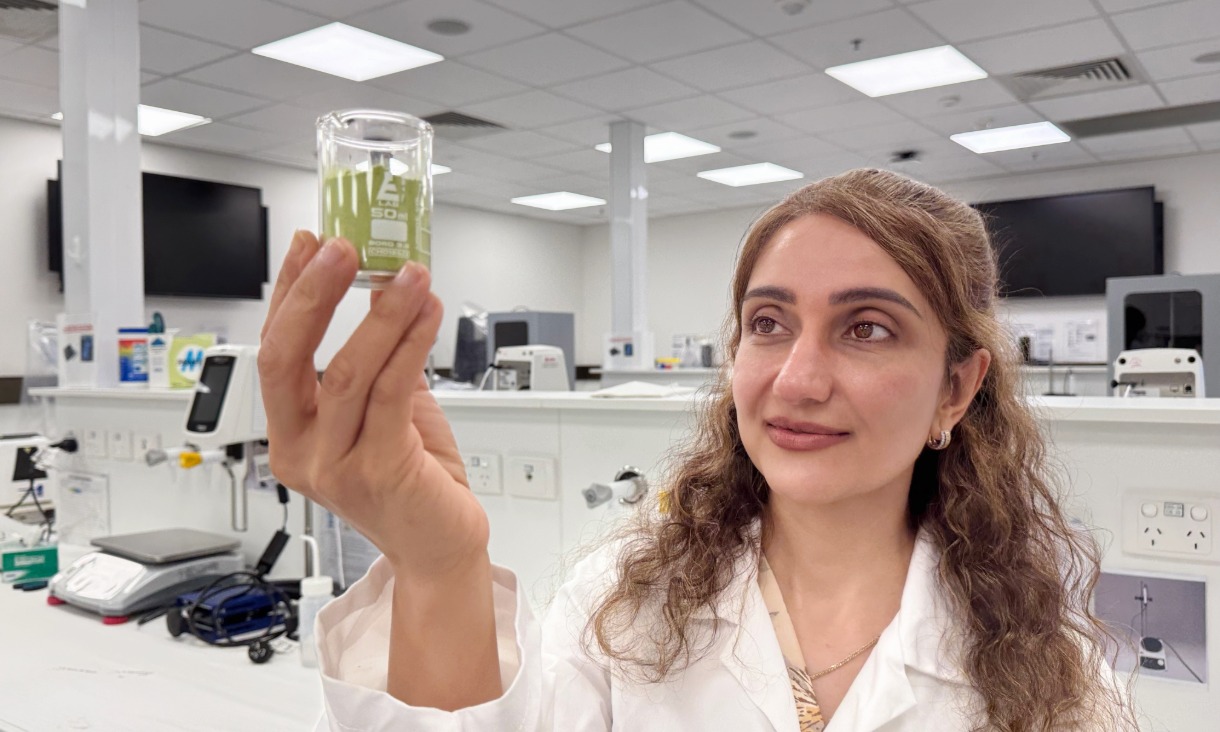
Dr Mahsa Majzoobi holding a beaker of powdered saltbush used in the study. Dr Mahsa Majzoobi holding a beaker of powdered saltbush used in the study.

Next steps

Majzoobi said the promising lab results now required longer term validation of gut health and nutritional benefits, as well as practical considerations on consumer acceptance, large-scale processing performance and supply-chain consistency of saltbush powder. 

"The next stage of this research will involve expanding the application of saltbush to other food products such as breads, snacks, and plant-based protein foods, as well as conducting larger sensory and consumer studies,” Majzoobi said.

“We also plan to collaborate more closely with growers and industry partners to investigate sustainable sourcing, processing optimisation, and scalability.”

“Ultimately, our goal is to support the development of Australian-grown, climate-resilient ingredients that contribute to healthier and more sustainable food systems,” Majzoobi said.

RMIT's Food Research and Innovation Centre is a world-class facility that helps Australian businesses develop and market innovative, high value products for the global marketplace.

This research was partly funded by The Enabling Impact Platform for Sustainable Technologies and Systems at RMIT University. 

‘Exploring the Physicochemical Properties of Saltbush (Atriplex nummularia) Powder as a Novel Sustainable Food Ingredient: Impact on Wheat Flour Noodle Quality’ was published in Food and Bioprocess Technology (DOI: 10.1007/s11947-025-04094-z

Organisations wanting to partner with RMIT researchers can contact research.partnerships@rmit.edu.au


Story: Michael Quin

18 February 2026

Share

18 February 2026

Share

  • Research
  • STEM
  • Environment
  • Science and technology
  • Sustainability

Related News

aboriginal flag float-start torres strait flag float-start

Acknowledgement of Country

RMIT University acknowledges the people of the Woi wurrung and Boon wurrung language groups of the eastern Kulin Nation on whose unceded lands we conduct the business of the University. RMIT University respectfully acknowledges their Ancestors and Elders, past and present. RMIT also acknowledges the Traditional Custodians and their Ancestors of the lands and waters across Australia where we conduct our business - Artwork 'Sentient' by Hollie Johnson, Gunaikurnai and Monero Ngarigo.

More information