Data experts, cancer specialists, unite to build AI infection-detection

Data experts, cancer specialists, unite to build AI infection-detection

A pioneering tool that aims to help clinicians monitor trends in serious fungal infections in cancer patients was a finalist in the community engagement category of the 2026 AFR AI Awards.

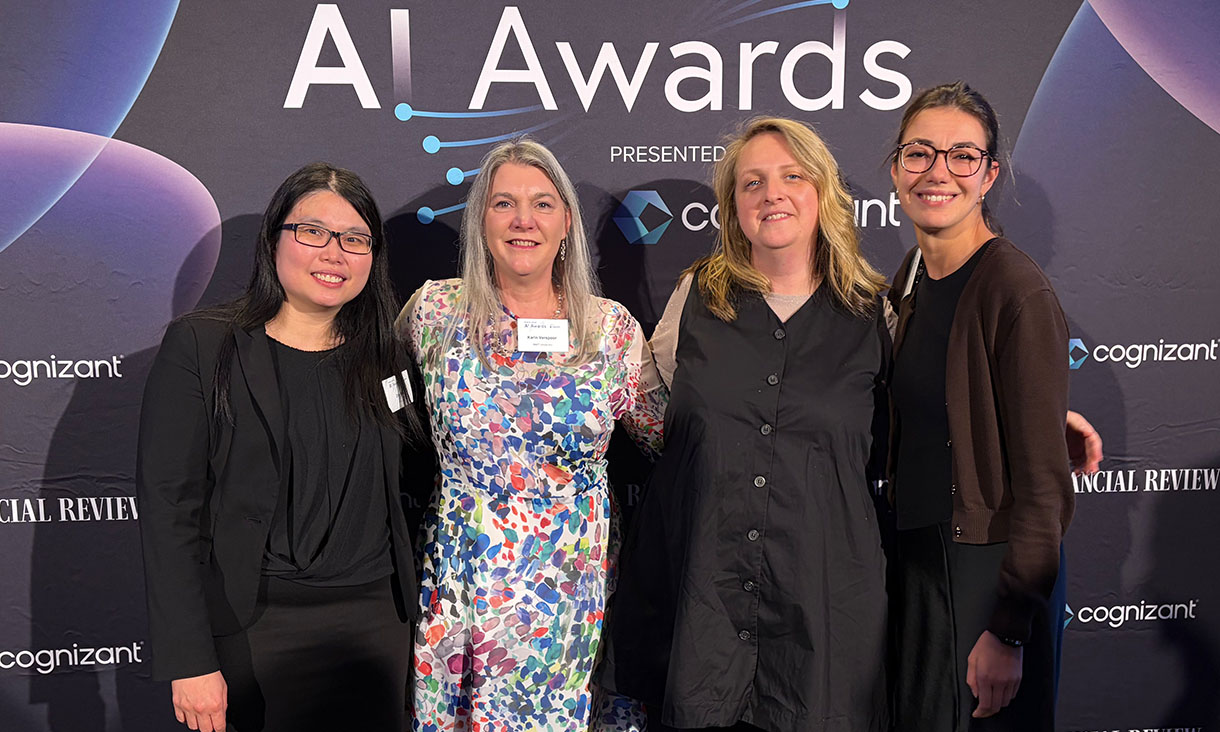
Part of the team behind the EINSTEIN AI program.Part of the team behind the AI tool, which was a finalist in the 2026 AFR AI Awards in the community engagement category. Image: Aeden Ratcliffe, RMIT

Artificial intelligence combined with medical expertise is being applied through a pioneering tool that aims to help clinicians monitor trends in serious fungal infections in cancer patients.

The new AI-powered tool has been developed in collaboration between RMIT University and the Peter MacCallum Cancer Centre in Melbourne, in a project that links doctors, researchers, computer and data science experts and software developers.

Cancer patients are prone to such infections because cancer, and many cancer treatments, weaken the body’s normal immune defences. Invasive fungal infections often lead to death and place a significant cost burden on the healthcare system.

While doctors have been able to identify and manage infections in individual patients, infectious disease teams lacked a clear picture of the overall burden of infections and outbreak risk across a hospital. Gaining that comprehensive picture is a complex manual task which takes time and resources.

This is where developers are confident the new tool, called EINSTEIN AI, can assist. It will allow for the automatic detection of infections in vulnerable patients, in turn enabling monitoring of the safety of new treatments, and evaluation of infection prevention strategies.

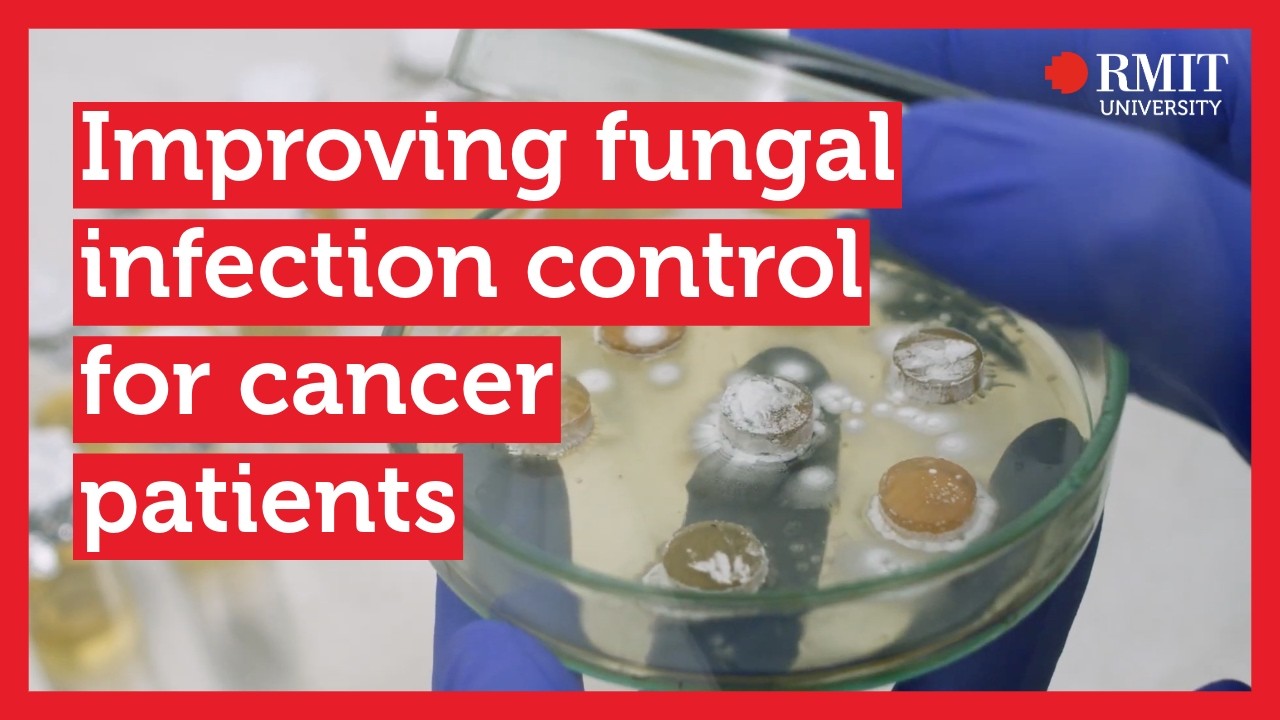
Watch the video

Bacteria growing in a Petrie dish.

Distinguished Professor Karin Verspoor, Dean of the School of Computing Technologies at RMIT University, said the tool aims to give medical teams greater situational awareness, allowing for more prompt and better-informed medical care.

It was developed over four years as a result of collaboration involving multiple people and parties – RMIT University, the National Centre for Infections in Cancer at Peter MacCallum, the University of Melbourne, the Guidance group at the Royal Melbourne Hospital, and BioGrid, a not-for-profit company owned by the Australian medical research sector that provides a national data platform.

“This has been a real team effort, involving a long list of collaborators, that couples AI and clinical expertise,” Verspoor said.

She says a wealth of information about patients is electronically recorded, such as reports on pathology tests and CT scans.

While individual treating doctors have this information, the broader team managing infectious diseases needs visibility on a wider picture.

“A problem clinicians have had is to understand the broader burden of infection in a hospital, and they wanted to make better use of the data to track infections,” Verspoor said.

She worked with Dr Vlada Rozova, now at the Centre for Digital Transformation of Health at the University of Melbourne, to develop the new tool that effectively machine reads reports, looking for clues that can help join the dots in the data.

It does this by using AI techniques, including natural language processing and machine learning, to scan findings described in medical reports to extract relevant information about potential or existing infections.

“What we did was build a tool that can scan through the words and the language in the reports and understand what evidence there is. It tells us whether or not a patient might have one of these infections,” Verspoor said.

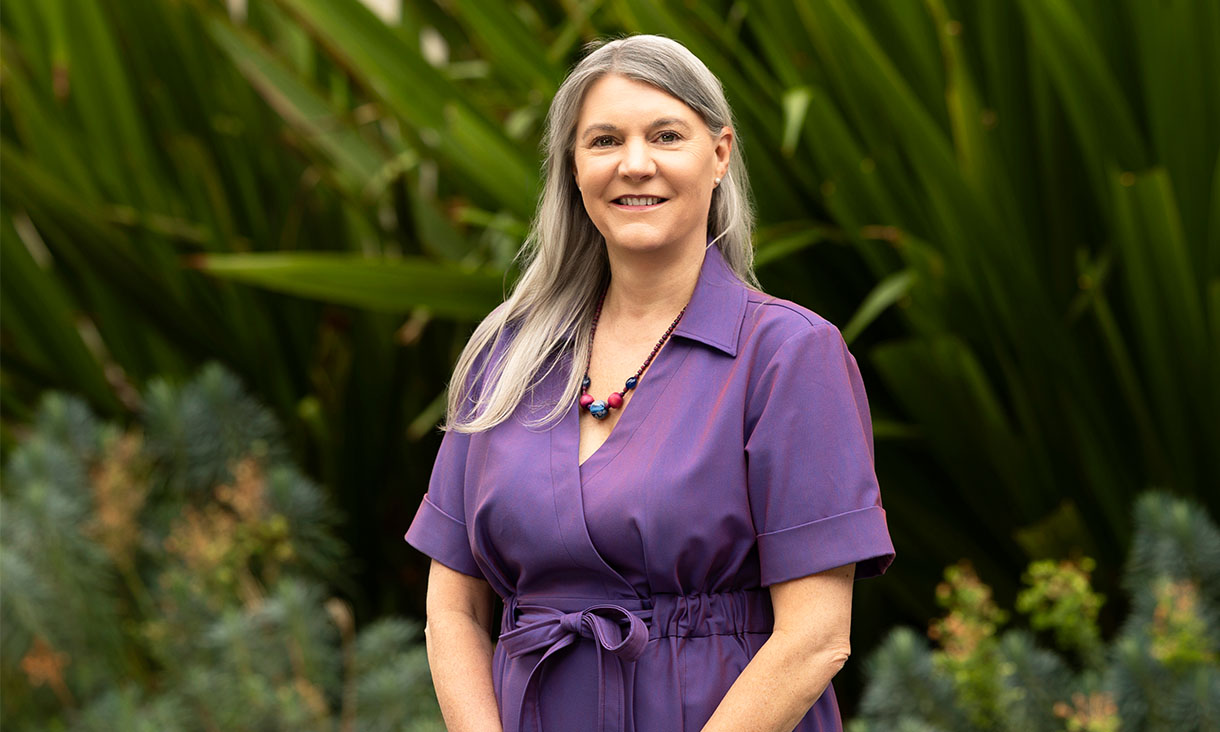
Distinguished Professor Karin VerspoorDistinguished Professor Karin Verspoor

Building the tool meant drawing on the skills of a diverse range of experts, starting with doctors.

“We first sat down with the clinicians who helped us understand the clinical data, the medical terminology, and the problem they needed to solve,” Verspoor said.

Clinical collaborators include Professor Karin Thursky, an infectious diseases physician and health services researcher at Peter MacCallum, and her colleague Dr Anna Khanina, a clinical pharmacist who focusses on using data to enhance infection surveillance in cancer patients.

“After engaging the clinical experts we worked to build the AI solutions that allow us to transform data into information,” Verspoor said.

“Interface designers worked with clinicians to co-design a user interface that provides information visually and aligns to their workflows. We also needed software developers to integrate the technology into the hospital environment.”

A fundamental challenge was deployment of effective AI models into the clinical environment.

“Working at the intersection of AI and medicine is challenging but rewarding,” Verspoor said.

“Complex clinical criteria coupled with small data sets required us to be innovative in our approach.”

The system only went live at Peter MacCallum and the Royal Melbourne Hospital in early May so it’s too early to obtain feedback from the doctors who are using it.

Initial signs are promising: “It’s early days, but so far we know it’s working, it’s stable and it’s providing data.”

Verspoor stresses that the tool will in no way override the professional judgement of medical experts.

“Its utility depends on trust,” she said. “It’s there to add value to the work of the clinicians, helping them do their jobs. It’s not replacing anyone.”

Organisations interested in partnering with RMIT University can contact research.partnerships@rmit.edu.au.

This article originally appeared in the Australian Financial Review on 2 June 2026, republished here with permission.

03 June 2026

Share

03 June 2026

Share

  • Research
  • STEM
  • AI
  • Industry
  • Science and technology

Related News

aboriginal flag float-starttorres strait flag float-start

Acknowledgement of Country

RMIT University acknowledges the people of the Woi wurrung and Boon wurrung language groups of the eastern Kulin Nation on whose unceded lands we conduct the business of the University. RMIT University respectfully acknowledges their Ancestors and Elders, past and present. RMIT also acknowledges the Traditional Custodians and their Ancestors of the lands and waters across Australia where we conduct our business - Artwork 'Sentient' by Hollie Johnson, Gunaikurnai and Monero Ngarigo.

More information