Scientists take major step towards a working quantum battery

Scientists take major step towards a working quantum battery

Australian researchers have demonstrated the world’s first proof-of-concept quantum battery, opening new possibilities for faster, more efficient energy storage.

In a new study, scientists have created a proof‑of‑concept quantum battery that can charge, store and discharge energy – the closest step yet towards a working quantum battery. 

Unlike traditional batteries, which rely on chemical reactions, quantum batteries use quantum superposition and interactions between electrons and light, offering the prospect of faster charging and enhanced storage capacity. 

Fully functioning quantum batteries don’t yet exist but advances like this could ultimately transform how we store and use energy. 

The research, led by CSIRO – Australia's national science agency – with collaborators RMIT University and the University of Melbourne, was published today in Light: Science & Applications

Study co-author and RMIT PhD candidate Daniel Tibben said the results point to a surprising advantage for quantum batteries. 

“Our study found quantum batteries charge faster as they get larger, which is not how today’s batteries work,” Tibben said. 

“It’s a sign that quantum batteries could one day outperform conventional energy-storage technologies.” 

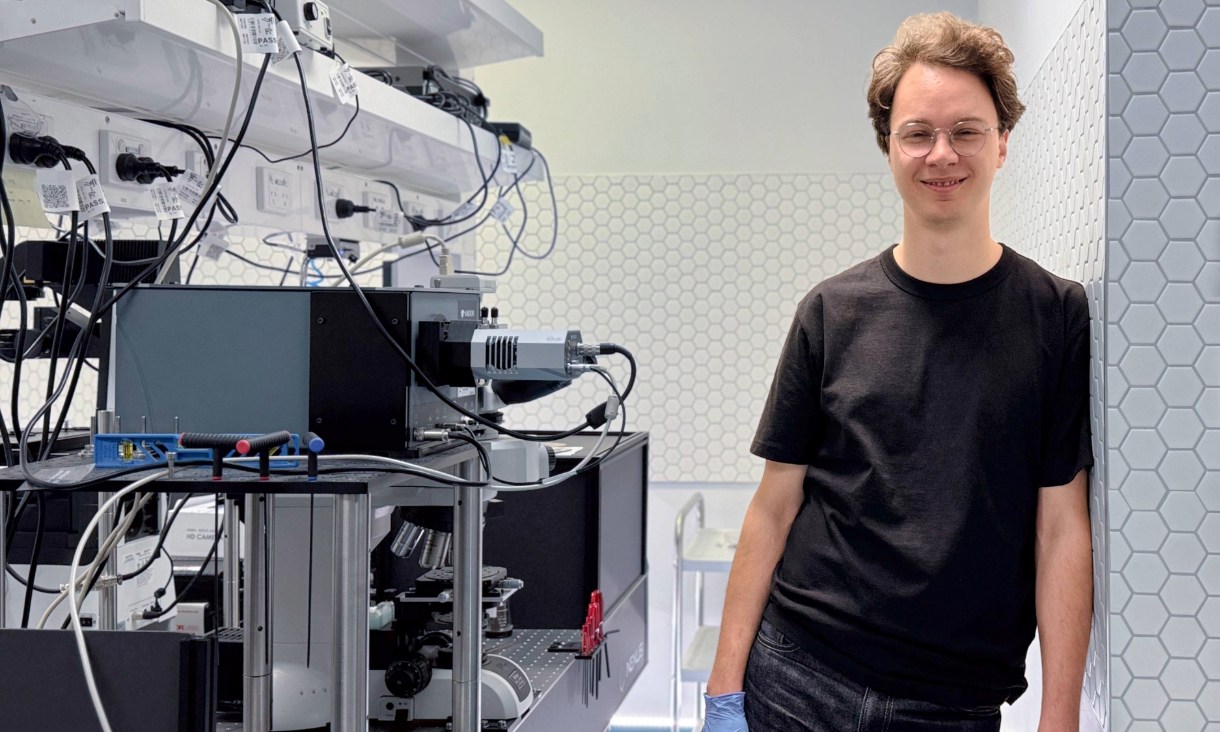
Study co-author and RMIT PhD candidate Daniel Tibben. Study co-author and RMIT PhD candidate Daniel Tibben.

Fellow study co-author and RMIT Professor of Chemical Physics Daniel Gómez said the proof-of-concept device is the closest we’ve ever come to producing a working quantum battery. 

“We demonstrated a device that can be charged, store that energy and then discharge it,” Gómez said.

"This is an exciting development in a rapidly growing interdisciplinary field. 

“Hopefully quantum batteries will soon no longer be a theoretical idea but something than can be built in the lab.” 

Quantum batteries use key effects from quantum mechanics, like superposition and entanglement, rather than the chemical reactions that power today’s conventional batteries. 

The prototype the researchers engineered is a tiny layered organic device that can be charged wirelessly using a laser. 

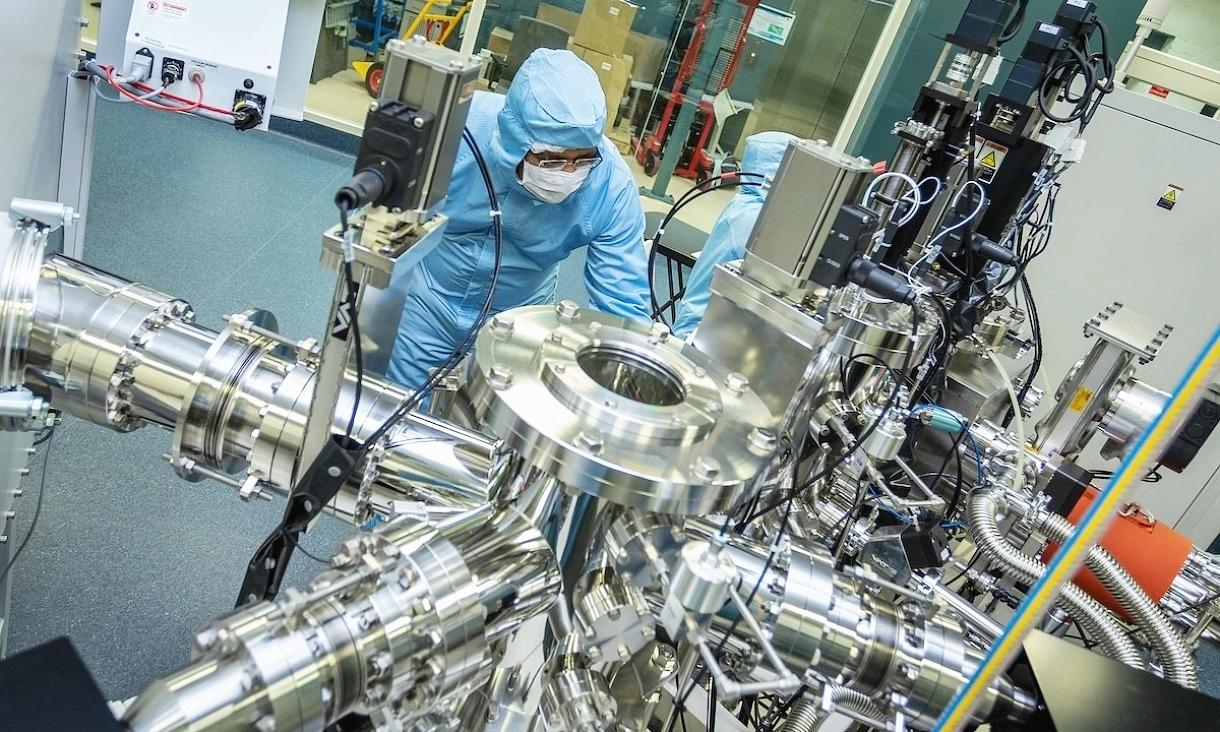
CSIRO’s clean lab for engineering prototype quantum batteries. CSIRO’s clean lab for engineering prototype quantum batteries

Study lead author and CSIRO Science Leader Dr James Quach said the research offers a glimpse into a possible future powered by quantum energy storage.

"Our proof-of-concept device showcases rapid, scalable charging and energy storage at room temperature, laying the groundwork for next-gen energy solutions," he said.

"While there's still much work to be done in quantum battery research, we've made an important move towards realising the possibilities.

“My ultimate ambition is a future where we can charge electric cars much faster than fuel petrol cars, or charge devices over long distances wirelessly.”

The researchers are focusing on extending the energy storage time for quantum batteries, bringing them closer to being commercially viable.

Organisations looking to partner with RMIT can contact research.partnerships@rmit.edu.au.

Superextensive electrical power from a quantum battery’ is published in Light: Science & Applications. (DOI: 10.48550/arXiv.2501.16541)


Story: Aeden Ratcliffe and Pamela Tyers

18 March 2026

Share

18 March 2026

Share

  • Research
  • Industry
  • Science and technology

Related News

aboriginal flag float-start torres strait flag float-start

Acknowledgement of Country

RMIT University acknowledges the people of the Woi wurrung and Boon wurrung language groups of the eastern Kulin Nation on whose unceded lands we conduct the business of the University. RMIT University respectfully acknowledges their Ancestors and Elders, past and present. RMIT also acknowledges the Traditional Custodians and their Ancestors of the lands and waters across Australia where we conduct our business - Artwork 'Sentient' by Hollie Johnson, Gunaikurnai and Monero Ngarigo.

More information