From Hanoi to the Mekong Delta: Exploring mangroves, livelihoods and new collaborations in Vietnam
Our recent visit to Vietnam took us between university meeting rooms and muddy mangrove restoration sites, offering opportunities to exchange knowledge, build partnerships and explore new approaches to nature-positive solutions.
In October 2026, we travelled to Vietnam as a team of three researchers from RMIT University's Centre for Nature Positive Solutions (CNPS) — Dr Melissa Wartman, Dr Micheli Costa and Dr Maria Palacios.
Our journey took us from the busy streets of Hanoi and Ho Chi Minh City to the waterways, shrimp farms and mangrove forests of the Mekong Delta. Along the way, we met with scientists, NGOs and local communities working on ecosystem restoration, sustainable livelihoods and nature-based solutions.
While our goal was to strengthen research connections and explore opportunities for collaboration, the trip also gave us a chance to see firsthand how people across Vietnam are working to protect and restore their natural environments.
Connecting research across borders
We began by meeting with researchers and academics across several Vietnamese universities and research institutions, including RMIT Vietnam (Hanoi and Ho Chi Minh City), Ton Duc Thang University (Ho Chi Minh City), Vietnam National University - Central Institute for Natural Resources and Environmental Studies (Hanoi), Hanoi National University of Education (Hanoi) and the University of Economics Ho Chi Minh City - Institute of Smart City and Management (Ho Chi Minh City).
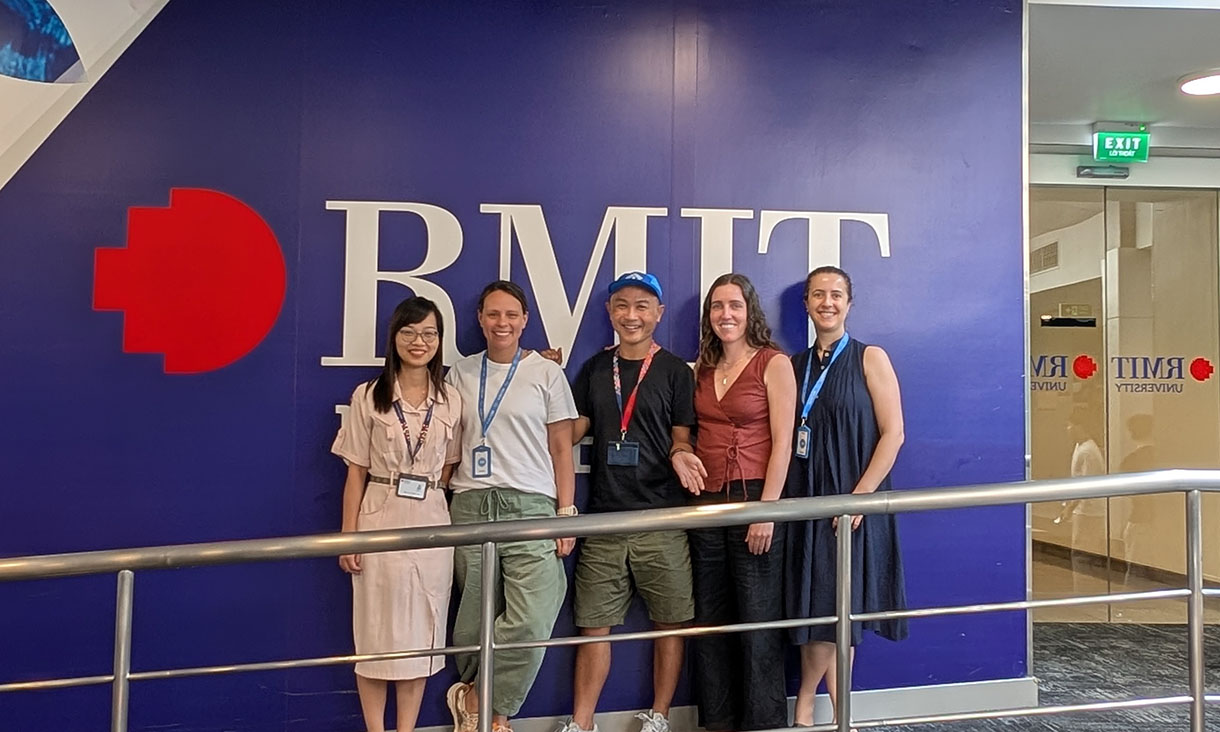
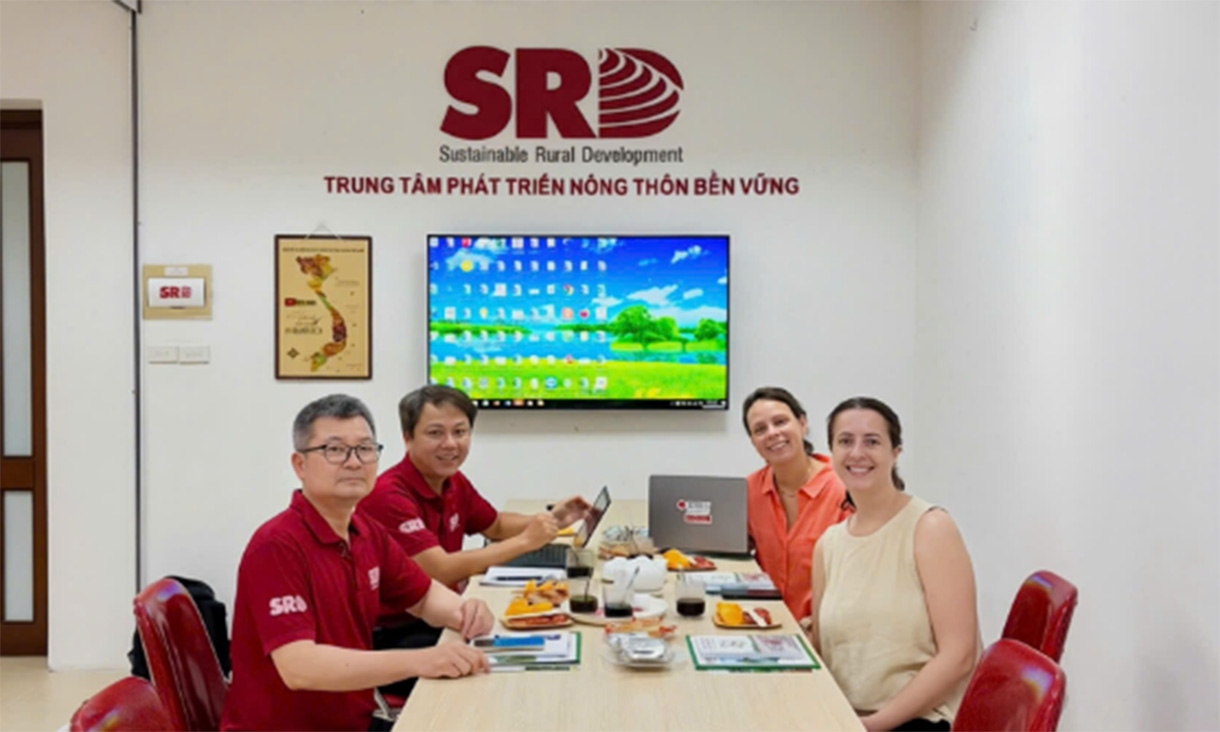
Our conversations covered everything from mangrove ecology and coastal restoration to environmental monitoring, ecotourism and community livelihoods.
Despite working in different landscapes, we found many shared research interests and challenges. How can we better understand the benefits that coastal ecosystems provide to people? How can restoration support local livelihoods? And how can ecological and social research come together to inform better environmental management?
We also connected with local NGOs, including Landscape Alliance and the Centre for Sustainable Rural Development (SRD), learning about their work in forestry, agricultural landscapes and community development. These discussions opened interesting opportunities to exchange approaches between terrestrial restoration and coastal blue carbon ecosystems.
Beyond the research conversations, these meetings helped identify opportunities for joint projects, student exchanges and future collaborations.
From meeting rooms to muddy boots
One of the most rewarding parts of our trip was getting out into the field to explore Vietnam's mangrove forests and see restoration efforts firsthand.
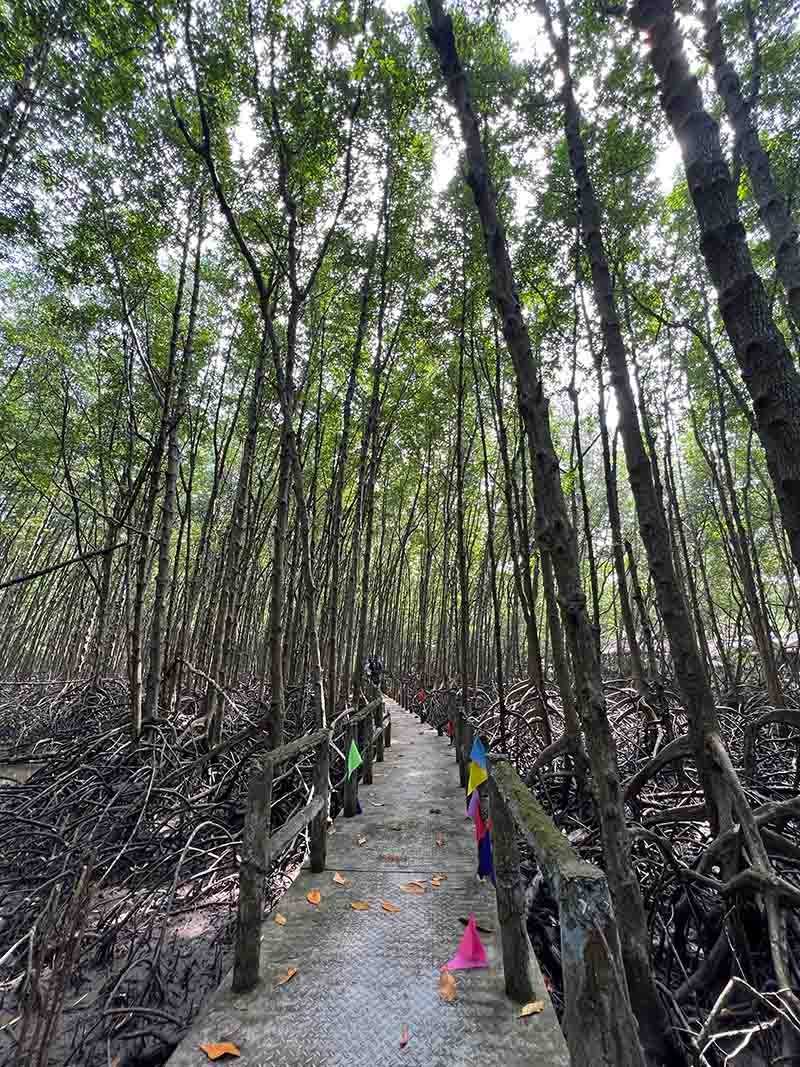
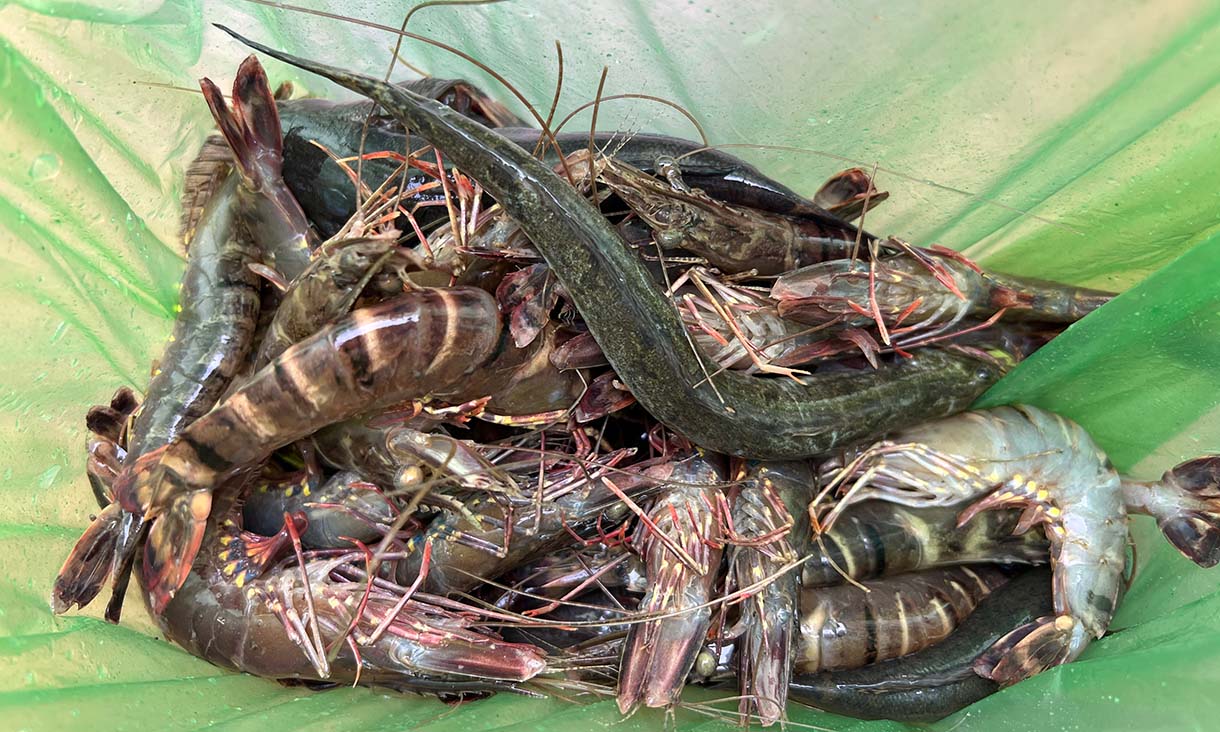
Together with Dr Dinesh Bhatia, we visited the Can Gio Mangrove Biosphere Reserve, where we met with a representative from the Mangrove Management Board to learn about local conservation and management efforts. We then ventured into the forest, exploring its boardwalks before taking a boat trip through the waterways. Along the way, we observed mangrove ecosystems and aquaculture activities, gaining valuable insights into how this remarkable coastal landscape is managed, protected and used by local communities.
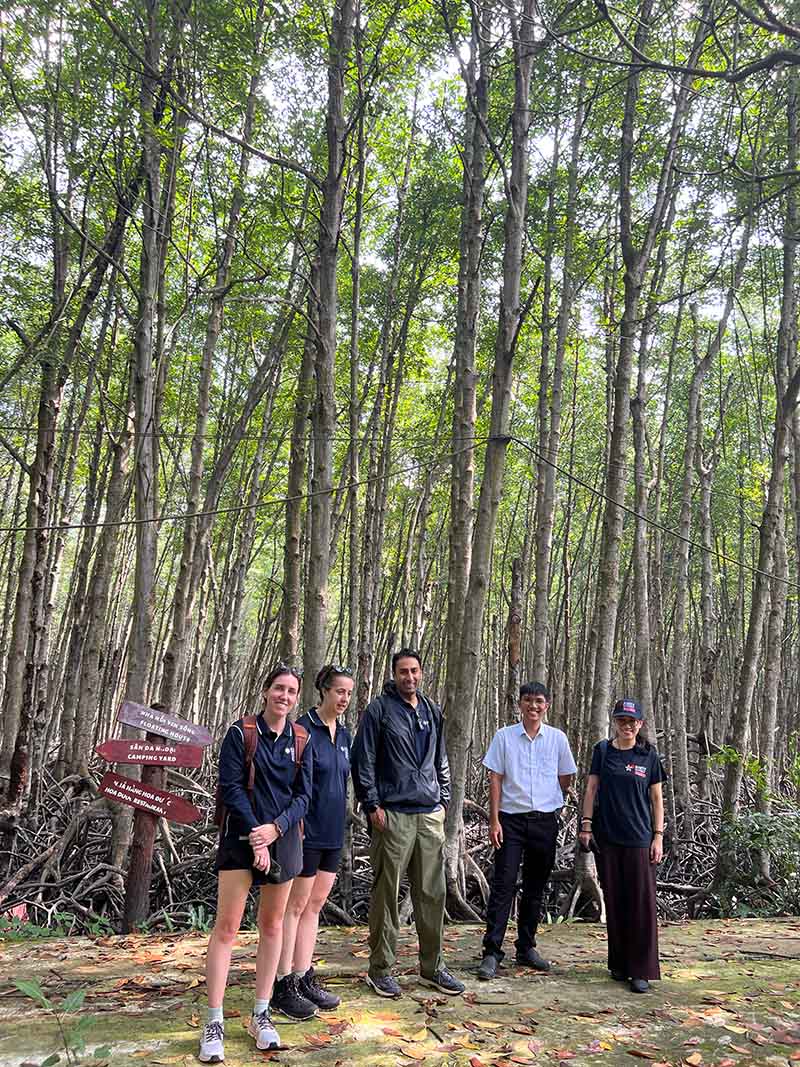
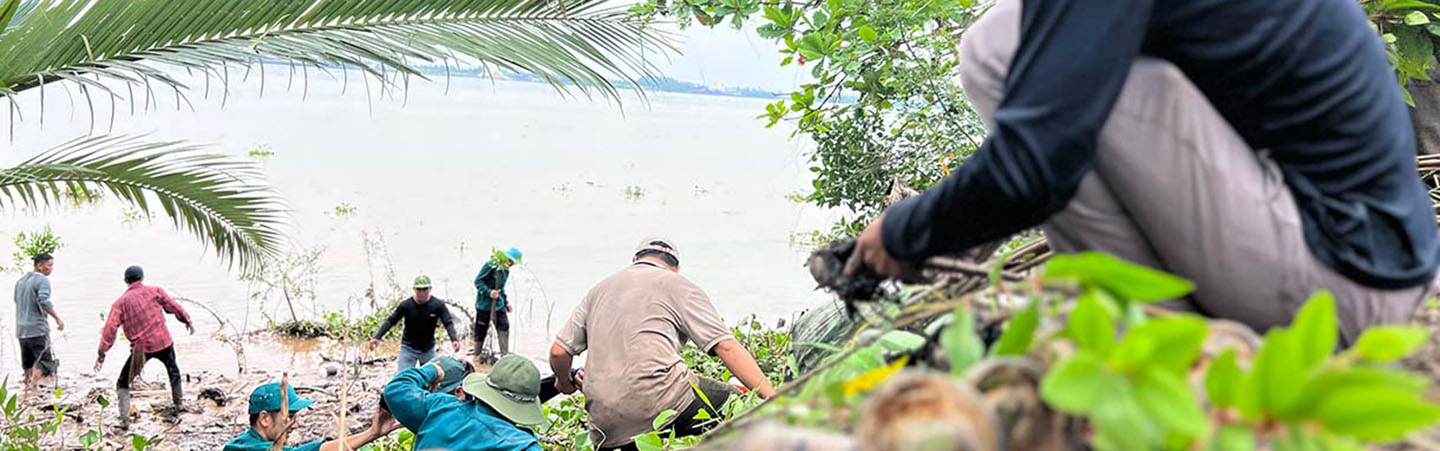
Further south, in the Mekong Delta, we joined the MangLub team to visit restoration sites along the Co Chien River, near My Long in Vinh Long Province. We learned about their efforts to restore mangroves in areas affected by erosion and changing land use, and the practical challenges of establishing and maintaining mangroves in these dynamic coastal environments.
We also visited a local shrimp farmer who has been planting Rhizophora mangroves within his aquaculture ponds. Seeing mangroves growing alongside shrimp production offered a fascinating example of how ecosystem restoration and local livelihoods can coexist.
These visits brought many of our research interests to life, particularly the connections between coastal ecosystems, local livelihoods and the practical challenges of restoration in working landscapes.
Women4Mangrove: More than planting trees
A highlight of our journey was joining the Women4Mangroveprogram in Cu Lao Dung, an inspiring initiative bringing together mangrove restoration, women's empowerment and sustainable livelihoods.
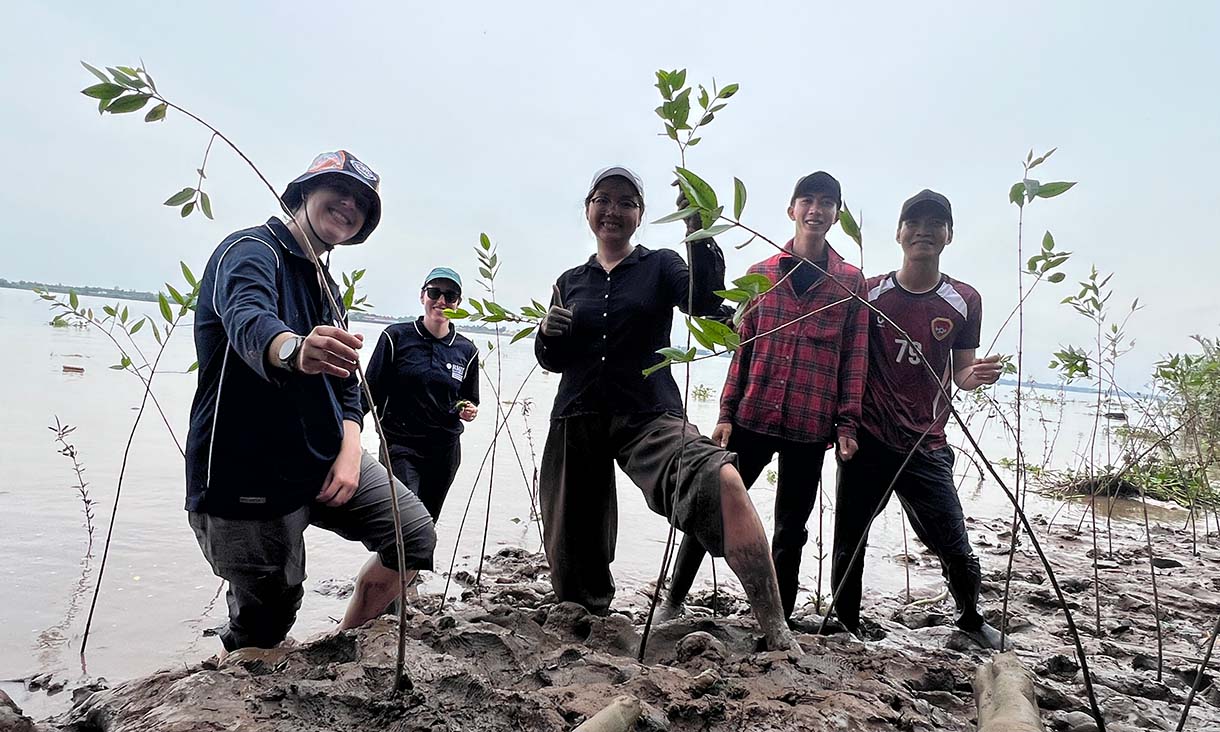
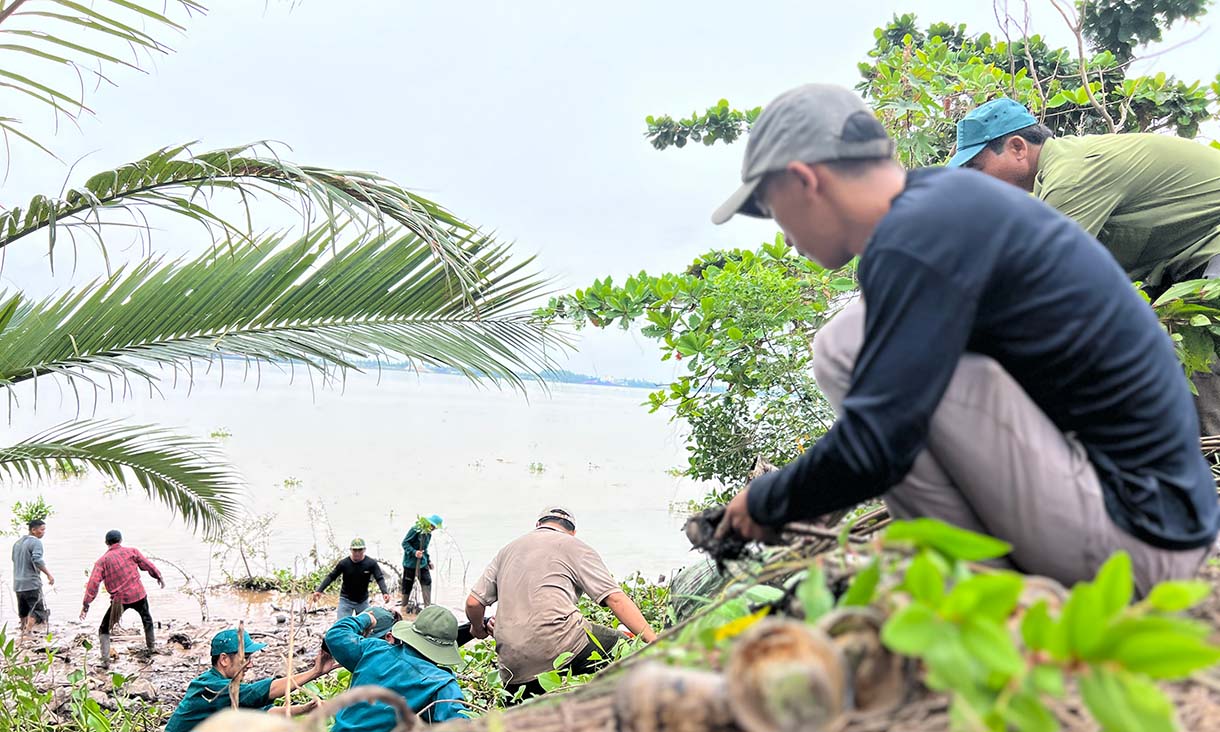
We had the opportunity to get our hands muddy during a community planting activity, helping establish Sonneratia caseolaris (mangrove apple) along the coast (see more).
But what stood out most was seeing how restoration extended well beyond planting trees.
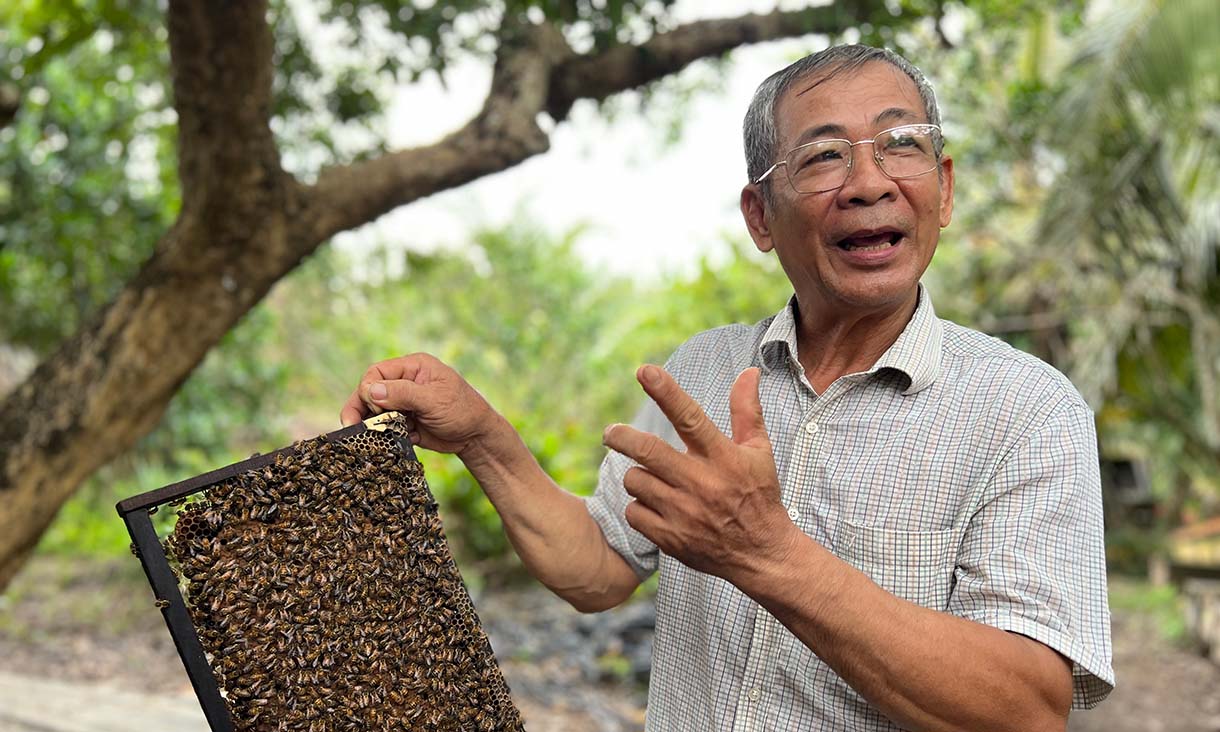
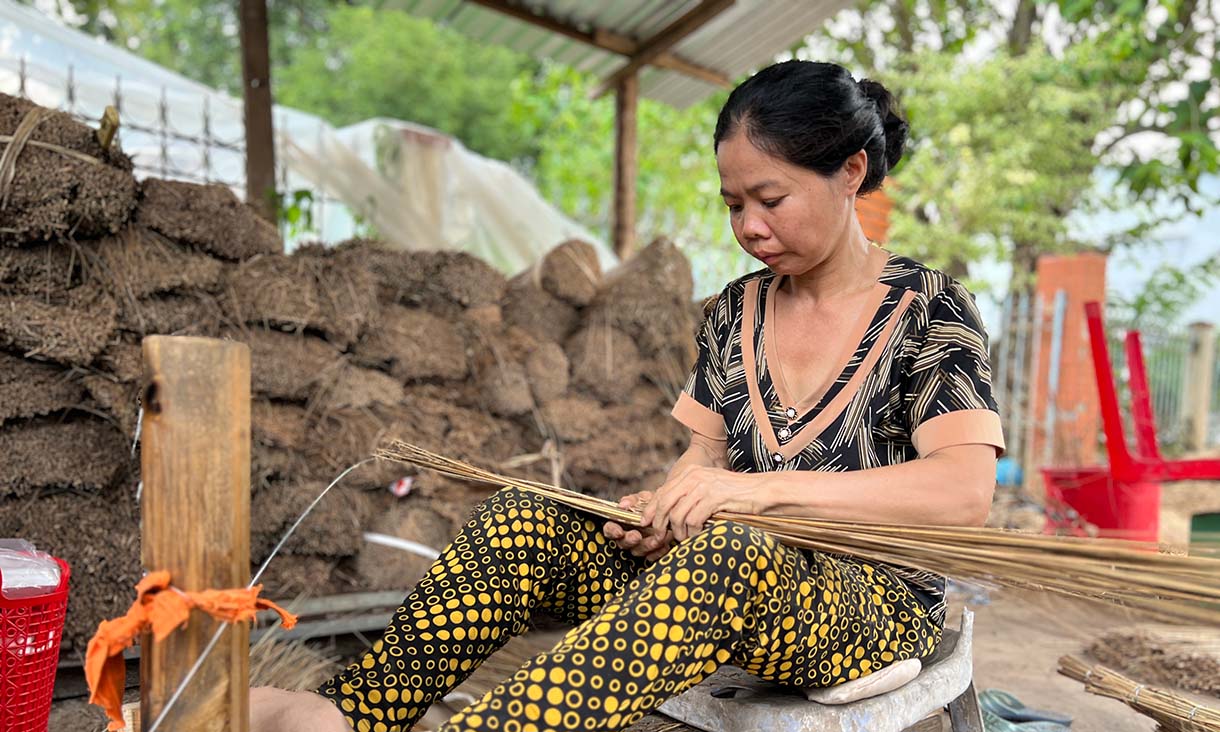
We met local women and community members developing livelihoods connected to the surrounding environment, including beekeeping, traditional palm crafts and products made from mangrove and nipa palm resources.
Our visit also coincided with the celebration of Women4Mangrove's first phase, which brought together local communities, researchers, government representatives and project partners (see more). Over the past year, the initiative has supported the restoration and protection of up to five hectares of mangrove forest, while creating opportunities for women to lead conservation activities and develop local enterprises.
During the event, we shared examples from our work in Australia, including mangrove monitoring using satellite imagery, innovative restoration techniques and research exploring the social and economic benefits of coastal wetlands.
It was a fantastic opportunity not only to share our research, but also to learn from the knowledge and experience of communities putting restoration into practice.
Different countries, shared challenges
Throughout our visit, we were reminded that although Australia and Vietnam have different coastal landscapes, many of the challenges we face are remarkably similar.
How can we restore coastal ecosystems while supporting the people who depend on them? How can we better recognise the social, cultural and economic values of nature? And how can research translate into practical, lasting outcomes?
We returned with plenty of new ideas, potential collaborations and a renewed appreciation for the importance of connecting ecological science with local knowledge and community priorities.
Perhaps our biggest takeaway was that successful restoration is not just about ecosystems, but also about people, partnerships and the opportunities we create together.
Thank you, Vietnam!
A huge thank you to everyone who welcomed us, generously shared their research, showed us their projects and made this visit such a valuable experience.
We are especially grateful to Dr Dinesh Bhatia (RMIT Vietnam), Dr Tran Trinh Duc (RMIT Vietnam), Dr Nguyen Tan Phong (Ton Duc Thang University), Prof Dr Tanh Nguyen (Vietnam National University), Dr Hue Le (VNU-CRES), Dr Dao Van Tan (Mangrove Ecosystem Research Center, HNUE), and Dr Trinh Tu Anh (UEH) for the engaging discussions and warm hospitality.
Our thanks also go to Landscape Alliance (Dr Tan Quang Nguyen), the Centre for Sustainable Rural Development (Hien Thanh Nguyen) MangLub (Thy Pham) and Women4Mangrove (Thuy Thi Thu Nguyen), and especially to the local farmers, women and community members who welcomed us and shared their experiences and knowledge.
This visit was supported by RMIT Global Mobility Grants awarded to Dr Melissa Wartman and Dr Micheli Costa, and a professional development grant awarded to Dr Maria Palacios.
Related News


Acknowledgement of Country
RMIT University acknowledges the people of the Woi wurrung and Boon wurrung language groups of the eastern Kulin Nation on whose unceded lands we conduct the business of the University. RMIT University respectfully acknowledges their Ancestors and Elders, past and present. RMIT also acknowledges the Traditional Custodians and their Ancestors of the lands and waters across Australia where we conduct our business - Artwork 'Sentient' by Hollie Johnson, Gunaikurnai and Monero Ngarigo.
More information