Building cultural competence in pharmacy education: a new standard for care
RMIT’s pharmacy program is transforming cultural competence training through immersive, research-informed modules that prepare graduates to deliver inclusive, patient-centred care.
Dr Chiao Xin (Chelsea) Lim and the RMIT pharmacy team uncovered a critical gap when reviewing cultural competence content in the pharmacy curriculum through conducting an interview study with third-year students.
The students felt they were ill-equipped to provide culturally responsive care and that their learning was mostly incidental; at the time there was only one lecture in the program on cultural competence.
In response to the greater emphasis on cultural competence with the introduction of new accreditation standards for pharmacy programs in 2020, Chelsea felt that RMIT needed to adapt their curriculum to better prepare students for real-world practice.
Through conducting a systemic review of the pharmacy profession and working alongside RMIT PhD students, the team established the most effective ways of teaching cultural competence by creating two modules that significantly increased students’ self-efficacy scores and stimulated genuine attitudinal change.
Immersive learning through real-life narratives
The first module introduces cultural competence through an interactive, self-paced online experience built using H5P technology to enhance interactivity. Students engage with case scenarios drawn from real pharmacy practice, presented through digital storytelling and video vignettes.
One scenario, for example, depicts a pharmacist who assumes a customer of Indian heritage, is vegetarian and offers medical advice based solely on that assumption. The resulting discomfort highlights the interpersonal impact of cultural missteps.
“We deliberately designed cases to evoke cultural tension,” Chelsea said.
It’s about challenging assumptions and promoting emotional internalisation of cultural competence principles.
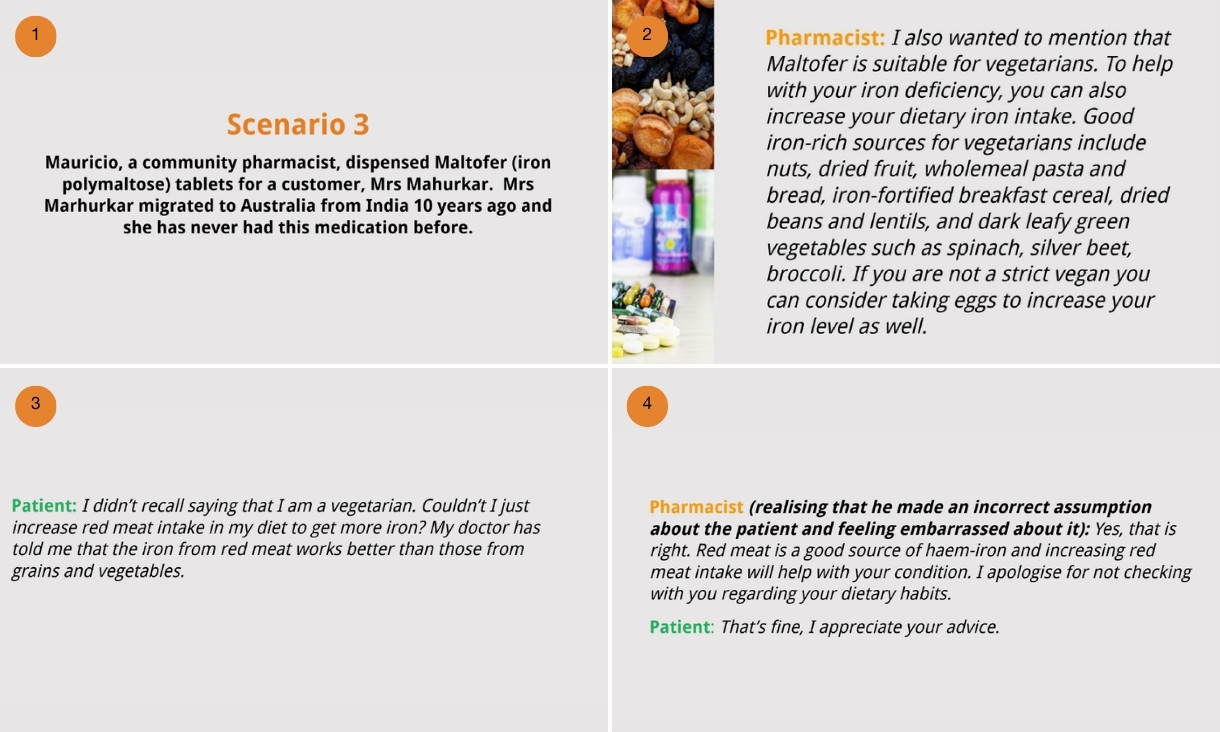 Example scenario from Module 1
Quizzes with automated feedback and reflective tasks encourage students to pause, think and apply their learning, and the feedback has been overwhelmingly positive.
“The most effective part was seeing real cases and understanding the right method of action,” one student said.
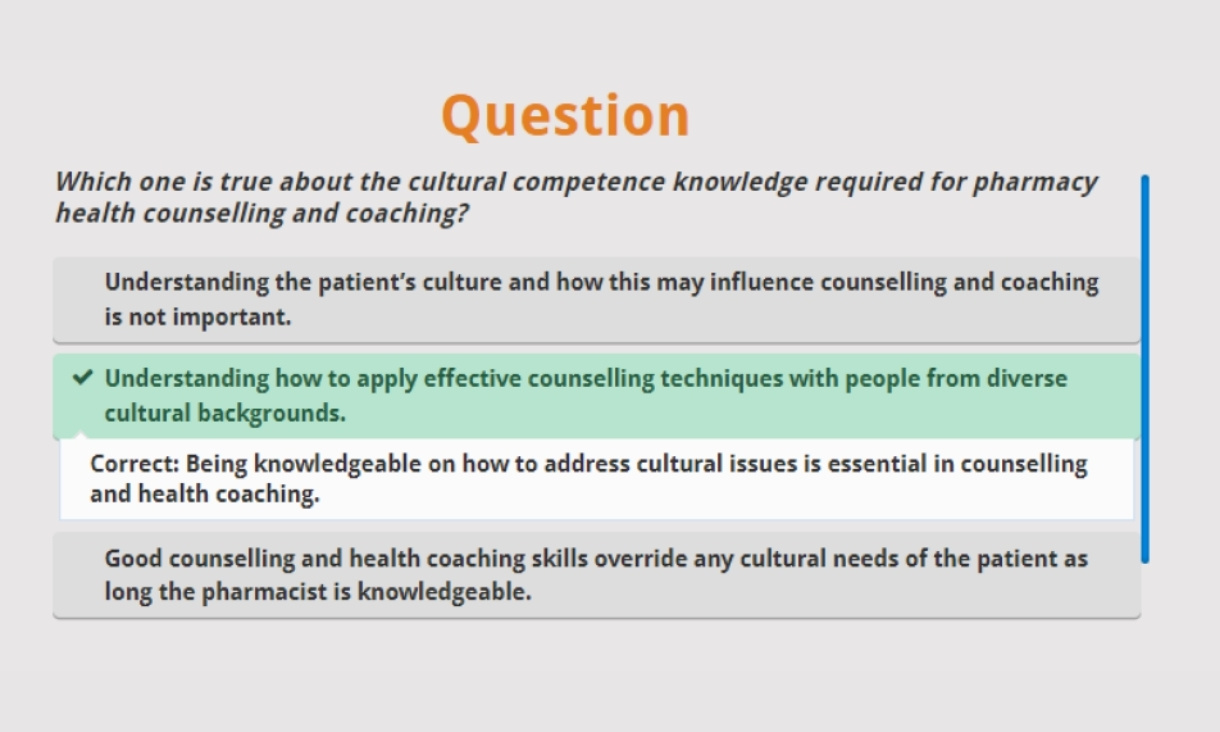 Example quiz with automated feedback
The analytics from the module have shown strong engagement and increased self-efficacy scores, showing not just cognitive understanding but emotional readiness to provide culturally responsive care.
Bry Forrest, pharmacy graduate and proud Kanolu woman said that even for someone who has a strong sense of cultural competency such as herself, the modules expanded and reinforced her skills.
“There is never not a good time to refresh my competencies across many diverse cultural identities,” she said.
There are always new things to learn, remember and continually work on, keeping an open mind, heart and attitude will always service patients best.
Cultural safety through community collaboration
The second module focuses on cultural safety for Aboriginal and Torres Strait Islander peoples and was co-designed and co-delivered with the Victorian Aboriginal Health Service (VAHS).
Delivered through lectures and workshops led by VAHS pharmacists and healthcare workers, the module uses case-based learning to explore complex scenarios including navigating traditional medicines or different Medicare entitlements.
“There are a lot of Indigenous herbal medicines that the person may be taking and the pharmacist needs to ensure that they are exercising cultural competence and safety and also utilising their professional knowledge to navigate these scenarios," said Chelsea.
“This collaboration gives students the chance to listen, reflect and learn directly from community voices.”
The module is part of RMIT’s commitment to reconciliation and responsible practice in learning and teaching and showcases meaningful engagement with community and industry to achieve this.
Students who participated in this course reflected on developing not only cognitive understanding but also the emotional resonance and attitudinal shifts that occurred through witnessing culturally inappropriate vs responsive care.
Bry found it valuable to hear from different perspectives and life experiences as part of the curriculum and enjoyed the opportunity to discuss these with her peers.
“A key learning from the workshop was that cultural safety is defined by the patient and their experience of care, rather than by our intentions and the power dynamics that exist within healthcare interactions,” she said.
“Hearing people share their real experiences and reflections helped reinforce the importance of listening directly to community perspectives when considering what culturally safe care looks like in practice.”
Chelsea and the team observed an increase in the students’ scores across all domains of the self-efficacy testing after they had completed the modules suggesting an increase in student confidence and competency in their cultural competency knowledge.
By embedding cultural competence and cultural safety into core pharmacy curriculum, RMIT is setting a new benchmark for pharmacy education, preparing graduates to deliver care that is inclusive, empathetic and responsive to Australia's diverse population.
Bry is currently completing her pharmacy placement the Royal Melbourne Hospital and credits the completion of the modules to have expanded her knowledge and skills in pharmacy practice.
“It reinforced the importance of asking open questions about cultural practices for certain treatments,” she said.
“Pharmacists play an important role in working collaboratively with patients to adapt treatment plans where appropriate, ensuring care is both clinically appropriate and culturally respectful.”
“As an intern pharmacist I aim to apply these learnings by prioritising respectful communication, patient-centred care, and cultural humility.”
 Pharmacy graduate Bry Forrest
About the team behind the innovation
Dr Chelsea Lim was awarded the RMIT University Vice-Chancellor's Teaching Citation for Outstanding Contributions to Student Learning in 2025 in recognition of her work in designing these modules . Chelsea attributes this achievement to the collaborative efforts of a dedicated team.
Led by Dr Chiao Xin (Chelsea) Lim, Senior Lecturer, the project brought together Professor Ieva Stupans (Professor of Pharmacy), Professor Gerard Kennedy (Professor of Psychology), Dr Gloria Nkhoma, Katherine Baverstock (Senior Lecturer), Atinuke Abraham (Pharmacist, Victorian Aboriginal Health Service), and Rhyanna Yow-Yeh (Aboriginal healthcare worker and pharmacy assistant, VAHS).
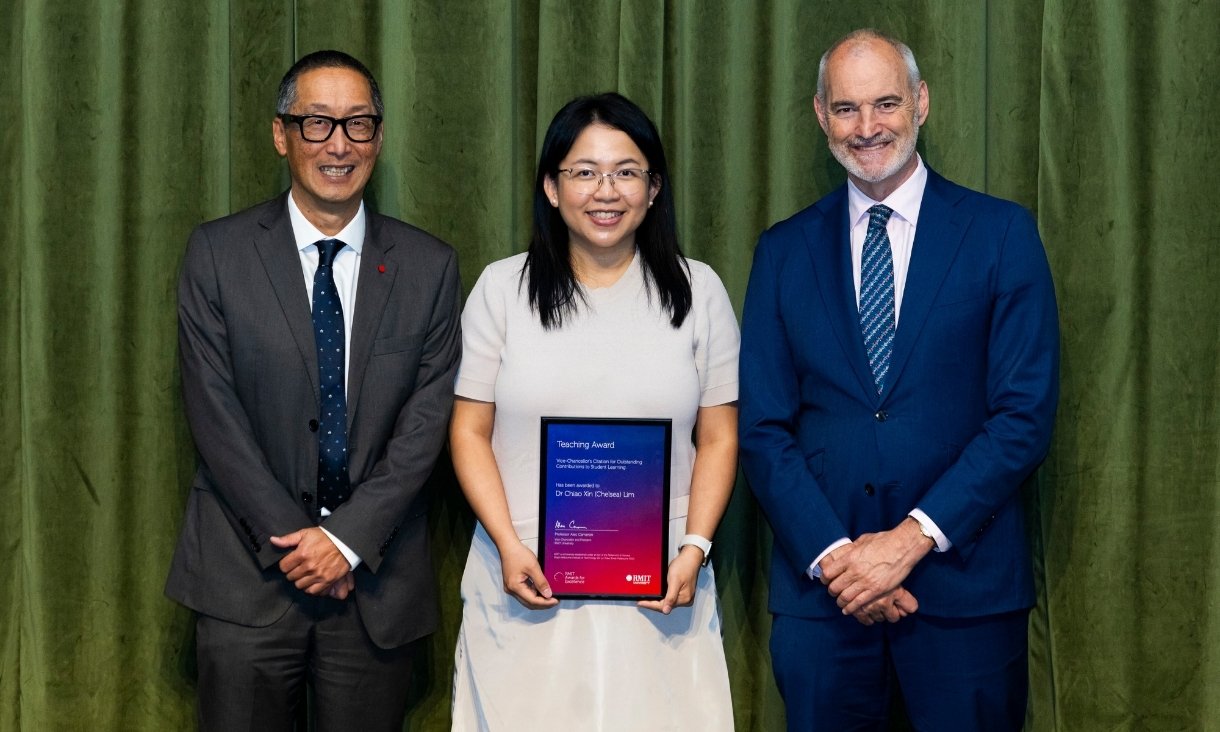 Dr Chelsea Lim accepting the RMIT University Vice-Chancellor's Teaching Citation for Outstanding Contributions to Student Learning in 2025


Acknowledgement of Country
RMIT University acknowledges the people of the Woi wurrung and Boon wurrung language groups of the eastern Kulin Nation on whose unceded lands we conduct the business of the University. RMIT University respectfully acknowledges their Ancestors and Elders, past and present. RMIT also acknowledges the Traditional Custodians and their Ancestors of the lands and waters across Australia where we conduct our business - Artwork 'Sentient' by Hollie Johnson, Gunaikurnai and Monero Ngarigo.
More information