Cultural, unique and inspiring: Meet Grace Lillian Lee

Indigenous RMIT alum Grace Lillian Lee’s striking woven creations have captured the attention of the fashion world.

Growing up in Cairns, Grace was obsessed with an op-shop across the road from her family home. The variety of colours and styles on the racks got her imagination working overtime. 

The influence of her mother, who had a passion for race wear, particularly hats, and her father, who was an artist, deepened Grace’s interest in design. 

“I just always would buy clothes, and I always was redressing people in my mind and creating little environments, and it just was a part of my upbringing,” she said. 

“My mum used to be a judge for the races, so she would actually get hats sent from Melbourne to Cairns, and I was very much like, ‘Oh, what's in the box?’ and I would look forward to that and her creating these outfits with designers. 

“To have exposure to that dressing and adorning of oneself was a privilege and I was curious about it.” 

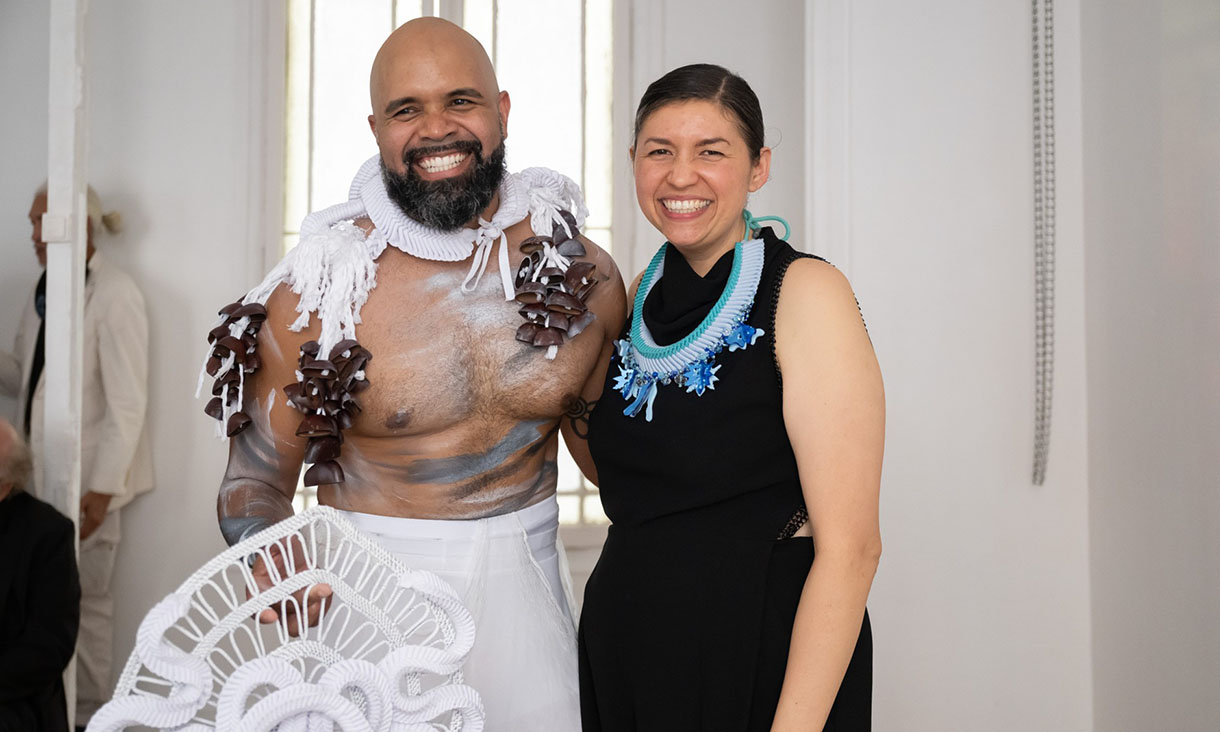
Two people standing together in a bright room, wearing bold, sculptural garments featuring intricate beadwork and textured designs, one person holding a decorative white piece.

A future in fashion unfurls

Grace’s talent for design was first revealed in her final year of high school when she entered a wearable art competition with the theme of ‘palette’. 

“I decided to paint large canvases that these models came out of and with that, I also decided to learn how to sew,” she said.  

“So I went to Spotlight to get some classes, and then I made these dresses and these models came out of these large scale canvas paintings. I won the supreme award, [and got] 100 per cent in terms of the scoring, and then I was like, ‘Okay, I think this is what I'm meant to do’.” 

From there, Grace set her sights on the Bachelor of Design (Fashion Design) at RMIT.  

“I knew that it was the leading school of design and for me, I wanted to be the best,” she said. 

Being accepted into the course meant moving from Cairns to Melbourne and at 18, it was Grace’s first time living away from home.  

Meeting other remote students helped her settle in and Grace ploughed headfirst into the world of design. 

“It was exciting - I got to learn how to illustrate, how to pattern make and do different techniques from men's wear to tailoring, to knit to lingerie,” she said. 

“Every year it was focused around something different and it was definitely about developing your design and exploring what that is.” 
Weaving a signature style

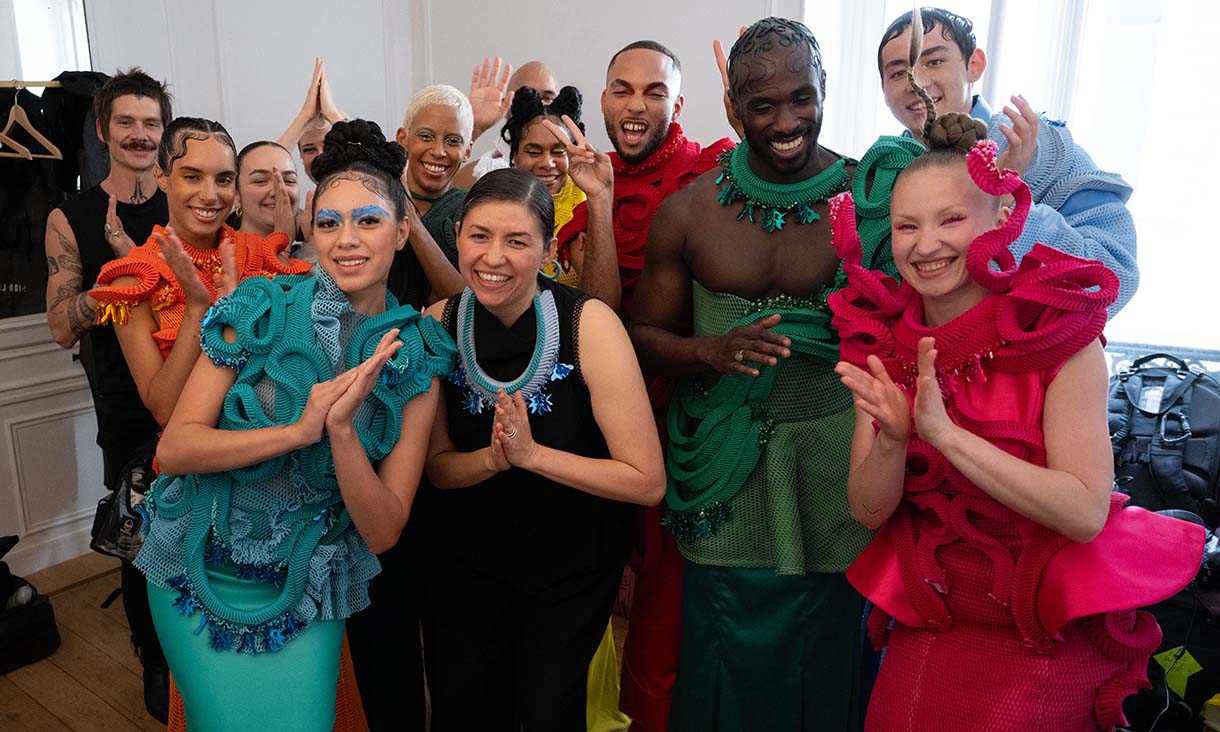
For her final year collection of designs, called Intertwined, Grace harked back to her Torres Strait roots and begun weaving fabric to create statement pieces.  “I felt like I wanted to be a part of something that was bigger than what I was accessing in Melbourne, and for me, that was to do with my culture,” Grace said.  

She used a grasshopper technique, which was traditionally used to weave palm fronds, and adapted it to fabric. The result was a striking collection of body sculptures that Grace continues to use today.  

But it was this first collection that won her high praise from a panel of industry experts invited to critique student work at RMIT. 

“They encouraged me to go down that way, to continue doing that, which was really quite profound actually,” she said. 

After graduating in 2010, Grace’s career has been ascending – starting with the Melbourne Fashion Week Graduate Show in 2011, her first commission in 2016 for the Australian Institute of Aboriginal and Torres Strait Islander Studies and right up to her designs appearing at Paris Couture Week in July last year. 

Among the guests was fashion royalty Jean Paul Gaultier, who took a shine to Grace’s creations when he saw them at the Fashion Freak Show as part of the 2024 Brisbane Festival.

Group of people posing together in vibrant, sculptural outfits made from textured fabric in red, green, blue and orange, standing in a well-lit room and making playful hand gestures.

More hard work than glitz and glam

Grace’s credentials as a leading Australian designer continue to accumulate. This month she will begin work on costumes for Flora, a performance by all-Indigenous ballet group Bangarra. 

She is also busy working on First Nations Fashion and Design – a fashion charity Grace founded to support the development of remote and rural Indigenous designers.  

“If they don't have access to go to university, there's a space like ours and it’s the first stepping stone into what maybe fashion and design could look like for them,” Grace said. 

For those considering a career in fashion, Grace’s advice is simple: work hard. 

“I just definitely don't think it's glitz and glam,” she said. 

“It's hard work and it takes big commitment, and it's beyond passion because everyone can be super passionate and excited, and want to be around creativity.  

“It's about relationships, so be nice to people and ensure that you are fostering good relationships ,and just being your authentic self.” 

Support for Indigenous and Torres Strait Island students continues beyond graduation with the Deadly Alumni group. The Deadly Alumni community has the opportunity to mentor First Nations RMIT students, access RMIT libraries and collaboration spaces, and receive career support.  

Story: Kate Jones

You might also be interested in

aboriginal flag float-start torres strait flag float-start

Acknowledgement of Country

RMIT University acknowledges the people of the Woi wurrung and Boon wurrung language groups of the eastern Kulin Nation on whose unceded lands we conduct the business of the University. RMIT University respectfully acknowledges their Ancestors and Elders, past and present. RMIT also acknowledges the Traditional Custodians and their Ancestors of the lands and waters across Australia where we conduct our business - Artwork 'Sentient' by Hollie Johnson, Gunaikurnai and Monero Ngarigo.

Learn more about our commitment to Indigenous cultures