Four ways green skills are becoming the ultimate career advantage

Green skills might sound like a buzzword, but they signal a genuine shift in how modern businesses operate – and for RMIT alum, that shift creates real opportunity.

Environmental sustainability can feel overwhelming, with climate change dominating headlines and social expectations continuing to rise. Customers, communities and employees are asking more of the organisations they support. Transparency and long-term impact aren’t optional anymore – they’re expected.

These shifts are starting to drive something increasingly more valuable in the workplace: green skills.

Organisations aren’t just updating policies, they’re re-designing how they operate. The professionals who can confidently connect sustainability to commercial outcomes aren’t just valuable, they’re shaping the direction of modern business.

So what does that mean for you? Here are four ways green skills are fast becoming a powerful career advantage.

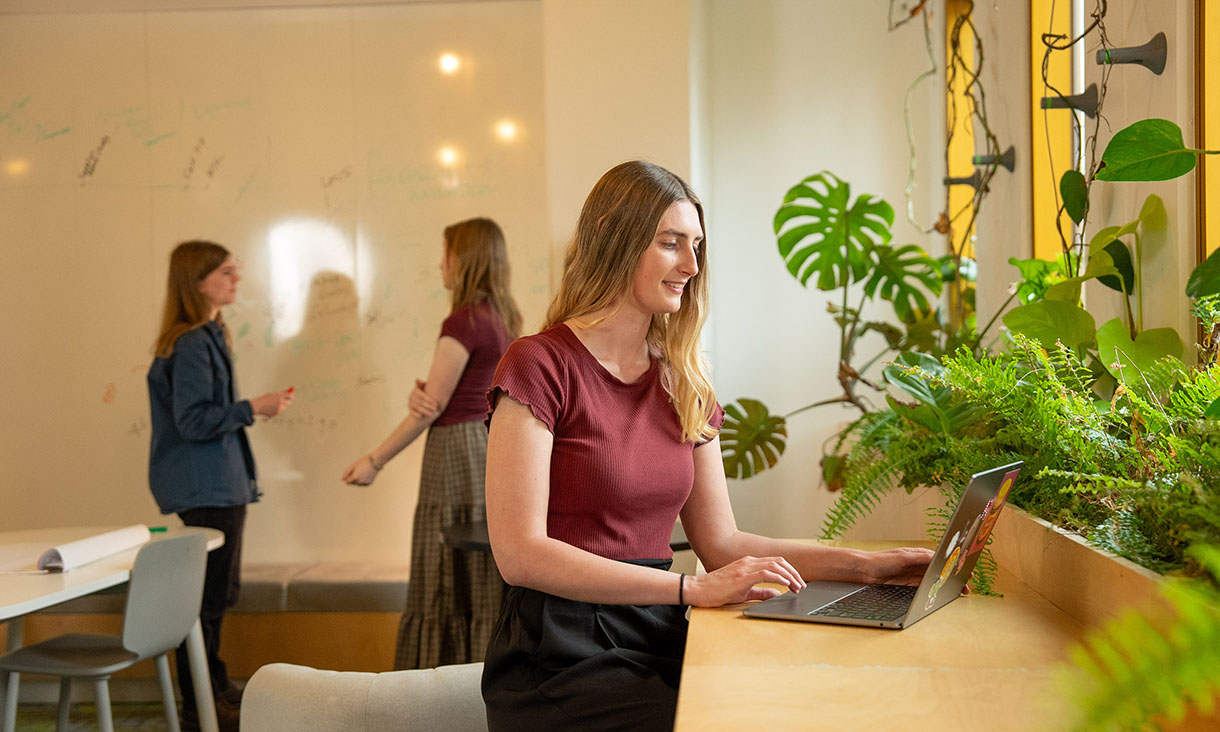
Woman working on a laptop at a desk with indoor plants, while two others collaborate and write on a whiteboard in the background in a modern, well-lit workspace.

#1: Green skills aren’t just environmental – they’re foundational

At their core, green skills combine environmental awareness with strategic thinking, innovation and business literacy. They include understanding emissions, sustainable supply chains, Environmental, Social and Governance (ESG) reporting, circular economy principles and climate risk. 

Green skills aren’t confined to environmental job titles. They’re showing up in everyday roles across every industry. You’ll see them in: 

  • A farmer reducing carbon emissions 
  • An architect designing energy-efficient buildings 
  • A supply chain manager lowering unnecessary waste 
  • A marketing professional communicating ESG commitments 

In today’s workforce, sustainability fluency is becoming as fundamental as digital literacy once was.

#2: Every industry will need sustainability capability

Last year, RMIT Online found that 43% of Australian businesses weren’t prepared for Australia’s first mandatory climate reporting introduced in 2025.1 That’s not just a compliance gap – it’s a capability gap. From healthcare to construction, finance to fashion, sustainability is influencing strategy, reporting and long-term planning. 

Businesses that were underprepared are now actively looking for people who understand opportunities, risk and sustainable operations. 

This shift is even reflected at an institutional level, too. RMIT is now ranked in the top 100 universities globally in the QS World University Rankings for Sustainability in 20262 – highlighting how deeply sustainability performance is being measured and embedded. 

Importantly, these companies are not just hiring sustainability specialists. They’re looking for leaders, managers and professionals who can bring that thinking into existing roles. That’s where you come in.

#3: Employers are willing to pay for green skills

Our joint report with Deloitte found employers are willing to pay up to $13,000 more for managers who bring green skills into leadership roles3

This is because sustainability capability isn’t just about doing good. It improves: 

  • Risk management 
  • Long-term strategy 
  • Investor confidence 
  • Operational efficiency 

Professionals who understand sustainability are more likely to lead change projects and influence business direction. 

#4: Being a green candidate is about curiosity, not perfection

You don’t need to reinvent your career to have green skills, and you definitely don’t need to have all the answers.  

It starts with asking better questions: 

  • How does climate risk affect my industry? 
  • Where are we wasting resources? 
  • What are customers and investors expecting now? 
  • How could we do this better? 

Curiosity signals leadership and when it’s backed by practical upskilling through short courses, micro-credentials or further study, it turns into real capability.  

Initiatives like RMIT's Regenerative Futures Institute (launching in 2026) reflect this shift – expanding interdisciplinary learning across courses, undergraduate study and public engagement in regenerative practice and sustainability innovation. Sustainability capability is fast becoming embedded in mainstream professional development, not a niche add-on. 

Green skills can give your career purpose

Green skills aren’t just about staying employable – they’re about choosing to lead with intention. They show you understand the forces reshaping your industry and that you’re ready to contribute thoughtfully, not just react to change. 

Your degree doesn’t end at graduation, and neither does our commitment to your growth. As the world of work continues to evolve, the most in-demand professionals will be those ready to lead with capability, confidence and purpose. 

Story: Angela Brayton

References 

  1. RMIT Online report finds most Australian businesses expect climate costs, but few are ready
  2. QS RMIT University Rankings
  3. RMIT Online report finds most Australian businesses expect climate costs, but few are ready

You may also be interested in

aboriginal flag float-start torres strait flag float-start

Acknowledgement of Country

RMIT University acknowledges the people of the Woi wurrung and Boon wurrung language groups of the eastern Kulin Nation on whose unceded lands we conduct the business of the University. RMIT University respectfully acknowledges their Ancestors and Elders, past and present. RMIT also acknowledges the Traditional Custodians and their Ancestors of the lands and waters across Australia where we conduct our business - Artwork 'Sentient' by Hollie Johnson, Gunaikurnai and Monero Ngarigo.

Learn more about our commitment to Indigenous cultures