RMIT hosts inaugural United Nations business human rights summit

RMIT hosts inaugural United Nations business human rights summit

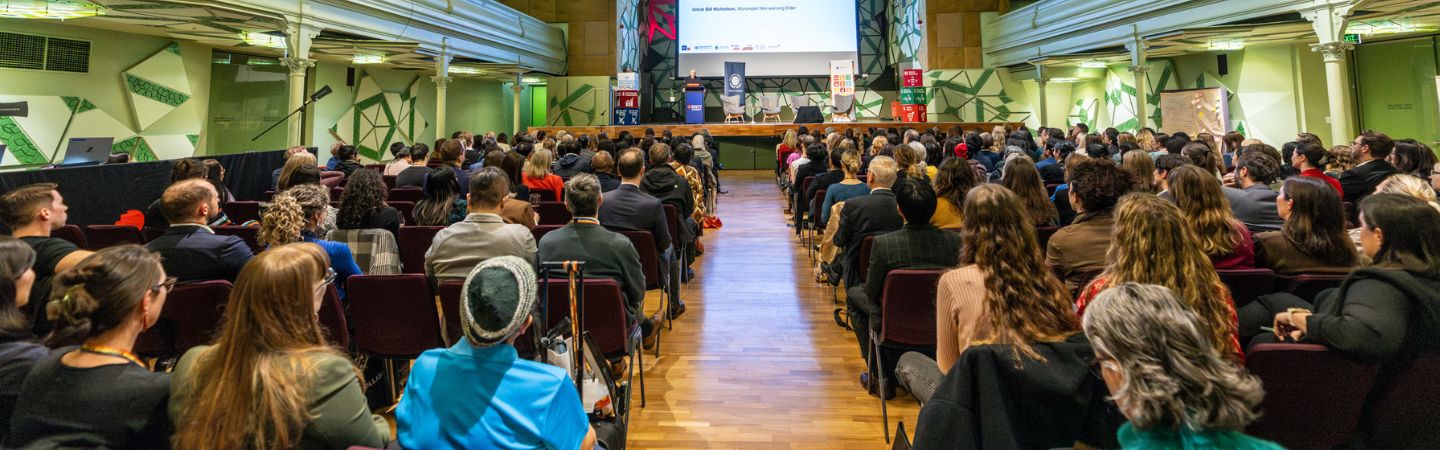
RMIT University hosted the first-ever United Nations Business and Human Rights (UN BHR) Regional Forum: Australia and New Zealand this week.

Held at RMIT’s Storey Hall, the forum was co-organised by the RMIT Business and Human Rights (BHRIGHT) Centre.

It brought together a broad range of stakeholders in critical sectors including government, business, investors, the education sector and civil society, to focus on strengthening business practices in the turbulent era the world finds itself in. 

At the forum, attendees discussed key trends and developments in the business and human rights landscape in our region and globally, including topics such as the role of investors in leading and enabling business respect for human rights, legislation aimed at ending modern slavery and strengthening implementation of human rights due diligence, measures to elevate respect for Indigenous Peoples in the economic transition and enabling tangible positive outcomes for affected workers, communities and other groups across complex global supply chains.

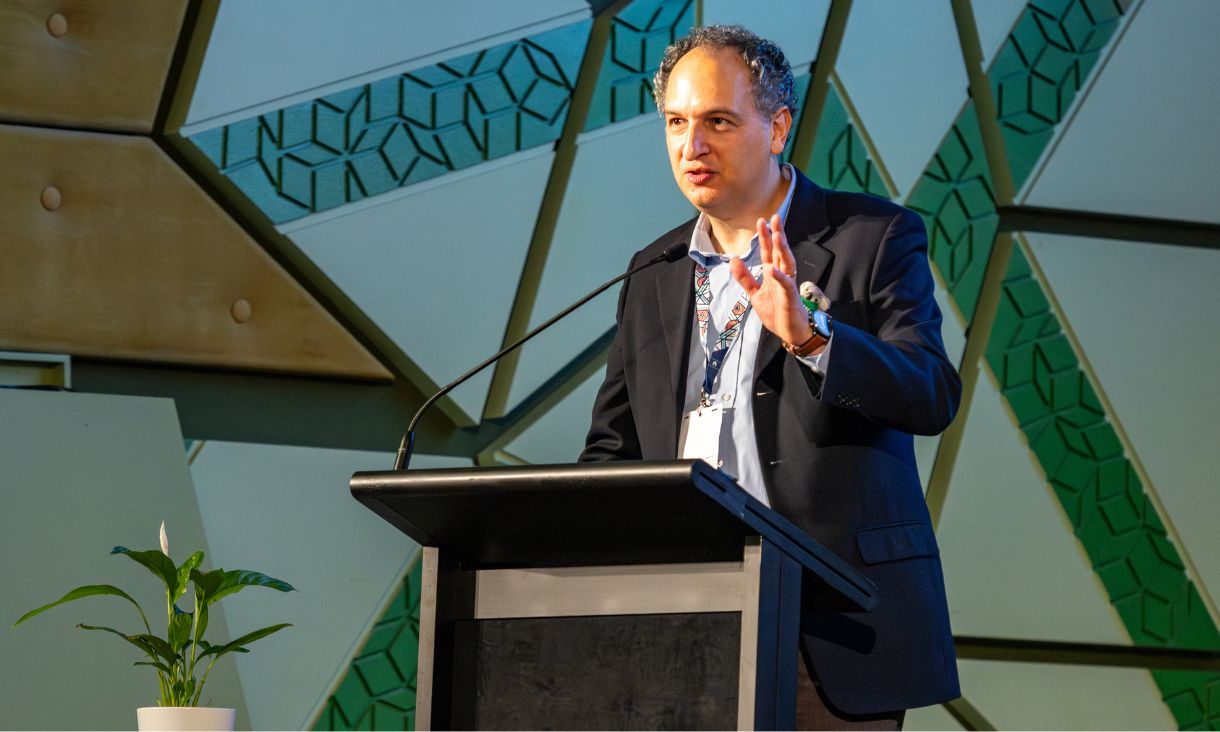
Associate Professor Jonathan Kolieb, Director BHRIGHT and co-organiser of the forum, said the forum was a chance to understand how human right interact with our system of economic activity and strengthen our commitment to upholding them. 

“At the forum, we showcased the impact achieved and achievable in the business and human rights space, with human rights-aligned leadership,” he said.

Associate Professor Jonathan Kolieb presenting at lectern. Associate Professor Jonathan Kolieb, Director of the RMIT Business and Human Rights (BHRIGHT) Centre.

“We brought together industry, civil society organisations, academics, government representatives and people with lived experience of human rights abuses, to influence the evolving landscape of business and human rights, ensuring a diverse range of perspectives are heard and reflected in future legislative and policy frameworks."

Catie Shavin, Senior Manager, Business and Human Rights, UN Global Compact Network Australia and co-organiser said the conversation was powerful opportunity to elevate the conversation around business and human rights in our region.

“As we navigate increasingly complex global challenges, it’s vital that businesses lead with purpose and embed a risk-based approach to human rights,” she said.

“The UN Global Compact Network Australia was proud to co-host this forum, fostering collaboration and driving meaningful change across sectors.”

The forum was co-organised by the UN Working Group on Business and Human Rights, UN Global Compact Network Australia, RMIT and BHRIGHT, Macquarie University B&HR Access to Justice Lab, UNSW Australian Human Rights Institute and World Vision New Zealand.

A plenary event to address the contemporary era of change

The forum culminated with a plenary session Human Rights, Business and Turbulent Times: Challenges, Responsibilities and Opportunities.

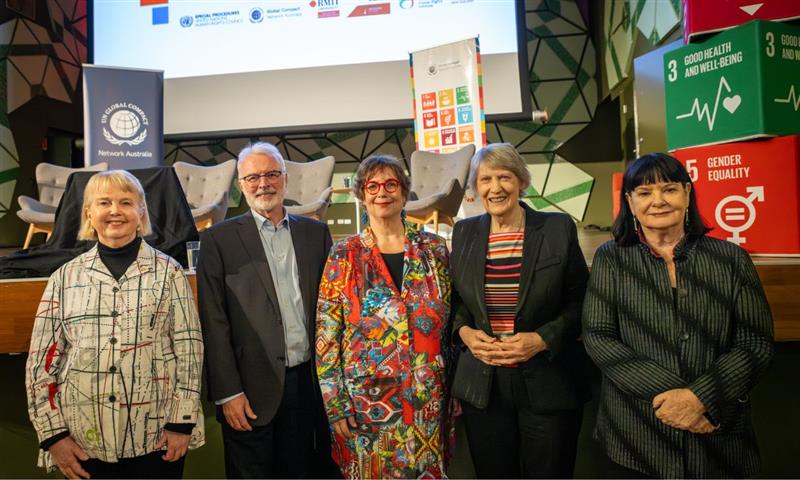
Group photo including Chancellor Peggy O'Neal AO From L-R: RMIT Chancellor Peggy O'Neal AO, Robert McCorquodale, Linda Kromjong, Helen Clark and Sharan Burrow.

Hosted by RMIT Chancellor Peggy O’Neal AO, the session featured a ‘fireside chat’ with former New Zealand Prime Minster Helen Clark, former President of the Australian Council of Trade Unions Sharan Burrow, and amfori President Linda Krumjong, focusing on how business and society can respond to the uncertain and often disruptive times the world finds itself in. 

Attendees also heard from renowned international lawyer and business and human rights expert Robert McCorquodale.  

An Australasian first for sustainability

Aside from being the inaugural business and human rights forum in the region, the event was unique in another aspect: it was the first certified fully sustainable event at a university in the Australasian region, achieving the first three-star certification.

The Australian Campuses Towards Sustainability (ACTS) Sustainable Events Accreditation supports event organisers across Australasia to embed sustainability into every aspect of their event planning. The certification provides a clear and practical framework to help reduce environmental impact, promote social responsibility, and showcase leadership in sustainable event delivery.

To achieve a three-star rating, the forum demonstrated leadership and innovation across environmental and social sustainability, fulfil all 15 mandatory actions from the ACTS sustainability checklist, and complete an additional 10 actions from the optional list.

Some of the initiatives to make the event more sustainable included ‘green’ lanyards that could be planted instead of thrown in rubbish, a fully vegetarian catering suite provided by a Mahony Group, a local business that prioritises ethical sourcing and fair labour practices, fully reusable service ware like cups, plates and cutlery, zero plastic and all participating organisers and service providers having a fully-sustainable and externally verified supply chain.

Achieving this certification took an enormous effort from the co-organisers, and comes just days before RMIT’s Sustainability Week 2025. 

More information about the forum is available here: https://unbhrforumanz.org/

RMIT Business and Human Rights Centre: https://www.rmit.edu.au/research/centres-collaborations/business-and-human-rights-centre  

UN Global Compact: https://unglobalcompact.org/


Story: Finn Devlin
Share

  • CoBL

Related News

aboriginal flag float-start torres strait flag float-start

Acknowledgement of Country

RMIT University acknowledges the people of the Woi wurrung and Boon wurrung language groups of the eastern Kulin Nation on whose unceded lands we conduct the business of the University. RMIT University respectfully acknowledges their Ancestors and Elders, past and present. RMIT also acknowledges the Traditional Custodians and their Ancestors of the lands and waters across Australia where we conduct our business - Artwork 'Sentient' by Hollie Johnson, Gunaikurnai and Monero Ngarigo.

More information