RMIT Advances Cyber Resilience Across the Asia-Pacific Region

RMIT Advances Cyber Resilience Across the Asia-Pacific Region

Throughout the last few months, the College of Business and Law’s Centre for Cyber Security Research and Innovation (CCSRI) marked significant milestones in its cyber resilience and uplift initiatives across the Asia-Pacific region.

Through strategic partnerships, international engagement, and targeted capability-building initiatives, CCSRI in collaboration with RMIT Vietnam continue to demonstrate leadership in addressing global cyber security challenges to protect critical infrastructure.

Untitled design - 1

Cyber Ambassador Resilience Uplift Programs 

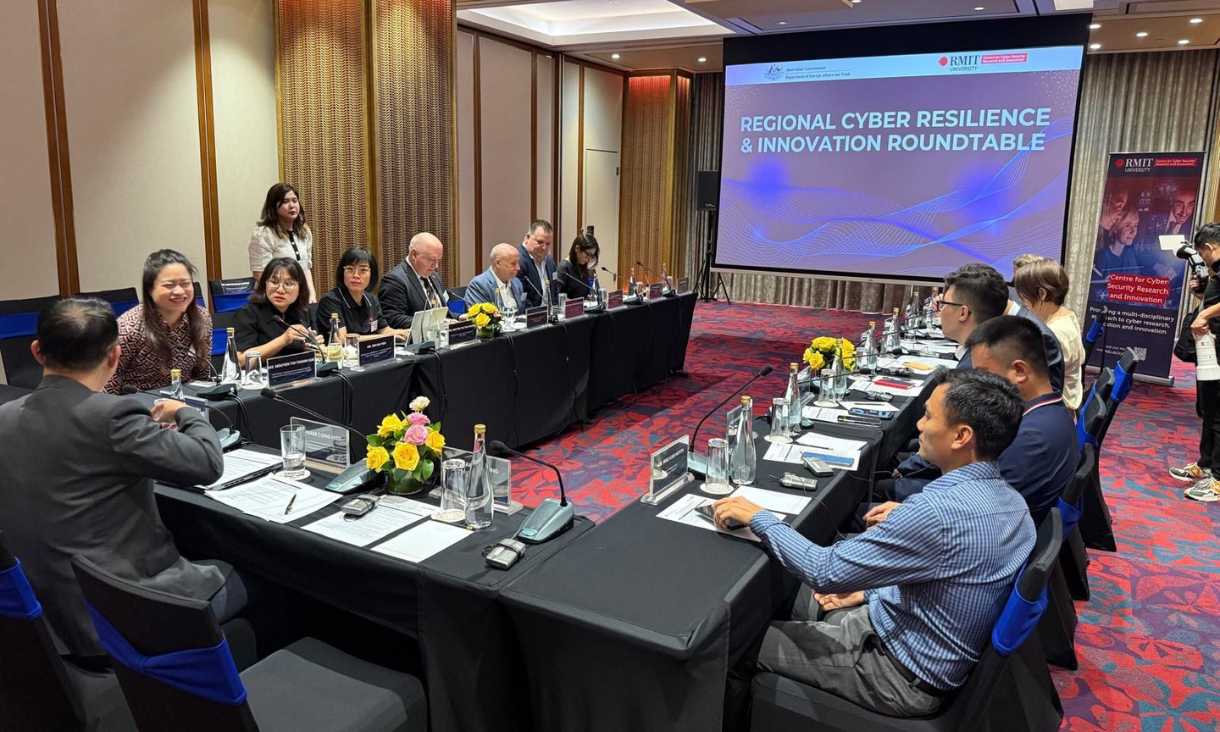
RMIT hosted an industry Roundtable on 13 June in Hanoi, celebrating the success of the Australia–Vietnam cyber-security uplift programs, with distinguished guests Her Excellency Ms Renée Deschamps, Deputy Head of Mission, Australian Embassy in Vietnam; His Excellency Mr Suren Baghdasaryan, Ambassador of the Republic of Armenia to Vietnam; and Mr Greg Ohan, Honorary Consul of the Republic of Armenia to Vietnam. 

Matt Warren, Director of CCSRI, affirmed the importance of the programs at the event.

“The Cyber and Critical Technology Cooperation Program (CCTCP), delivered by RMIT University in partnership with the Vietnam Information Security Association, and funded by the Australian Department of Foreign Affairs and Trade (DFAT), has delivered meaningful impact across Vietnam’s critical infrastructure sectors,” he said.

Participants in the program received technical upskilling alongside training in risk and governance, awareness and communication, female leadership and networking. The program was delivered through three key streams:

  1. Cyber Ambassador Program (train-the-trainer style cyber security uplift)
  2. Cyber Bootcamps (with a technical and governance focus)
  3. Female Leadership Programs

Warren emphasised the scale of the programs outlining that over the past nineteen months, the program has directly supported over 2,000 professionals through more than 30 training sessions across four cities - Hanoi, Hai Phong, Binh Dinh, and Ho Chi Minh City. 

CCSRI, RMIT Vietnam and the Vietnam Information Security Association (VNISA) delivered training sessions to improve cyber security awareness and resilience across Vietnam’s critical infrastructure sectors, including banking, telecomunications, logistics, aviation and healthcare. 

“We’ve had the privilege of working with some of Vietnam’s most critical organisations—EVN, Vietcombank, Vietnam Airlines, ACSV, Hong Ngoc Hospital, and many others—spanning sectors such as energy, finance, aviation, telecommunications, and logistics,” said Warren.

“These are organisations at the heart of national stability and regional connectivity.”

Warren explained that the training has gone beyond just technical skills. 

We have helped organisations assess and strengthen their digital maturity, leadership, and transformation capabilities,” he said.

“Importantly, we have also prioritised women’s leadership in cyber security through the launch of the She Leads Digital: Emerging Female Leaders in Cyber Security Program —recognising that resilience must be inclusive if it is to be effective.” This program is aimed at empowering mid-career women professionals with practical leadership tools, insights into the evolving cybersecurity landscape, and providing a forum to build valuable industry connections.”

“The success of these programs gives us confidence as we expand our focus to Cambodia.”

“Many of our Vietnamese partners already operate across Southeast Asia, including in Cambodia, making this an organic and strategic extension of the program.”

Cyber Symposium in Indonesia 

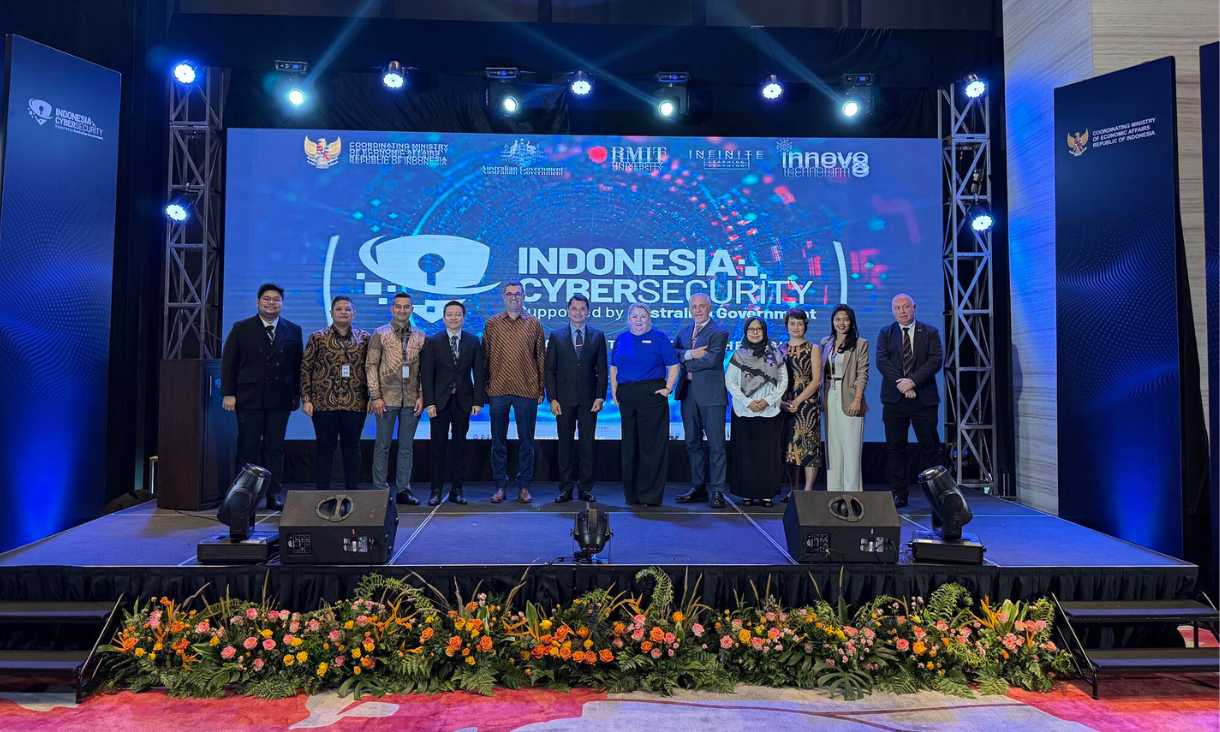
On 17 June, Warren also delivered the keynote at the Indonesia-Australia Cyber Security Symposium.  

The event was led by RMIT’s College of Vocational Education and was hosted by the Coordinating Ministry for Economic Affairs of the Republic of Indonesia (CMEA) and funded by DFAT.

Untitled design - 1

Mish Eastman, Deputy Vice-Chancellor Vocational Education and Vice-President at RMIT University, highlighted RMIT’s ongoing commitment to delivering relevant, in-demand training internationally.  

“This symposium is an exciting next step in leveraging RMIT’s global research and skills development expertise to align with Indonesia’s cyber security skills needs,” she said.

“Together, we can co-create tailored solutions responding at scale to build cyber resilience.” 

Warren opened the Symposium with a keynote that explored global cybersecurity trends, cross-border collaboration, regional approaches to shared threats, and national strategies to safeguard critical infrastructure.

He addressed the pressing need to strengthen cyber infrastructure both regionally and globally, stressing the need for Cyber Security professionals is an issue for many countries including Australia and Indonesia, and emphasised the foundational role of the infrastructure security across all nations as well as the unique challenges facing small and medium-sized enterprises (SMEs), particularly in Indonesia. 

“Critical Infrastructure is key for all countries; these are key systems that every country depends upon, from power, water, to national banking systems,” he said. 

“Every country needs a skilled cyber workforce to protect its critical infrastructure; this applies to Indonesia as well as Australia.”

“SMEs are the backbone of every country, but they lack cybersecurity awareness, lack the budgets to improve cyber security, and lack cyber security. Indonesia has over 60 million SMEs and according to the Indonesians government at this moment in time there is shortage of 3 million cyber security professionals and by 2030 there will be requirement of 9 million workers in the cyber sector, requiring over 600,000 qualified workers to be trained every year."

By responding to the distinct needs of partner countries and emphasising inclusivity, leadership, and practical skill development, CCSRI continues to set the standard for impactful, scalable cyber resilience work. 

These efforts emphasis CCSRI’s central role in building a safer digital future for critical infrastructure, industry, and society across Southeast Asia and beyond.

Story: Claudia Lavery and Finn Devlin

Share

  • CoBL

Related News

aboriginal flag float-start torres strait flag float-start

Acknowledgement of Country

RMIT University acknowledges the people of the Woi wurrung and Boon wurrung language groups of the eastern Kulin Nation on whose unceded lands we conduct the business of the University. RMIT University respectfully acknowledges their Ancestors and Elders, past and present. RMIT also acknowledges the Traditional Custodians and their Ancestors of the lands and waters across Australia where we conduct our business - Artwork 'Sentient' by Hollie Johnson, Gunaikurnai and Monero Ngarigo.

More information