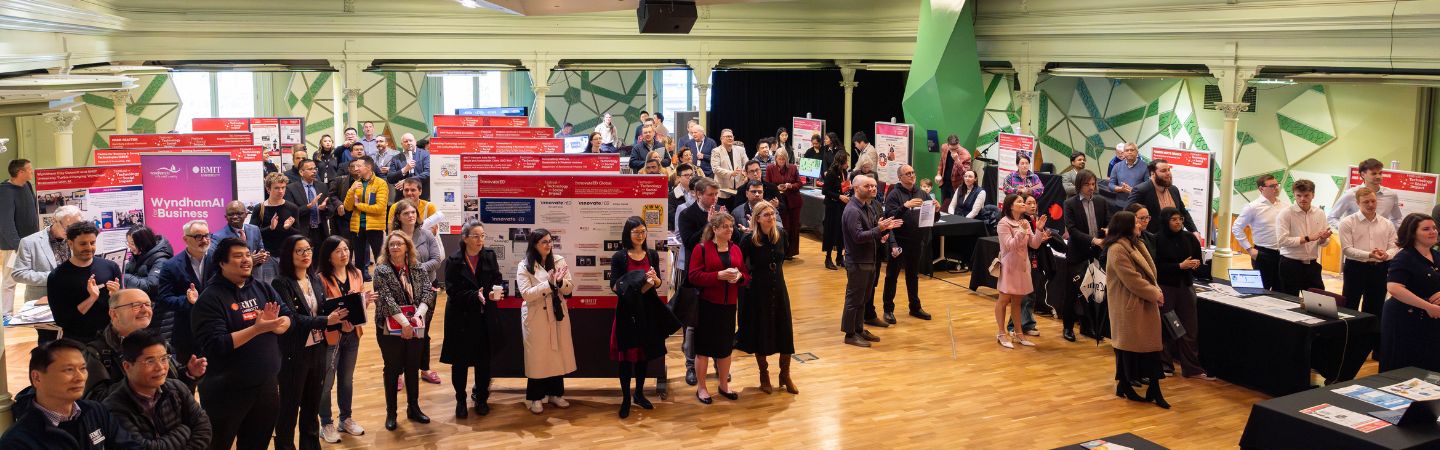
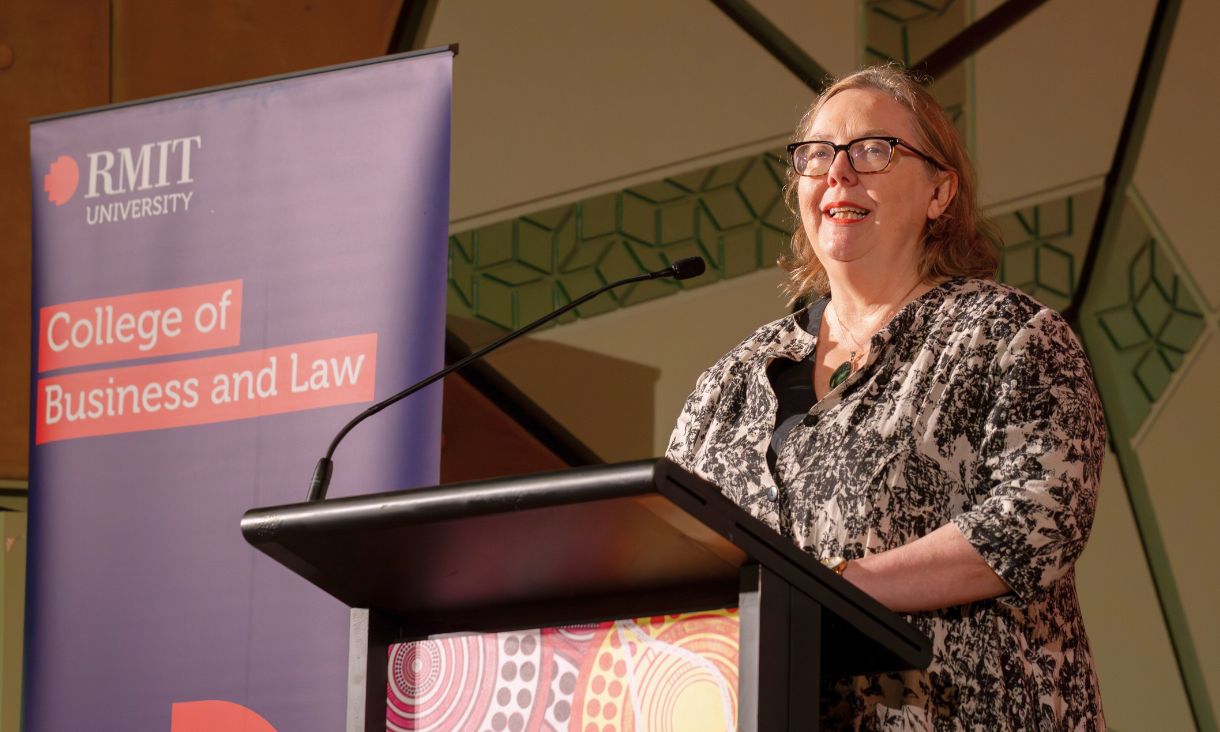
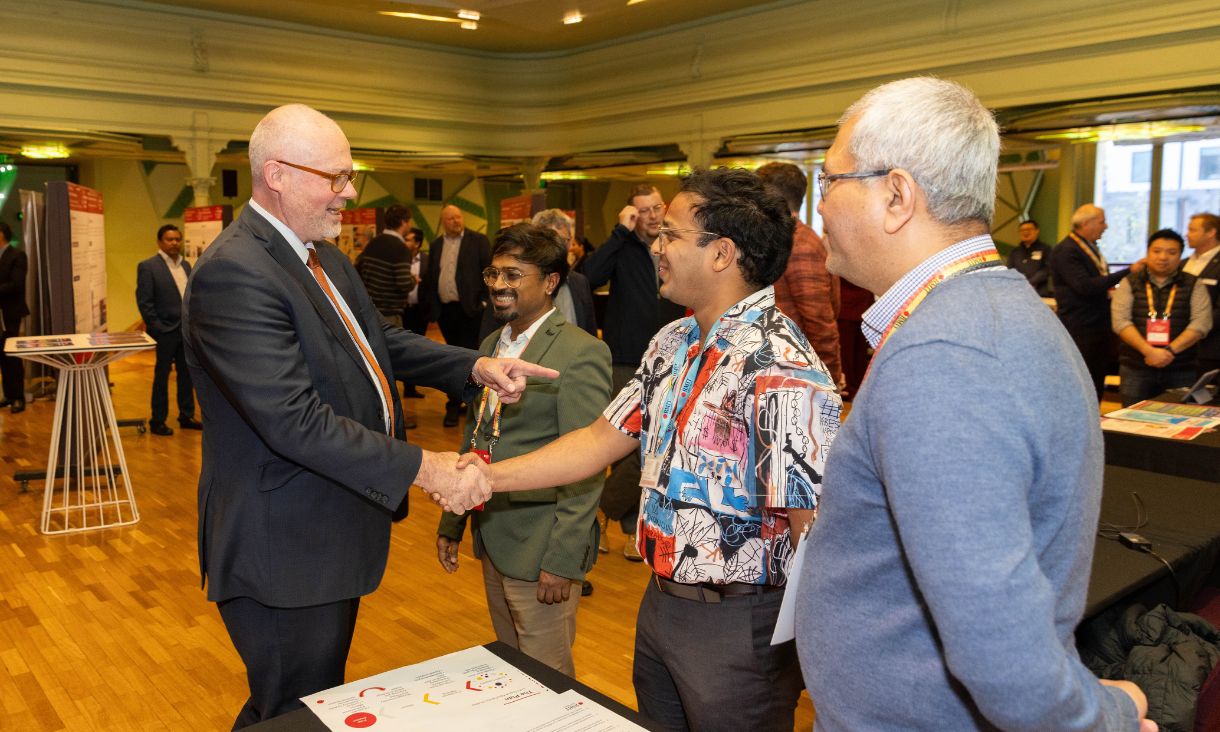
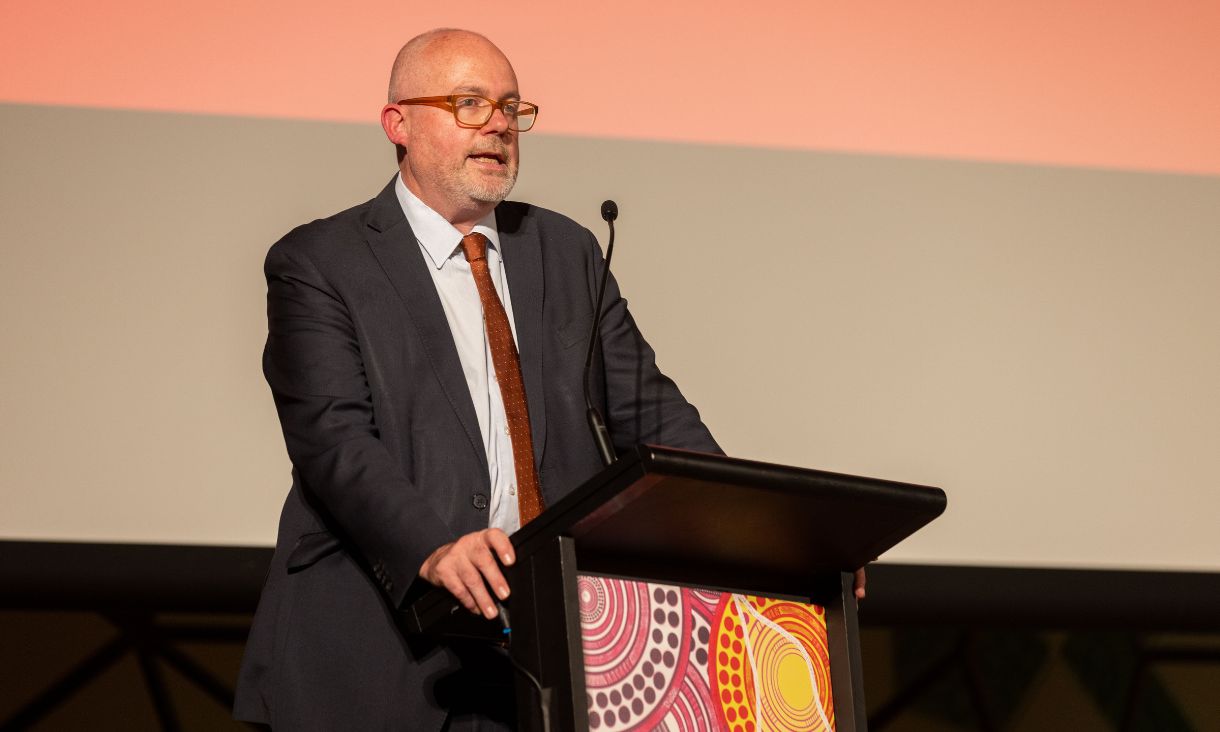
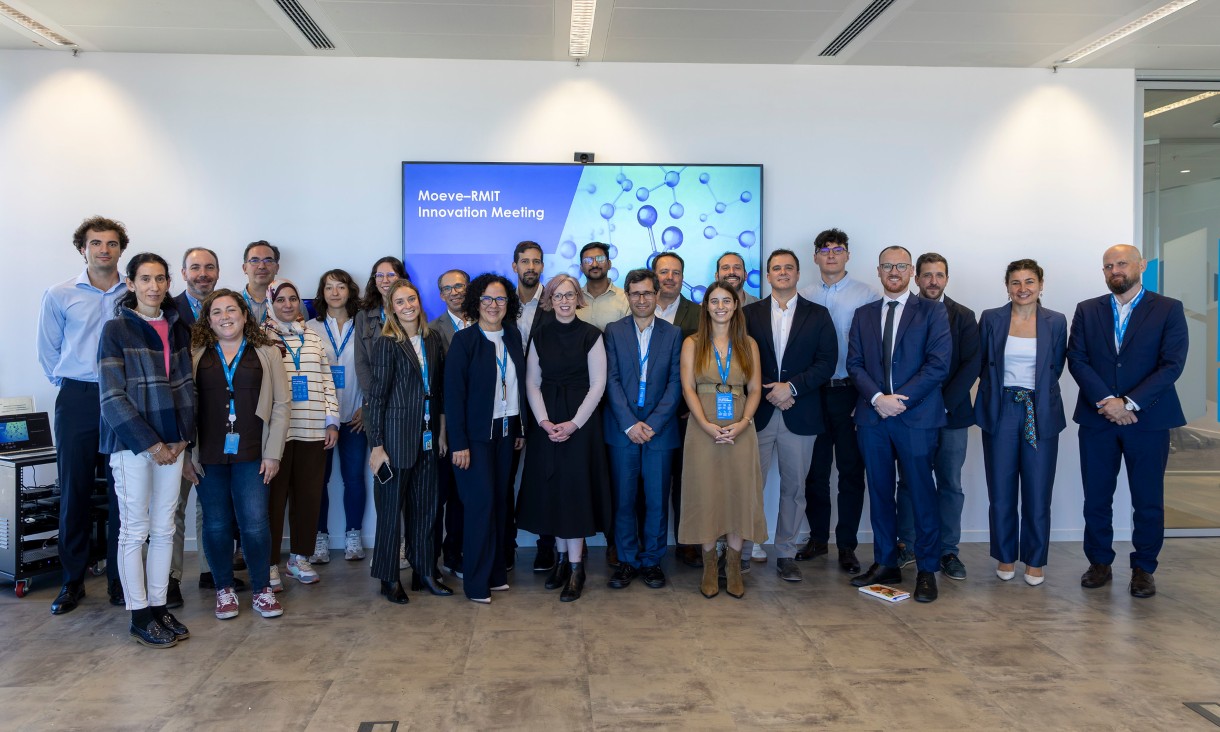
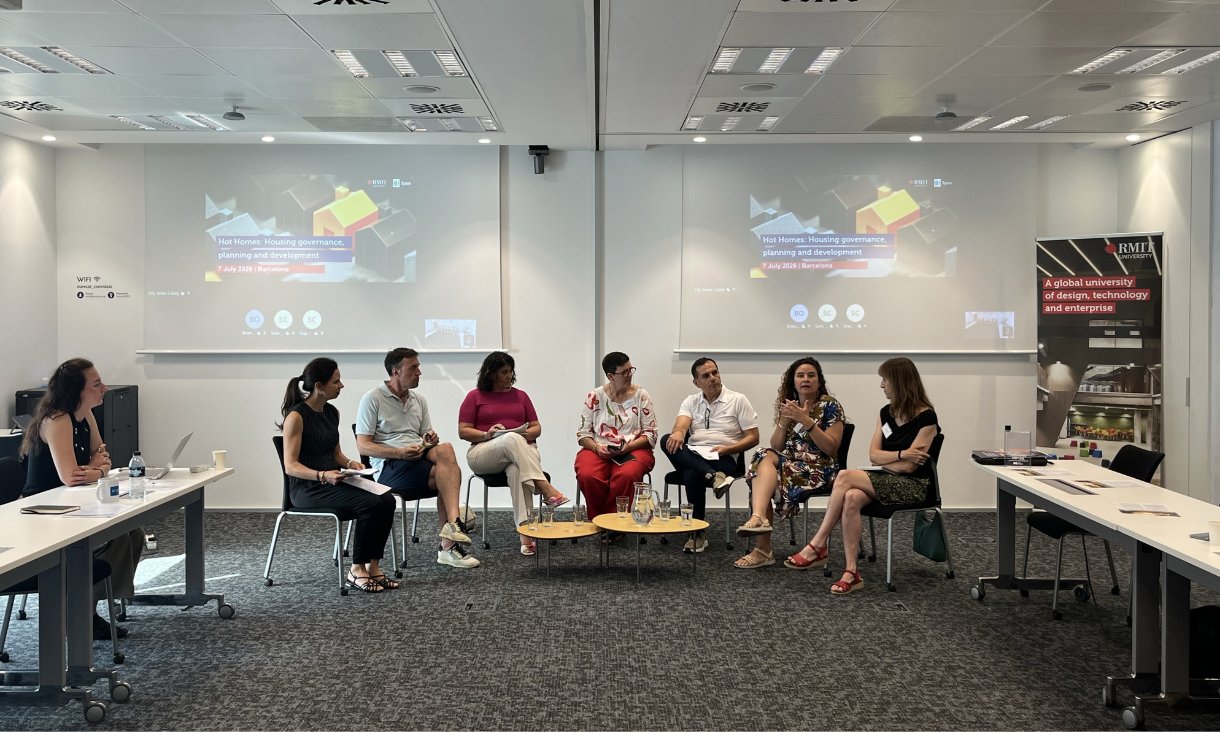
The Minister then participated in the inaugural RMIT-Industry Leadership Forum, organised by the College of Business & Law and RMIT's Enabling Impact Platforms with support from Research Partnerships and Translation, with business, industry and civil society, alongside RMIT academic staff and executives. The forum brought this group of leaders together to discuss problems, initiatives and solutions related to Australia’s long-term economic future.
During his keynote, the Minister reinforced how innovation is vital for Australia’s current and future prosperity, resilience and living standards, and emphasised that for innovation to be effective, it requires strategic collaboration across the tertiary sector, industry and society to realise the benefits.
“It’s widely appreciated that Australia has some of the best researchers in the world,” he said.
“But to use an AFL analogy, Australia is kicking goals when it comes to research and development, but only behinds when it comes to onshore commercialisation.
“Sometimes, lack of strategic focus can stand in the way of targeted investment in the skills and facilities that Australian innovation really needs. And in the way of opportunities for research translation and commercialisation that Australia has too often missed or failed to take up.
“The role of government here is not just about investing in research capabilities and the commercialisation of discoveries - it’s about providing the kind of leadership that helps to align the effort and ingenuity that’s already abundant in our research system.”
The Minister cited the importance of working Australians in creating and then benefiting from a fair and innovative future.
“Innovation is done by ordinary Australians, not done to them. There is no innovation without working people,” he said.
“There’s no long-term technological improvement or productivity uplift without the buy-in of ordinary Australians who, quite often, do the actual innovating.
“It’s about advancing the human condition, lifting living standards, finding solutions to human problems.
“Relationships between workers and firms, inventors and investors, the industrial end-users, and of course, government too, are what drive economic change.”