Researchers launch project to improve autism detection and care for children born preterm

Researchers launch project to improve autism detection and care for children born preterm

RMIT experts will contribute to MICRO-NEST, a €6 million ($9.8 million) Horizon Europe project applying innovative approaches to identify markers of autism in children born before 37 weeks of gestation.

A research collaboration spanning Europe and Australia will develop new guidelines and a first-of-its-kind AI-enabled digital twin to improve the diagnosis and support for autism in children born preterm.

Being born preterm is a disruptive early-life event, and this under-researched population of children is three times more likely to be diagnosed with autism due to the combined impacts on brain development.

Professor Elisa Hill and Associate Professor Bobbi Fleiss from RMIT’s School of Health and Biomedical Sciences will investigate links between genes and factors in the environment, such as being exposed to an inflammatory (sickness) response in early life, in the development of autism. 

“Our work in MICRO-NEST will generate new knowledge about the processes that drive changes in how the gut, immune system, microbiome and brain interact in autism,” said Hill, an expert in gut development and function in models of autism.

“We will study the gut, microbiome and brain to look for the development of autistic-like traits in mice.”

Hill said that many autistic people, particularly those with profound autism and high support needs, live with gastrointestinal symptoms together with an imbalance in the gut microbiome.

This has been suggested to impact behaviour and day-to-day living, making gut issues a priority for investigating potential therapies. 

Associate Professor Jessica Holien from RMIT’s School of Science will lead the use of machine learning computational methods on data collected from thousands of babies born preterm with autism as well as mouse models. 

This work aims to assess and prioritise therapeutic targets for developing drugs to relieve symptoms associated with autism that impact quality of life, in particular for people with profound autism. 

“We will identify and evaluate safe therapeutic candidates for real translational potential, prioritising those which could have the biggest benefit to autistic people who are interested in therapies,” said Holien. 

03 June 2026

Share

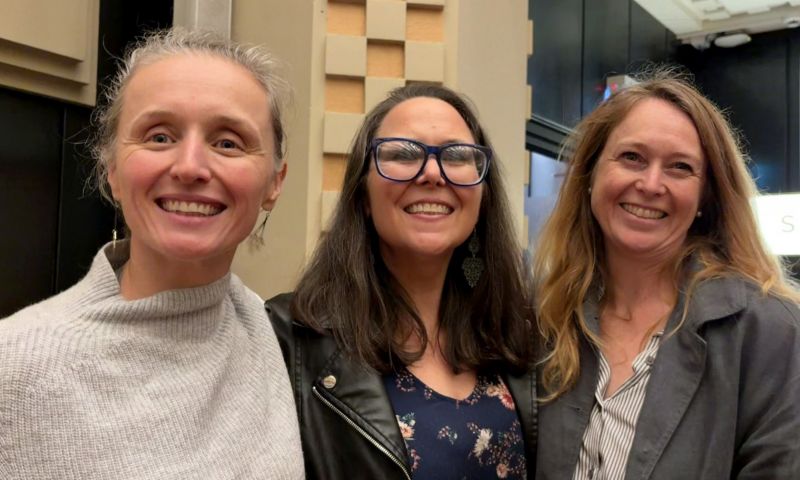
From left: Associate Professor Bobbi Fleiss, Associate Professor Jessica Holien and Professor Elisa Hill

Supporting Holien will be a postdoctoral fellow based at RMIT's innovation hub in Barcelona, RMIT Europe, a partner in the project contributing communications and stakeholder engagement expertise. 

Dr Gabriela Irrazabal, a social scientist at RMIT Europe, will lead co-creation activities to ensure that the project's direction and outcomes respectfully align with the clinical priorities of the project’s research beneficiaries. 

“We will collaborate with families of preterm-born children and people with lived experience of autism throughout the research journey, ensuring that their needs directly shape and impact the outcomes of the project,” said Irrazabal.  

The Microbiota-Immune-Cognition Relationships from Neonatal Environments to Social Trajectories (MICRO-NEST) project aims to transform the detection and care for children born preterm diagnosed with autism whose long-term health can benefit from early intervention, therapy and support. 

The project proposes that prenatal and perinatal microenvironments, including the immune system, gut microbiota and early life events, form a developmental 'nest' that shapes the gene-driven trajectory of brain maturation.

Project Coordinator Professor Pierre Gressens from Inserm said the research will lead to improved autism diagnosis and more equitable outcomes, given that many children are not diagnosed until after the age of five. 

“These missed opportunities to provide support and therapies during critical moments in early life are compounded by inequity of access and high lifetime costs for individuals, families and health systems,” he said. 

“MICRO-NEST addresses the early diagnosis gap by identifying early-life biological markers, generating new tools, and informing neonatal and autism support guidelines for anticipatory care.” 

The five-year project begins in September 2026. For more information, contact research.europe@rmit.edu.au.  

Partners: Inserm (coordinator); RMIT University; RMIT Europe; University Medical Center Utrecht; University Hospital Essen; King’s College London; University of Edinburgh; Maastricht University; University of Rostock; Gothenburg University; Unapei; Global Foundation for the Care of Newborn Infants; Technische Universität Dresden; Genos Ltd; University of Geneva; Inserm Transfert SA. 

Funded by the European Union. Views and opinions expressed are however those of the author(s) only and do not necessarily reflect those of the European Union. Neither the European Union nor the granting authority can be held responsible for them. 


Story: Hannah Tribe 

EU funding acknowledgment
03 June 2026

Share

  • STEM
  • Research
  • Science and technology
  • RMIT Europe

Related News

aboriginal flag float-starttorres strait flag float-start

Acknowledgement of Country

RMIT University acknowledges the people of the Woi wurrung and Boon wurrung language groups of the eastern Kulin Nation on whose unceded lands we conduct the business of the University. RMIT University respectfully acknowledges their Ancestors and Elders, past and present. RMIT also acknowledges the Traditional Custodians and their Ancestors of the lands and waters across Australia where we conduct our business - Artwork 'Sentient' by Hollie Johnson, Gunaikurnai and Monero Ngarigo.

More information