

RMIT launches sex-specific pharmacy curriculum to address gender disparities in health

RMIT launches sex-specific pharmacy curriculum to address gender disparities in health

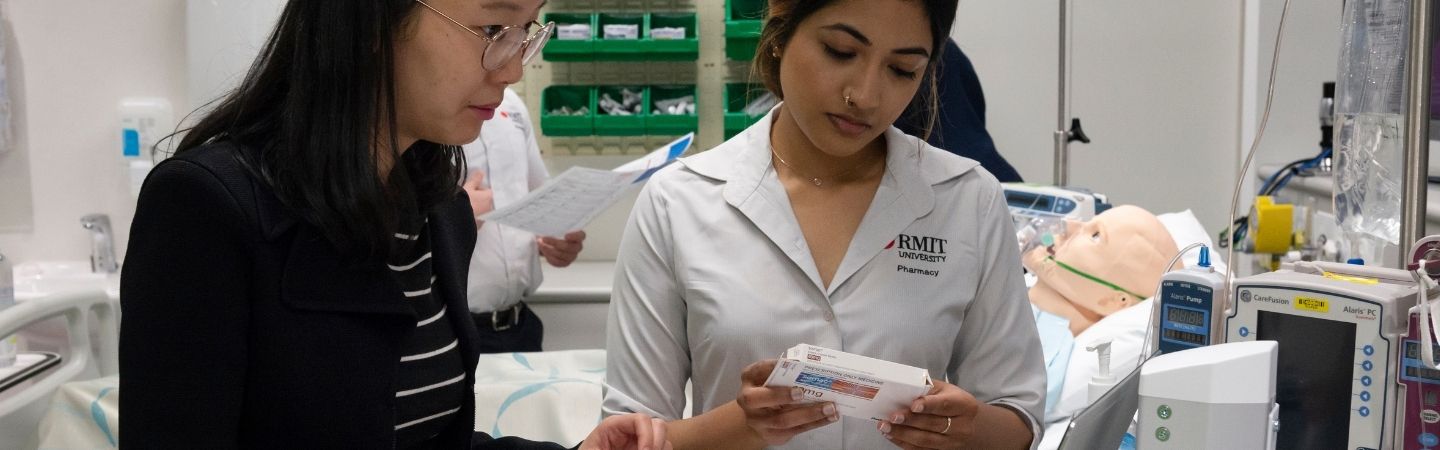
RMIT University has launched a landmark health education program in its undergraduate pharmacy degree, equipping students with the knowledge and skills needed to support sex-specific health differences in clinical practice.

Sex-specific differences arising from biological factors such as hormones, metabolism, and body composition translate to differences in the way diseases present and respond to treatments, which can lead to missed diagnoses and suboptimal care.

By incorporating sex-specific curricula into its undergraduate pharmacy degree, the university has recognised the need to advance clinical education in health degrees, to provide safer, more effective care and better health outcomes. 

RMIT Deputy Vice-Chancellor STEM College Catherine Itsiopoulos said the initiative, supported by the National Council of Women Victoria (NCWV), will set a new benchmark for health education and training and how it can, and should, respond to the needs of industry and community.

“This new approach represents a landmark step in allied health education, in being one of the first instances of formally integrating sex-specific education into an undergraduate allied health degree,” she said.

“It reflects RMIT’s commitment to advancing education, providing our graduates with the skills they need in the workforce, and improving health outcomes through forward-thinking, evidence-based training.”

11 May 2026

Share

From L-R: Professor Cassandra Szoeke, Dr Julie Stevens, Pharmaceutical Society of Australia Victoria President Atinuke Abraham, Deputy Vice-Chancellor STEM College Professor Catherine Istiopoulos.From L-R: Professor Cassandra Szoeke, Dr Julie Stevens, Pharmaceutical Society of Australia Victoria President Atinuke Abraham, Deputy Vice-Chancellor STEM College Professor Catherine Istiopoulos.

Dr Julie Stevens, Program Manager in RMIT’s Discipline of Pharmacy and Executive Member of NCWV, said despite thousands of published studies, sex-specific treatment knowledge has yet to be systematically translated into health professional training.

“Advancing women’s health is critical because women represent over half the population, yet their health needs have historically been under-researched,” she said.

“For decades, clinical trials have disproportionately included men, translating to guidelines and treatments that don’t always reflect women’s needs. 

“Women experience higher rates of some medical conditions and are twice as likely to experience adverse drug reactions than men, highlighting the need for sex-specific teaching in prescribing.” 

RMIT will take a staged approach to integrate the sex-specific curriculum into its pharmacy program, before applying it across the whole degree. Students in their later years of study will be the first to adopt the program as they undertake placements, work with clinical professionals and apply their learnings in practice. 

The University will also explore opportunities to implement sex-specific health education into other disciplines within the School of Health and Biomedical Sciences. 

11 May 2026

Share

Related News

aboriginal flag float-starttorres strait flag float-start

Acknowledgement of Country

RMIT University acknowledges the people of the Woi wurrung and Boon wurrung language groups of the eastern Kulin Nation on whose unceded lands we conduct the business of the University. RMIT University respectfully acknowledges their Ancestors and Elders, past and present. RMIT also acknowledges the Traditional Custodians and their Ancestors of the lands and waters across Australia where we conduct our business - Artwork 'Sentient' by Hollie Johnson, Gunaikurnai and Monero Ngarigo.

More information