

Tracking PFAS through the atmosphere
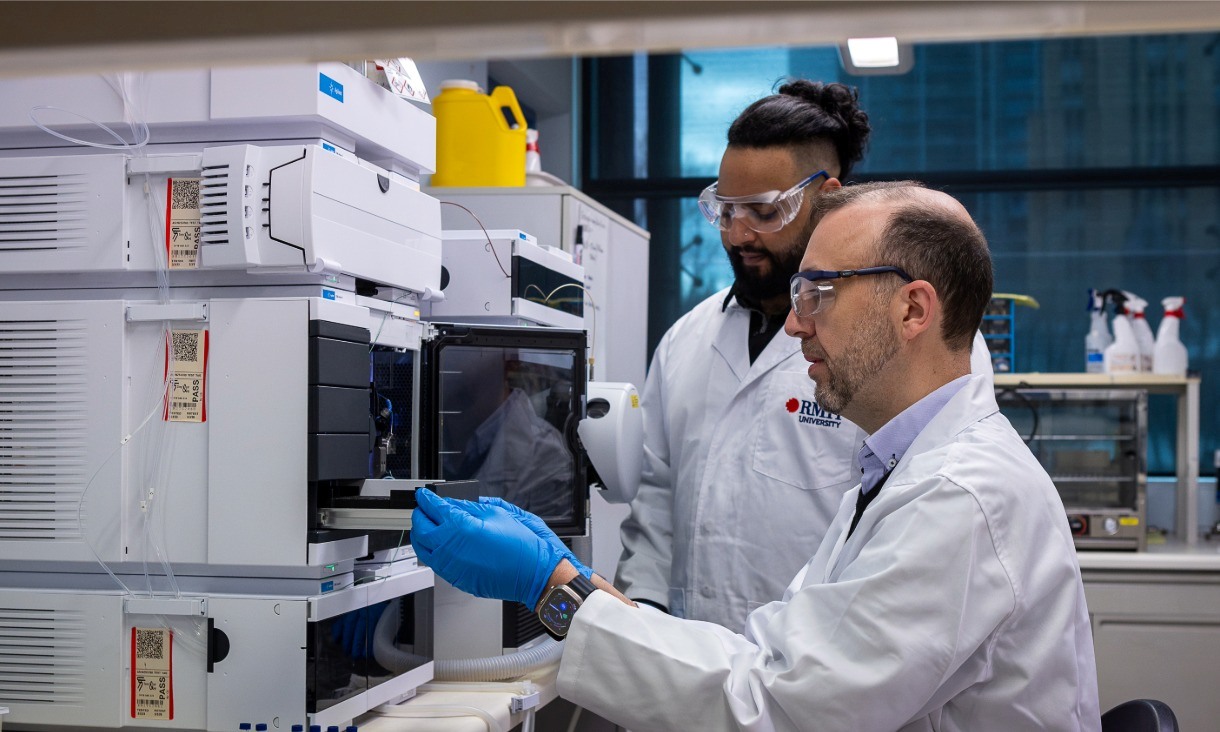
The project aimed to test a new analytical method designed to measure very low concentrations of contaminants in small-volume samples such as rainwater.
The researchers analysed rainwater collected on three occasions and tested for 30 PFAS compounds.
“Eight compounds were detected, with concentrations generally measured in nanograms per litre,” Jones said.
“For context, one nanogram per litre is one part per trillion, so we are talking very low concentrations indeed.”
The study took a new turn when EPA Victoria collaborators contributed atmospheric modelling data, enabling the team to investigate the origins of air masses associated with each rainfall event.
Using atmospheric modelling, the researchers found rain linked to air travelling over land contained higher PFAS concentrations compared to over the ocean.
The finding suggests urban and industrial areas may be important sources of airborne PFAS deposited elsewhere through rainfall.
Lead author, PhD student Nav Singh, said the study contributed new and important knowledge on PFAS in the environment.
“This is an important environmental challenge, and I’m proud to be part of research that helps improve our understanding of it.”
EPA Victoria Deputy Chief Environmental Scientist Caroline Martino said the regulator was proud to be part of the study.
“This study provides valuable insights into how PFAS moves through the environment,” Ms Martino said.
“Robust, peer-reviewed evidence is essential for effective regulation, risk assessment and management."
“Science is at the heart of everything EPA does, and we’re always pleased to work with great institutions like RMIT.”
“Forever chemicals” is a misnomer
“PFAS are often called ‘forever chemicals’, but that term can be misleading because it suggests they never break down, which isn't actually the case,” Jones said.
“A more accurate description is that they are highly persistent, or ‘lingering’, chemicals that can remain in the environment for a long time, which is why understanding their behaviour is so important.”
The paper, 'Concentrations of per- and polyfluoroalkyl substances in the rainwater of South-Eastern Australia', is published in the international journal Environmental Chemistry and Toxicology (DOI: 10.1093/etojnl/vgag204).
Story: Will Wright