TREMS Hub delivers on circular economy mission

TREMS Hub delivers on circular economy mission

The ARC Industrial Transformation Research Hub for the Transformation of Reclaimed Waste Resources to Engineered Materials and Solutions for a Circular Economy (TREMS) has overseen close to 50 projects since its inception, helping to address Australia’s urgent waste crisis.

Launched in 2021, the purpose of TREMS Hub is to explore new ways to engineer construction and other high-value materials from recycled waste, supporting national and global sustainability commitments including Australia’s Circular Economy Framework and the UN Sustainable Development Goals.  

TREMS is one of RMIT’s largest research hubs, engaging more than 200 staff, nine Australian and four international universities, and 48 industry partners.

It has a value of $20 million, made up in part by an Australia Research Council (ARC) investment under the Industrial Transformation Research Program (ITRP).

The Hub drives scientific and engineering research while translating solutions into new tools and technologies that can lead to scalable social change when applied in the real world. 

Last month, academics, industry and government came together to celebrate the success of TREMS and discuss the future of circular economy research.

The event featured RMIT Vice-Chancellor and President Professor Alec Cameron and STEM College Deputy Vice-Chancellor and Vice-President Professor Catherine Itsiopoulos, as well as government and industry presenters, including Sarah Witty, Member of Parliament for Melbourne, and Claire Tubolets, CEO of SmartCrete CRC.

05 November 2026

Share

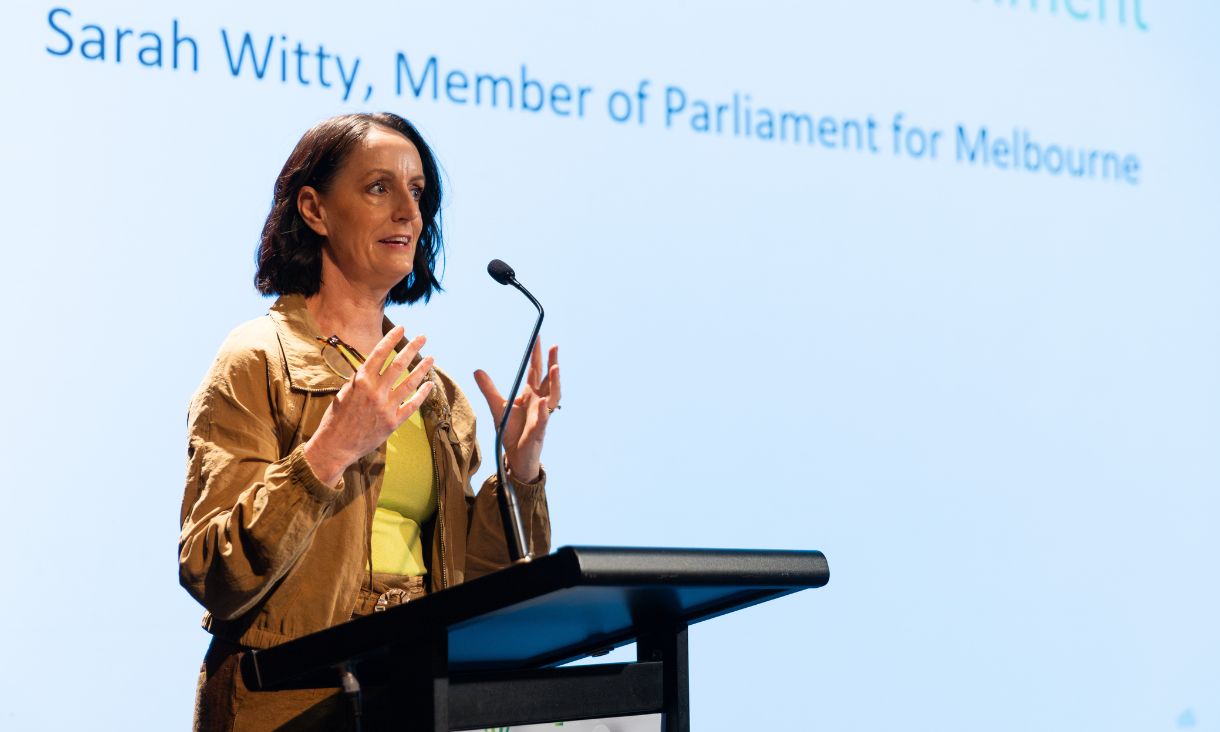
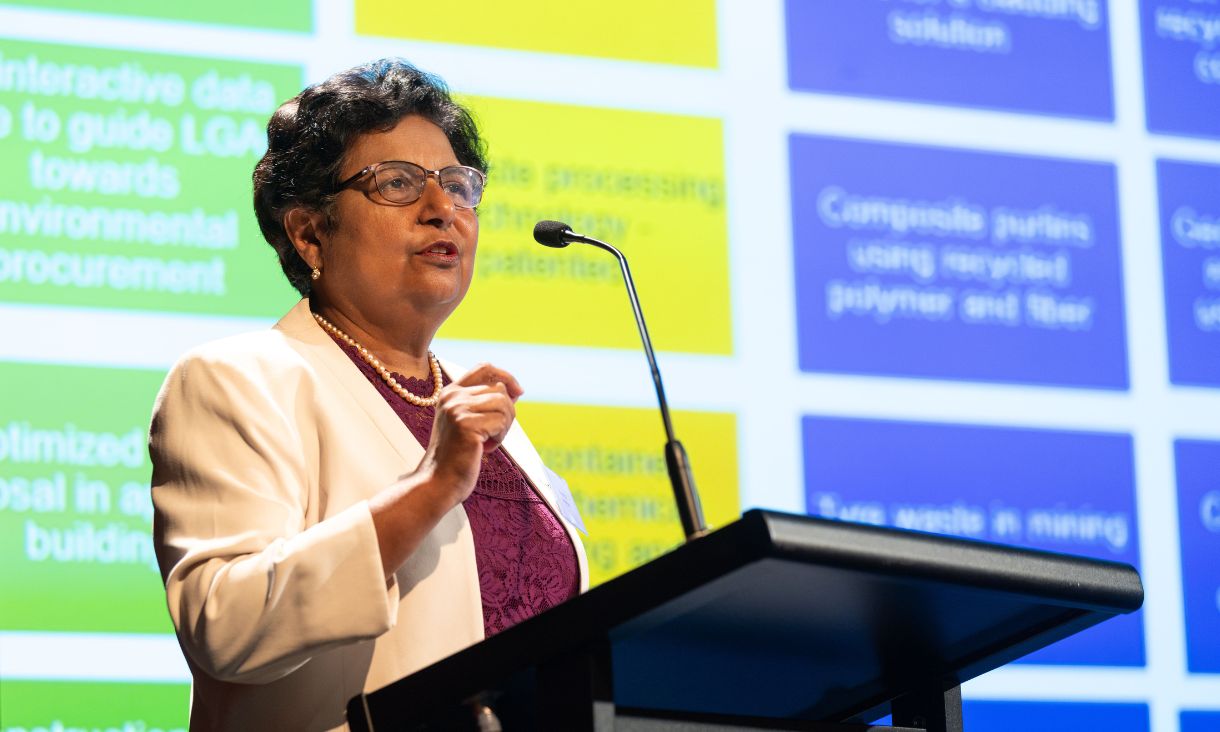
Untitled design - 1Sarah Witty, Member of Parliament for Melbourne, presenting at TREMS event.

Distinguished Professor Sujeeva Setunge, TREMS Hub Director and Associate Deputy Vice-Chancellor, Research and Innovation at STEM College, told the audience that the Hub has significantly progressed its objectives. 

“TREMS is focused on creating innovative, low-carbon construction materials designed for industrial applications, reducing embodied carbon and transforming waste into valuable resources for the built environment," Setunge said. 

“With its five themes encompassing various research stages, from smart design to solution development to field trials, the Hub takes a comprehensive approach that has led to the translation and commercialisation of many projects. 

“I’m incredibly proud and grateful to lead this multi-sector collaboration, which is contributing to a more sustainable, circular built-environment.” 

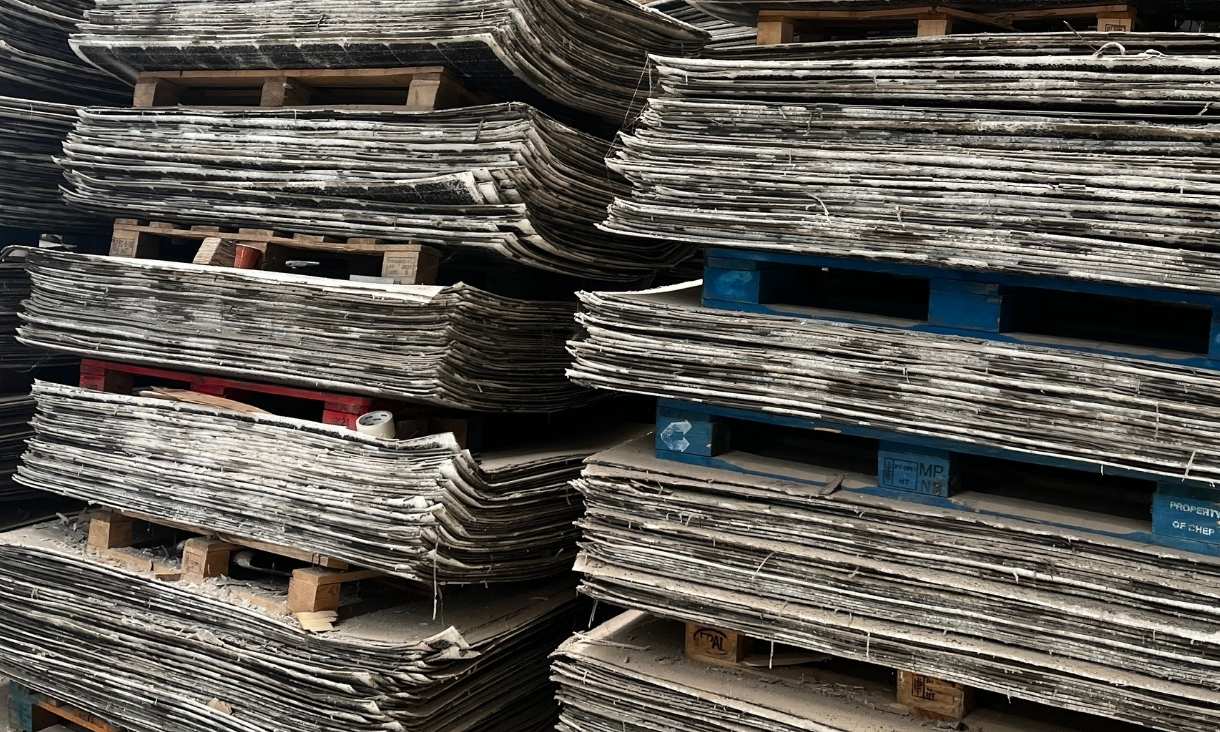
Untitled design - 2Distinguished Professor Sujeeva Setunge.

Hub creates innovative, green solutions 

The focus of TREMS is using recovered, recycled, and repurposed materials to create low-carbon construction materials, working closely with industry and government partners. 

It is estimated that buildings and infrastructure contribute to approximately 30 per cent of Australia's total carbon emissions – a large portion of which is from manufacturing materials like cement and concrete. 

TREMS aims to diversify these materials so that there is less reliance on processes that are unsustainable and have a high carbon footprint. 

Some key projects include roof tiles that incorporate coal ash and glass waste, which could reduce carbon emissions by 13% compared to regular concrete tiles, as well as a high-performance cement supplement made from clay. 

The challenge goes beyond recycling waste – it rests on converting waste into a high-quality product that adds value to industry, which is key to wide-scale adoption. 

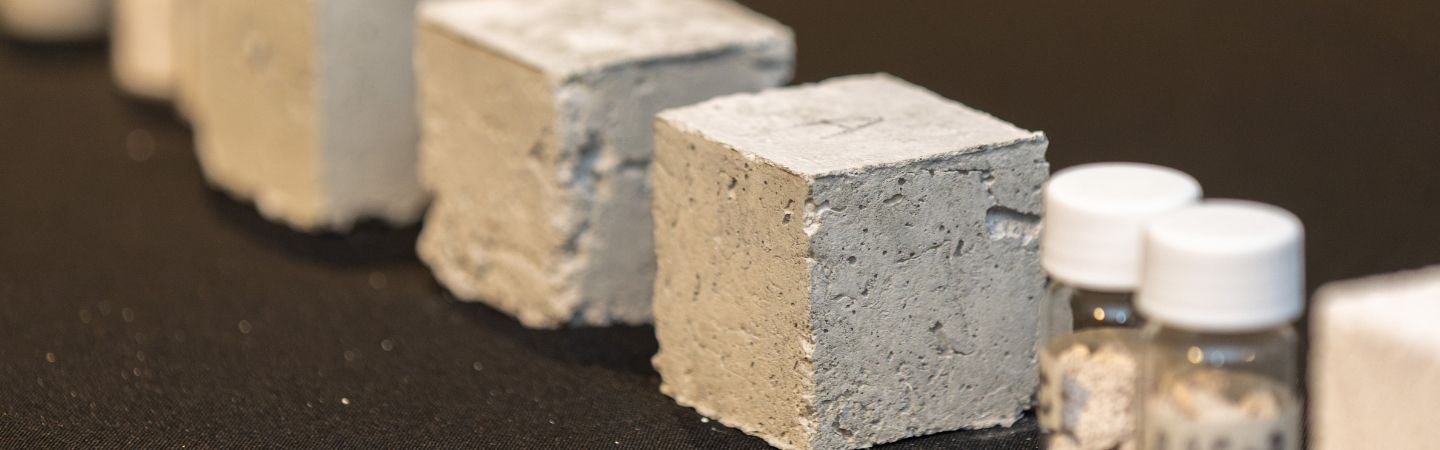
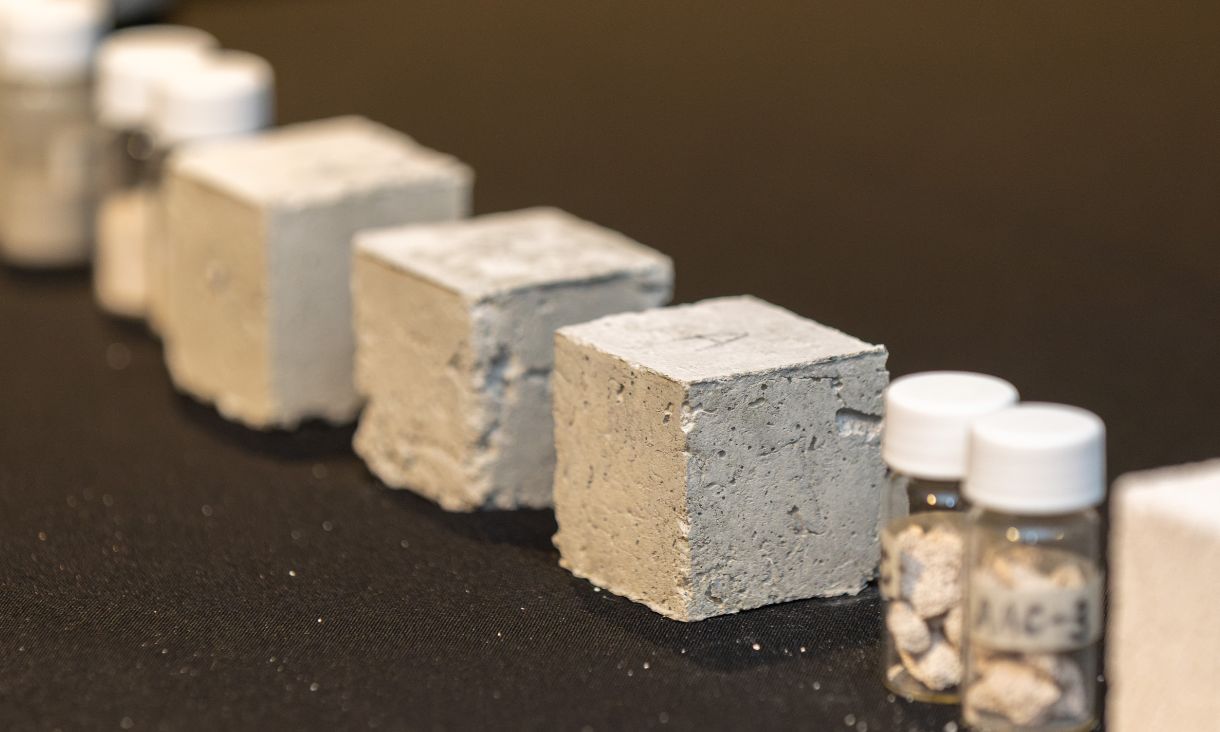
Untitled design - 4One of the displayed projects at the TREMS event.

In what will be a world-first field trial, a TREMS project which developed a new concrete mix incorporating recycled carpet fibres to increase strength, durability and reduce cracking by up to 30 per cent, will soon be implemented in the Victorian town of Barwon Heads.

The carpet concrete will exist as a 50-metre public footpath, in a major collaboration between research, waste management and construction partners.

This research addresses a major challenge in the construction sector, as Australia’s annual repair cost of cracks in reinforced concrete structures is about $8 billion, and demonstrates how deep connection to industry helps apply TREMS research to achieve real-world impact.

Experts offer insights into future of built environment 

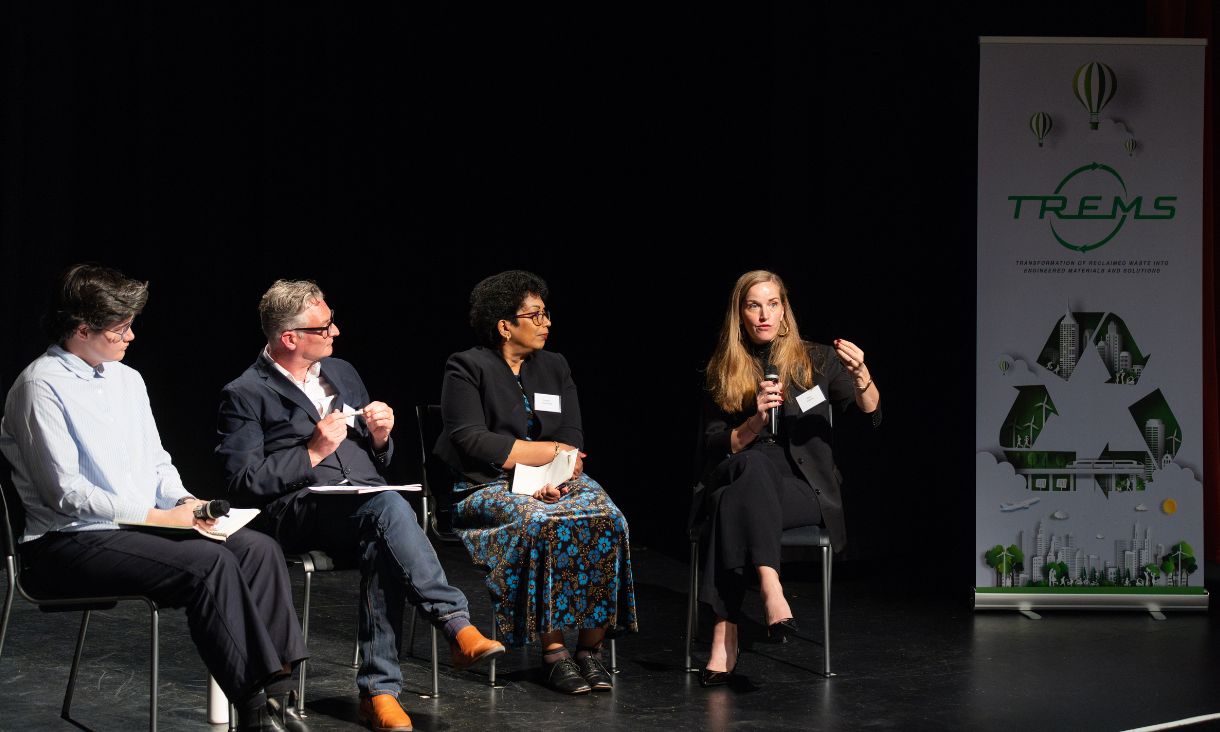
A panel session at the Hub event discussed the continued need to combat barriers to sustainable change and drive uptake of greener solutions.

Speakers included cross-sector experts: Jordi McInerney from City of Melbourne, Professor Chris Speed from RMIT, Professor Dilanthi Amaratunga from Loughborough University in the UK, and Tubolet.

Amaratunga emphasised the importance of safe, durable, and cost-competitive solutions in making sustainable alternatives viable.

“We can’t solve one environmental problem by creating another," Amaratunga said.

"We need to focus our efforts on turning waste into a trusted, certified and resilient construction product that can withstand different climates, including fire and floods.”

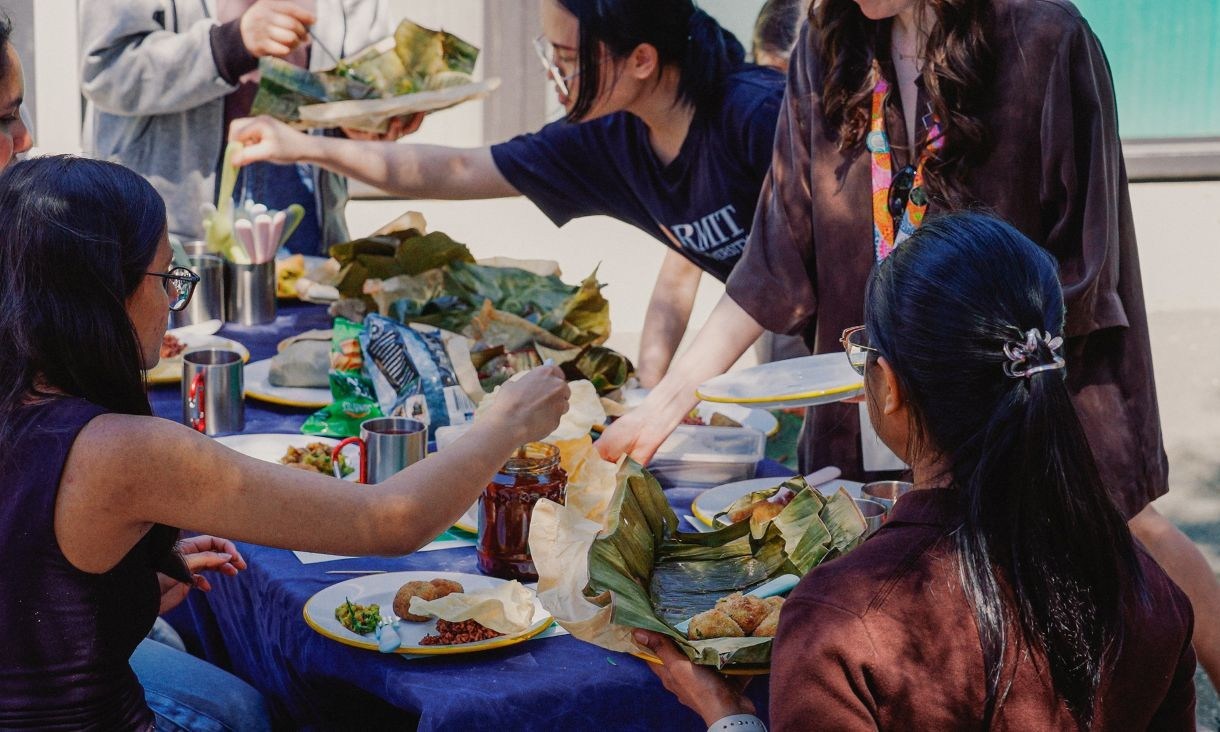
Untitled design - 3Panel discussion.

Tubolet agreed that concrete is "not a waste tip" and advocated for a targeted approach that demonstrates how sustainable research can be economically beneficial for industry.

Speed added that the construction sector is concentrated on temporal problems that necessitate quick turnover and ultimately undermine the circular economy.

"All the incentives now are focused on building new homes as fast as possible. The way we build housing is equivalent to fast food; it's quick and easy but not good quality and not sustainable,” Speed said.

"To address barriers to circularity, we need to collectively slow things down." 

The panel also highlighted the need for collaboration among various stakeholders to drive behavioural change across the sector, from producers to consumers.

McInerney said there is a role for government to lead change and "de-risk" the adoption of sustainable solutions by co-funding research projects.

Tubolets added that the onus is on all players – not just industry – to champion change.

"Everyone has a role to play. We all have agency, and only by working together can we move forward." 

Read more about TREMS Hub: https://tremshub.com/


Story: Keely Tzoukos

05 November 2026

Share

Related News

aboriginal flag float-starttorres strait flag float-start

Acknowledgement of Country

RMIT University acknowledges the people of the Woi wurrung and Boon wurrung language groups of the eastern Kulin Nation on whose unceded lands we conduct the business of the University. RMIT University respectfully acknowledges their Ancestors and Elders, past and present. RMIT also acknowledges the Traditional Custodians and their Ancestors of the lands and waters across Australia where we conduct our business - Artwork 'Sentient' by Hollie Johnson, Gunaikurnai and Monero Ngarigo.

More information