
Major Sydney Harbour artwork unveiled by leading contemporary artist

Major Sydney Harbour artwork unveiled by leading contemporary artist

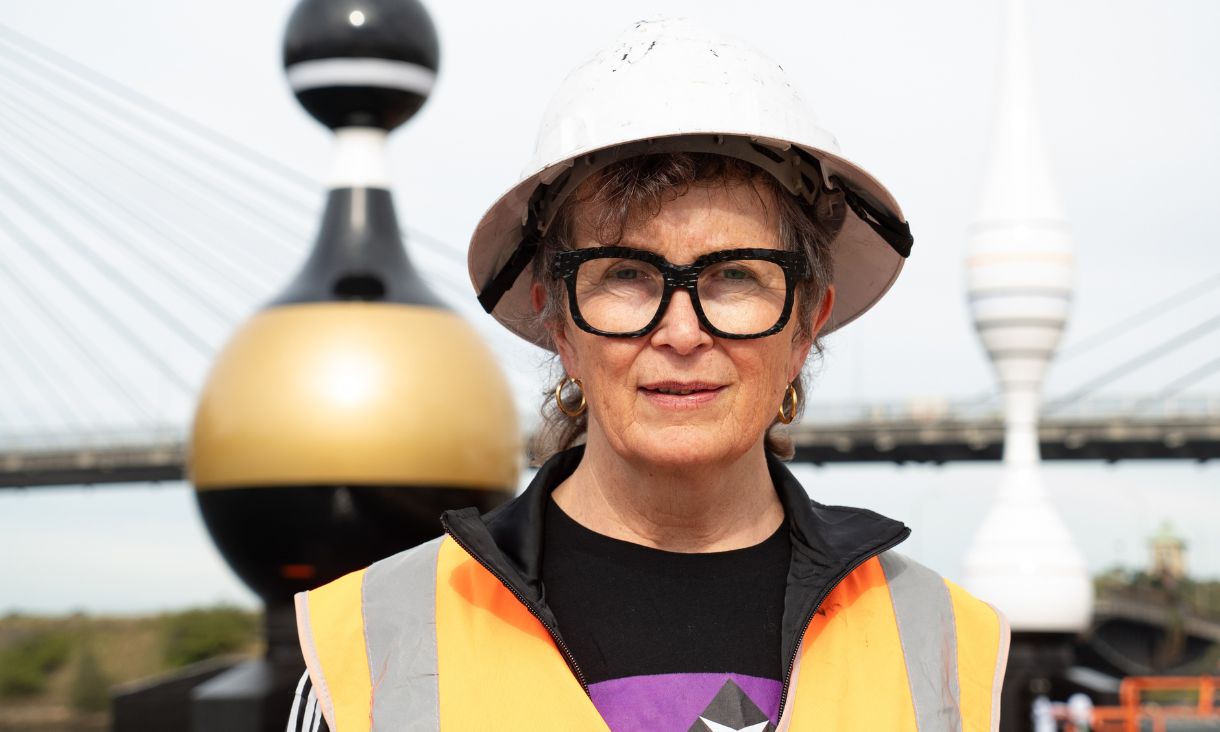
One of Australia’s leading contemporary artists, RMIT Distinguished Professor Mikala Dwyer, has unveiled a new landmark art-installation in Sydney Harbour.

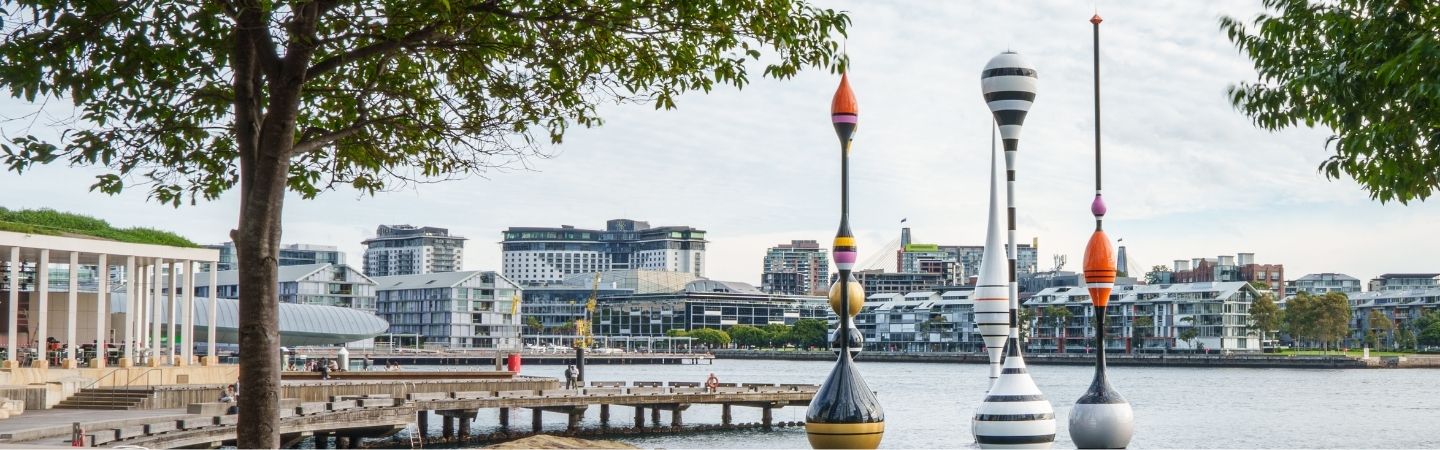
Monuments for Fishes, a large-scale floating installation on the water’s edge at Barangaroo South, is the first artwork of its kind to establish a permanent presence on the Harbour. 

Commissioned by Lendlease, the work transforms Watermans Cove through a series of brightly coloured floating sculptures, inspired by traditional fishing floats. 

The work celebrates Barangaroo and pays homage to the coastal fisherwomen who fished in the waters from time immemorial, while also creating reef-like habitat beneath the water's surface. 

The installation was engineered using carbon fibre, steel cores and marine-grade systems and reflects Dwyer's long-standing practice of transforming everyday objects into monumental works that invite curiosity and reflection.  

Dwyer has become internationally acclaimed and one of Australia's most influential artists over an impressive career which spans more than four decades.  

Her practice spans sculpture, installation, performance and large-scale public art, and is widely celebrated for its ambition, experimentation and conceptual depth.  

The Barangaroo commission builds on Dwyer’s significant public art contributions to Martin Place Station, ACMI and other civic and cultural sites across Australia and internationally, including Phantasms in Hong Kong

Mikala Dwyer

Quotes attributable to RMIT Distinguished Professor Mikala Dwyer:  

“Monuments for Fishes responds to Watermans Cove through continual movement, a material relationship to boats, buoys and fishing, and an underwater structure that provides a reef-like habitat for marine life. 

“Whether glowing in the sun or lit from inside at night, dancing or offering a contemplative presence, it is a barometer of the harbour’s energy cycles. 

“My work is always about relationships and the decision to make a circle of five emphasises communion. The five forms represent the idea of community.”

***

General media enquiries: RMIT External Affairs and Media, 0439 704 077 or news@rmit.edu.au

Share

Share

Related News

aboriginal flag float-starttorres strait flag float-start

Acknowledgement of Country

RMIT University acknowledges the people of the Woi wurrung and Boon wurrung language groups of the eastern Kulin Nation on whose unceded lands we conduct the business of the University. RMIT University respectfully acknowledges their Ancestors and Elders, past and present. RMIT also acknowledges the Traditional Custodians and their Ancestors of the lands and waters across Australia where we conduct our business - Artwork 'Sentient' by Hollie Johnson, Gunaikurnai and Monero Ngarigo.

More information