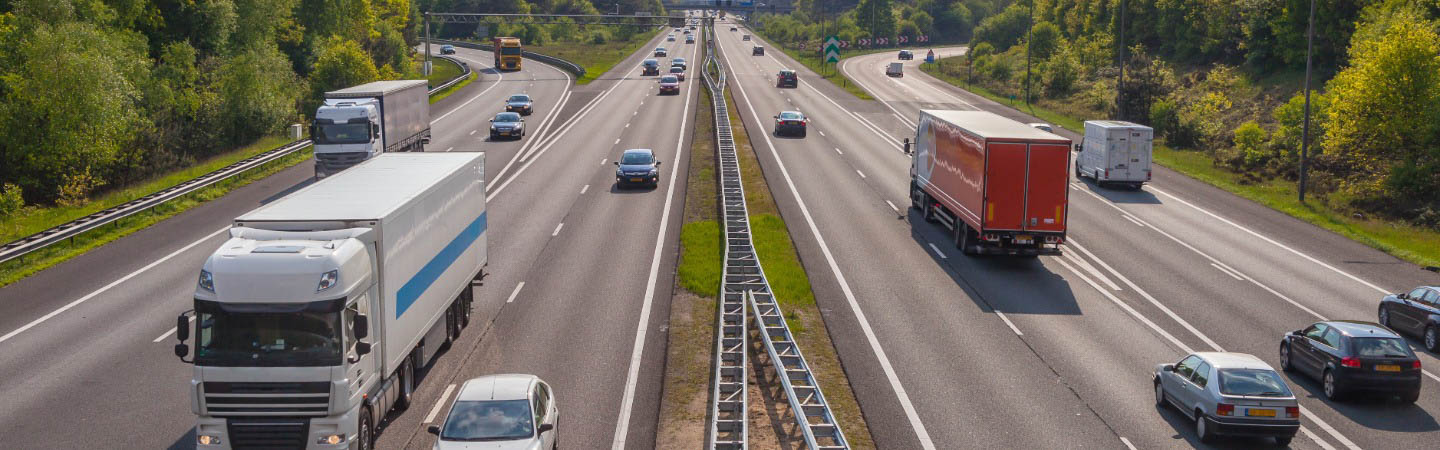

Should speed limits be increased along the Princes Freeway?

Should speed limits be increased along the Princes Freeway?

The Victorian Coalition has announced a new pledge to increase speed limits along the Princes freeway and highway, if elected in November. Under the proposal, speed limits on a major stretch between Colac and Melbourne would be increased from 100 km/h to 110 km/h. An RMIT expert weighs in on the proposed changes. 

Dr Afshin Jafari, School of Global, Urban and Social Studies:

“Increasing the speed limit from 100 to 110 km/h is not safety neutral. Higher speeds increase stopping distance, leave drivers less time to react and increase the severity of crashes. 

“The Princes corridor should not be treated as one uniform road. The section between Melbourne and Geelong is a busy commuter and freight corridor with high traffic volumes, frequent merging and lane changing, and recurrent congestion. These conditions are very different from those on an open rural freeway. 

“Some recently upgraded and lower-volume sections west of Geelong may be suitable for reassessment, but duplication alone does not make a road appropriate for 110 km/h. 

“Intersections, access points, barriers, road geometry, heavy vehicle traffic and crash history all need to be considered. 

“A higher speed limit may reduce travel time when traffic is flowing freely, but in reality, drivers cannot travel continuously at the posted speed because of congestion, merging, slower sections and surrounding traffic.  

“Most delays occur at busy merging points, after crashes, or where traffic builds along the road. Increasing the speed limit will not address these bottlenecks and, if it increases crash risk, could result in longer and less reliable journeys. 

“Based on the evidence currently available publicly, there is not a strong case for a blanket 110 km/h limit from Laverton North to Colac. A better approach would be publishing a section-by-section road safety assessment to identify whether any individual sections can safely support the higher limit.” 

Dr Afshin Jafari is a Research Fellow at the Centre for Urban Research. His work focuses on using computational methods to explore pathways to promote active and sustainable transport, including cycling, walking, public transport, and electric mobility.

***

General media enquiries: RMIT External Affairs and Media, 0439 704 077 or news@rmit.edu.au

Share

Share

Related News

aboriginal flag float-starttorres strait flag float-start

Acknowledgement of Country

RMIT University acknowledges the people of the Woi wurrung and Boon wurrung language groups of the eastern Kulin Nation on whose unceded lands we conduct the business of the University. RMIT University respectfully acknowledges their Ancestors and Elders, past and present. RMIT also acknowledges the Traditional Custodians and their Ancestors of the lands and waters across Australia where we conduct our business - Artwork 'Sentient' by Hollie Johnson, Gunaikurnai and Monero Ngarigo.

More information