New Aboriginal and Torres Strait Islander learning journey for RMIT community

New Aboriginal and Torres Strait Islander learning journey for RMIT community

RMIT University Library has collaborated with the Office of Indigenous Education, Research and Engagement to establish learning resources for students and HDR candidates.

These revitalised micro-credential courses and brand-new resources form a new learning journey that provides a greater understanding of Aboriginal and Torres Strait Islander peoples’ history, culture, knowledge and current affairs. The aim of this journey is to build the RMIT community’s capacity to work with Aboriginal and Torres Strait Islander peoples and respect Indigenous knowledges. 

“We are very fortunate at RMIT to have such a wide range of professional development and resources available. At times it might be overwhelming to know where to begin and how to find them. The RMIT Library is once again showing up for the RMIT community by making these opportunities more visible,” says Professor Gary Thomas, Pro-Vice Chancellor Indigenous Education, Research and Engagement.

The modules align with RMIT’s commitment to Responsible Practice and invite the RMIT community to continually work toward addressing biases, prejudice and systemic barriers for Aboriginal and Torres Strait Islander peoples. Learnings also support the Regenerative Futures Institute’s aims to make the world fairer and more inclusive.

“The courses do more than just inform you. They invite you to challenge your assumptions and understand how you can contribute to Responsible Practice,” says Matthew Millis, one of the Learning Designers who worked closely with Cathy Doe (Yirrganydji/Irukandji) from the Library and Gabrielle Murray from the Office of Indigenous Education, Research and Engagement to create these modules.

The learning journey

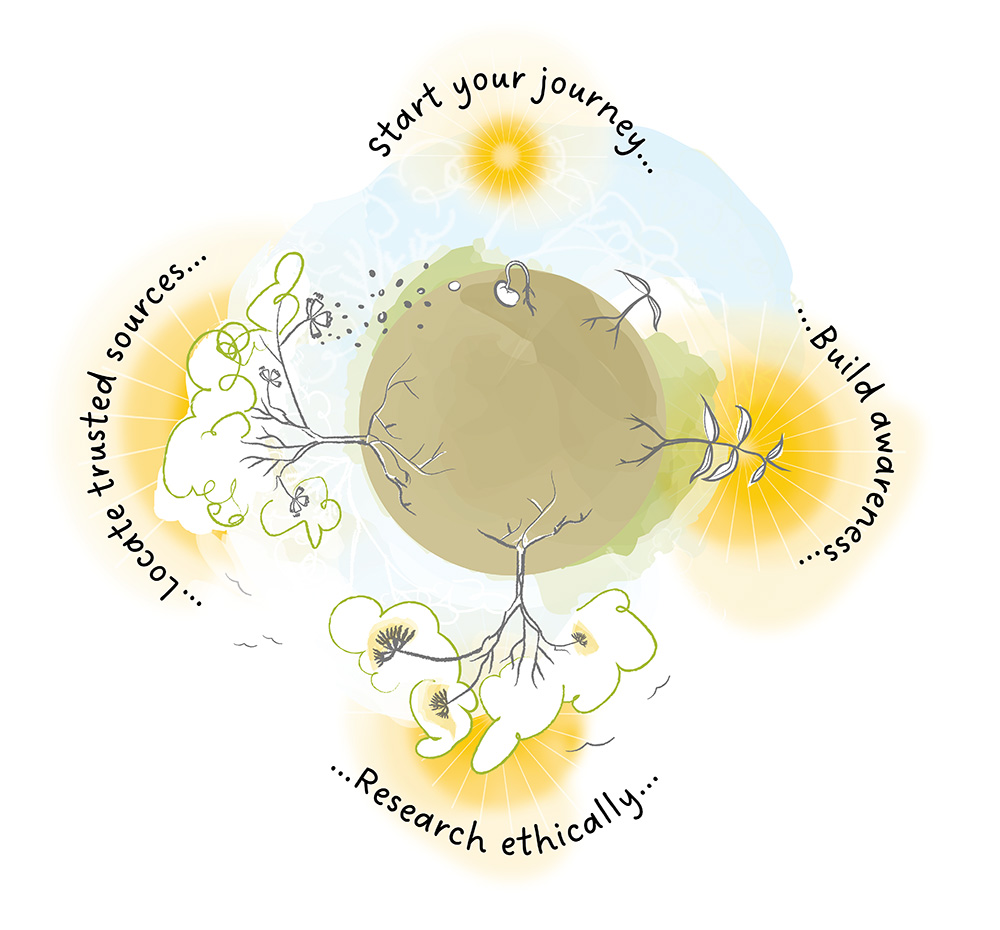
Image depicting the lifecycle of learning as a seed being planted (starting your journey), to a seedling (build awareness), to a flowering plant (research ethically) and finally a tree (locate trusted resources).Aboriginal and Torres Strait Islander learning journey digital design.

The Library’s Digital Learning team spent several months developing these modules, which are now available for the RMIT community to enrol in.

There are four milestones included:

  1. Start your journey
  2. Build awareness
  3. Research ethically
  4. Locate trusted sources

What do the modules cover?

Womin Djeka Indigenous Orientation is the journey’s starting point. If you want to learn about the rich, local Aboriginal and Torres Strait Islander culture of the eastern Kulin nation – or if would like to build your understanding – this module is for you. Topics covered include the different language groups in Victoria, the difference between Acknowledgement and Welcome to Country, reconciliation, and more. Once you complete the course, you’ll have a solid foundation to build from.

Truth Telling: Racism and Reconciliation expands on Womin Djeka and will help you understand issues such as systemic racism and white privilege, and clarify why truth telling is necessary. It explains why recognising the persisting impacts of Australia’s colonial past is important, and how you can address injustice and inequality to create social change that supports Indigenous peoples.

Research with Indigenous Peoples and Knowledges is primarily designed for candidates and supervisors intending to, or already engaging in, research and collaboration with Aboriginal and Torres Strait Islander people and communities and/or Indigenous Cultural and Intellectual Property. However, you don’t have to be a researcher to complete the course; it is a guide to working ethically with Aboriginal and Torres Strait Islander communities and will be beneficial for anyone looking for deeper engagement with Indigenous research, knowledges and cultural heritage.

Locating Aboriginal and Torres Strait Islander Sourceshelps students and researchers improve information literacy skills to discover literature produced by and for Aboriginal and Torres Strait Islander peoples and critically evaluate their appropriateness.

Enrol in the modules:

21 September 2026

Other news from the Library

aboriginal flag float-starttorres strait flag float-start

Acknowledgement of Country

RMIT University acknowledges the people of the Woi wurrung and Boon wurrung language groups of the eastern Kulin Nation on whose unceded lands we conduct the business of the University. RMIT University respectfully acknowledges their Ancestors and Elders, past and present. RMIT also acknowledges the Traditional Custodians and their Ancestors of the lands and waters across Australia where we conduct our business - Artwork 'Sentient' by Hollie Johnson, Gunaikurnai and Monero Ngarigo.

Learn more about our commitment to Aboriginal and Torres Strait Islander peoples