Blood test offers hope for more effective ovarian cancer treatment

Blood test offers hope for more effective ovarian cancer treatment

A major collaboration has revealed a blood test to guide more effective ovarian cancer treatment, by identifying the women more likely to respond to a treatment known as PARP inhibitor therapy.

More than 300,000 women are diagnosed with ovarian cancer globally each year, including 1,700 in Australia. 

The four-year clinical trial across 15 Australian hospitals – known as SOLACE2 – was co-led by RMIT University, WEHI and the University of Sydney NHMRC Clinical Trials Centre, and coordinated by the Australia New Zealand Gynaecological Oncology Group (ANZGOG). 

The Phase II trial tested strategies for priming the immune system to enhance the effectiveness of PARP inhibitor therapy, which stops cancer cells from repairing their own damaged DNA by blocking the PARP enzyme. 

It was during this trial that a new companion blood test for women with ovarian cancer was also evaluated – with promising results.

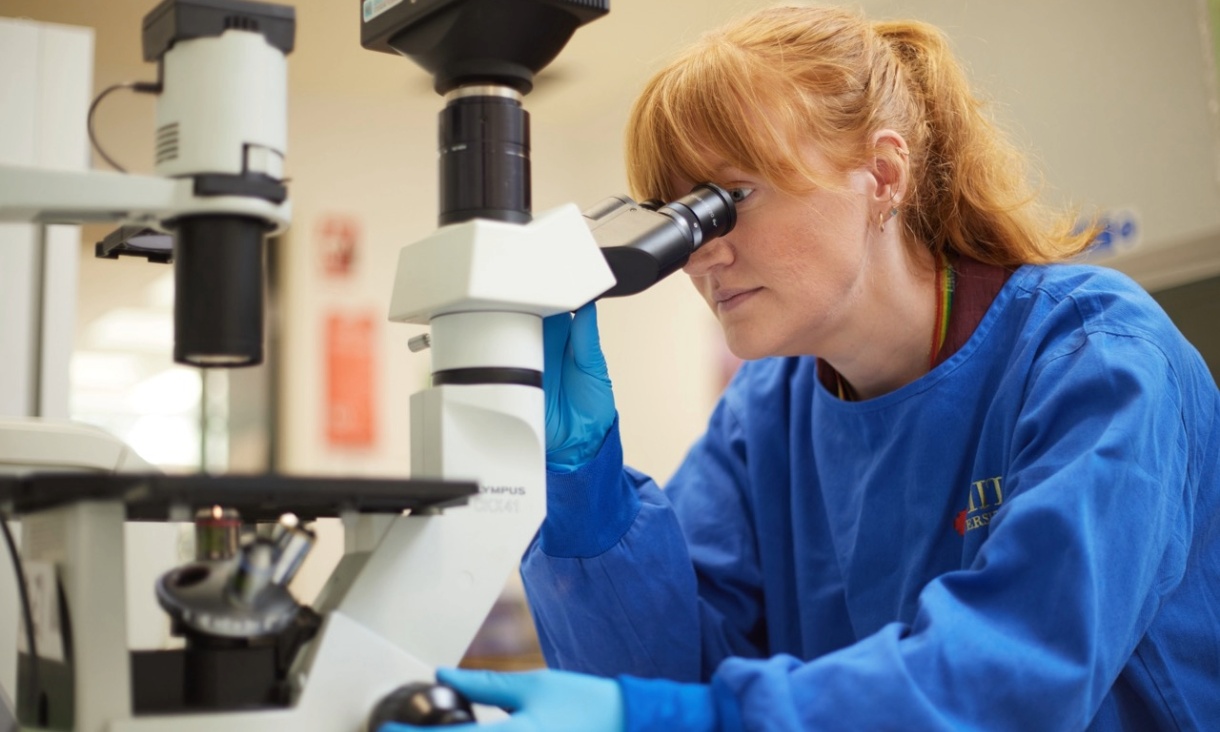
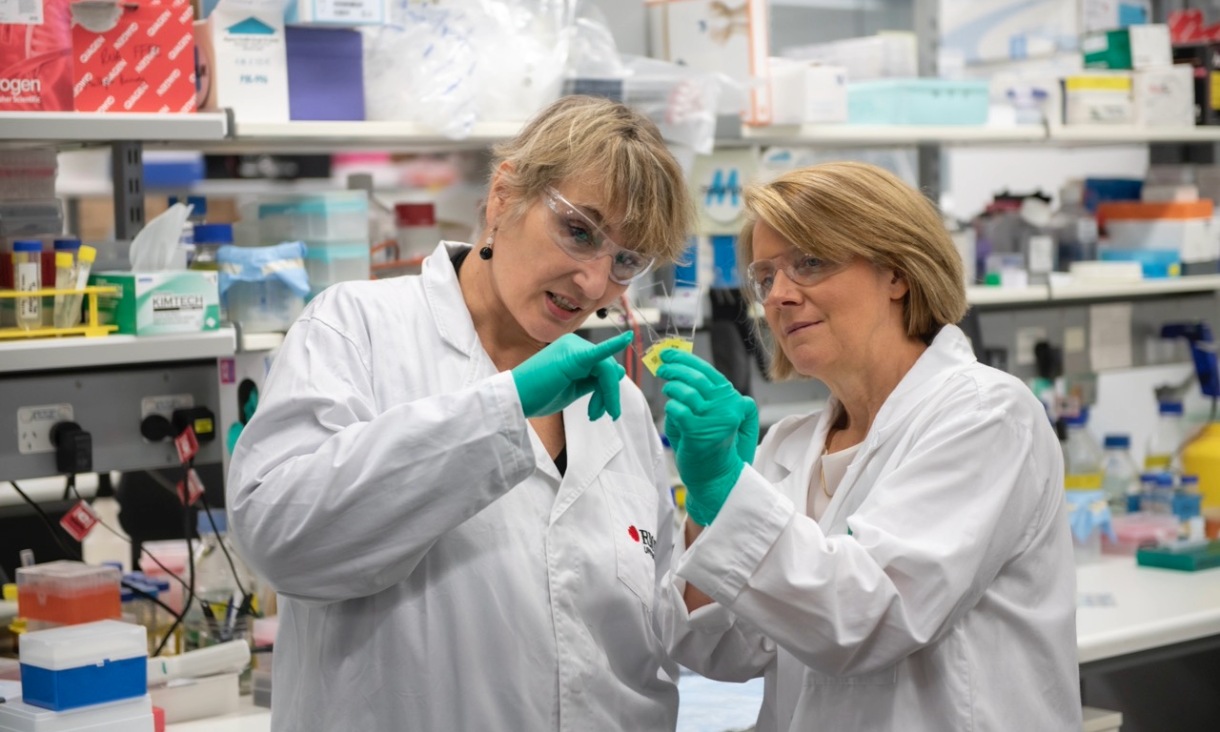
RMIT's Distinguished Professor Magdalena Plebanski and WEHI's Professor Clare Scott AM in the lab. Credit: WEHI. RMIT's Distinguished Professor Magdalena Plebanski and WEHI's Professor Clare Scott AM in the lab. Credit: WEHI.

Precision targeting cancer treatment for better outcomes

PARP inhibitor therapy is currently offered to women whose cancer has a defect in DNA repair, known as homologous recombination deficiency. These cancers are called ‘HRD positive’. 

However, clinicians have long recognised that some women with an ‘HRD negative’ cancer can still benefit from PARP inhibitors, while others with an ‘HRD positive’ ovarian cancer may not respond, suggesting other factors may influence treatment response.

RMIT lead researcher and co-senior author, Distinguished Professor Magdalena Plebanski, said there had been no easy way to more effectively target PARP inhibitor therapy, beyond the currently approved HRD test, until now. 

“In SOLACE2, we demonstrated that a new immune test could better indicate which women will respond to PARP inhibitors,” said Plebanski, who heads RMIT’s Accelerator for Translational Research and Clinical Trials (ATRACT) Centre. 

“We expect this promising new test will enable more effective screening and identification of eligible patients for PARP inhibitors, allowing us to provide this leading treatment to the women most likely to benefit.”

The new blood test measures the increase in expression of immune biomarkers that reflect the movement of good, cancer-destroying immune cells towards the cancer cells hiding in the body, together with a measure of important inflammatory processes that aid cancer growth and treatment resistance, providing a simple ‘biomarker signature’ in blood.

RMIT's Georgia Goodchild (Senior Laboratory Manager) in the CAVA labs. RMIT's Georgia Goodchild (Senior Laboratory Manager) in the CAVA labs.

The team’s results, published in Nature Communications, reveal that the RMIT-patented biomarkers – easily identified through a simple blood test – may be a better guide to who’ll potentially benefit from PARP inhibitor therapy than the current gold standard HRD test, meaning it requires urgent validation.

The current HRD test requires sufficient cancer tissue and the ability to perform complex analysis of DNA repair, which is not always available or feasible. In addition, the test may not provide an accurate reflection of the current DNA repair capability of the cancer, as this can change over time.

“Our test focused on a real-time blood immune response rather than on the DNA repair capability of the cancer, which may no longer be accurate. In doing so, we more accurately identified which SOLACE2 patients would most benefit from PARP inhibitor therapy,” Plebanski said.

WEHI lead and joint-senior author Professor Clare Scott AM, said an important finding was how immune cells in the cancer affected the response to PARP inhibitor therapy, particularly in combination therapy.  

Scott, who leads WEHI’s Ovarian and Rare Cancer Laboratory and is the Chair of ANZGOG, said a clear indication of who would respond to treatment came from predicting whether effector T cells could increase their migration into the tumour, where they can start killing the cancer cells.

“Now that we understand this is a vital factor for cancer control, we could also potentially improve treatments by focusing on promoting this beneficial migration of immune cells in the future,” said Scott, who is also a medical oncologist at the Peter MacCallum Cancer Centre, Royal Women’s Hospital and Royal Melbourne Hospital.

The new test is not currently available for patients, as it still needs to undergo further testing and confirmation before obtaining necessary approvals for routine use.

What the overall trial found

Professor Chee Khoon Lee, clinical lead at the University of Sydney’s NHMRC Clinical Trials Centre (CTC) and co-study chair, said the SOLACE2 clinical trial showed that three months of immune priming helped delay ovarian cancer recurrence when followed by treatment with the PARP inhibitor and immunotherapy. 

“Despite the treatment benefit we saw with this approach, the small trial did not provide the definitive clinical validation we were seeking, so more work will be needed to validate that,” Lee said.

“However, our study did successfully reveal this new test that has the potential to transform outcomes for many women diagnosed with ovarian cancer, helping clinicians to better personalise treatments, ensuring each woman receives the most effective therapy for her.”
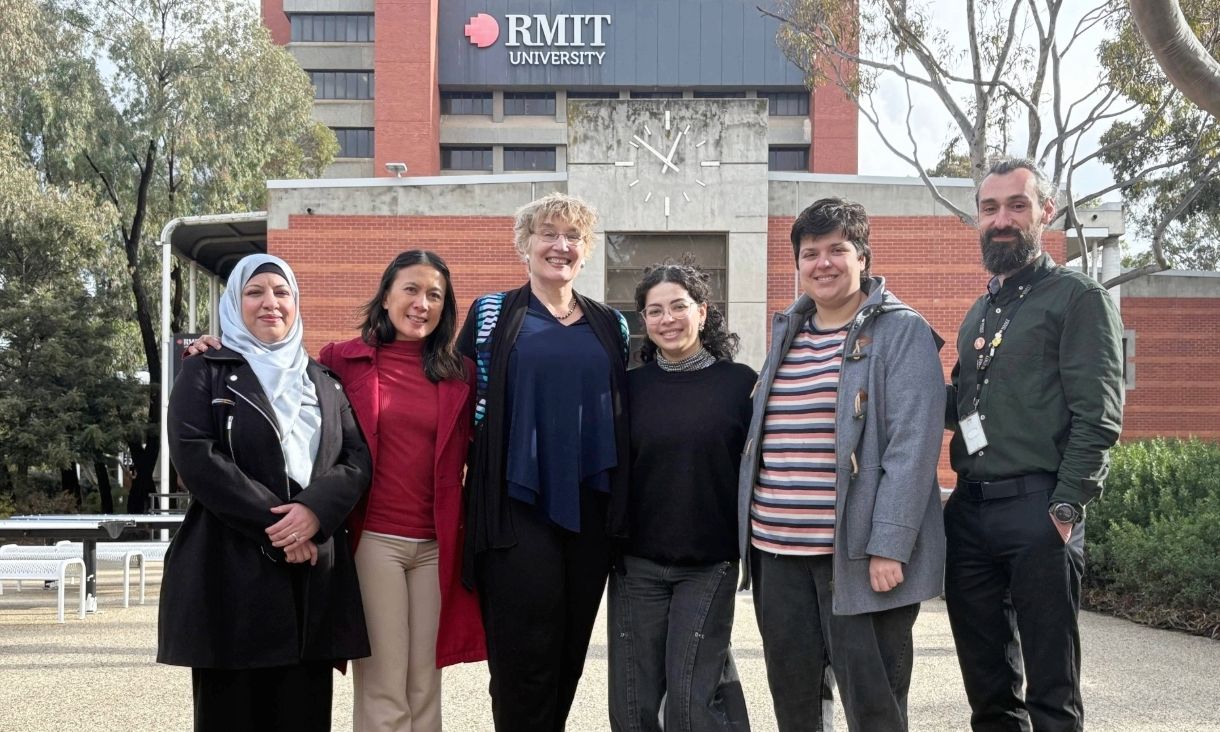
The RMIT team: (l-r) Ms Hina Amer (PhD candidate), Dr April Kartikasari (Postdoctoral Research Fellow), Dist Prof Magdalena Plebanski (Laboratory Head), Ms Nirashaa Bound (PhD candidate), Ms Emily Cassar (PhD Candidate), Mr Cyril Deceneux (Senior Research Assistant). The RMIT team: (l-r) Ms Hina Amer (PhD candidate), Dr April Kartikasari (Postdoctoral Research Fellow), Dist Prof Magdalena Plebanski (Laboratory Head), Ms Nirashaa Bound (PhD candidate), Ms Emily Cassar (PhD Candidate), Mr Cyril Deceneux (Senior Research Assistant).

Ongoing collaboration key to progressing cancer treatments

Study co-author and RMIT Postdoctoral Research Fellow Dr April Kartikasari said the major collaboration and coordination across hospitals for this project organised by ANZGOG had been crucial to achieving this advance.

“This collaboration is all about personalising treatments at the first sign of cancer recurrence, which could make a real difference to health outcomes,” she said.

“Currently, PARP inhibitors are widely used as first-line therapy for ovarian cancer. However, with the validation and development of this new blood test, patients who are most likely to respond, could be better identified, improving outcomes for women”.

Plebanski, who also heads RMIT’s Cancer, Ageing and Vaccines (CAVA) Laboratory in RMIT’s School of Health and Biomedical Sciences, said the advance was exciting but there was still more to do. 

“This is part of making a difference in the short term, but at the CAVA Lab and ATRACT Centre we are also looking longer term, towards new cancer drugs and vaccines to break the cycle of suffering,” she said. 

Olaparib, durvalumab, and cyclophosphamide, and a prognostic blood signature in platinum-sensitive ovarian cancer: the randomized phase 2 SOLACE2 trial’ is published in Nature Communications (DOI: 10.1038/s41467-025-64130-6). 

The study, with funding and support from ANZGOG and AstraZeneca, was approved by Sydney Local Health District (SLHD) Ethics Research Committee (RPAH Zone), HREC Reference No. 2019/ETH07640.


Story: Michael Quin, Gosia Kaszubska and Hashela Kumarawansa.

12 November 2025

Share

12 November 2025

Share

  • Research
  • STEM
  • Industry
  • Science and technology

Related News

aboriginal flag float-start torres strait flag float-start

Acknowledgement of Country

RMIT University acknowledges the people of the Woi wurrung and Boon wurrung language groups of the eastern Kulin Nation on whose unceded lands we conduct the business of the University. RMIT University respectfully acknowledges their Ancestors and Elders, past and present. RMIT also acknowledges the Traditional Custodians and their Ancestors of the lands and waters across Australia where we conduct our business - Artwork 'Sentient' by Hollie Johnson, Gunaikurnai and Monero Ngarigo.

More information