
Fighting fire with fungi: researchers design protective clothing using mycelium leather

Fighting fire with fungi: researchers design protective clothing using mycelium leather

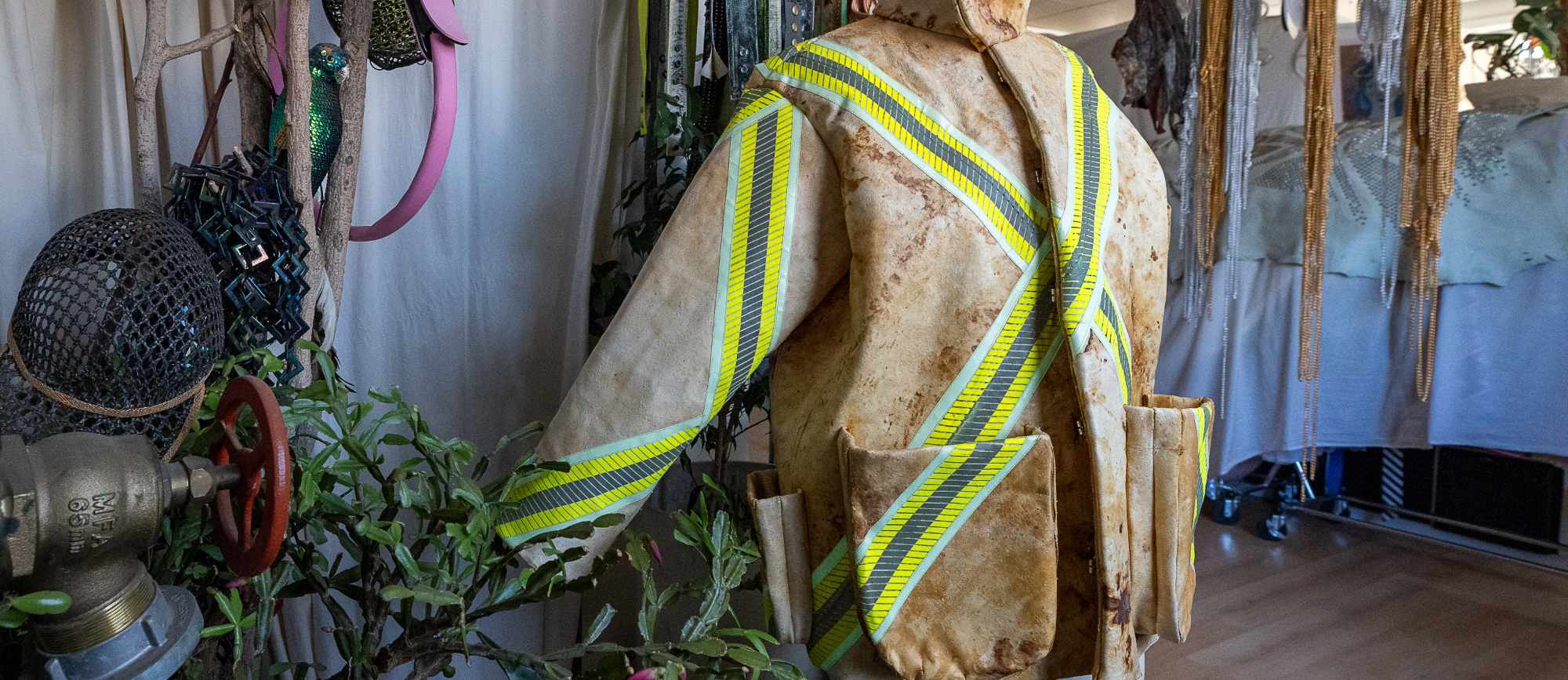
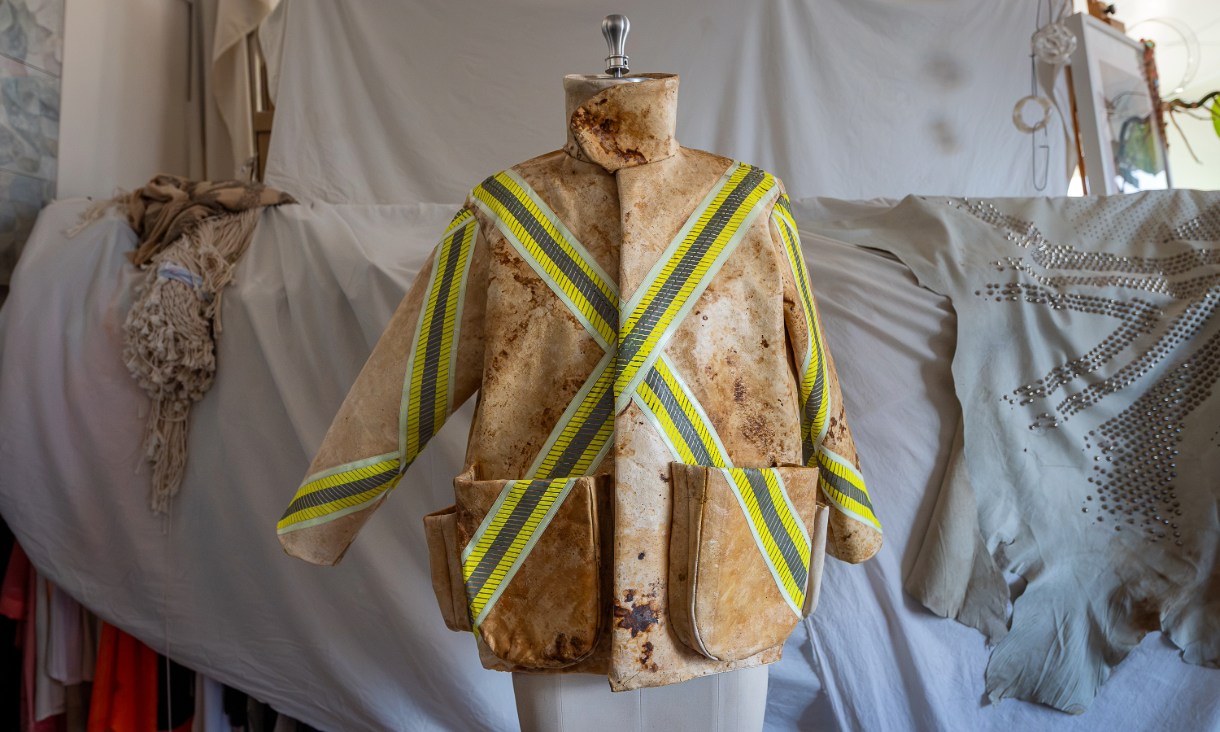
RMIT researchers have crafted a wildfire jacket prototype from mycelium leather, testing whether fungi‑based materials could help shape the next generation of protective clothing.

Made from fungal networks cultivated using agricultural waste and water, the material has already met key international safety benchmarks – marking an important step toward real‑world use.  

The prototype now on display at the National Gallery of Victoria (NGV) advances the shift toward regenerative, low‑waste alternatives in protective clothing design. 

Alt Text is not present for this image, Taking dc:title 'undefined'The mycelium wildfire jacket.

Early testing shows promising protective properties 

Dr Tien Huynh from RMIT’s School of Science said the idea for the mycelium leather jacket emerged as Australia approached another bushfire season.  

“Heading into another bushfire season made me reflect on the growing impacts fire has on communities, landscapes and ecosystems,” Huynh said. 

“We’re exploring how sustainable biomaterials can support broader conversations about environmental resilience, climate adaptation and regeneration.”   

The prototype demonstrates the material’s durability, fire resistance, thermal insulation and ability to self‑extinguish – all critical factors for gear used by firefighters. 

It has achieved OEKO‑TEX® STANDARD 100 Product Class II certification, confirming it is safe for direct skin contact.  

Earlier studies led by Huynh also point to mycelium as a promising material for fireproof architectural cladding

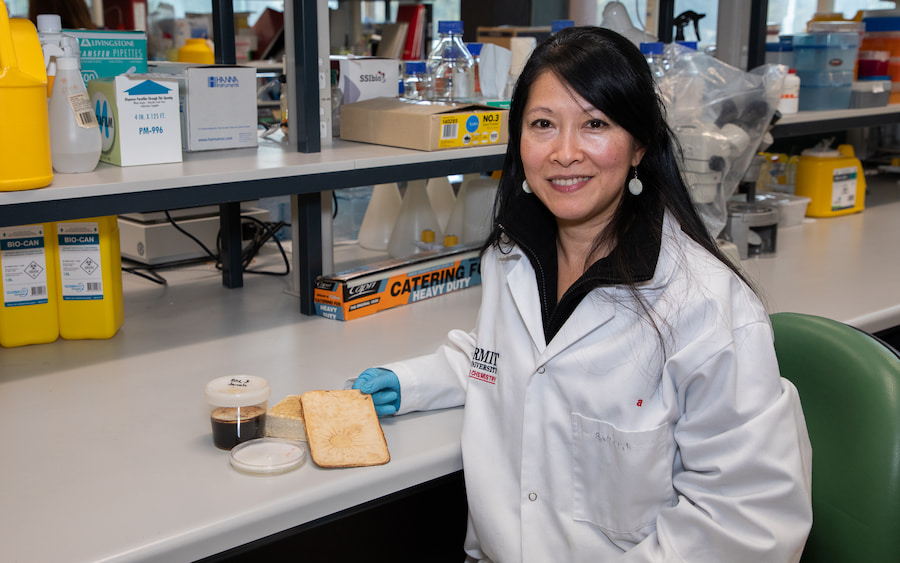
Associate Professor Tien HuynhAssociate Professor Tien Huynh with a piece of mycelium sheet used in her fireproof cladding research.

Design and science combine to showcase emerging materials 

The team behind the prototype jacket paired scientific insight with design practice to demonstrate the potential of emerging sustainable materials. 

Dr Judith Glover from RMIT’s School of Design said working with mycelium challenges designers to rethink how protective clothing could be made. 

“Mycelium is an extraordinary material – it potentially replaces materials with bigger ecological rucksacks and forever chemicals with a biodegradable material grown from agricultural waste – and working with it challenges us to rethink how protective clothing could be made in the future,” Glover said.  

“The jacket demonstrates the power of creative practice to make emerging technologies visible, accessible and engaging. RMIT is a great example of promoting cross-disciplinary approaches in the university sector.” 

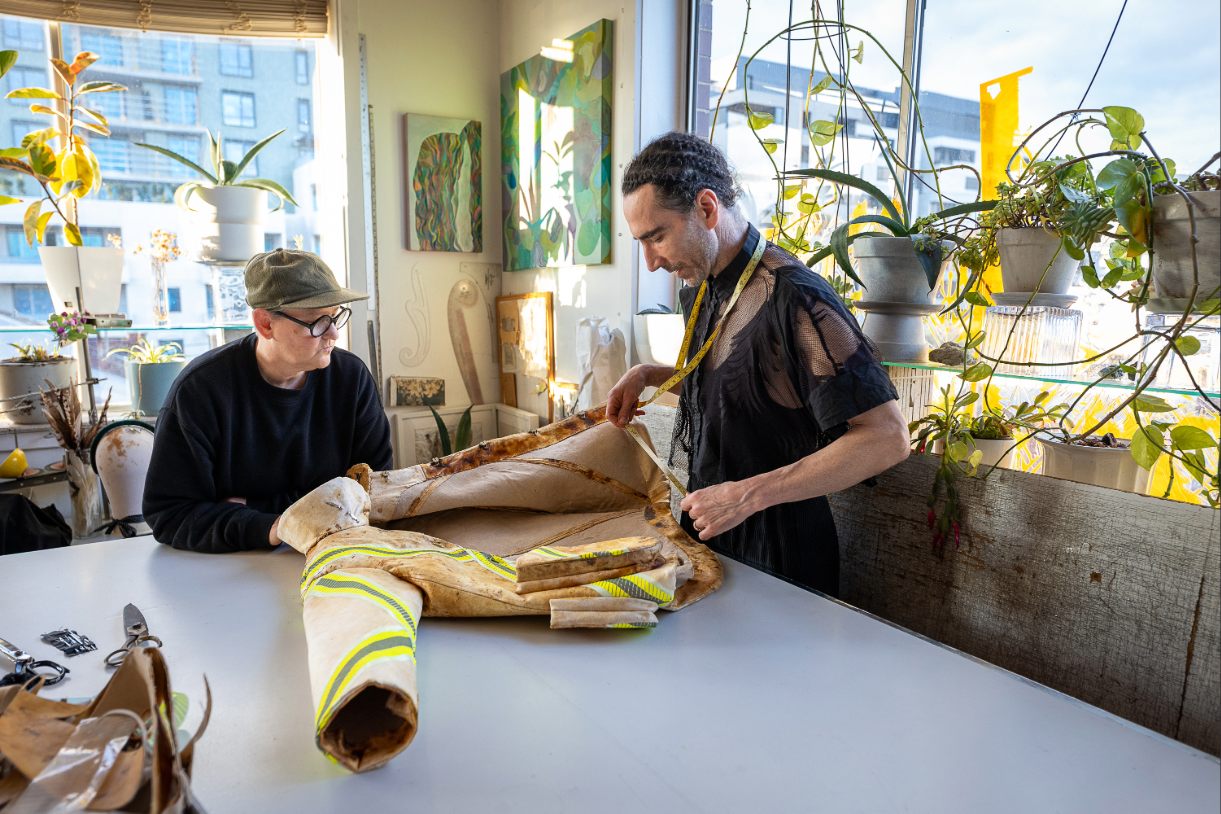
Alt Text is not present for this image, Taking dc:title 'undefined'Dr Judith Glover (left) in the design studio with the mycelium jacket.

The growing importance of fungi’s role in design and sustainability 

Fungi were recently recognised as Australia’s ‘third kingdom’, reflecting their essential role in biodiversity alongside plants and animals.  

Incorporating fungi into protective clothing echoes their important role in nature, where they’re among the first to help landscapes regenerate after fire. 

The jacket is currently being exhibited at the NGV as part of its free exhibition, Plant Life: The Nature of Design, until 7 February 2027.  


Story: Bree Marsh

17 September 2026

Share

17 September 2026

Share

  • fashion
  • STEM
  • DSC Research
  • Sustainability
  • DSC
  • Research
  • Regenerative Futures
  • Environment
  • Science and technology

Related News

aboriginal flag float-starttorres strait flag float-start

Acknowledgement of Country

RMIT University acknowledges the people of the Woi wurrung and Boon wurrung language groups of the eastern Kulin Nation on whose unceded lands we conduct the business of the University. RMIT University respectfully acknowledges their Ancestors and Elders, past and present. RMIT also acknowledges the Traditional Custodians and their Ancestors of the lands and waters across Australia where we conduct our business - Artwork 'Sentient' by Hollie Johnson, Gunaikurnai and Monero Ngarigo.

More information