As the nation’s largest dual-sector university, offering both vocational and higher education pathways, RMIT is uniquely placed to drive harmonisation and to foster Australia’s future workforce. We have valuable insights into the barriers students face, the needs of employers and where policy settings can do more to support these changes.
We have longstanding partnerships with government and industry, including through co-designed learning models, like our flagship Earn and Learn program. This innovative program allows students to undertake their studies while employed with partner organisations, building skills in real-time while completing their qualifications. And it also helps employers by creating a pipeline of graduates who are ready to hit the ground running.
This type of model is sustainable and scalable - and it’s heartening to see other universities beginning to offer dual-qualifications or fast-tracked degrees for students with TAFE qualifications. But a more consistent national approach is required.
This work is already successfully happening elsewhere. Jurisdictions, like the United Kingdom and Switzerland, have shown that credit recognition, mobility between pathways, and lifelong learning make it easier for learners and employers and meet national demands.
Our future workforce won’t simply be created by doing more of the same. To meet the Accord’s 80 per cent participation target by 2050, the system will also need to open the door to people who have historically been excluded, overlooked, or poorly served by a rigid system.
Artificial intelligence and emerging technologies will be central to this mission. AI is already reshaping how we teach, how students learn, and the workplaces they will enter. The challenge for tertiary education is not simply to respond to that shift, but to get on the front foot. That’s why RMIT recently launched a new sector-leading AI framework which will support our educators and ensure our graduates have the capabilities they need to face these challenges head on.
The common thread is clear: we can’t do this alone or in isolation. Solutions require meaningful collaboration across the tertiary sector, government, industry, and community.
If we are serious about delivering on the Accord, and futureproofing Australia’s economy, it requires more than goodwill. The whole system must quickly adapt, and governments must provide the appropriate settings to support and accelerate these changes.
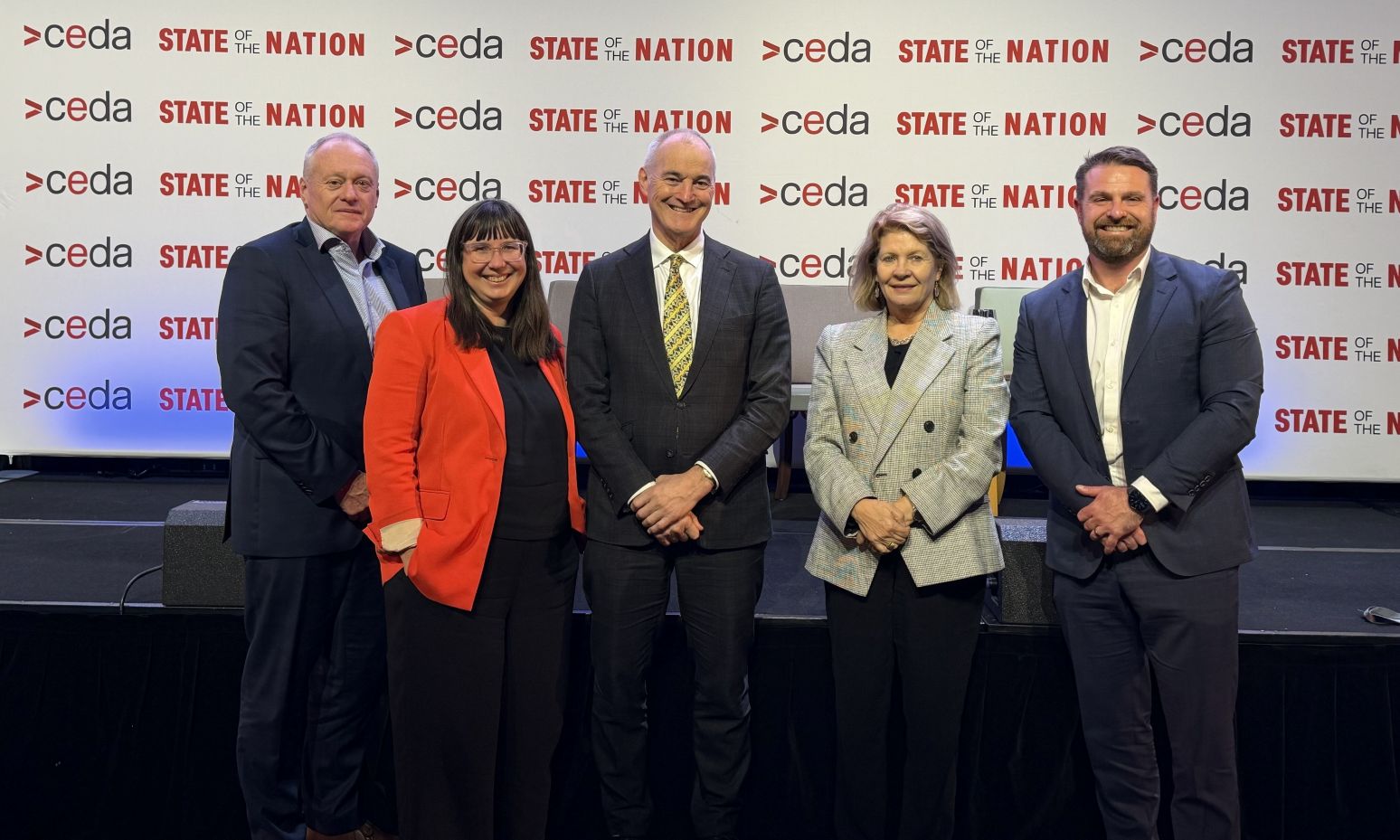
RMIT University Vice-Chancellor and President Professor Alec Cameron this week convened a discussion on workforce solutions at the CEDA State of the Nation summit in Canberra.