RMIT leaves its mark on Melbourne Design Week 2026

RMIT leaves its mark on Melbourne Design Week 2026

Melbourne Design Week has drawn to a close for 2026, with record numbers of visitors attending 350+ events across Greater Melbourne.

RMIT University academics, students and alumni were at the heart of Australia’s premier design event in its 10th anniversary year, featuring in 35+ RMIT-affiliated events, ranging from the launch of a bold new Regenerative Futures Institute, to bringing world-leading thinkers to NGV, celebrating 100 diverse Australian creatives through the medium of the chair and so much more. 

A new institute for a regenerating world

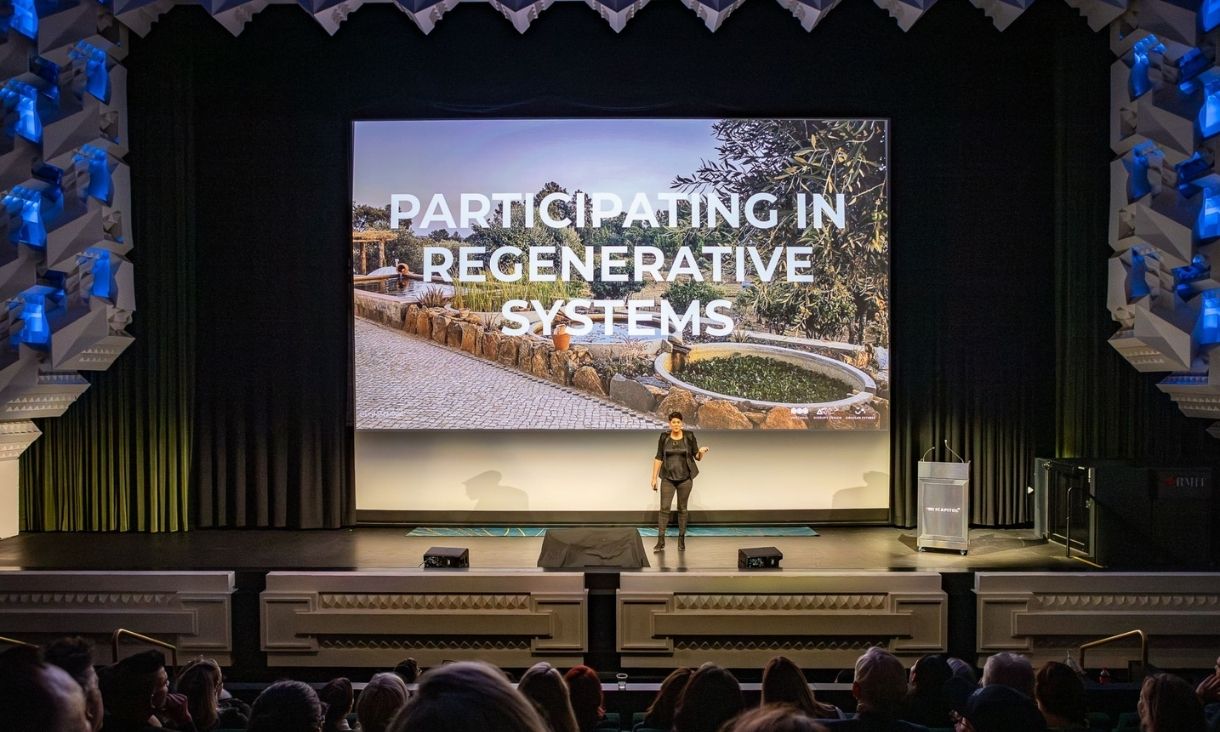
Among the most significant events of Melbourne Design Week (MDW) was the launch of the RMIT Regenerative Futures Institute at The Capitol – a landmark moment for RMIT and for the broader regenerative design community. The Institute signals the University's deepening commitment to futures-focused, ecologically grounded inquiry, positioning RMIT as a leader in designing a fairer, more inclusive collective future that actively regenerates our social, ecological and economic systems. 

A speaker stands on the Capitol stage, with a giant projection saying 'participating in regenerative systems'.Keynote speaker Leyla Acaroglu at RFI Launch, The Capitol. Photographer: Ant Bragaglia

Stepping into the symbiocene

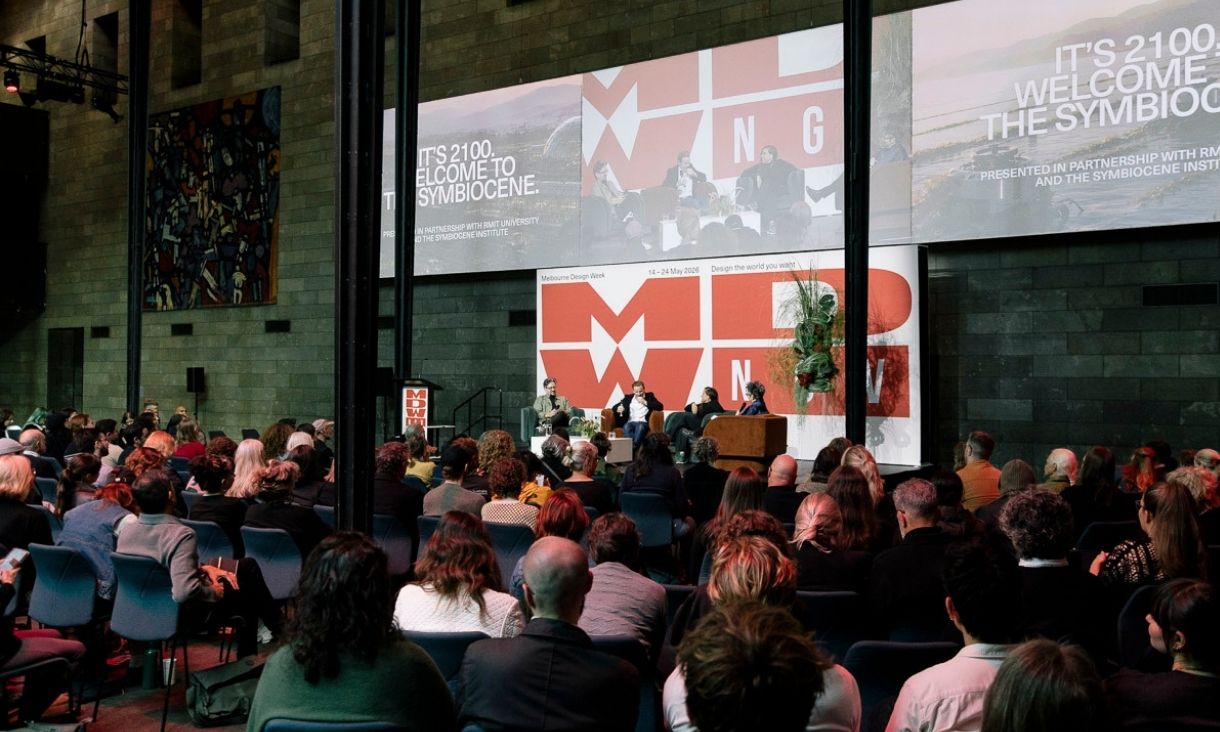
Another festival highlight was the symposium, It's 2100. Welcome to the Symbiocene, a collaboration between RMIT, the Symbiocene Institute and NGV, which hypothesized, ‘if we get it right, what will life on Earth look like in 75 years?’ 

Organisers, including Professor Naomi Stead - Associate Deputy Vice Chancellor of Engagement, RMIT College of Design and Social Context brought Dr Glenn Albrecht - philosopher and originator of the ‘symbiocience’ concept – into dialogue with industry-leading voices including A/Prof Ronnie Scott (RMIT’s non/fictionLab). 

"I found this event genuinely moving – projecting ourselves 74 years forward into an imagined future in which humankind and all other creatures and systems live in flourishing symbiosis opened a kind of optimism which felt actively possible,” Stead said.  

“The day was powerful, intriguing, uplifting, and funny – and RMIT was right there in the midst of it, doing the kind of speculative experimental thinking we excel at.” 

A panel discussion at the NGV for 'Welcome to the Symbioscene'Welcome to the Symbiocene during Melbourne Design Week 2026. Image courtesy of the National Gallery of Victoria. Photographer: Thomas McCammon

The day before the main event, Dr Albrecht addressed an intimate cohort of RMIT PhD students and academics, providing them with an opportunity for direct engagement with one of the most original environmental thinkers of our time. 

Another MDW standout was 100 Chairs, co-curated by RMIT Industrial Design and Furniture Design alumnus Dale Hardiman and Tom Skeehan (SKEEHAN Studio), which had queues snaking around Abbostford Convent. The exhibition featured 100 Australian-made creations by local designers, including Sandra Githinji (RMIT Interior Design), Georgie Szymanski (Furniture Design, RMIT College of Vocational Education) and Ruby Shields (RMIT Interior Design & Decoration and Communications alumnus). 

two men stand in a large warehouse type room, surrounded by many types of chairsDale Hardiman and Tom Skeehan (Friends and Associates) at the opening of their exhibition 100 Chairs. Photographer: Tom Ross

Beyond rezoning: designing liveable neighbourhoods

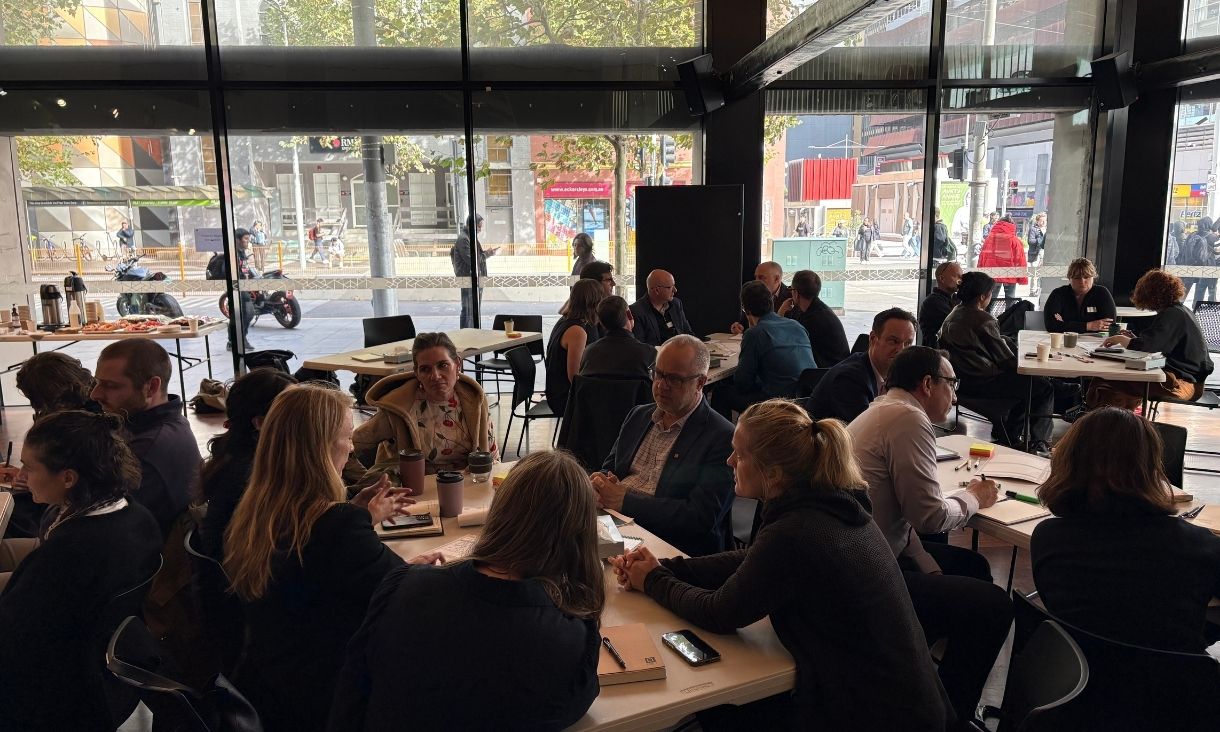
RMIT's Centre for Urban Research joined forces with Monash Urban Lab for Beyond Rezoning: Delivering Liveable Neighbourhoods, a workshop supported by the Victorian Health Promotion Foundation bringing together academics, community, industry and government to examine transit-oriented development and the risks of relying on rezoning alone to deliver meaningful change.  

Professor Andrew Butt (RMIT Sustainability and Urban Planning) commented: "We know we need a transformation in many low-rise suburban neighbourhoods, but we will only get one chance to maximise the gains through good design, improvements to public amenity and ensuring diverse and affordable housing solutions - we need a model that demands more than simply rezoning land and hoping for the best."

people sit at crowded tables, in discussionBeyond Rezoning workshop, RMIT Media Portal. Photographer: Georgia McKay

Reviving a Melbourne digital classic

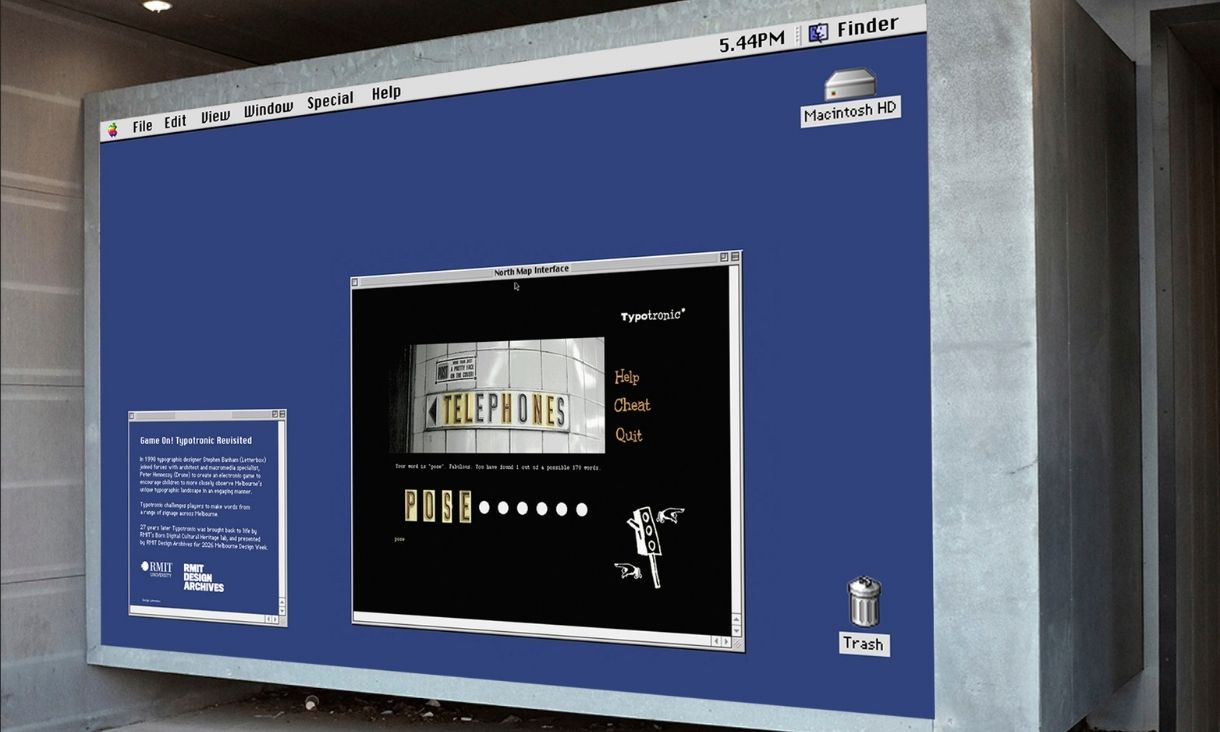
The RMIT Design Archives and RMIT Born Digital Cultural Heritage Lab offered festival-goers a live screening of the emulation and play of Typotronic, an electronic game originally created in 1998 by Dr Stephen Banham (RMIT Typography) and architect and macromedia specialist Peter Hennessy (Drone Pty Ltd). Designed to encourage children to observe Melbourne's unique typographic landscape, the game challenged players to spot and build words from the city's iconic signage from Pellegrini's and Flinders Street Station to the American Donut van and Dinkum Pies.

A wall is changed to look like an old mac computer desktop, there is a pop-up which says 'telephones'.Typotronic installation, RMIT Design Archives Window. Photographer: Stephen Banham

A flourishing fashion future

At RMIT Brunswick, RMIT’s School of Fashion & Textiles convened a two-day Living Lab workshop of industry professionals, policymakers, educators, researchers and community members to co-create pathways toward circular textiles.  

"We had a rich discussion and workshop exploring A Flourishing Fashion System for 2040, through the lens of wellbeing — feeling well, doing well, being well," commented Professor Alice Payne.  

“The groups located the 'cracks and frictions' in the current fashion system that suggest hopeful opportunities for the future," she continued.  

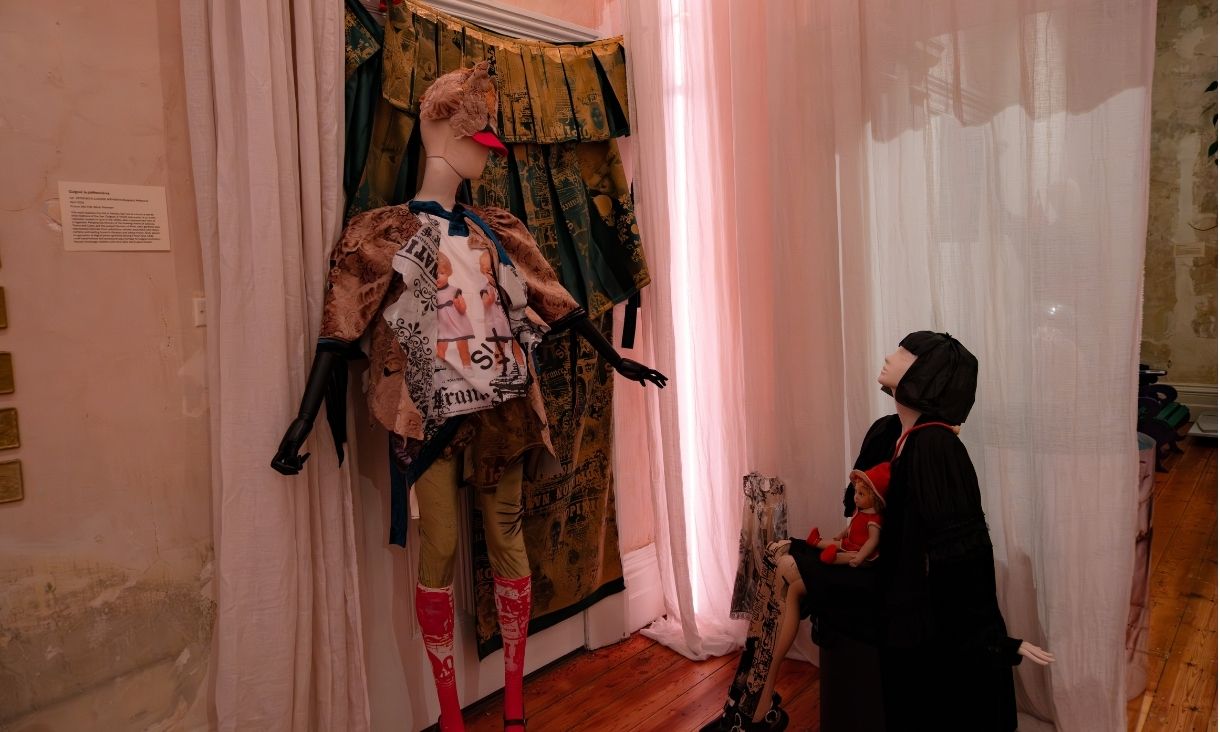
Fashion & Textiles staff also appeared in an exhibition curated by The National Trust, reFashion/transform, which reimagined textile waste as a resource, casting discarded materials into new forms and meanings. 

Two mannequins are in a room, one sitting and another standing, there are bright pink lights and soft curtains.reFashion/transform, Tasma Terrace. Photographer: Shantal Hayden

Multidisciplinary label, PAGEANT also held a retrospective exhibition at Abbotsford Convent.  

Policy design geekery

A panel of policy design practitioners from RMIT’s School of Design and Aurecon presented guiding principles for the future of policy design, or ‘policy design geekery’ as Professor Andrea Siodmok prefers to call it.  

"Policy Design is how paperwork changes people’s lives. Policy is about power, who gets it and how they use it. ‘Open policy’ acknowledges that policymakers don’t hold a monopoly on wisdom. It involves community but done badly, co-design offers a blunt instrument for tokenistic engagement,” she said.

Playable XR: extended reality on show

The Virtual Experiences Lab (VXLab) at RMIT opened its doors forPlayable XR: Extended Reality RMIT Showcase, an exhibition of student works from the Master of Animation, Games and Interactivity (MAGI). Visitors encountered cutting-edge technologies including 3D holographic screens, haptic feedback devices, motion capture suits and 360° virtual reality motion simulation. 

Student Yohan Dsouza, whose VR game NOVAROVER was featured in the showcase, said that the opportunity to exhibit at Australia’s leading design festival was a privilege: “MDW puts student work in the same room as established studios and national institutions. Showing NOVAROVER there means the experience gets read as design, not just a student project.”

PhD research in the public eye

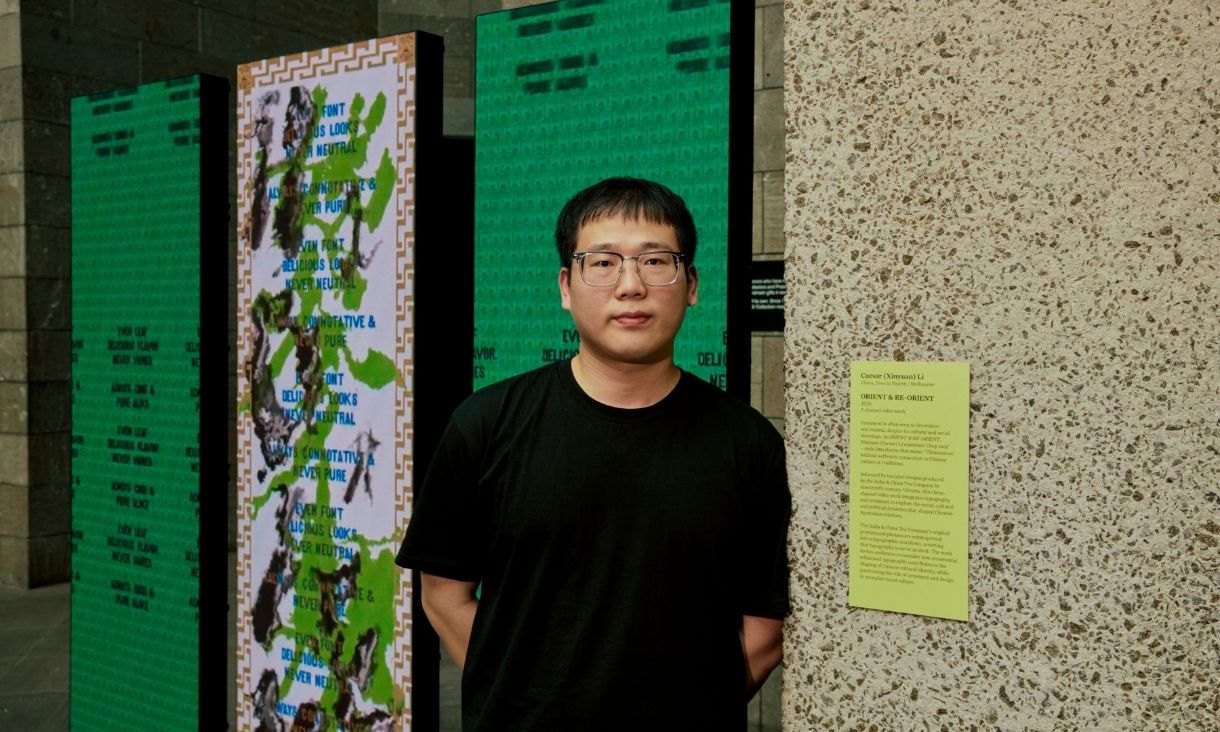
PhD candidate Xinyuan (Caesar) Li presented three projects across Melbourne Design Week and the Melbourne Art Book Fair, drawing on his research into how typography shapes culture. His work spanned a video installation, a community walking exhibition, and a contributor role in an independent publication launch.  

“Presenting at the NGV as part of the Melbourne Art Book Fair allows the work to engage with people from diverse backgrounds. As someone who has moved between cultures, it's especially meaningful to share this work with audiences who may or may not share the same cultural background,” Li commented.   

Caesar stands against a wall.Xinyuan (Caesar) Li at Melbourne Art Book Fair 2026. Image courtesy of the National Gallery of Victoria. Photographer: Charlie Hawks

Student recognition

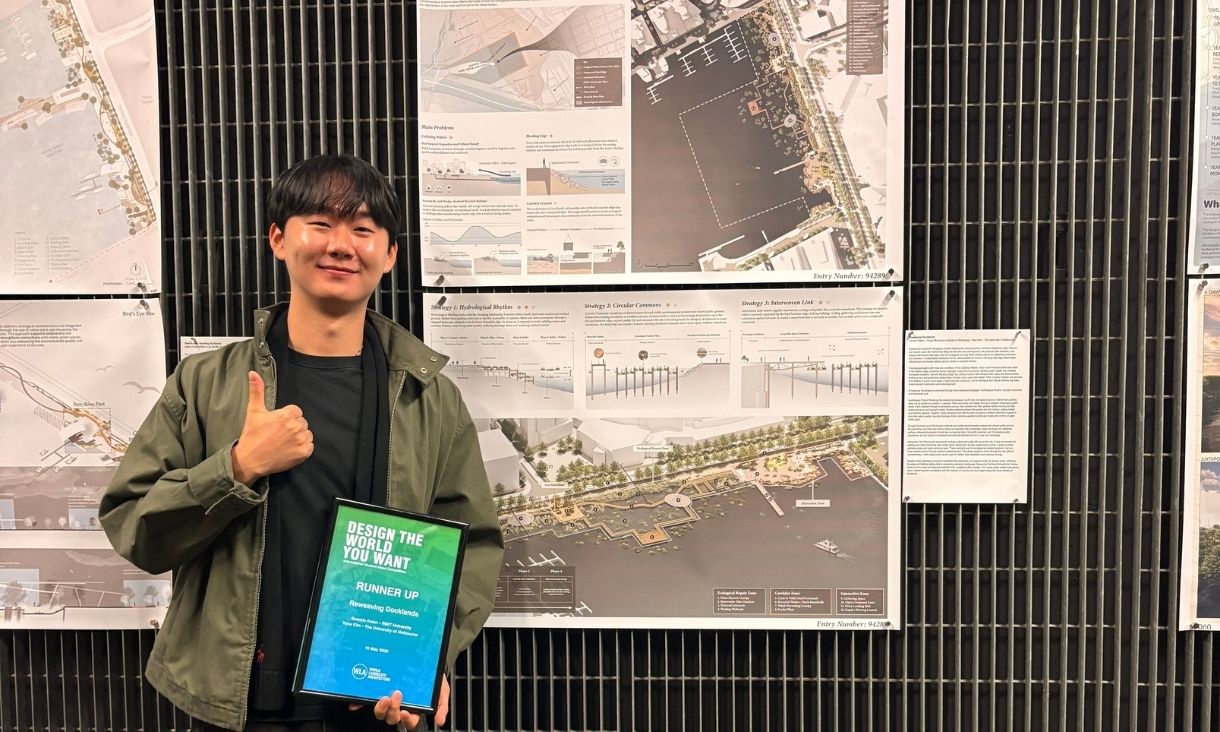
First-year Master of Landscape Architecture student Sunmin Kwon, an international student from Seoul, was awarded runner-up in the Design the World You Want International Student Ideas Competition. The winners were announced at the exhibition opening of shortlisted projects at RMIT’s Design Hub Gallery.  

Kwon said the opportunity to exhibit his own work at RMIT was a “full circle moment” and that taking part in the competition provided much more than recognition: "In the past, I was an observer of that international conversation; now, through my project, I feel I have been able to add a small voice to it.” 

Sunmin stands with the award and with a thumbs up in front of his work Sunmin Kwon at the Design the World You Want Student Ideas Competition Exhibition, RMIT Design Hub.

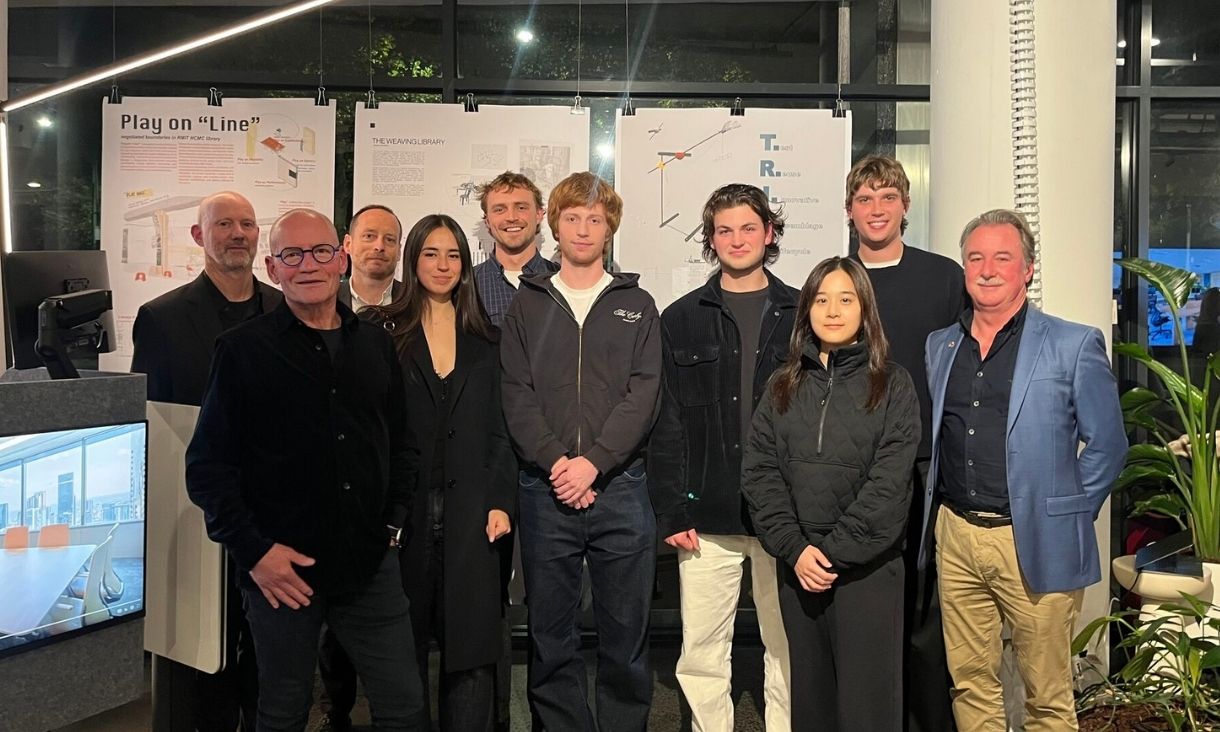
A group of RMIT students from architecture, industrial design and interior design disciplines curated a window installation which turned the street into a gallery of future workplace thinking. They teamed up with Melbourne-based commercial furniture designers, HOW Group to present an installation for their Southbank showroom that speculated on the future workplace environments. 

A group of people stand together in a group in front of work being presented.Participating RMIT students, Future Workplace Thinking: Systems, Spaces, Cities, HOW Group Showroom. Photographer: Celine Saoud.
A table is laden with pamphlets, bowls and other objects amidst an exhibition.  Attendees at The Sociable Designer, RMIT Media Portal. Photographer: Georgia McKay

Student designers from RMIT’s Master of Design, Technology and Innovation explored design as a restorative practice: slow, accountable and built with the communities that extraction-led design has most often overlooked. 

“Melbourne promotes itself as a world‑class food city, yet nearly half its residents experience food insecurity, affordable food cultures are being displaced, and First Nations foodways remain largely invisible. This raises questions about the role design has played,” commented Dr Areli Avendaño Franco, RMIT School of Design.  

"Design in this context extends well beyond products like packaging or branding to include the design of services, systems and policies that shape how food is grown, distributed, accessed, consumed and disposed of, and crucially, who benefits from those systems,” she continued.  

Melbourne-based furniture designer and RMIT graduate Joanne Odisho won the prestigious 2026 Australian Furniture Design Award (AFDA). She secured the $20,000 cash prize and a production partnership with Stylecraft for her innovative and sustainable submission, "Mod-u" that re-purposes eggshells to create lamps.  

Brunswick Design District opened its door for community print making

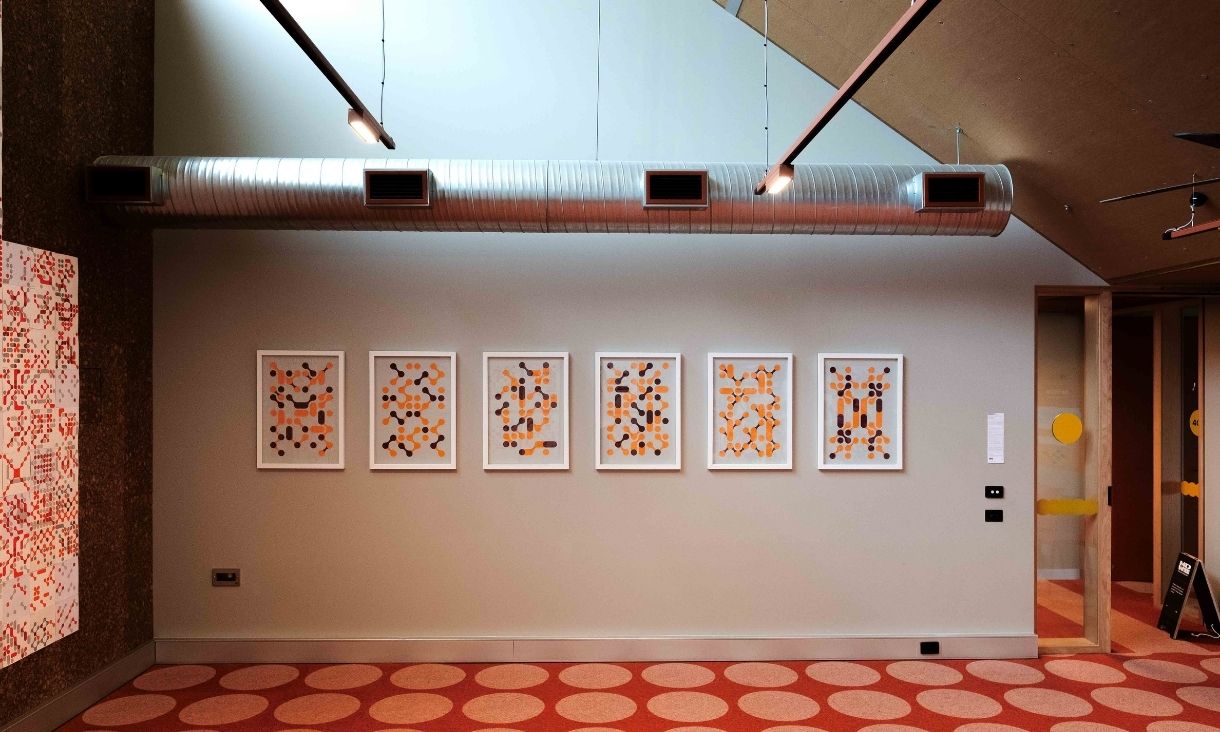
Open Edition by Pavement Print Studio invited the public to become contributors to a collaborative screen-printing activation and exhibition for Brunswick Design District’s 'Design Behind Closed Doors’ program. Over four days, 80 participants took part in eight workshops, creating collaborative prints that were exhibited in a large-scale installation at Balam Balam Place in Brunswick. 

Six frames are lined up on a wall depicting the screen prints made by participants.Pavement Print Studio, Open Edition, Balam Balam Place. Photographer: Elena Hogan

Counterfactual Cities: Regenerative Urban Imaginaries

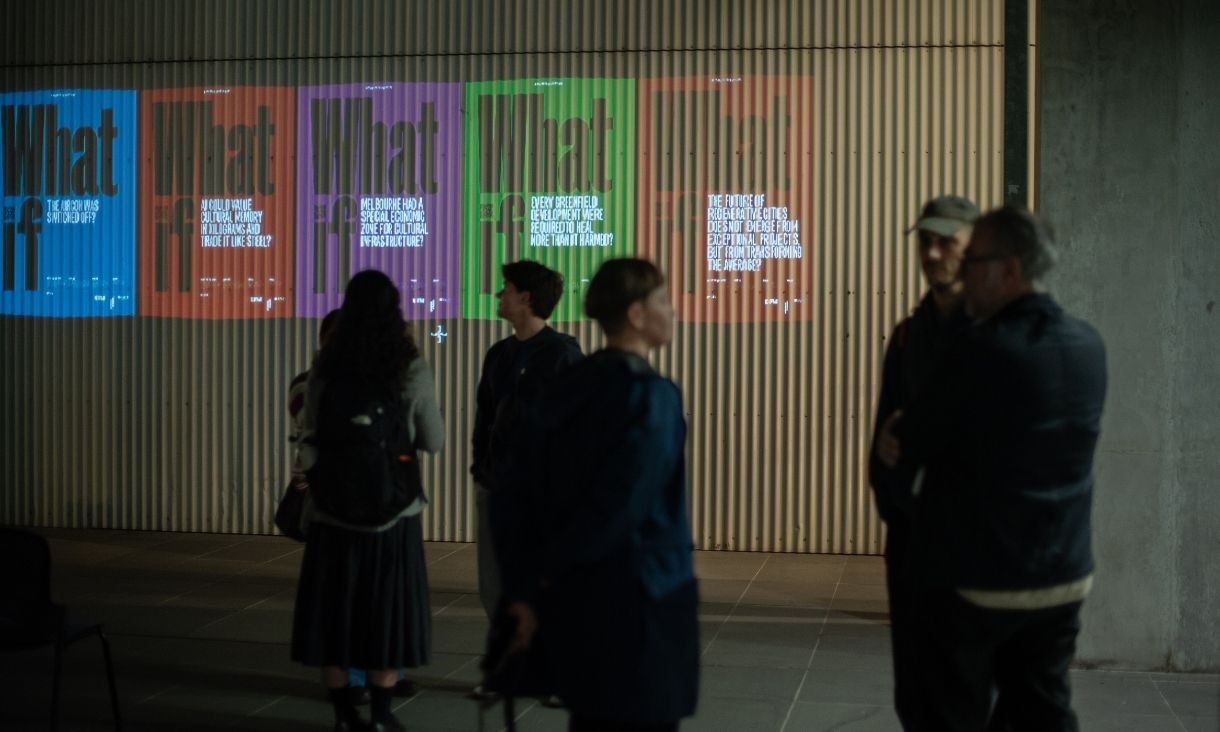
RMIT Super Urban Lab’s MDW26 project comprised a city-wide poster series, an interactive web application and a symposium that invited audiences to engage with a series of provocative ‘What if?’ propositions about the future of cities bringing together designers, researchers, practitioners, and the public. Through speculative urban scenarios and public discussion, the project examined pathways towards regenerative urban futures. 

People stand in front of a lit up wall, with individual screens of different colours saying 'What if?' Counterfactual Cities: Regenerative Urban Imaginaries, RMIT City Campus: Photographer: Helen Duong

Design as a force for Regenerative Futures

“Taken together, RMIT's presence at Melbourne Design Week 2026 reflects our conviction that design, and the people who practise, study, and theorise it, has a central role to play in how we navigate a regenerative future in the decades ahead,” said Professor Tim Marshall, Deputy Vice-Chancellor, RMIT College of Design and Social Context.  

“We were proud to continue our collaboration with NGV as Futures Partner on Australia’s most significant design event in its 10th anniversary year, having been involved since its inception.” 

Share

Share

  • DSC Research
  • Industry
  • Announcements
  • Arts and culture
  • Architecture
  • Design
  • DSC
  • Awards
  • Research
  • Regenerative Futures
  • Student experience
  • Urban Design

Related News

aboriginal flag float-starttorres strait flag float-start

Acknowledgement of Country

RMIT University acknowledges the people of the Woi wurrung and Boon wurrung language groups of the eastern Kulin Nation on whose unceded lands we conduct the business of the University. RMIT University respectfully acknowledges their Ancestors and Elders, past and present. RMIT also acknowledges the Traditional Custodians and their Ancestors of the lands and waters across Australia where we conduct our business - Artwork 'Sentient' by Hollie Johnson, Gunaikurnai and Monero Ngarigo.

More information