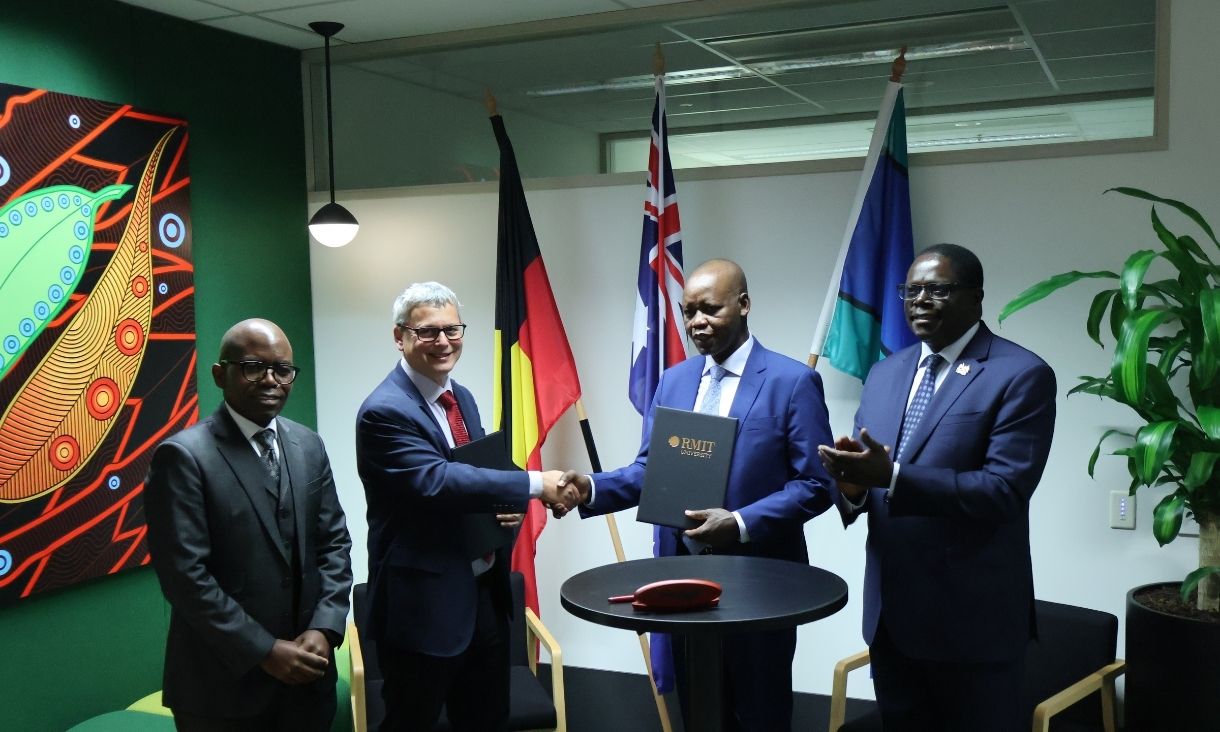
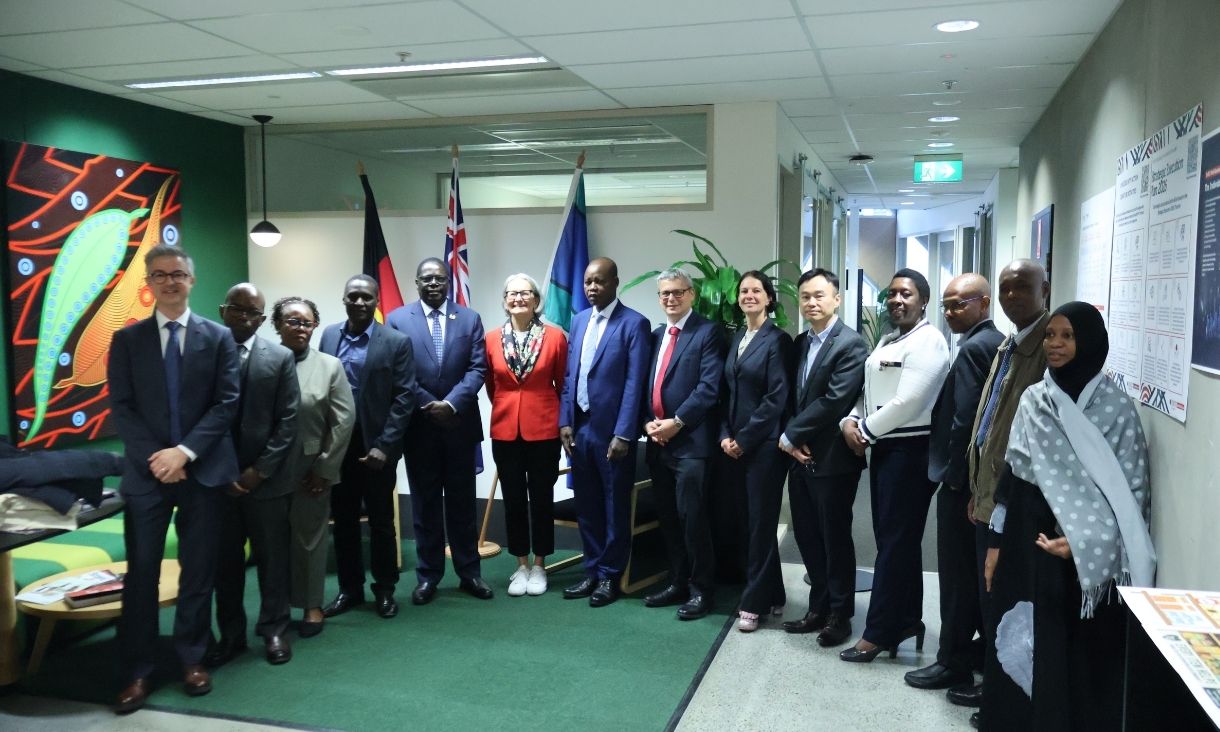
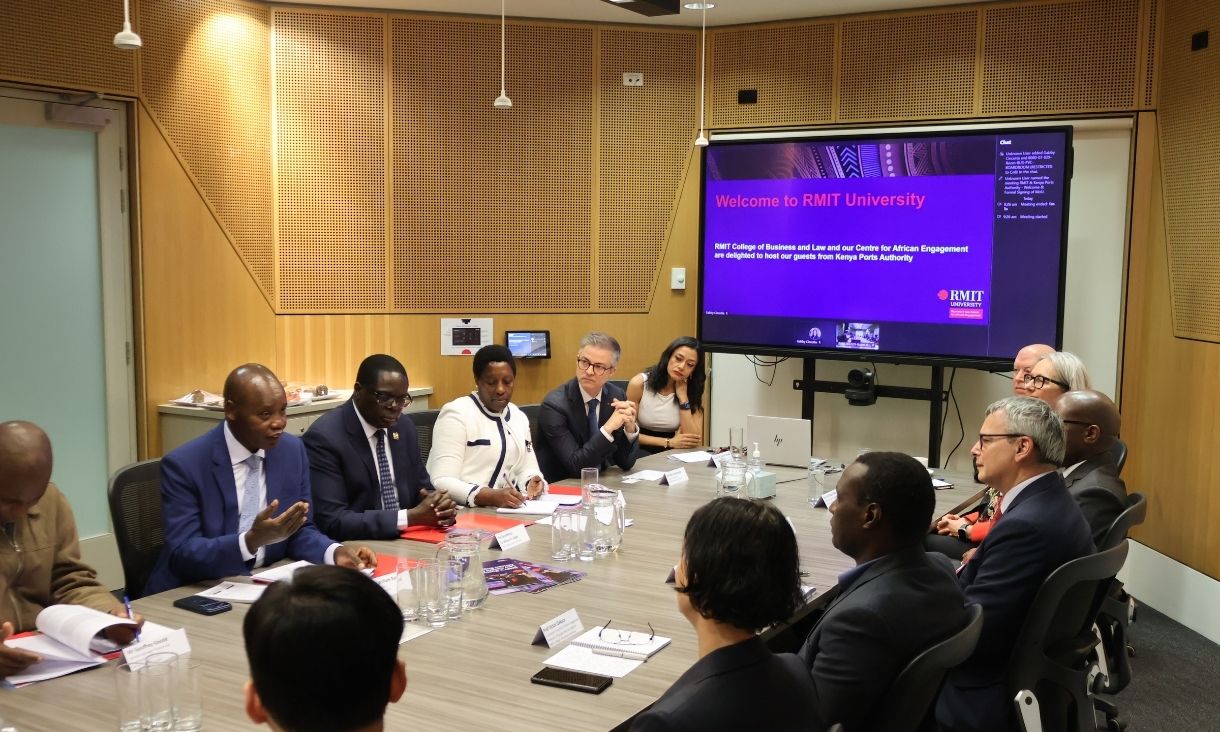
The agreement builds on an established relationship between RMIT’s College of Business and Law and KPA, with a shared focus on advancing research, industry engagement and capability building.
RMIT Deputy Vice-Chancellor, College of Business and Law, Professor Colin Picker, said the MoU reflects a commitment to collaborative impact and global engagement.
“This MoU brings together the strengths of both our institutions – world-class research capabilities, industry-engaged learning, global networks and KPA’s operational leadership in one of East Africa’s most critical trade gateways. I’m confident our shared goals will deliver positive outcomes for both of our institutions and the broader maritime and port industry.”
Captain William Ruto said that the MoU demonstrates KPA’s commitment to partnering with leading global institutions in generating the research and knowledge required to address the complex challenges facing regional trade and transport.
“We share the view that East Africa’s future competitiveness will depend on greater coordination across infrastructure, policy and logistics systems. Through this collaboration with RMIT University, we aim to contribute to evidence-based interventions that address corridor bottlenecks, improve supply chain efficiency, lower the cost of doing business and support sustainable economic growth across the region.”
The signing also coincided with the launch of a new policy paper, Beyond Borders: Building Integrated Transport Corridors for Regional Competitiveness in East Africa, which examines the governance and coordination challenges affecting transport efficiency and trade competitiveness across the region.
Authored by Professor Victor Gekara, Professor Mathews Nkhoma and Professor Prem Chhetri, the report argues that East Africa’s transport challenges cannot be solved by ports, roads, or rail projects alone. Instead, the region needs better coordination between countries, institutions and transport systems.
The report examines how fragmented transport planning and competing national interests continue to slow trade, increase logistics costs, and reduce regional competitiveness. It also highlights the growing pressure on major gateway ports such as Mombasa and Dar es Salaam.