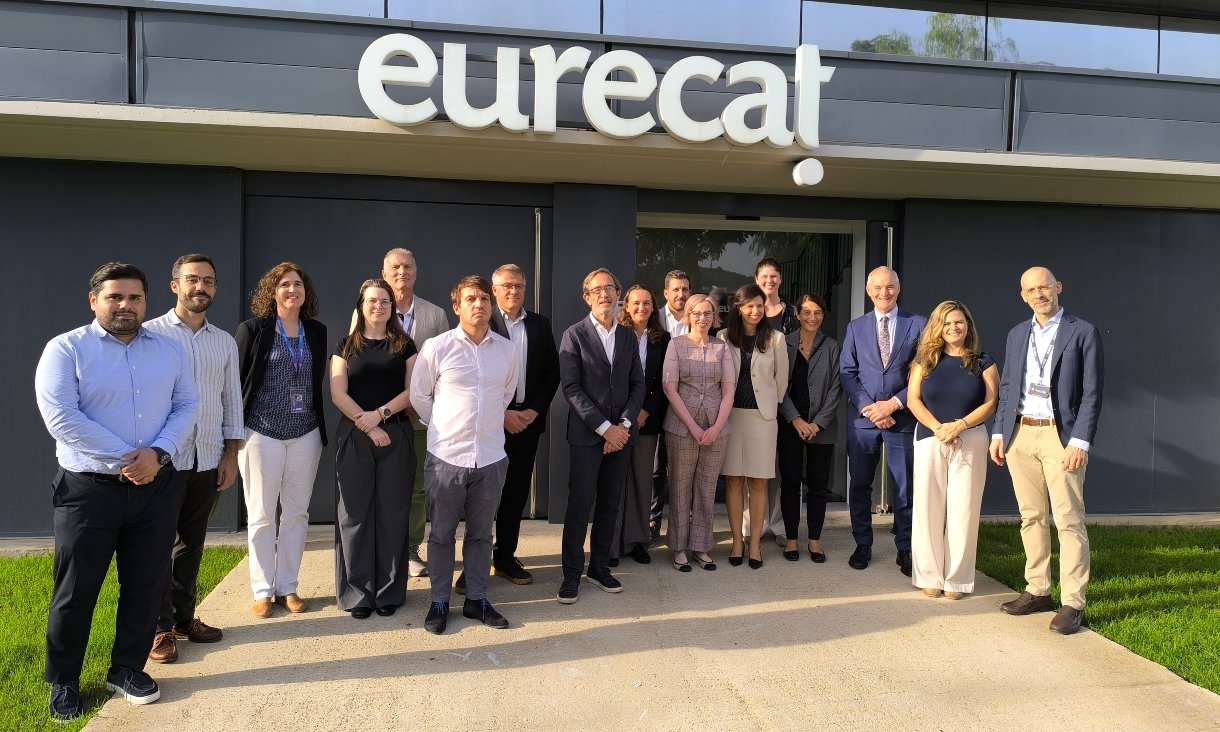
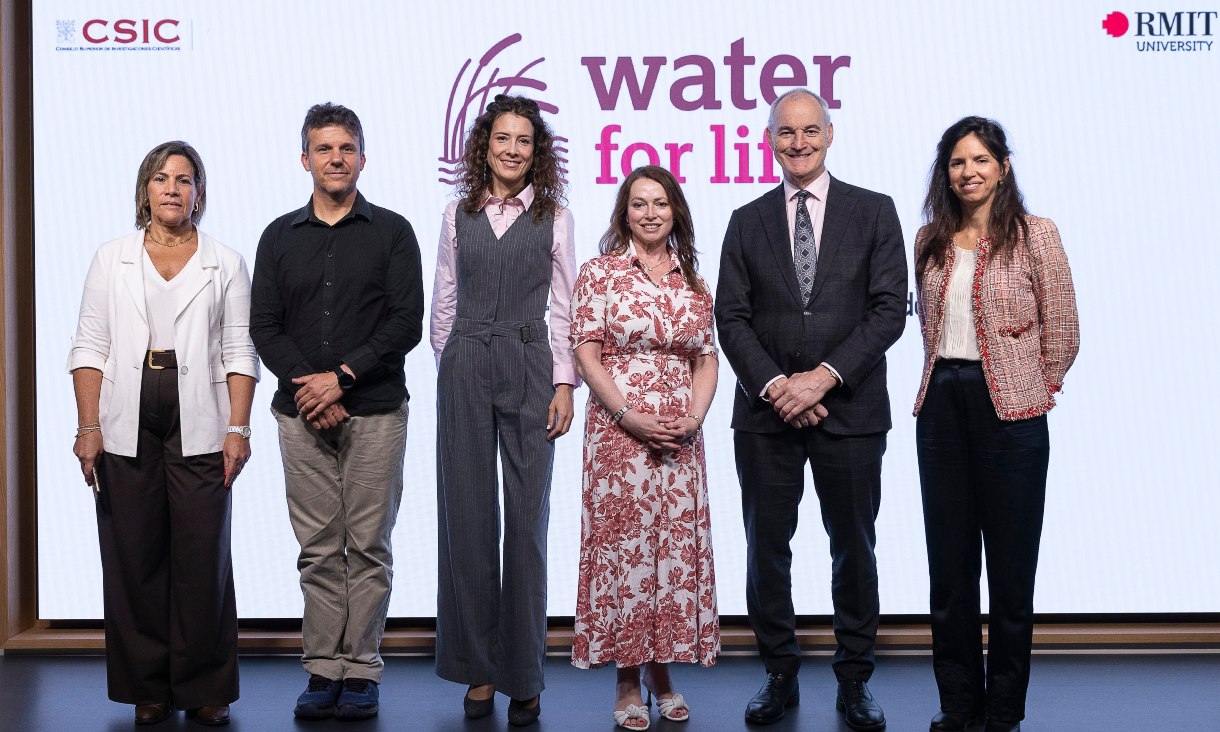
To mark five years of strategic engagement, senior representatives from RMIT, Eurecat, government agencies and industry have gathered in Barcelona to celebrate a partnership that has strengthened research, innovation and industry collaboration between Australia and Catalonia.
In attendance were RMIT Vice-Chancellor and President, Professor Alec Cameron, Vice President Engagement Michelle King, and RMIT Europe CEO, Dr Marta Fernandez; Eurecat representatives, led by Eurecat President, Daniel Altimiras, and the technology centre’s CEO, Xavier López; ACCIÓ CEO, Joan Romero; as well as companies with a presence in Australia and Catalonia interested in strengthening ties between the two regions.
The RMIT-Eurecat partnership brings together researchers, industry partners and innovation stakeholders to develop new capabilities, accelerate technological advancement and strengthen cooperation across continents.
From the lab to the production line
Half a decade of collaboration has resulted in around 15 R&D and innovation projects in fields including metals, water management, chemistry, nutrition, quantum technologies and artificial intelligence.
A key milestone has been the establishment of the Joint Research Unit (JRU) for Digital Metal Manufacturing in 2022, combining the expertise of the RMIT Centre for Additive Manufacturing with Eurecat's Center of Excellence in Advanced Manufacturing, laying the groundwork for cross-sector collaboration with industry partners.
The JRU has already delivered significant outcomes, including a jointly patented technology for monitoring and quality control of metal parts produced through additive manufacturing as well as a collaboration between RMIT, Eurecat and SEAT exploring innovative solutions for producing high-quality replacement parts in the automotive industry.
The patent, a first for RMIT Europe, resulted from a project between RMIT and Eurecat aligned to the REDI (RMIT European Doctoral Innovators) PhD training program, involving Dr Milad Bemani, Research Fellow at RMIT Europe, Professor Andrey Molotnikov, Director of the RMIT Centre for Additive Manufacturing and Professor Raj Das, Deputy Head of Department, Research and Innovation in RMIT's School of Engineering.
It incorporates the ERAM method (electric resistance method for additive manufacturing) — a fast, simple and low-cost way to check the quality of 3D-printed metal parts during production or already in use.
Using this technology, the researchers plan to deliver an automated measurement device for future application in industrial settings.