“To be a fly on the wall of real program work and to listen to a collection of designers with combined decades of global experience is unique and special,” he said.
“Watching a complex tapestry of specialist teams work together really taught me how transport design is a team sport.”
“Especially with university work, you're often working alone. This opportunity really taught me how to collaborate with a broader team and use that to accelerate my project into something I never expected.”
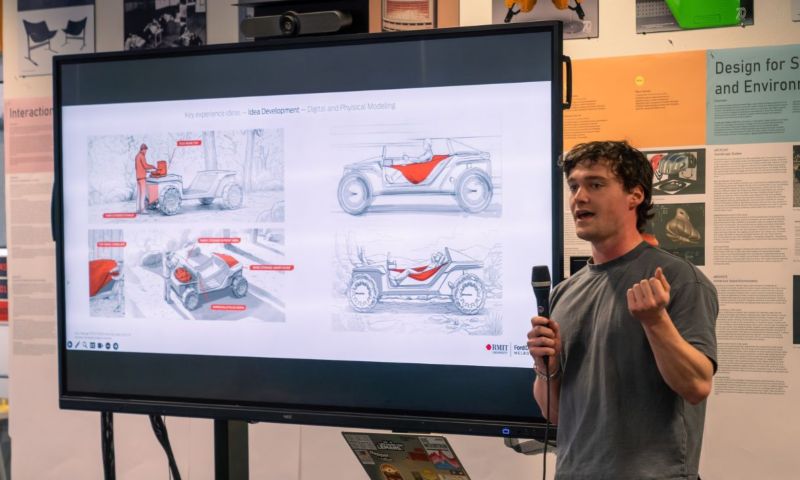
During his time at Ford, Issac was asked to respond to a brief for a 2050 Ford mobility solution. He designed an overland vehicle, inspired by the ideas of solitude and reconnecting with your environment.
“The idea came from a friend who - weighed down by life’s pressures - drove off in his Ute for a weekend, and came home revitalised,” he explained.
“As our lives grow busier and more connected, I believe we need equal time to switch off. Shaped by my own two-week hike through New Zealand, the vehicle is a tool for experiencing nature, built to tread lightly on the places it takes you.”
“It takes its cues from a hiker: tough, rugged footwear below and light technical fabrics above. Layers peel away like a hiker’s gear, and the open cabin asks occupants to take whatever the weather brings, keeping them insulated but never isolated.”
“That feeling of hardship and gratitude, of suddenly appreciating a warm bed and a shower, became the whole emotional core of the vehicle.”
Issac said the opportunity to work and be mentored by peers with experience of a career in his field made his career goals feel real and reachable.
“It’s easy to feel like the professional world is a closed door,” he said.
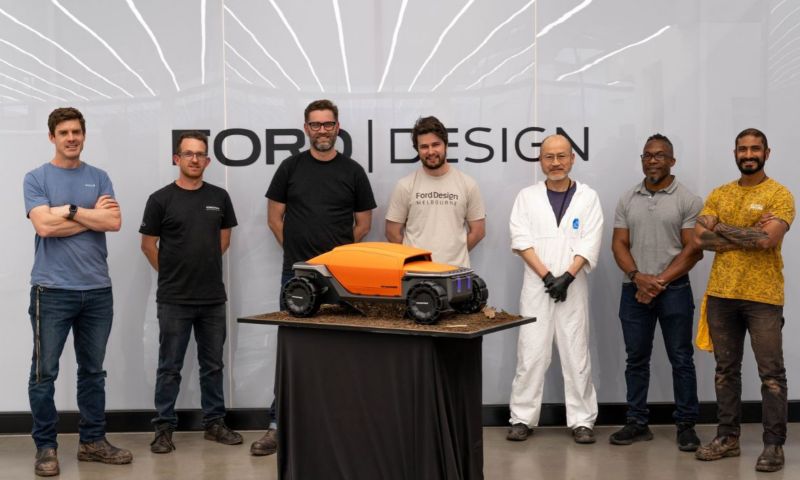
“At Ford I had mentors who were always open to talk, designers with decades of global experience happy to answer my questions, and a fabrication team who put enormous effort into building my model. That kind of investment in a student is incredibly humbling.”
Issac’s desire to work in transportation design was shaped by an in-class industry visit, as well as a global experience, both facilitated through his Industrial Design course at RMIT University.