Blak Design graduate debuts collection at Paypal Melbourne Fashion Festival

Blak Design graduate debuts collection at Paypal Melbourne Fashion Festival

Indigenous artist and RMIT Fashion (Design) student Tarsha Davis extended her visual art practice onto the Beyond Blak Runway at this year’s Paypal Melbourne Fashion Festival alongside fellow RMIT students, academics and alumni.

Tarsha Davis came to fashion through Blak Design, the Indigenous-led mentorship program delivered in partnership with RMIT and the Koorie Heritage Trust. Originally trained in painting and digital art, she began working with textiles as a new medium, using screen printing to translate her imagery into wearable form. 

The program helped her to explore fashion as a medium for storytelling, sustainability and cultural expression, and offered her a hands-on introduction to fashion and a pathway into the RMIT Bachelor of Fashion (Design)

“I’ve always been creative, and Blak Design became an introduction to a new medium. Fashion didn’t feel like a departure from my art, it felt like an extension of it. It was a good opportunity to articulate and crystallise what I was trying to say through my work,” Davis commented.

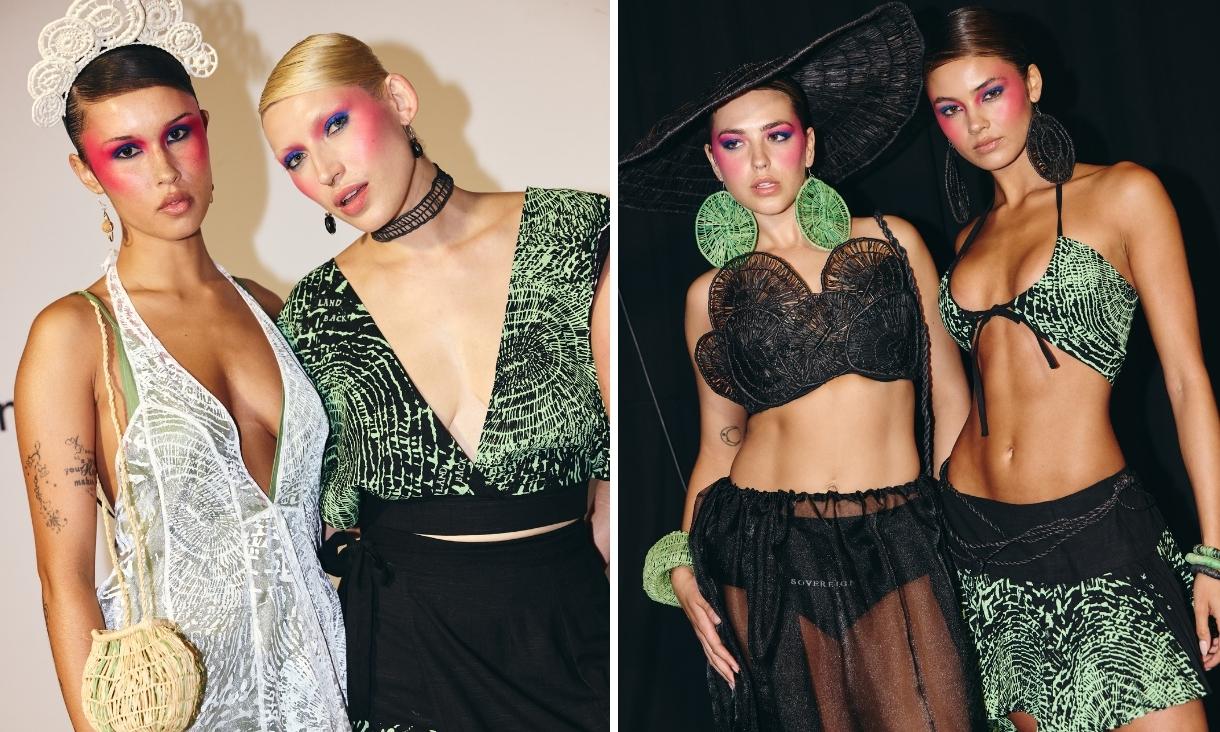
4 models across two different images wear different skirts and dresses that have a weave like pattern in white, black and green. Models wearing designs by Tarsha Davis. Image: Danielle Castano

Her Paypal Melbourne Fashion Festival debut in the Beyond Blak Runway, a premium runway event in the official program, highlights the impact of Indigenous-led learning programs in supporting emerging designers into industry-facing opportunities. 

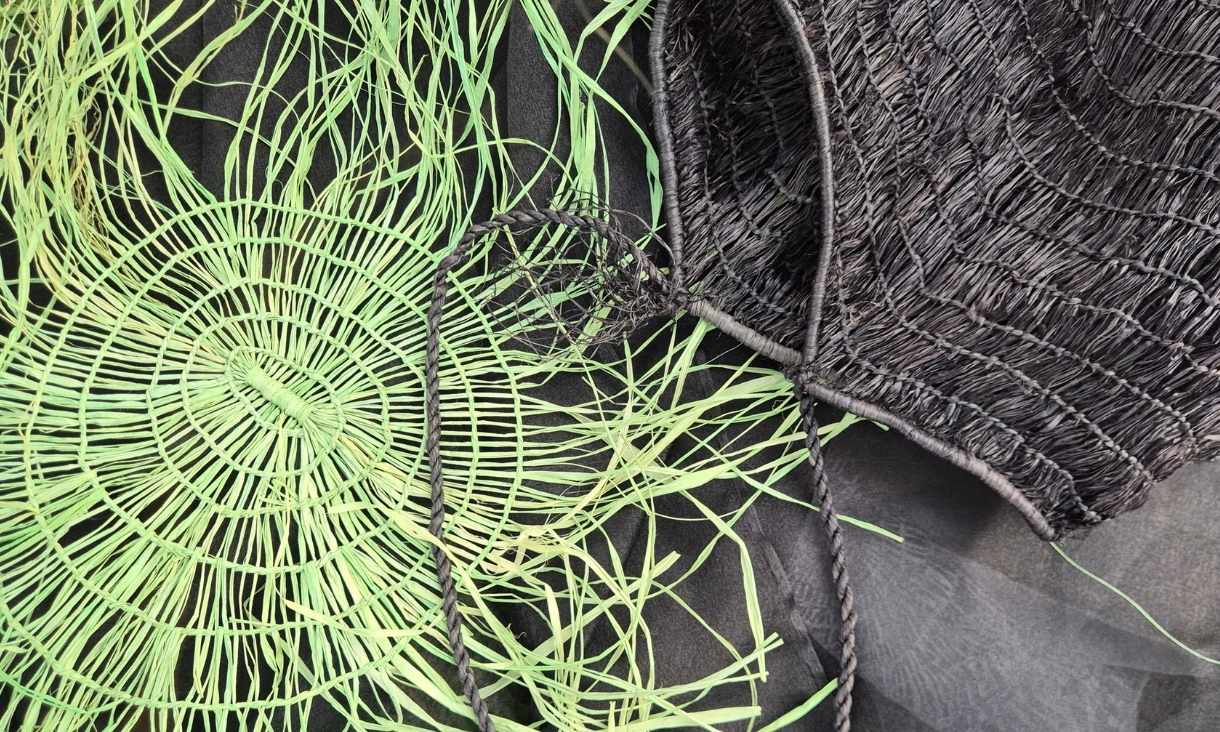
The collection drew on woven forms and basket-based patterns that run through the garments, jewellery and printed textiles. Davis learnt the basket weave with her Aunty on her traditional Country, and that form has become a recurring visual reference throughout the work. 

“It was only a couple of years ago that I learnt how to weave that basket, and I did that with my Aunty on our traditional Country,” she said. 

Tarsha's designs up close depict a lime green woven piece sitting over a black textured fabric Designs by Tarsha Davis

Now in her second year, Davis is continuing to build technical skills and explore fashion to communicate ideas, with text elements embedded into her garments using screen printing. “I started to realise how powerful fashion can actually be, and how much it’s shaped society and politics. I wanted my mob represented. I wanted the work to speak to home and speak to Country. I’m at a place now where I’m not satisfied with work that isn’t addressing what’s happening,” she said.  

As a mature-aged Aboriginal student, Davis initially found commencing her degree daunting, but she encouraged fellow Indigenous students not be self-limiting and seek out Ngarara Willim Centre for support.  

RMIT Fashion Community Shines

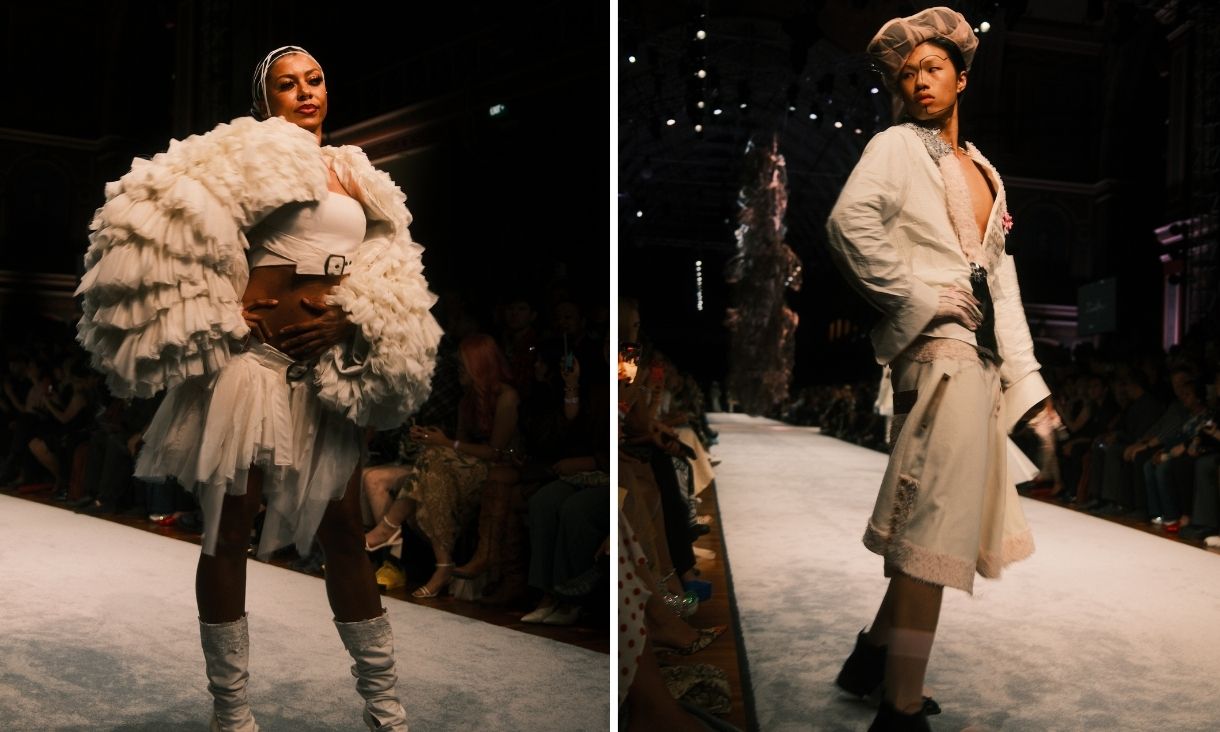
Three of Davis’ fellow Fashion (Design) students, Zhenzhen Hong, Zain Bleed and Jessica Pangestu, were selected for the Festival’s prestigious National Graduate Showcase

two images of the grad runway depict models wearing white frilly outfits and posing under lights on a light blue runway. Zain Bleed and Zhenzhen Hong’s designs on the runway. Image: Seamus Daniel

Professor Alice Payne, Dean of RMIT’s School of Fashion & Textiles commented: “To be counted among the top 12 graduate designers selected for the National Graduate Showcase is a remarkable achievement and one that speaks volumes about the calibre of talent emerging from RMIT Fashion & Textiles. These three students were hand-picked by a highly esteemed industry judging panel from a nationwide field, and seeing their designs on that runway is a moment of enormous pride for our School.” 

Two RMIT Fashion (Design) academics, Peter Boyd and Denise Sprynskyj, also debuted their collection for S!X, in collaboration with P.A.M, as part of Joywear Runway - a bold celebration of colour, self-expression, maximalism and the mood-lifting power of fashion to celebrate the 30th anniversary of the festival.   

A number of RMIT academics were involved in the Festival’s Independent Programme, including:

  • ‘Echoes in the Dome’ - an immersive salon show curated by the RMIT Revive and Thrive Cohort in collaboration with the RMIT RUSU Fashion Society. One highlight, The Sort for Good project, showcased the creative transformation of otherwise unwearable clothing collected through Australia’s first dual-stream pilot.  
  • ‘This is not a shoe’ - an exhibit and workshop by Dr Alexandra Sherlock and Pennie Jagiello, examined the creative potential of transforming beloved footwear.  
  • Textile Terrains – a transdisciplinary collaboration between landscape architecture and fashion disciplines, examined the impact of international trade in textile waste. 
  • Celebrating Indonesian Design runway at The Capitol - a partnership between RMIT and the Australian Embassy Indonesia celebrated South-East Asian creative excellence. 
  • A workshop the art of dart manipulation from 1940s - took inspiration from the Lorna Clarke Collection - a historically significant archive held by RMIT Design Archives. 
  • A panel, ‘Labels: Fashion and Identity’, featuring Associate Professor Ricarda Bigolin with RMIT alumni Shauna Toohey (PAM) and Jackie Wu (Wackie Ju)).

“PayPal Melbourne Fashion Festival is one of the most important stages in the Australian fashion calendar, and we are incredibly proud to see our RMIT Fashion & Textiles community, including our students, staff, and alumni, represented across it. In its 30th year, the festival embodies RMIT’s approach to fashion: as a living, breathing practice that connects culture, craft and community,” said Payne.   

Learn more about studying Fashion & Textiles at RMIT.  

Ngarara Willim Centre provides support to all Aboriginal and Torres Strait Islander students studying at RMIT, as well as those wishing to apply. Learn more.

Share

  • Indigenous
  • Alumni
  • fashion
  • Student experience
  • Arts and culture
  • Indigenous Australia
  • DSC

Related News

aboriginal flag float-start torres strait flag float-start

Acknowledgement of Country

RMIT University acknowledges the people of the Woi wurrung and Boon wurrung language groups of the eastern Kulin Nation on whose unceded lands we conduct the business of the University. RMIT University respectfully acknowledges their Ancestors and Elders, past and present. RMIT also acknowledges the Traditional Custodians and their Ancestors of the lands and waters across Australia where we conduct our business - Artwork 'Sentient' by Hollie Johnson, Gunaikurnai and Monero Ngarigo.

More information