Sacred Heart Advocacy Forum hears how society can make our communities safer for people without a home

Sacred Heart Advocacy Forum hears how society can make our communities safer for people without a home

The second annual Sacred Heart Mission Advocacy Forum, held in partnership with RMIT at the University’s Kaleide Theatre, explored the links between community safety and homelessness, and called for changes in policies and attitudes to make our communities safer for people without a home.

At the forum, the audience heard from a range of experts and people with lived experience of homelessness, exploring the link between community safety and homelessness. 

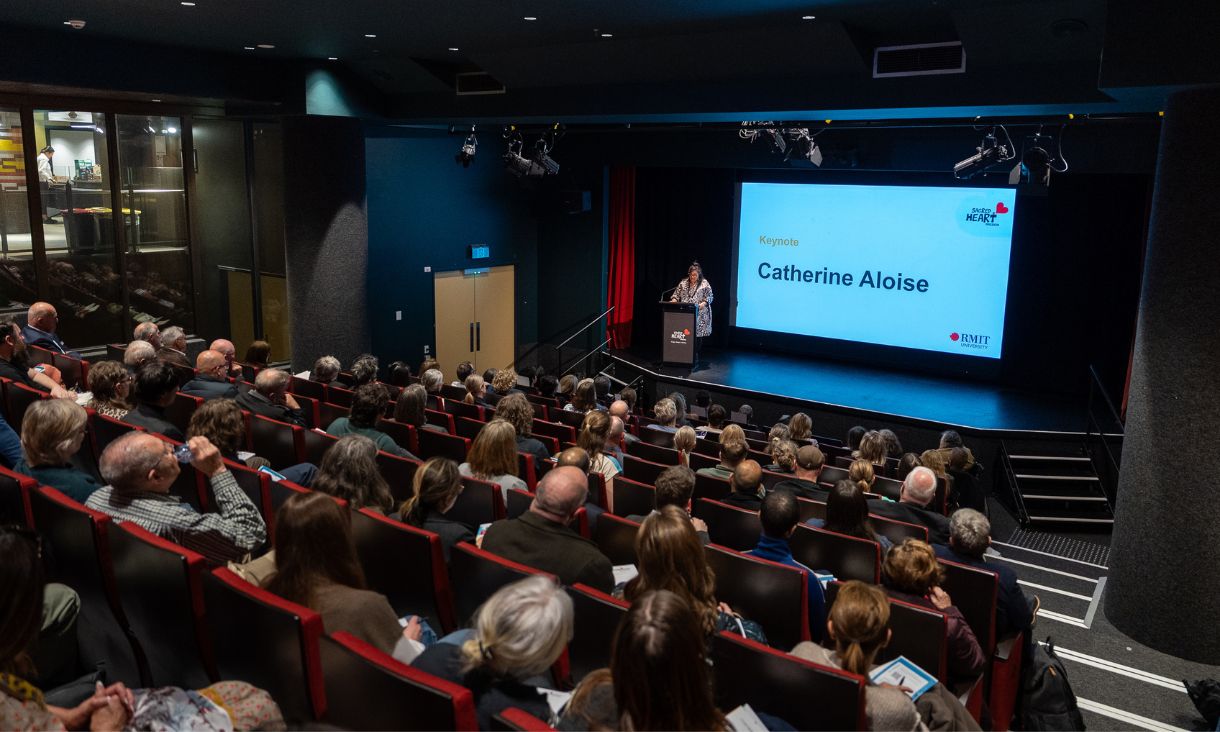
The forum’s keynote address was delivered by Catherine Aloise, a founding member of Sacred Heart Mission’s Executive Advisory Group on Lived Experience (EAGLE), a long-time visitor to the Women’s House, and a regular volunteer with Southside Justice and St Kilda Gatehouse. 

She gave a deeply personal account of being homeless, explaining how measures taken in the name of ‘community safety’ can make life far more precarious for people without a home. 

A person speaks on a stage in front of a large audience The keynote address was delivered by Catherine Aloise, who spoke about her experience of homelessness. Credit: Fancy Films

“One day the council removed all my belongings,” she said. 

“It took me a week to find out where they’d put them. When I got there, I was told they’d already been destroyed.” 

“I want you to understand what I lost that day. It wasn’t junk, it was all my worldly possessions, including my identification.” 

“It was bedding that charities had given me. It was clothes that kept me warm at night. It was my shoes. It was the only photos of my children that I still had.” 

Lived experience advocate Chris Reid also shared his insights on trauma, the impacts of unsafe housing and the value of ongoing support. 

“The period immediately after someone is housed can actually be one of the most vulnerable times in their recovery,” he explained.  

“Loneliness doesn’t disappear overnight. Fear doesn’t disappear overnight. Trauma doesn’t disappear overnight.” 

“Support needs to remain available until people have genuinely settled into their communities and can finally experience something many of us take for granted: the peace of climbing into bed at night knowing you’re safe.”

Creating long-term solutions through a multi-faceted approach

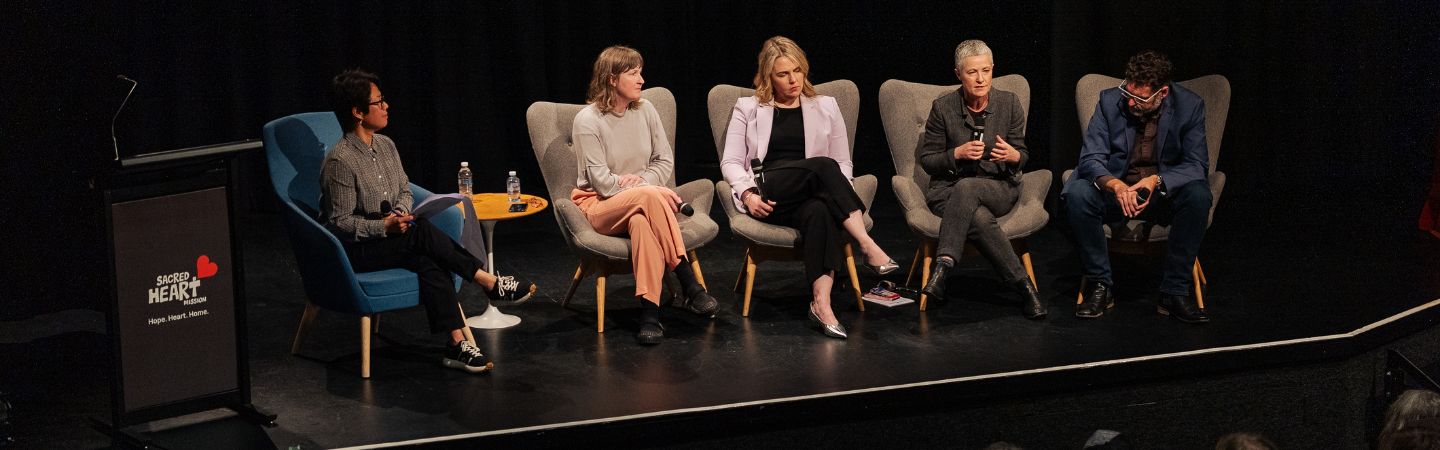
At the forum, Sacred Heart Mission CEO Hang Vo chaired a panel discussion on how to make our communities safer and more inclusive. Among the panellists was Dr Kathryn Daley, Assistant Associate Dean of Social Research and Policy Studies at RMIT University. 

She explained that data insights on homelessness, such as how long people endured homelessness before they presented to a service for help, make it clear to governments where assistance is most needed and why it is essential.  

“Homelessness is a multi-factored social issue, but it is not especially complex to solve,” she said. 

“It requires investment and whole-of-society responses. Data collection is important, so too is lived experience, practice wisdom and research translation.” 

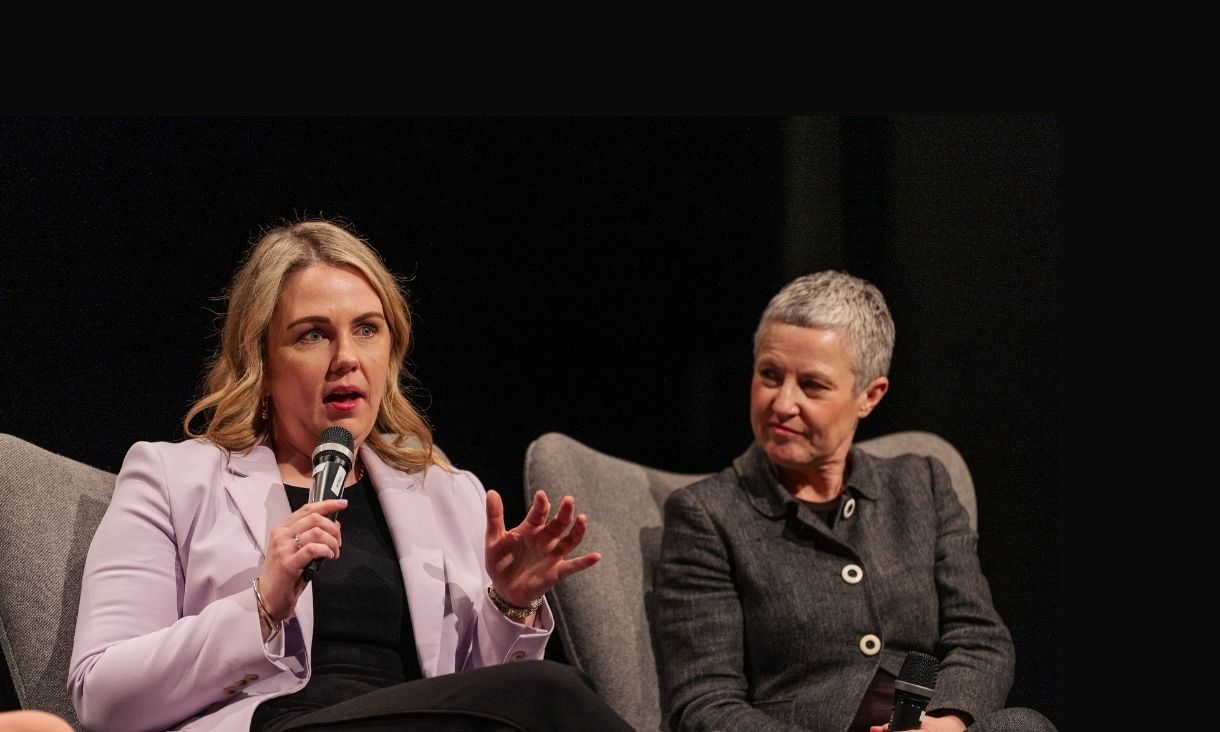
Two people speak on a panel with a micDr Kathryn Daley was a member of a panel that discussed policy solutions and changes in approach to homelessness. Credit: Fancy Films

Daley explained that ‘housing first’ – an approach to homelessness that recognises that the contributing factors to becoming homeless can’t be solved until a person first has housing – was an integral part of society’s collective response to homelessness but was not the entire solution. 

“People do not become homeless without a reason,” she said. 

“Homelessness is inextricably linked to poverty, family breakdown, educational disadvantage, trauma, mental health issues, substance abuse, and crime.” 

“Addressing homelessness requires housing and service system response. Preventing homelessness requires supporting families, children and young people at the earliest signs of hardship.” 

Reid’s address focussed on safety after a person is housed, with an evocative description of why many people need ongoing support to heal from the trauma of their past experiences.  

“People often say that homelessness ends when someone receives a roof over their head,” he said.  

“But for many of us with lived experience, that’s not the end of the story. It’s the beginning of an entirely new chapter.” 

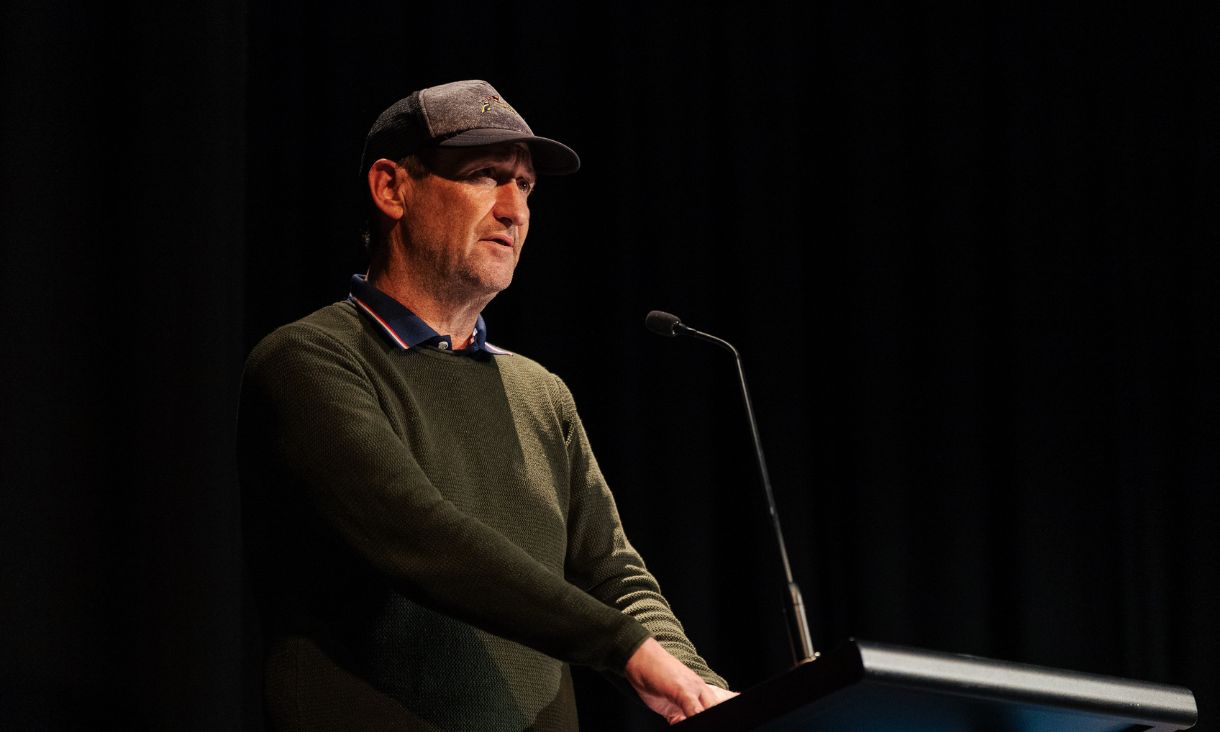
A person speaks at a podium, with a spotlight shining on them dramaticallyLived experience advocate Chris Reid explained many people experiencing homelessness need ongoing support even after finding a home. Credit: Fancy Films

“A house alone doesn’t erase trauma. It doesn’t rebuild confidence. It doesn’t restore trust. And it doesn’t automatically make someone feel safe. If trauma isn’t considered when housing people, we risk creating another set of challenges.” 

“We often overlook invisible disabilities when it comes to finding long-term solutions to homelessness: PTSD, complex trauma, anxiety, depression and ADHD.” 

Empathetic policymaking and a care-focused approach

Aloise called for places for homeless people to store their belongings, and for a more care-focused approach to the way police interact with the homeless community.  

“Homeless people are not bad people,” she said.  

“There should be enough police to keep people safe, but the police could be more lenient, caring and understanding.” 

“There should be lockers where people can store their belongings safely, so they don’t get stolen or taken away.” 

Reid said that housing policies that aimed to create more permanent positive outcomes for the homeless community needed to consider more than the locations of vacant property in making decisions on where and how to house people experiencing homelessness. 

“Good housing isn’t simply about filling vacancies,” he explained. “It’s about giving people the greatest possible chance to succeed.” 

“Instead of only asking, ‘Is there a vacant property?’, perhaps we should also ask things like: is this the safest available property for this individual? What risks already exist here? What protective factors are nearby? What supports can we put in place before problems occur?” 

Aloise encouraged the community to empathise with the homeless community, and to reach out and help where they can. 

“Try to put yourself in their shoes and understand what they’re going through,” she said. 

“We live in a digital world, where image and appearance have become what we think is important. But I encourage you to get back to reality and remember what really matters: human beings and human rights.” 

“Housing is a human right.” 

Dr. Kathryn Daley has released a Homelessness White Paper following the forum outlining research that is working towards ending homelessness, which you can view on the RMIT Social Equity Research Centre webpage.


Story: Finn Devlin

Share

  • DSC Research
  • Industry
  • Announcements
  • Arts and culture
  • Society
  • DSC
  • Social services

Related News

aboriginal flag float-starttorres strait flag float-start

Acknowledgement of Country

RMIT University acknowledges the people of the Woi wurrung and Boon wurrung language groups of the eastern Kulin Nation on whose unceded lands we conduct the business of the University. RMIT University respectfully acknowledges their Ancestors and Elders, past and present. RMIT also acknowledges the Traditional Custodians and their Ancestors of the lands and waters across Australia where we conduct our business - Artwork 'Sentient' by Hollie Johnson, Gunaikurnai and Monero Ngarigo.

More information