Research in the Department of Civil and Infrastructure Engineering focuses on developing intelligent, sustainable, and resilient infrastructure systems that enhance the performance, safety, and longevity of civil infrastructure throughout its lifecycle. Our expertise integrates advanced materials, smart technologies, digital solutions, and systems engineering approaches to address emerging societal, environmental, and industrial challenges.
Our research spans a broad range of applications, including buildings, bridges, transport systems, roads, railways, airports, underground utilities, water and geotechnical infrastructure, energy systems, and infrastructure exposed to natural and man-made hazards. Through the integration of digital technologies, advanced modelling, smart sensing, automation, and next-generation materials, we aim to create infrastructure that is adaptive, efficient, and future-ready.
Sustainability and resilience are central to our research activities. Our work focuses on net zero and whole-of-life infrastructure design, smart construction and infrastructure renewal, resilient transport systems, sustainable geo and water infrastructure, hazard mitigation, and advanced smart materials for high-performance applications. We also investigate innovative approaches such as digital twins, artificial intelligence, robotics, additive manufacturing, and circular economy strategies to improve infrastructure productivity, durability, and environmental performance.
This expertise has led to the establishment of the Resilient Infrastructure Hub (RIH), which brings together multidisciplinary capabilities across engineering, materials science, digital technologies, and infrastructure systems. The Hub aims to foster long-term and sustainable partnerships with industry by enhancing workforce capability, supporting industry transformation, translating research into practical solutions, and delivering measurable economic, environmental, and societal impacts. Through strong national and international collaborations, the Hub contributes to enhanced urban living, infrastructure resilience, and the development of next-generation infrastructure solutions for a rapidly changing world.
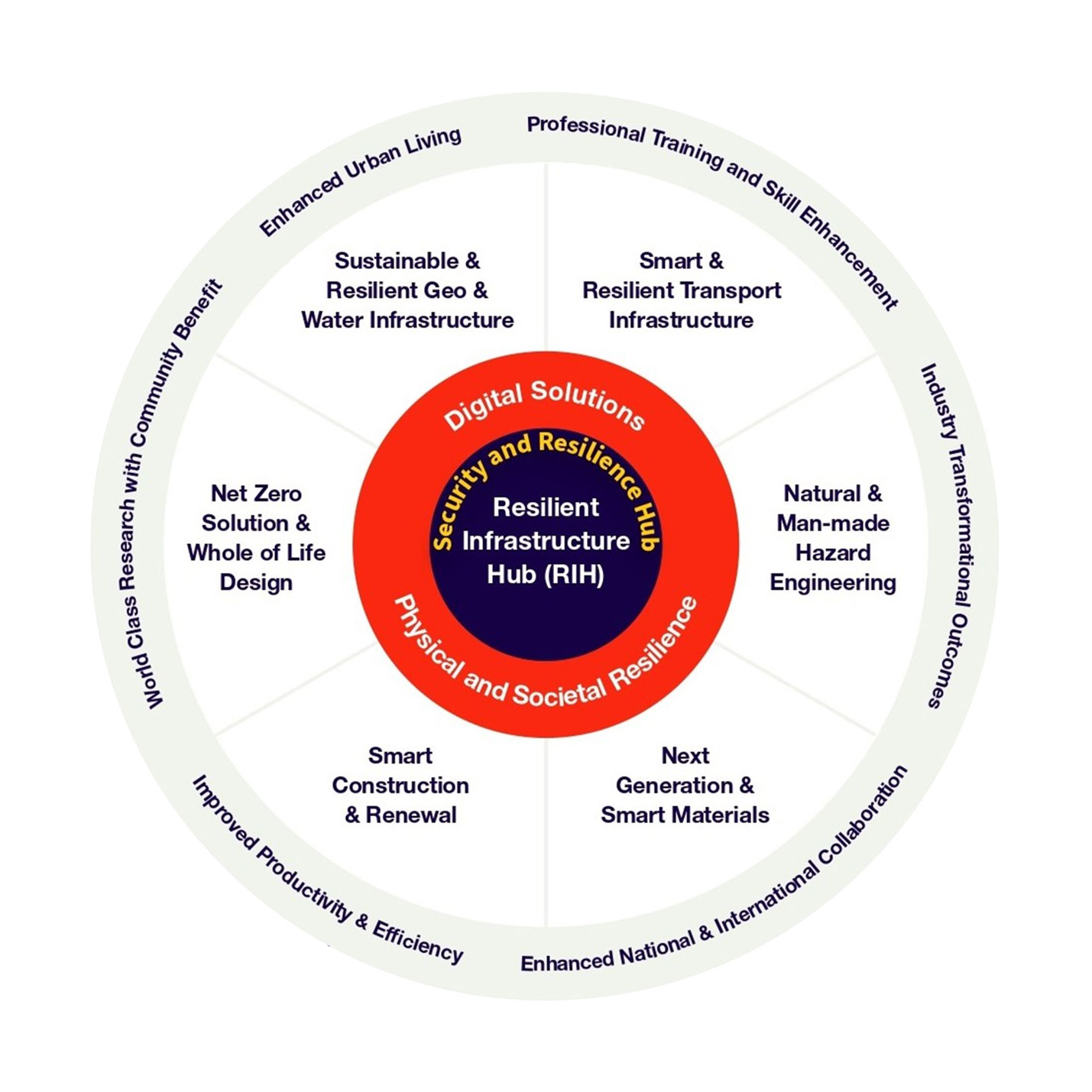
Our research in Sustainable & Resilient Geo & Water Infrastructure focuses on developing environmentally sustainable and climate-resilient geotechnical and water systems. We investigate advanced geomechanics, soil improvement technologies, wastewater treatment processes, and sustainable foundation solutions to enhance infrastructure durability, environmental protection, and resource efficiency. Our work supports resilient urban development and sustainable management of critical geo and water infrastructure systems.
Our capabilities include:
Our research in Smart & Resilient Transport Infrastructure aims to improve the safety, efficiency, sustainability, and resilience of transport systems and infrastructure networks. We develop innovative transportation materials, intelligent transport systems, infrastructure monitoring approaches, and advanced asset management strategies to support next-generation mobility solutions and resilient transport infrastructure capable of responding to future urban and environmental challenges.
Our capabilities include:
Our research in Natural & Man-made Hazard Engineering focuses on improving infrastructure resilience and safety under extreme events and hazardous conditions. We investigate fire dynamics, structural performance under extreme loading, hazard mitigation technologies, and advanced computational simulations to develop safer and more robust infrastructure systems. Through experimental testing, modelling, and innovative engineering solutions, we support disaster resilience, risk reduction, and public safety.
Our capabilities include:
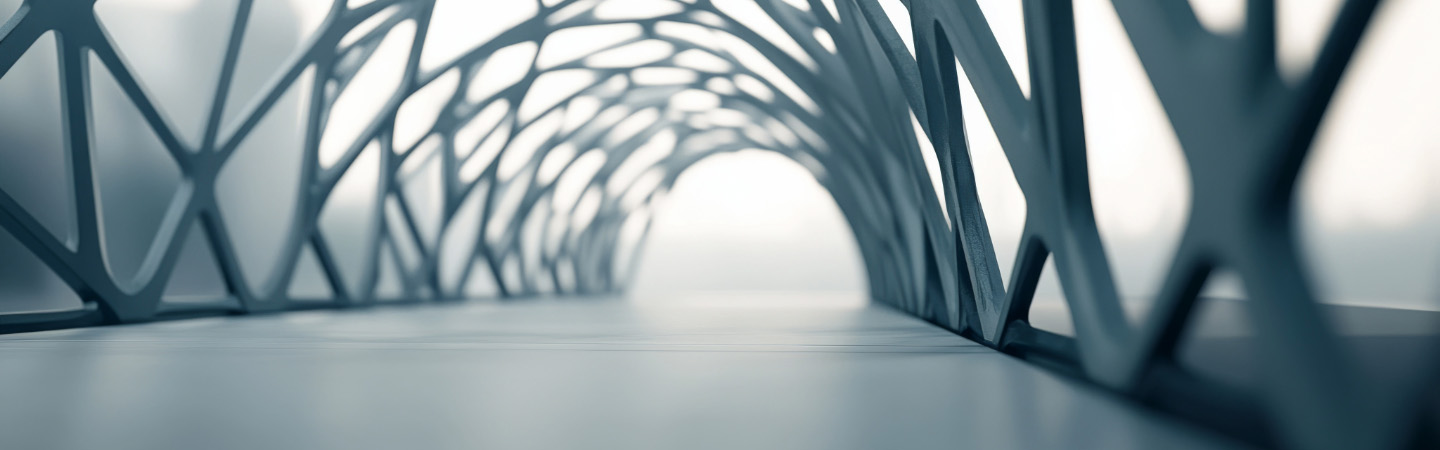
Our research in Next Generation & Smart Materials focuses on developing advanced, multifunctional, and sustainable materials for future infrastructure applications. We investigate bio-inspired materials, metamaterials, nano-structures, smart construction materials, and topology-optimised structural systems to enhance mechanical performance, durability, sustainability, and resilience. By integrating advanced material science, computational design, and innovative manufacturing techniques, we aim to create next-generation materials and structures for high-performance infrastructure applications.
Our capabilities include:
Our research in Smart Construction & Renewal advances innovative, automated, and sustainable construction technologies to improve productivity, quality, safety, and infrastructure renewal. We focus on digital construction technologies, robotics, modular construction, and advanced manufacturing approaches to modernise construction practices and support efficient infrastructure delivery and maintenance. Our work contributes to smarter, faster, and more sustainable construction systems for future cities and infrastructure networks.
Our capabilities include:
Our research in Net Zero Solutions & Whole-of-Life Design is dedicated to developing carbon-neutral and environmentally sustainable infrastructure systems. We focus on carbon reduction technologies, circular economy strategies, life-cycle assessment, and sustainable resource management to minimise environmental impacts across the entire infrastructure lifecycle. By integrating sustainability into design, construction, operation, and end-of-life management, our work supports the global transition toward net zero infrastructure and resilient built environments.
Our capabilities include:
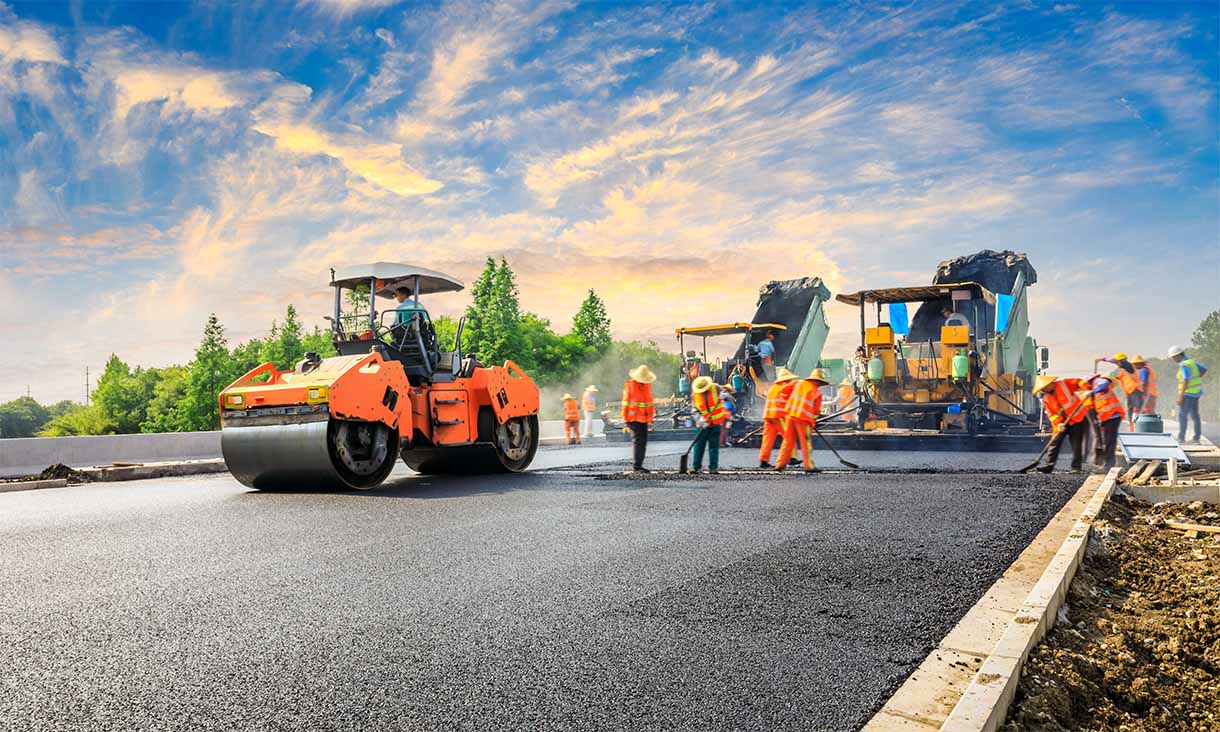
Our research in smart transport infrastructure focuses on developing sustainable and efficient transportation systems. We explore Transport Network Design and Vulnerability Analysis to enhance network resilience and optimise designs for future growth. Infrastructure Management and Land Use integrates land use planning with transport infrastructure and supports smart city initiatives. Driving Behaviour studies driver interactions with Intelligent Transport Systems (ITS) and autonomous vehicles. Freight Management Strategies aim to optimize logistics and promote sustainable freight solutions. In Traffic Operations and ITS, we improve traffic flow and safety through advanced signal control and Vehicle-to-Everything (V2X) communication. Pavement Technology research includes innovative materials and smart pavement systems, while Sustainable Pavement focuses on eco-friendly materials and life cycle assessments to promote sustainability. These efforts collectively aim to create a resilient and efficient transport infrastructure for the future.

Professor

Head of Department Civil & Infrastructure Engineering

Professor
Professor
Lecturer
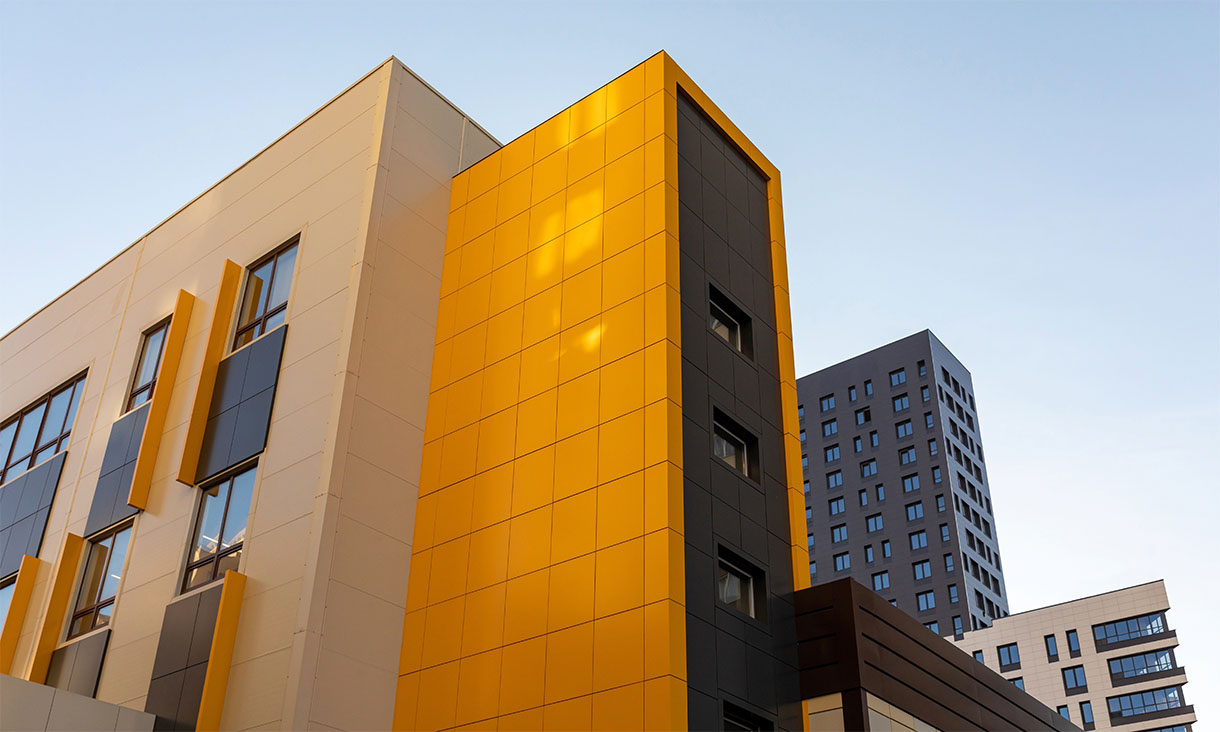
Our research in Fire and Façade Engineering is dedicated to enhancing safety and sustainability in building design and construction. Fire Dynamics and Fire Protection Engineering examines the behaviour of fire and develops advanced protection systems. Fire Safety Design Compliant to Codes and Standards ensures that building designs meet the latest safety regulations. CFD Modelling uses computational fluid dynamics to simulate fire scenarios and improve safety measures. We also investigate the Fire Performance of Materials and the Effect of Flame Retardants to enhance material resilience. High Performance Concrete and Nanotechnology and Sustainable Materials in Construction focus on developing innovative, eco-friendly materials for better building performance. Nanocomposites research aims to create materials with superior fire resistance and mechanical properties. Finally, High Performance Building Façade Systems are designed to provide both safety and energy efficiency. These research areas collectively aim to advance fire safety and sustainable building practices.
Deputy Head of Department, Civil & Infrastructure (R&I)

Lecturer
Dean, School of Engineering
Head of Department Civil & Infrastructure Engineering

Deputy Head of Department, Civil & Infrastructure (L&T)

Vice Chancellor’s Senior Research Fellow

Lecturer
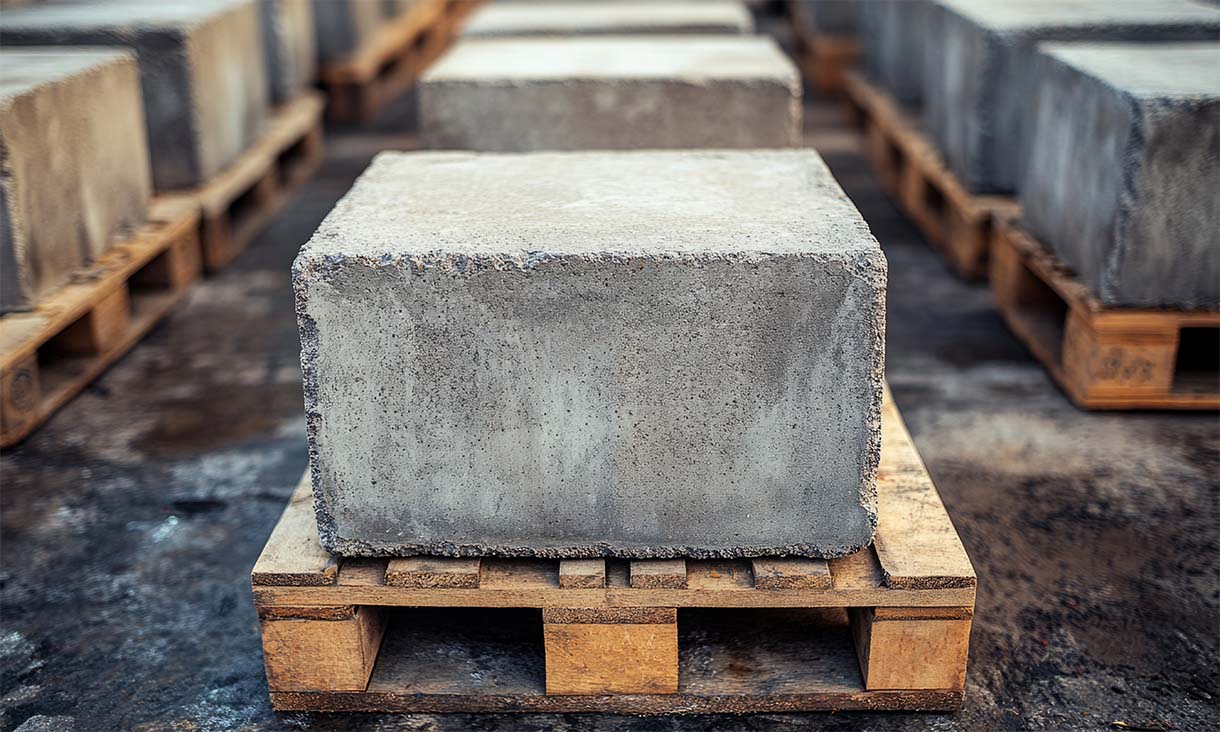
Our research in Next Generation Construction Materials aims to innovate and enhance the sustainability and performance of construction materials and structures. Concrete research focuses on developing geopolymer concrete and green concrete using eco-friendly cementitious materials. Soils and Pipelines study includes improving soil stabilization and pipeline durability. Steel research aims to enhance the strength and corrosion resistance of structural steel. In Asphalt, we explore polymer-modified asphalt, recycled asphalt, and other bituminous materials for better performance and sustainability. Polymer-Wood Composites are developed from waste materials to create sustainable construction solutions. The use of Waste Water Sludge in Construction Materials aims to recycle waste while improving material properties.
Our work on Innovative Structures includes developing new structural forms and topology optimization for better efficiency and performance. Nano-Structures and Materials research focuses on creating materials with superior properties at the nanoscale. Metamaterials and Bio-Inspired Structures aim to mimic natural systems for enhanced structural performance. Structural Design for Dynamic Loading addresses challenges in earthquake and wind engineering, ensuring the resilience of large-scale structures. These research areas collectively aim to advance construction materials and structural engineering for a sustainable and resilient built environment.
Associate DVC, R&I
Professor
Head of Department Civil & Infrastructure Engineering
Dean, School of Engineering
Professor

Professor
Professor
Lecturer

Lecturer

Lecturer, Civil Engineering
Associate Professor
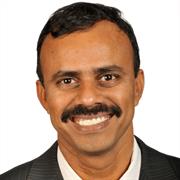
Academic Lead for Engineering International Teaching & Learning
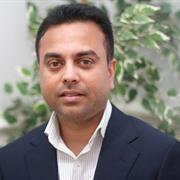
Senior Lecturer

Associate Professor
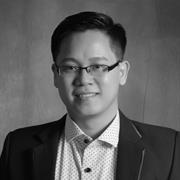
Academic Lead for Engineering International Research and Innovation
Associate Professor
Lecturer
Lecturer, Civil and Infrastructure Engineering
Associate Professor
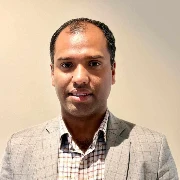
Associate Professor

Lecturer
Associate Professor
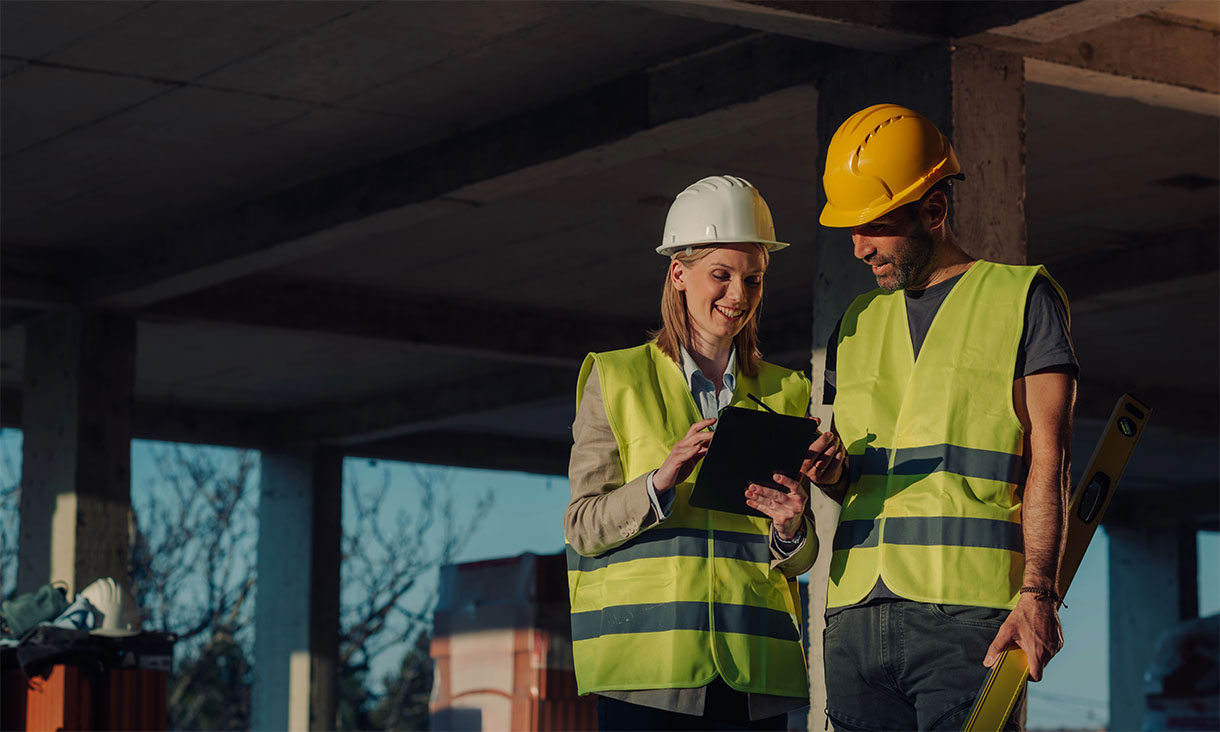
The Whole of Life Cycle Engineering research at RMIT is dedicated to transforming the way civil infrastructure is designed, built, and maintained, ensuring sustainability and carbon neutrality from inception to end-of-life. Our approach integrates advanced methodological frameworks, digital technologies, and sustainable material innovations to assess and optimize the entire life cycle of infrastructure projects.
With infrastructure contributing significantly to global carbon emissions, our research focuses on carbon-neutral design principles, enabling engineers to predict, measure, and mitigate environmental impact before construction begins. We work towards developing uniform sustainability indices aligned with industry standards, allowing for a systematic evaluation of carbon footprints, material efficiency, and structural longevity.
Our commitment extends beyond research—through industry collaborations, workforce training, and real-world implementation, we aim to equip engineers with the expertise needed to drive a more resilient, low-carbon built environment. By bridging the gap between academia and industry, RMIT is at the forefront of shaping the future of sustainable infrastructure, ensuring that every phase of civil engineering contributes to a more sustainable and climate-resilient world.
Professor
Dean, School of Engineering
Associate DVC, R&I
Professor
Senior Lecturer
Academic Lead for Engineering International Research and Innovation
Senior Lecturer
Associate Professor
Senior Lecturer
Professor
Senior Lecturer HK

Associate Professor
Lecturer
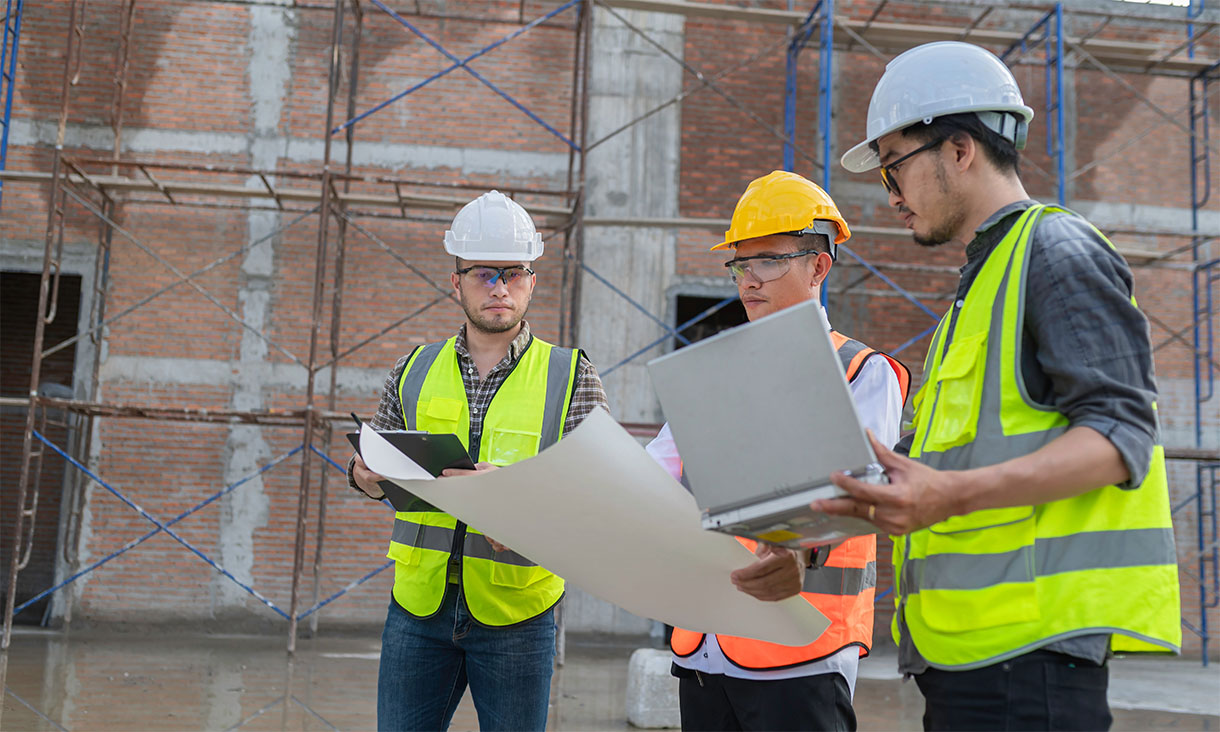
Our research in Digital Construction is focused on advancing sustainable and efficient building practices. We prioritize Lower Carbon Construction to minimize environmental impact and promote Green Buildings and Benchmarking of Green Construction Practices. Life-Cycle Analysis is used to assess the environmental impacts of construction processes and materials over their entire life span. Noise Management in Urban Environments addresses the challenge of urban noise pollution. Environmental Impact Assessment evaluates the potential environmental effects of construction projects.
We utilize BIM Application for Sustainable Construction to enhance project efficiency and sustainability. Prefabrication methods are explored to reduce waste and improve construction speed. Innovative Procurement Methods such as Public-Private Partnerships (PPP) and relational contracting are studied to foster collaboration and efficiency. Finally, Construction and Demolition Waste Management aims to reduce waste and promote recycling in the construction industry. These research areas collectively aim to transform construction practices towards greater sustainability and efficiency through digital innovation.
Dean, School of Engineering
Associate Professor
Associate Professor
Senior Lecturer
Lecturer
Lecturer, Civil and Infrastructure Engineering
Senior Lecturer HK
Associate Professor
Academic Lead for Engineering International Teaching & Learning
Academic Lead for Engineering International Research and Innovation
Associate Professor
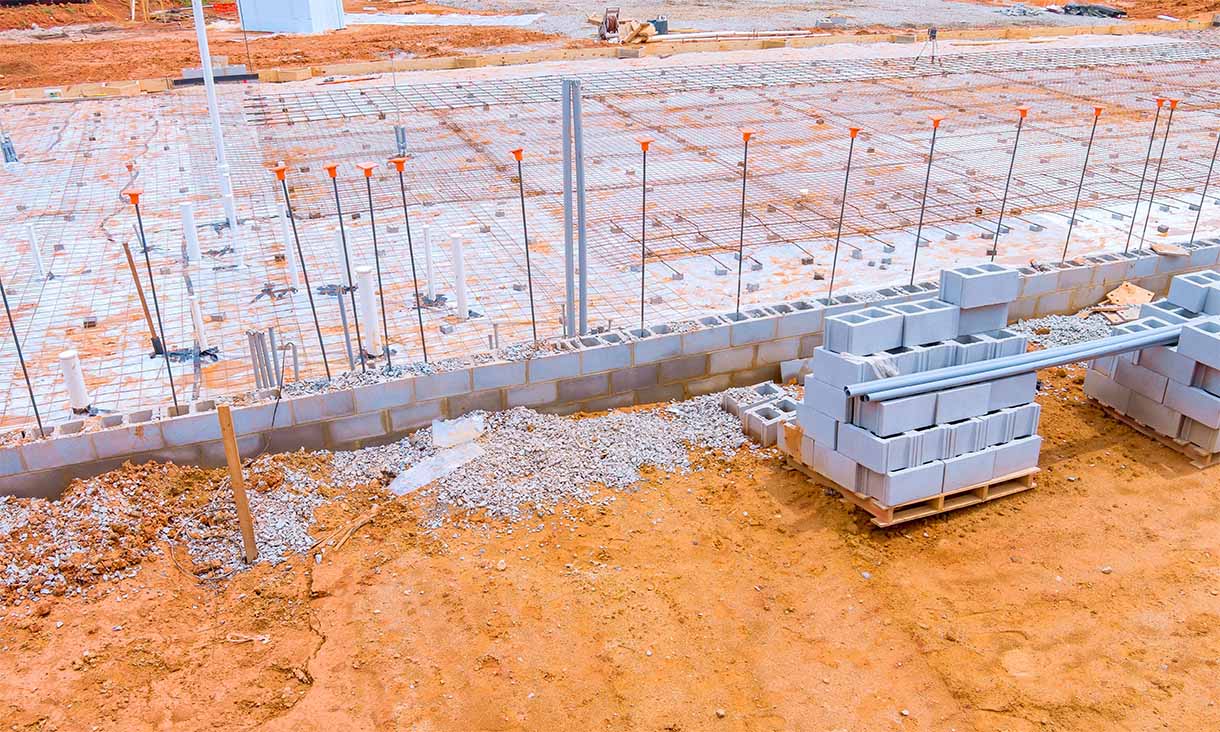
Our research in Geo and Water Infrastructure aims to advance the understanding and development of sustainable solutions for soil and water challenges. We study Expansive Soils Mechanics to improve the stability and performance of structures built on expansive soils. Soil Contamination research focuses on identifying and mitigating the effects of pollutants in the soil. In Bulk Material Handling, we develop methods to enhance the efficiency and safety of handling large volumes of materials.
We work on Improving Residential Footings and Slab Design to increase the durability and safety of residential structures. Monitoring In-Situ Soil Moisture Movement and Modelling Unsaturated Soils helps in predicting soil behaviour and managing water resources. Design and Construction Methods of Screw Piles are explored to provide efficient and sustainable foundation solutions.
Our research also includes the development of Innovative Drilling Fluids to improve the efficiency of exploration activities. We are pioneering the Development of a Separation-Based Technological Platform for removing emerging pollutants, such as nano/microplastics, from water and wastewater. These research areas collectively aim to improve the sustainability and performance of geo and water infrastructure systems.
Professor
Professor
Professor
Associate Professor
Adjunct Associate Professor
Senior Lecturer
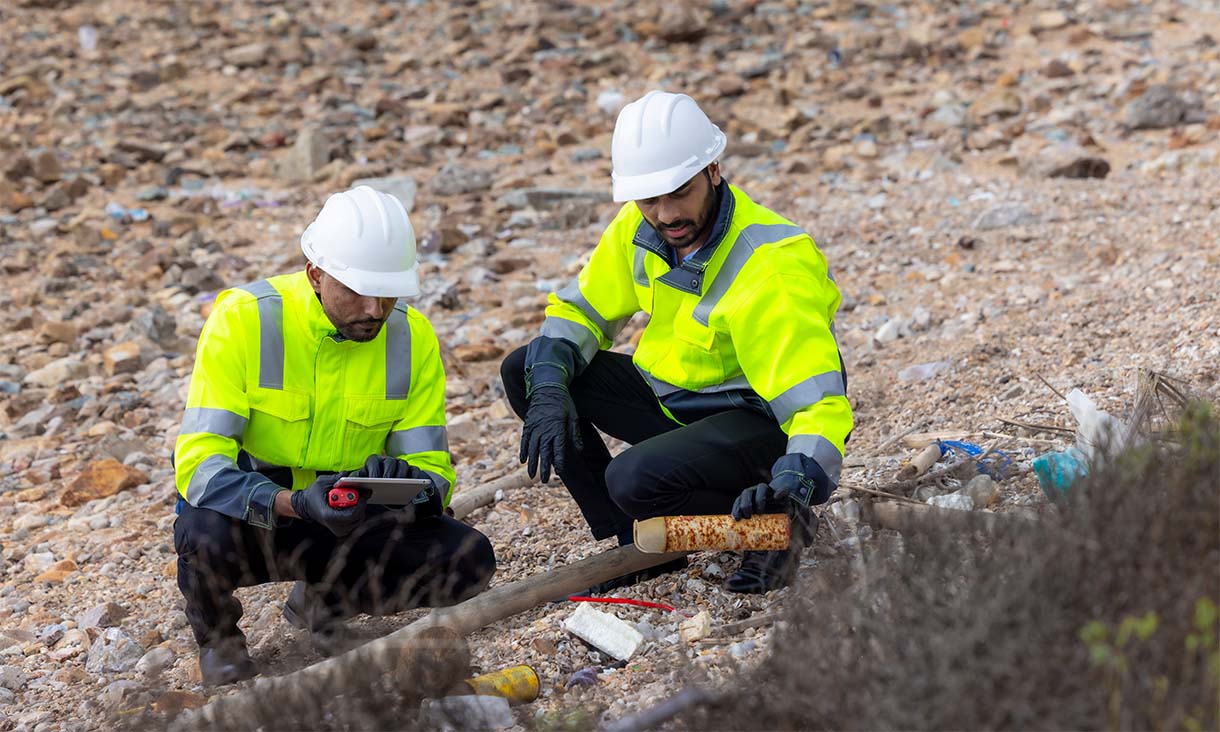
Our research in disaster risk and resilient engineering aims to better understand the impacts (tangible and intangible) of natural hazards on built environment and communities and develop advanced knowledge to make our infrastructure and communities more resilient to natural hazards. It includes assessing vulnerability of buildings and infrastructure to extreme loading, conducting damage and risk assessment studies to assess consequences and severity of risk and developing cost-effective mitigation strategies to inform decision making in reducing future risk. We conduct post-disaster surveys to evaluate performance of buildings and infrastructure by recording failure mechanisms and identifying factors contributing to damage. Furthermore, the Disaster Risk and Resilient Engineering theme includes research examining household behaviour during disasters, utilising innovative techniques and virtual reality to collect human response data and to develop new evacuation models and emergency alert systems. The research theme aligns very well with the RMIT’s commitment to the United Nations Sustainable Development Goals, particularly related to SDG11 (Sustainable cities and communities) and SDG13 (Climate action).
Vice Chancellor’s Senior Research Fellow
Deputy Head of Department, Civil & Infrastructure (L&T)
Deputy Head of Department, Civil & Infrastructure (R&I)
Lecturer
Head of Department Civil & Infrastructure Engineering
Dean, School of Engineering
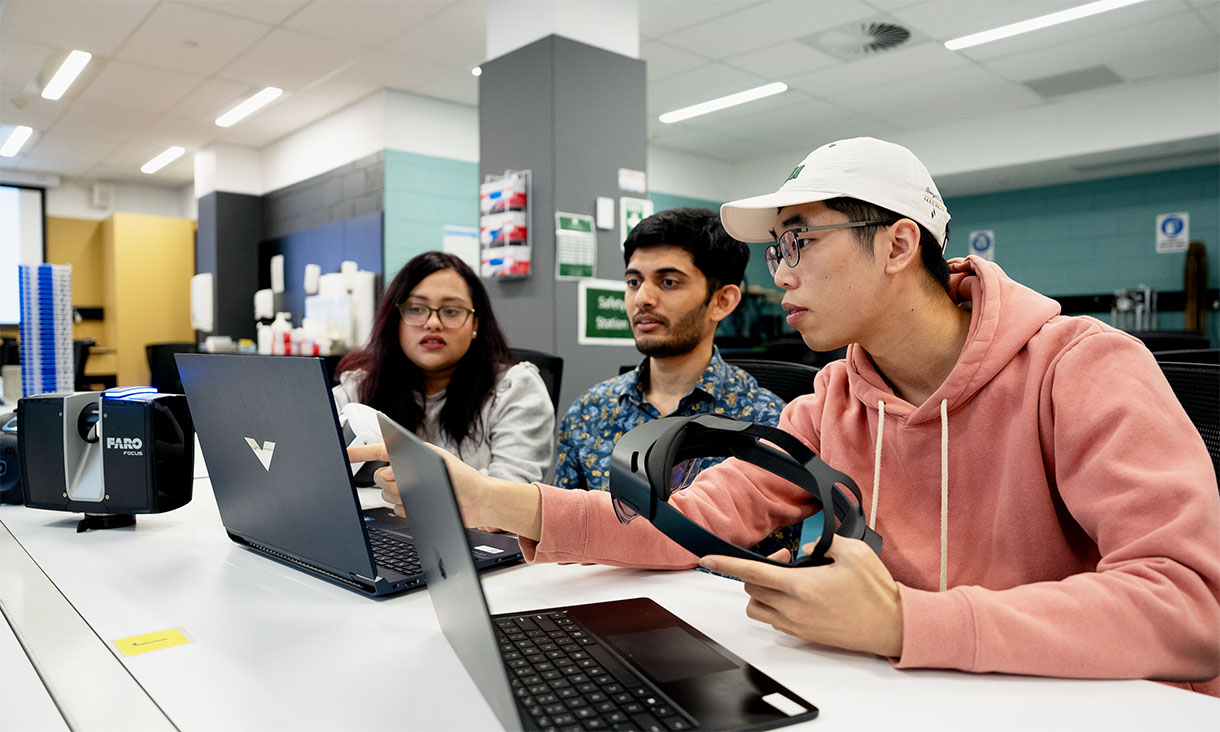
At the Department of Civil & Infrastructure Engineering, our world-class research facilities provide the foundation for groundbreaking advancements in materials, structures, geotechnical engineering, water systems, and digital construction. Equipped with cutting-edge technology, these facilities enable researchers to test, refine, and validate engineering solutions that are sustainable, resilient, and industry-ready.
The Light Structures Laboratory features state-of-the-art facilities for the fabrication, assembly, testing, and non-destructive evaluation of light structural systems and construction materials. The laboratory is equipped with structural testing equipment, loading frames, small-scale compression testing machines, non-destructive testing (NDT) instruments, and advanced instrumentation for evaluating the behaviour, strength, stiffness, serviceability, and condition of structural elements under static loading. These facilities support research on structural performance, structural health monitoring, condition assessment, innovative construction materials, modular and lightweight structural systems, and sustainable engineering solutions for civil and structural engineering applications.
253.01.025
The Heavy Structures Laboratory features state-of-the-art facilities for large-scale structural testing and performance evaluation of reinforced concrete, steel, timber, and composite structural elements. The laboratory is equipped with advanced structural loading systems, reaction/loading frames, hydraulic jacks, load cells, strain gauges, data acquisition systems, large-scale beam testing facilities, pull-out testing facilities, and instrumentation for evaluating structural behaviour, strength, stiffness, serviceability, load-bearing capacity, and failure mechanisms. These facilities support research on structural performance, infrastructure resilience, innovative construction materials, load-bearing systems, long-term structural performance, and sustainable civil and structural engineering applications.
253.01.034
The Concrete Lab features state-of-the-art facilities for the batching, mixing, vibrating, casting, and curing of concrete, mortar, paste, and other cementitious materials. The laboratory is equipped with concrete mixers, mortar and paste mixers, vibrating tables, workability testing equipment, hot-water curing tanks, temperature-controlled water curing facilities, heat-curing chambers, and supporting instrumentation for evaluating the fresh properties of conventional, low-carbon, and sustainable concrete. These facilities support research on concrete mix design optimisation, fresh-state behaviour, specimen preparation, curing methods, supplementary cementitious materials, recycled materials, and the development of innovative and sustainable concrete technologies for civil and structural engineering applications.
253.01.032
The Concrete Cutting Room features state-of-the-art facilities for the cutting, grinding, and preparation of concrete, masonry, rock, and other construction material specimens. The laboratory is equipped with concrete cutting saws, grinding equipment, milling and powdering systems, and sample preparation facilities for producing specimens with accurate dimensions and preparing powdered materials for further analysis. These facilities support research and teaching activities related to mechanical testing, durability testing, chemical analysis, mineralogical characterisation, and microstructural investigation of construction materials.
253.01.032a
The Humidity Chamber Room features state-of-the-art controlled environmental facilities for the conditioning, curing, and storage of construction materials and test specimens under regulated temperature and humidity conditions. The laboratory is equipped with humidity-controlled curing chambers and creep testing setups that provide stable environmental conditions for concrete, cementitious materials, and other construction materials throughout the curing and testing process. These facilities support research on material hydration, strength development, shrinkage, creep, durability, moisture-related performance, and the long-term behaviour of construction materials under controlled environmental conditions.
253.01.036
The Materials Store provides secure storage facilities for construction materials, laboratory consumables, testing equipment, and research specimens used in teaching and research activities. The facility supports the organised storage, handling, and distribution of cementitious materials, aggregates, recycled materials, chemicals, moulds, and prepared specimens, ensuring material quality, traceability, and safe laboratory operations. These facilities support efficient laboratory management and provide ready access to materials for experimental research, teaching, and industry collaboration across civil and structural engineering.
253.01.035
The Geotechnical Laboratory features state-of-the-art testing facilities for the characterization and performance evaluation of soils, recycled geomaterials, and pavement materials. The laboratory is equipped with advanced systems for unsaturated soil testing, pavement geotechnical testing, dynamic and cyclic loading, resilient modulus and permanent deformation testing, permeability, consolidation, compaction, and strength assessment. These facilities enable research into soil behaviour, pavement performance, ground improvement technologies, sustainable construction materials, and the long-term performance of geotechnical infrastructure under static and repeated loading conditions
253.01.022
The Triaxial Laboratory houses state-of-the-art equipment for static and cyclic triaxial testing of soils. The facility enables comprehensive assessment of shear strength, stiffness, stress–strain response, and deformation characteristics under a wide range of loading and drainage conditions.
253.01.024
The Temperature Control Room houses state-of-the-art facilities for conducting geotechnical tests under controlled temperature and humidity conditions. The laboratory includes equipment for swell and shrinkage testing, Soil–Water Retention Curve (SWRC) measurement, moisture equilibration, specimen curing, and environmental conditioning. These facilities support research on unsaturated soils, expansive clays, pavement materials, and the durability and long-term performance of geomaterials.
253.01.023
The Asphalt Mould-Making Facility is equipped with contemporary features that support the production of innovative asphalt mixes and testing specimens. The facility is equipped with an automatic asphalt mixer, which allows researchers to customize the mixing speed, temperature, and duration to produce conventional, recycled, and modified asphalt mixes with consistency. Latest-generation moulding equipment in the facility efficiently converts loose asphalt samples into precision-engineered specimens for a wide range of asphalt testing applications, including mechanical and environmental performance evaluations, durability assessments, and pavement material research. The automatic cutting saw allows precise sample preparation for testing with safe operation.
253.01.033
The 3D Printing & Robotics Laboratory specialises in 3D concrete printing and robotics for construction automation. It supports courses in 3D printing technologies for construction, modular construction, and design for digital fabrication. The lab leads and participates in industry projects focused on concrete printing applications. Its core capability centres on an ABB robotics arm integrated with a direct mixing system, enabling precise on-demand material preparation and controlled deposition. The lab is currently collaborating with the heavy structures concrete laboratory to develop advanced printable materials and indoor wet-mix processes that occur immediately before printing, significantly reducing dust generation and occupational hazards. The facility is also a key partner in an industry defence research project funded in 2026 dedicated to next-generation 3D printing materials. Additional general capabilities include large-format additive manufacturing with cementitious materials, robotic path planning and automation for construction tasks, rheological characterisation and optimisation of printable concretes and mortars, digital twin and simulation support for printing operations, BIM/CAD-to-print workflow integration, mechanical and durability testing of printed structural elements, development of sustainable low-carbon construction materials, and collaborative R&D in resilient, automated, and modular building systems.
Doom Shed
The Fire-Under-Load Laboratory is equipped with a 250 kN MTS universal tensile machine with a radiant heater and oxygen calorimeter to quantify fire resistance, fire survivability, and reaction to fire properties. These facilities support research and teaching activities on the development fire safe structures by characterising the synergistic impact of mechanical stress and fire exposure on the survivability of structural materials.
253.01.009
The Multi-Scale Fire Laboratory is equipped with fire testing equipment across small- to large-scale. It houses multiple small-scale radiant panels that simulate fire exposure to test targeted structural features; intermediate live-fire flame spread and bushfire exposure apparatuses to evaluate fire performance indices in accordance with national and international standards; large-scale live-fire test apparatuses to evaluate the fire performance of buildings (e.g., facade and wall assemblies, etc.); and large-scale oxygen calorimetry to quantify scaled reaction to fire indices. These facilities support research and teaching activities on the development fire safe structures by characterising fire exposure on survivability and performance. Critically, the facility provides industry with a cost and time efficient pathway to product development not available elsewhere.
253.01.001


RMIT University acknowledges the people of the Woi wurrung and Boon wurrung language groups of the eastern Kulin Nation on whose unceded lands we conduct the business of the University. RMIT University respectfully acknowledges their Ancestors and Elders, past and present. RMIT also acknowledges the Traditional Custodians and their Ancestors of the lands and waters across Australia where we conduct our business - Artwork 'Sentient' by Hollie Johnson, Gunaikurnai and Monero Ngarigo.
Learn more about our commitment to Aboriginal and Torres Strait Islander peoples