Creativity, community and social impact in Cambodia

RMIT alum, artist and NGO director Anya Minko carries creativity, global experience and purpose in everything she does.

During her Bachelor of International Studies at RMIT, Anya received the New Colombo Plan scholarship from the Australian Government, enabling her to gain vital experience working and studying overseas.

After graduating, she returned permanently to her home country, Cambodia, with the vision of making an impact in education and community work.

We sat down with Anya to learn more about her inspiring global journey. 

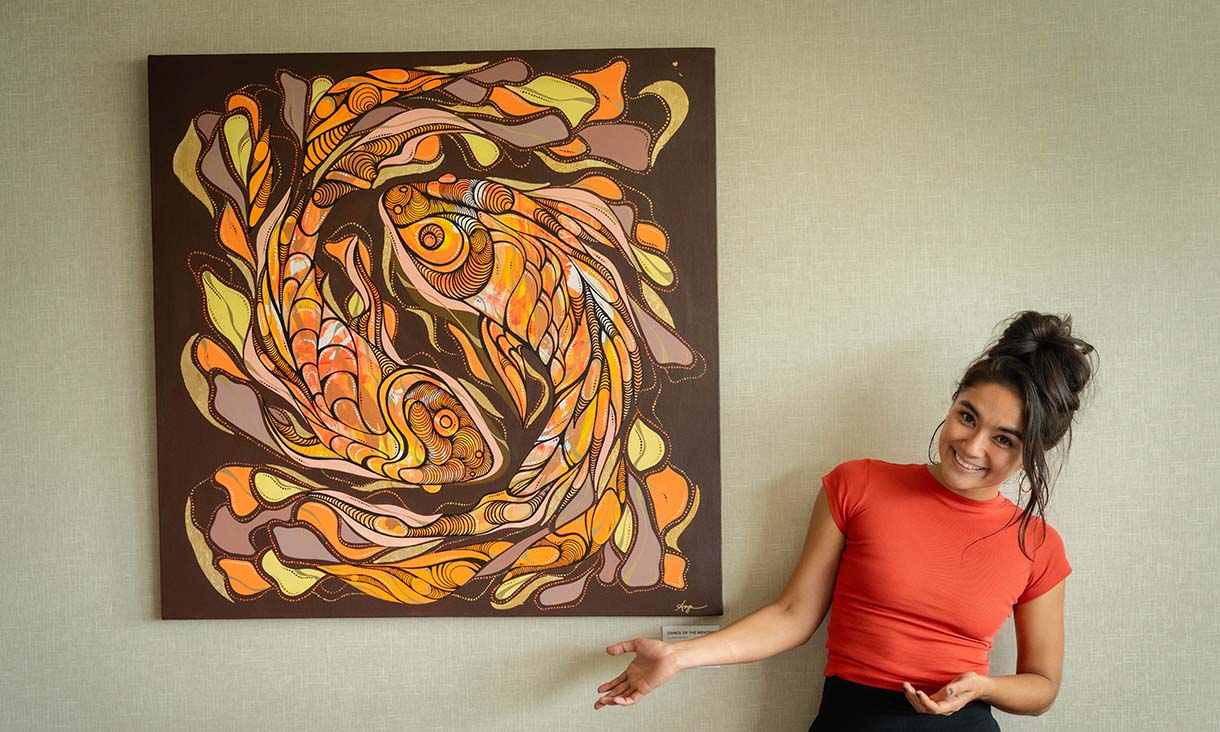
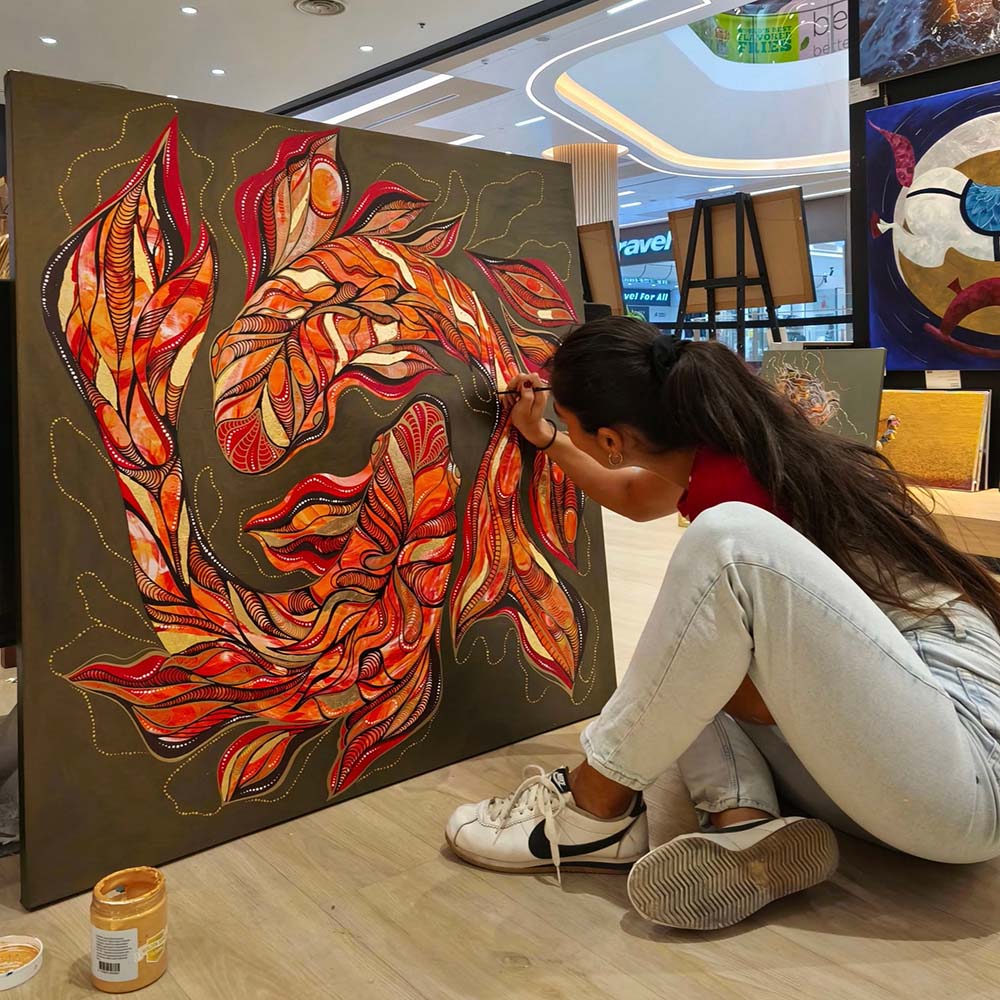
Anya standing in front of her own large, colourful abstract painting, smiling and gesturing toward the artwork.

What attracted you to the Bachelor of International Studies at RMIT?

Having grown up in Cambodia as an Australian–Thai, I’ve always been drawn to global politics, development, cultural dialogue, and languages. The Bachelor of International Studies at RMIT felt like the perfect fit. It offered an interdisciplinary understanding of how the world connects, and encouraged us to apply that knowledge in real contexts.

I chose German as my language major, later also studying Thai through the New Colombo Plan scholarship, which allowed me to spend a year in Thailand learning the language and working with the Mechai Bamboo School and the Population and Community Development Association (PDA). My studies also took me to Berlin, where I completed an internship at the Australian Embassy and an exchange at the Technical University of Berlin, before another exchange at Chulalongkorn University in Bangkok.

RMIT gave me the foundation to explore cultures, languages, and development through lived experience. It was an incredibly formative and exciting time that ultimately guided me back to Cambodia, where I continue to merge creativity, community, and social impact in my work today.

What is your business all about?

I currently wear two hats. I’m an artist, I paint, exhibit, and sell my work, and I’m also the Director of SEVA (Socio-Economic Vision Alliance), a Cambodian NGO focused on improving education and empowering communities.

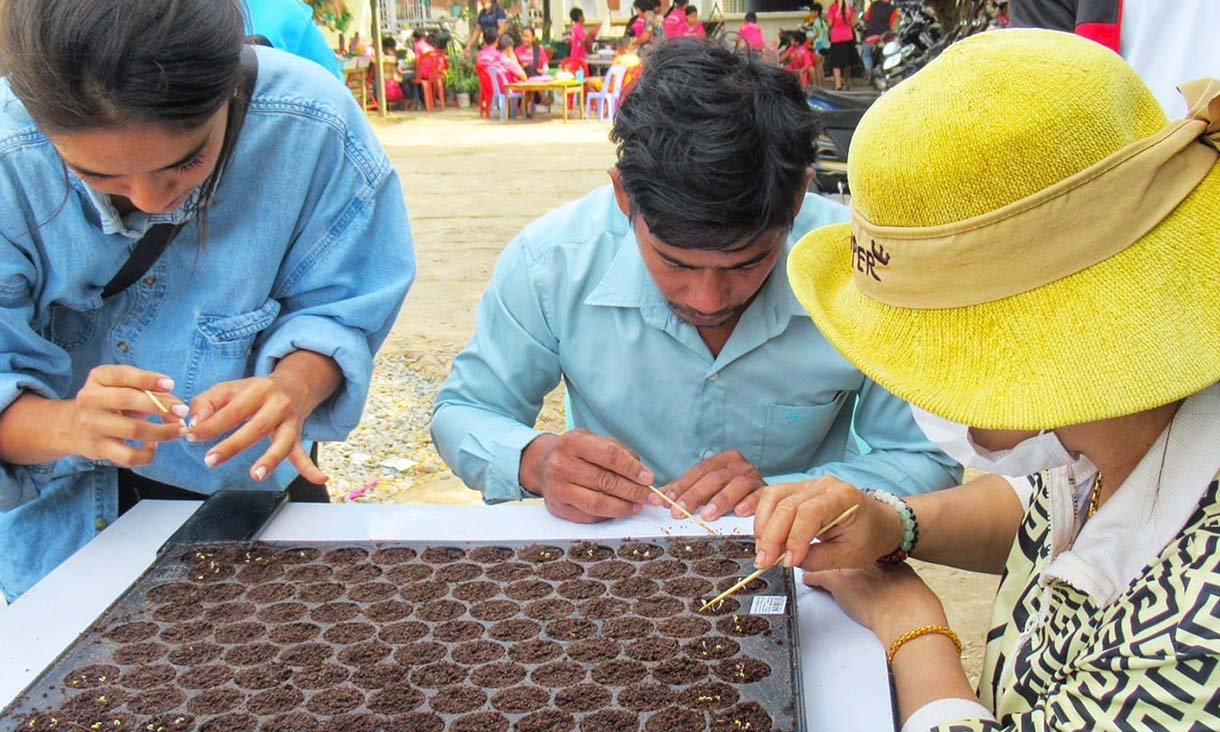
At SEVA, we transform unused spaces in Cambodian public schools into resource-efficient vegetable gardens and provide training in agro-gardening. Teachers, students and community members learn practical skills, schools generate income through produce sales, and that revenue is reinvested in education. The gardens also beautify campuses and create a sense of pride and ownership among students and teachers.

Both roles – artist and NGO director – are connected by creativity and purpose. One uses colour and form to tell stories and express; the other uses ideas and teamwork to create tangible change.

What skills did you learn from RMIT that enabled you to start your organisation?

RMIT taught me the importance of cross-cultural understanding and collaboration – skills that are essential to SEVA’s work, and this ever-evolving world. Our first pilot project in Cambodia was implemented in partnership with a Thai organisation (PDA). Bridging two cultures required empathy, communication, and adaptability – exactly the soft skills that RMIT emphasised throughout the Bachelor of International Studies.

The ability to work with people from different backgrounds, listen to multiple perspectives, and connect ideas across borders has been invaluable in both my NGO and artistic practice.

Image of germination training

What does the future look like for your business and industry?

We’re now working to expand SEVA’s school vegetable garden program across more public schools in Cambodia. There are around 13,000 state schools, many of which remain under-resourced and heavily focused on rote learning. Our goal is to introduce more interactive, practical experiences that help students think critically, work collaboratively, and develop an entrepreneurial mindset – skills vital for Cambodia’s future workforce.

As for my art, I continue to create and exhibit new collections. The art scene in Cambodia is small but growing fast, with a rising community of young, contemporary artists. Early next year, I’ll be curating and exhibiting Tonlé to Treeline, a group exhibition that celebrates Cambodia’s landscapes and ecosystems through painting, sculpture, and mixed media.

Despite conversations about AI disrupting creative fields, I believe there will always be value in the human touch, in work made by hand, layered with time, emotion, and imperfection; therefore, as an artist who paints, I’m not worried! I look forward to exhibiting in Australia in the future. 

Where does your passion for environmentalism and sustainability come from?

I grew up along the Tonlé Sap River, in Chroy Chanvar, Phnom Penh, Cambodia. Back then, it was a small village. I have always felt at home in nature. I’ve spent much of my life exploring landscapes, from rural Cambodia to cities and villages around the world, and I’ve seen firsthand how our wellbeing is tied to the environment.

My studies at RMIT strengthened that understanding by connecting sustainability to global systems: social, political, and economic. That awareness now drives both my art and community work. Whether it’s painting Cambodia’s natural beauty, promoting Cambodian artists or assisting schools to grow their own food, I aim to highlight the connection between people and the planet.

How does your creative practice tie into your activism?

My art and activism come from the same place: a desire to create meaningful change and make people see differently. As an artist, I explore connection through bold colour, linework, and form. As an NGO director, I apply that same creativity to designing projects that empower communities and reimagine education in Cambodia.

Through art, I tell stories of Cambodia’s beauty, resilience, and complexity. Through SEVA, we transform schoolyards into living classrooms where children learn about growing vegetables, nutrition, sustainability, and entrepreneurship. Both are about transformation: of spaces, perspectives, and possibilities.

Image of Anya working on her artwork.

What are some of the ways your work has been personally rewarding and fulfilling?

Although I was born in Australia, I arrived in Cambodia at the age of three. Cambodia is my home. Seeing the impact of our school gardens, how students and teachers take pride in maintaining them, and how the schools reinvest their earnings, is incredibly rewarding. It’s proof that small ideas can create lasting change.

In my art practice, that same sense of fulfilment comes when I see my paintings in someone’s home, in galleries or in public spaces. Each piece represents hours of thought, emotion, and energy, and knowing that it resonates with other people and beautifies spaces is incredibly meaningful.

Whether through art or community work, I’m grateful that both allow me to give back to the country that has shaped me.

You may also be interested in...

aboriginal flag float-start torres strait flag float-start

Acknowledgement of Country

RMIT University acknowledges the people of the Woi wurrung and Boon wurrung language groups of the eastern Kulin Nation on whose unceded lands we conduct the business of the University. RMIT University respectfully acknowledges their Ancestors and Elders, past and present. RMIT also acknowledges the Traditional Custodians and their Ancestors of the lands and waters across Australia where we conduct our business - Artwork 'Sentient' by Hollie Johnson, Gunaikurnai and Monero Ngarigo.

Learn more about our commitment to Indigenous cultures