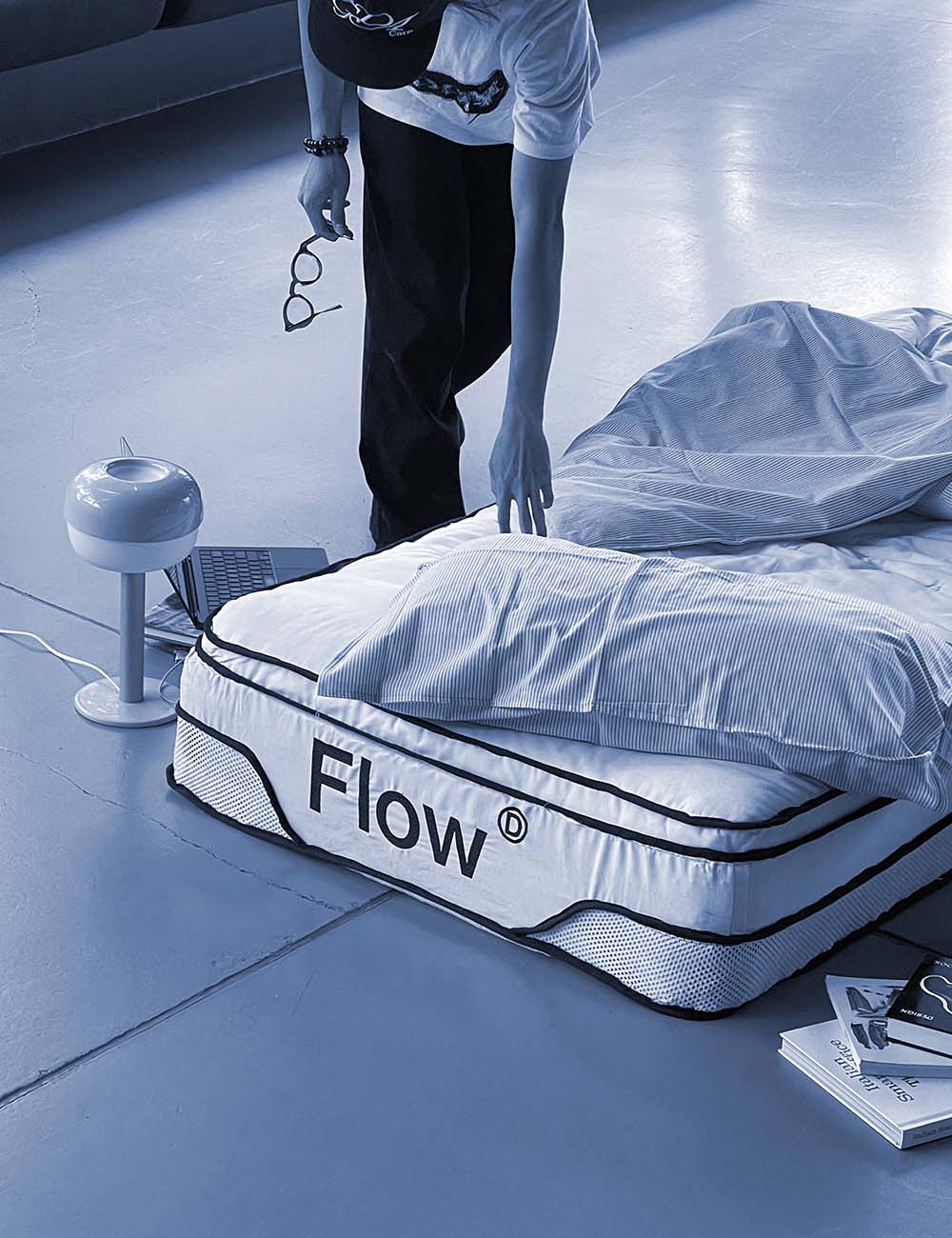
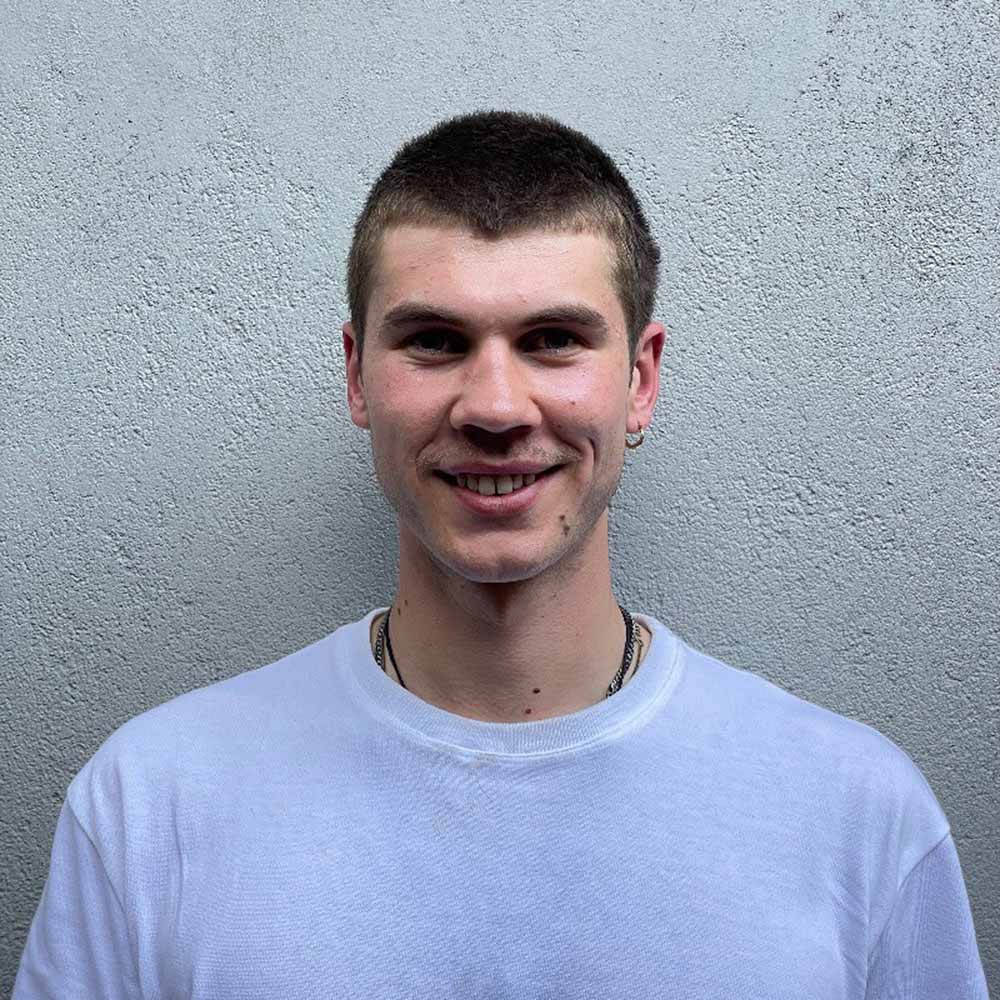
The visible problem of mattress recycling was a driving factor for Maximillian’s quest to design a product that could be part of a circular economy.
“I could see roadside mattresses scattered all over the streets and I was just like, how does this happen?” he said.
“Why is this happening and how can we solve this? It’s a huge problem.”
Using one material, rather than multiple materials, was the key to unlocking a more streamlined way of using a mattress and then recycling it. This led Maximillian to investigate a 3D printed foam material designed in Chicago, but it was a polymer material made by a company in Osaka, Japan that he settled on using for Flow.
“I ended up getting it shipped to Australia and doing a whole bunch of testing with it and a big block of this material,” he said.
“It was nice to sleep on, which I did, but it was a little bit more rigid than I thought. So I ended up figuring out how to design the inner mono material with isolated compression, meaning that all the different parts of the mattress compress individually. It means that your sleep is more comfortable.”
The Flow mattress is sealed with chain stitching, which Maximillian noticed on a bag of jasmine rice when he was cooking a green curry with his roommate.
“I looked it up on YouTube, figured out how to do it and then ordered the machine that stitches that bag the following night, and that is what I used to contain the outer casing.”
Maximillian’s innovation and hard work was recognised with the Dean’s Award and Design Excellence Award at RMIT. He was also a finalist for the Graduate of the Year Awards and earned himself a spot in the top 20 finalists for the James Dyson Award, which recognises the best inventions by young design engineers.
In the future, Maximillian’s sights are set on finalising the patent process for Flow and also commercialising the mattress so it’s readily available to consumers.
Story: Kate Jones