To Mars and beyond: A career with no boundaries

RMIT alum Dr Dianne McGrath comes from a family of intrepid explorers, which explains her lifelong sense of curiosity and adventure.

At age 10, she moved with her parents to live in indigenous communities at remote locations throughout the Northern Territory.

“My family was adopted by families in the local community,” she said.

“Being a part of that community and seeing how people do live on country and care for country, it's almost inevitable that I would've grown up to be someone who respects our land to the degree that I do.”

Dianne spent seven years in the NT and it proved to be a formative experience.

Today, the RMIT alum is a professional speaker and sustainability expert working at the Australian Renewable Energy Agency (ARENA) as an Associate Director of Portfolio Management in the distributed energy resources team. Her role is to manage government-funded projects for everything from community batteries and microgrids in regional Aboriginal communities through to new projects in IT infrastructure.

But Dianne’s passion for all things renewable goes further than energy sources.

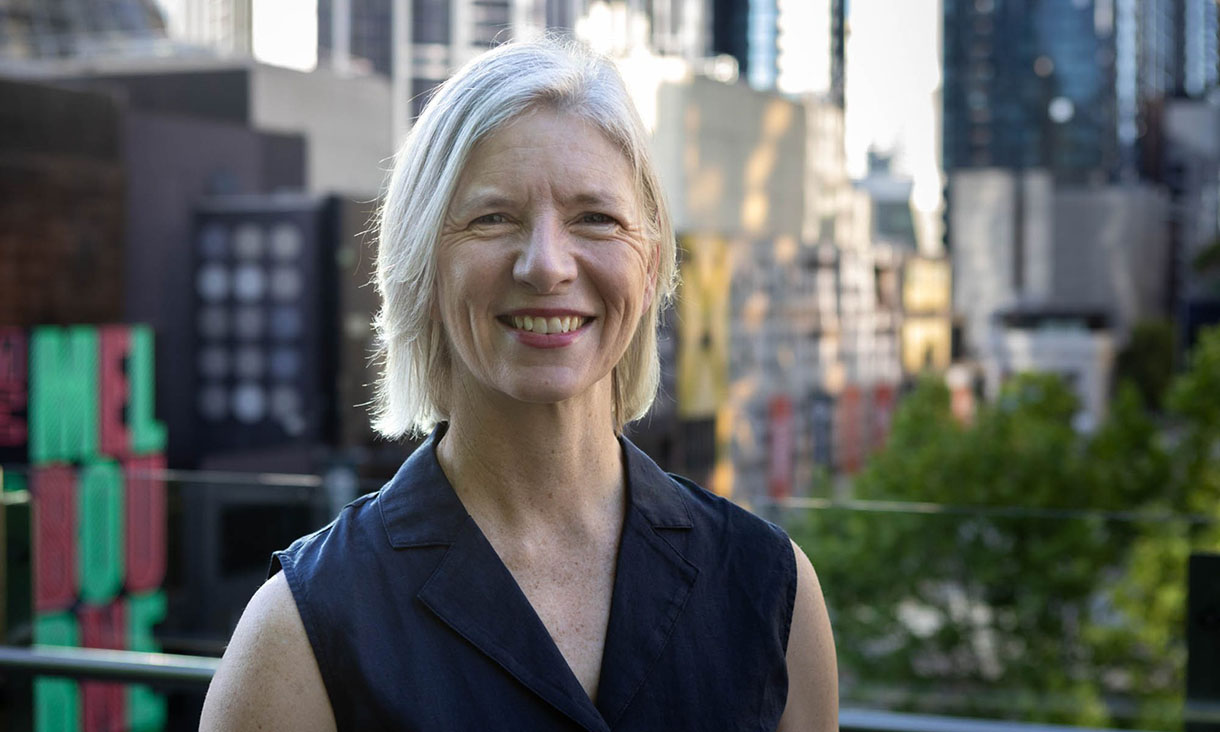
Dianne standing outdoors wearing a sleeveless top, with a city skyline and trees visible in the background.

Preparing to blast off on the Mars One mission

When a Dutch company issued a global callout in 2013 for anyone interested in living on Mars, Dianne quickly applied. She was one of more than 200,000 applicants for the Mars One mission and eventually, one of 100 successful astronaut candidates set to establish a permanent settlement on the planet.

For Dianne, the decision to leave planet Earth boiled down to adaptability.

“I had to really think about the things that would be personally really challenging. It wasn't about health or death or anything because all of those things are inevitable,” she said.

“But I was thinking more about, ‘What are the challenges that are going to be harder to manage from Mars?’”

The Mars One project was cancelled in 2021, which came as a huge disappointment to Dianne. But by then, she had already learned so much about resilience.

“After eight years, I'd invested a lot of time and effort to get ready to go to Mars, but all the choices I'd made to do that were going to benefit me regardless of whether I went to Mars or not,” she said.

“I had learned so much. I had changed so much. I would not be the person I am today if I had not spent so much time trying to get ready to go to Mars.”

Sailing around the world

Dianne’s next chapter unfolded when she signed up to circumnavigate the world in 11 months as part of the Clipper Round the World Yacht race between September 2023 and July 2024.

She was among a small crew who shared four to six hourly rosters to divide up sleep and sailing duties as they raced around the world. The yacht stopped in many international ports to restock, but also to participate in local initiatives such as the Take Three for the Sea project to remove rubbish from the beach.

Dianne said her passion to create a better environment and give back to the community comes from a desire to “nurture humanity”.

“I see the result when people try something different and it's changed their life,” she said.

“When I was on the boat, for example, when I went to all those communities, all those NGOs that I did a beach clean with, that I did a mangrove restoration with, that I did river clean-up in a canoe – I did all of this stuff all around the world with small local NGOs and saw how passionate they were.

“When you see that sort of stuff, you can't help but want to do more. If we choose to start to look at some things that are positive and encouraging, it's amazing that you started to see more positive and encouraging things.”

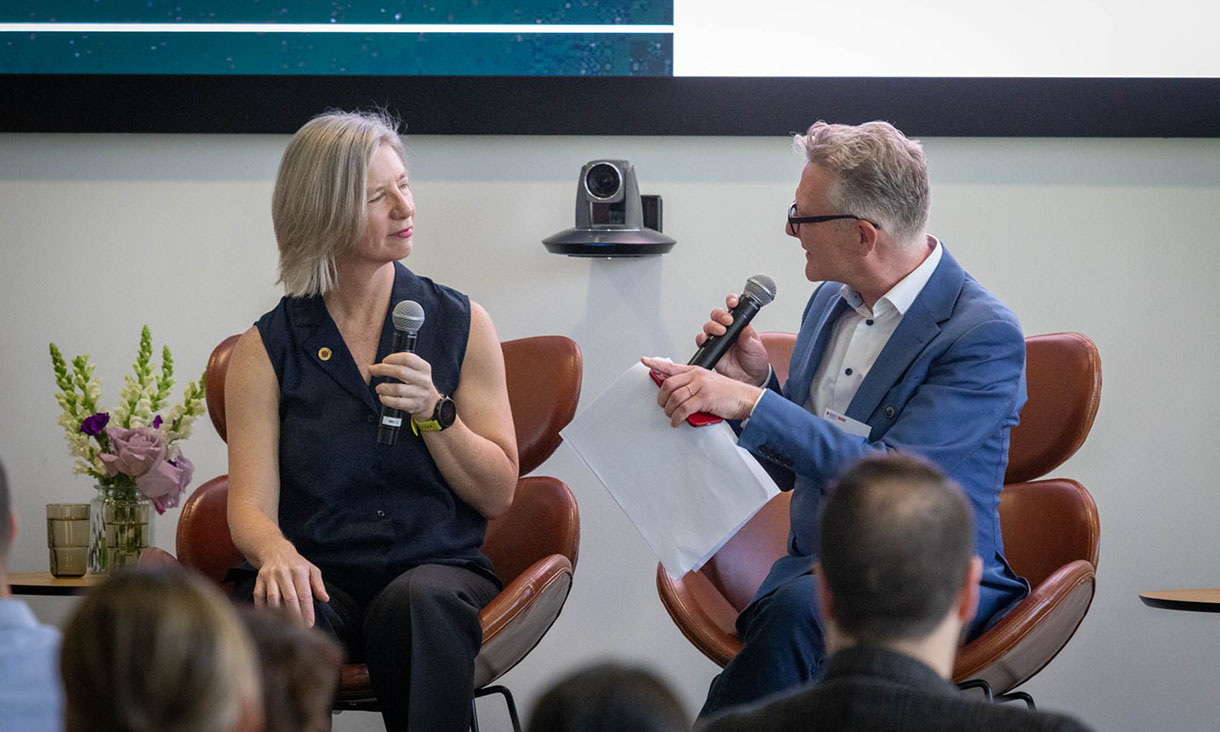
Two people seated on stage having a discussion with microphones during an event, with an audience in the foreground and a flower arrangement on a table nearby.

Learning from failure

Dianne gained a Graduate Diploma in Sustainable Practice at RMIT in 2014, and a PhD in Environmental Engineering from RMIT in 2021. She also went on to work at RMIT’s Cooperative Research Centre to explore solutions for food waste.

“What I really love about RMIT is the practical application of learning,” she said.

“It's a very immersive environment to learn in, even if we are looking at an online system, because all of what we can produce at RMIT actually has a physical impact on our world.”

But some of Dianne’s best lessons in life have come through failure.

“We learn so much more when something goes wrong than we do when it goes right,” she said.

“So actually learning from failure is a good thing too and being able to be comfortable with failing, and seeing it as lessons is really important.”

Story: Kate Jones

You may also be interested in...

aboriginal flag float-start torres strait flag float-start

Acknowledgement of Country

RMIT University acknowledges the people of the Woi wurrung and Boon wurrung language groups of the eastern Kulin Nation on whose unceded lands we conduct the business of the University. RMIT University respectfully acknowledges their Ancestors and Elders, past and present. RMIT also acknowledges the Traditional Custodians and their Ancestors of the lands and waters across Australia where we conduct our business - Artwork 'Sentient' by Hollie Johnson, Gunaikurnai and Monero Ngarigo.

Learn more about our commitment to Indigenous cultures