New micro-credentials recognise 21st-century skills gained through youth arts programs

New micro-credentials recognise 21st-century skills gained through youth arts programs

Young people who participate in arts programs develop highly sought-after workplace skills – and now they have a way to prove it.

At a launch event held at Collingwood Yards, the VITAL ARTS project team unveiled a groundbreaking suite of micro-credentials that formally recognise the 21st-century skills young people gain through arts participation.

Powered by CLOCK Your Skills, VITAL ARTS is an Australian Research Council Linkage project hosted by RMIT University, Deakin University, Maynooth University and the University of Singapore. Over five years, the research team has collaborated with Creative Australia and leading youth arts organisations, including The Push, Australian Theatre for Young People, Centre for Multicultural Youth, Future Foundations, Back to Back Theatre, Carclew, Corrugated Iron Youth Arts, L2R Dance, and Gippsland Art Gallery, to develop credentials that bridge the gap between creative practice and career readiness.

The launch brought together industry partners, educators, policymakers and members of the youth sector to celebrate a new way of valuing creative experience.

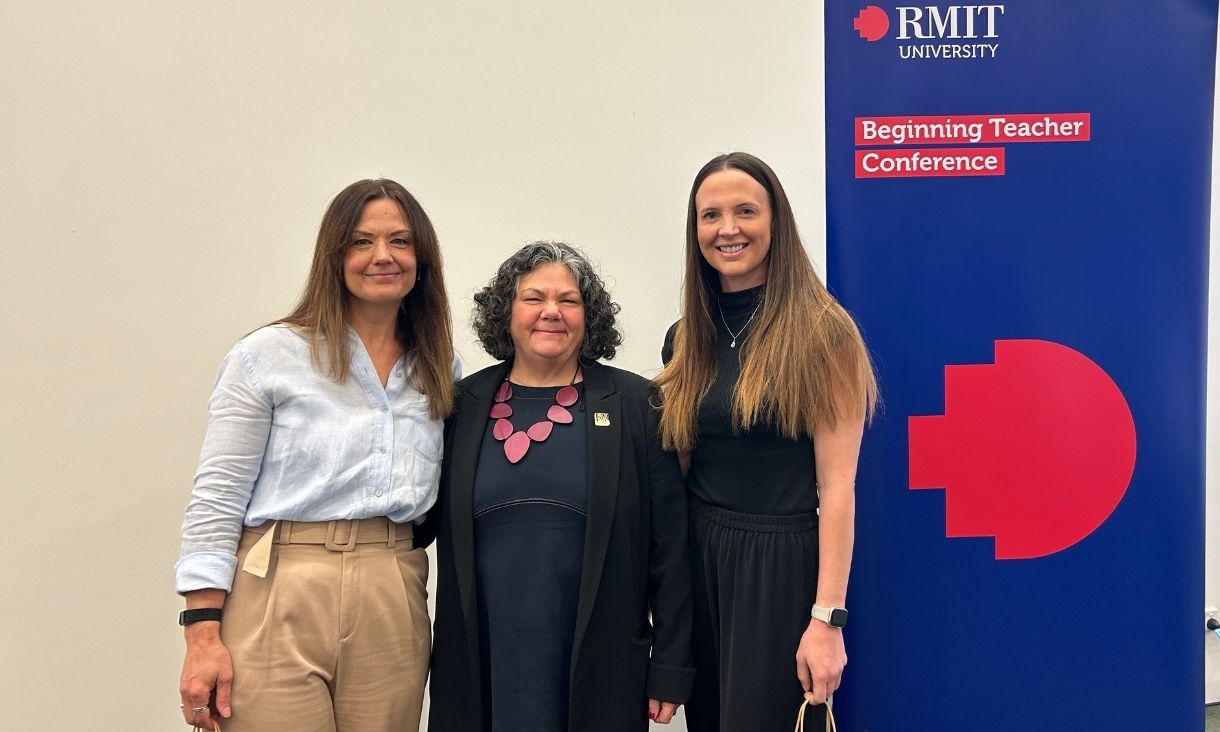
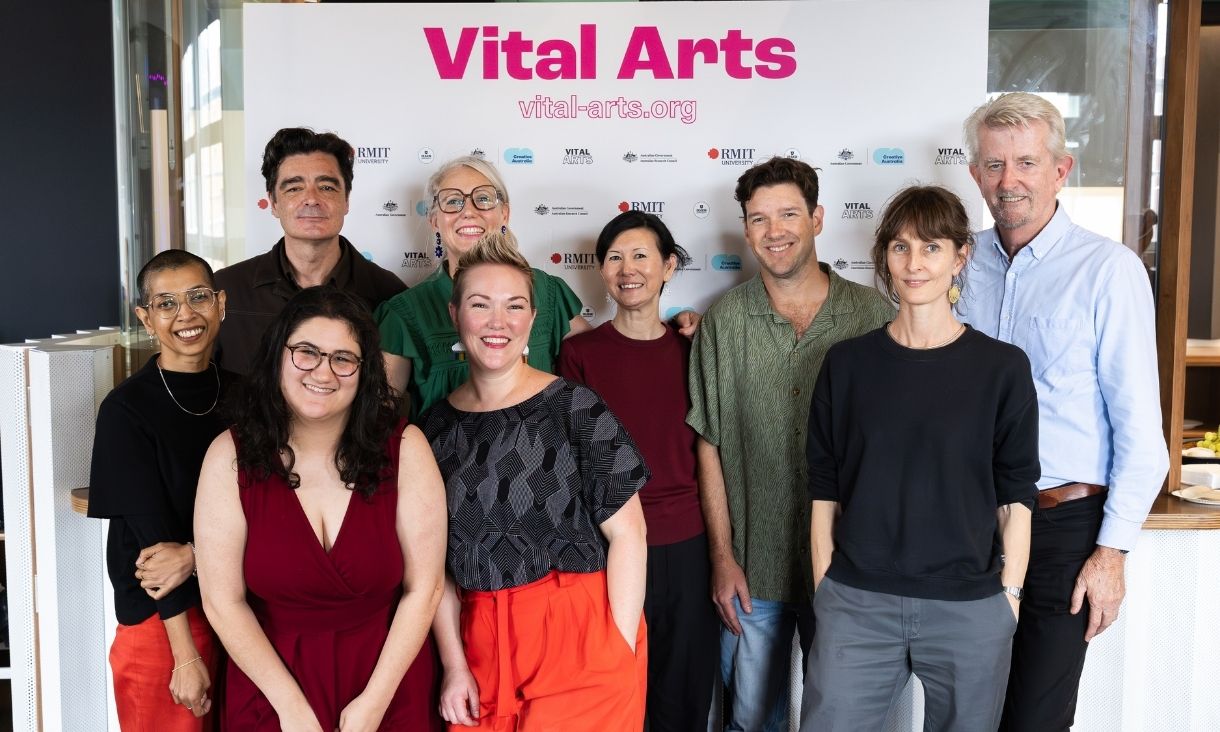
(L-R) Tim Marshall (DVC, College of DSC), Mojo Juju (VITAL ARTS trainer), and Naomi Stead (Interim ADVC, Engagement). (L-R) Professor Tim Marshall, Deputy Vice Chancellor, RMIT College of Design & Social Context; Mo'Ju, Professor Naomi Stead, Associate Deputy Vice Chancellor, Engagement, DSC

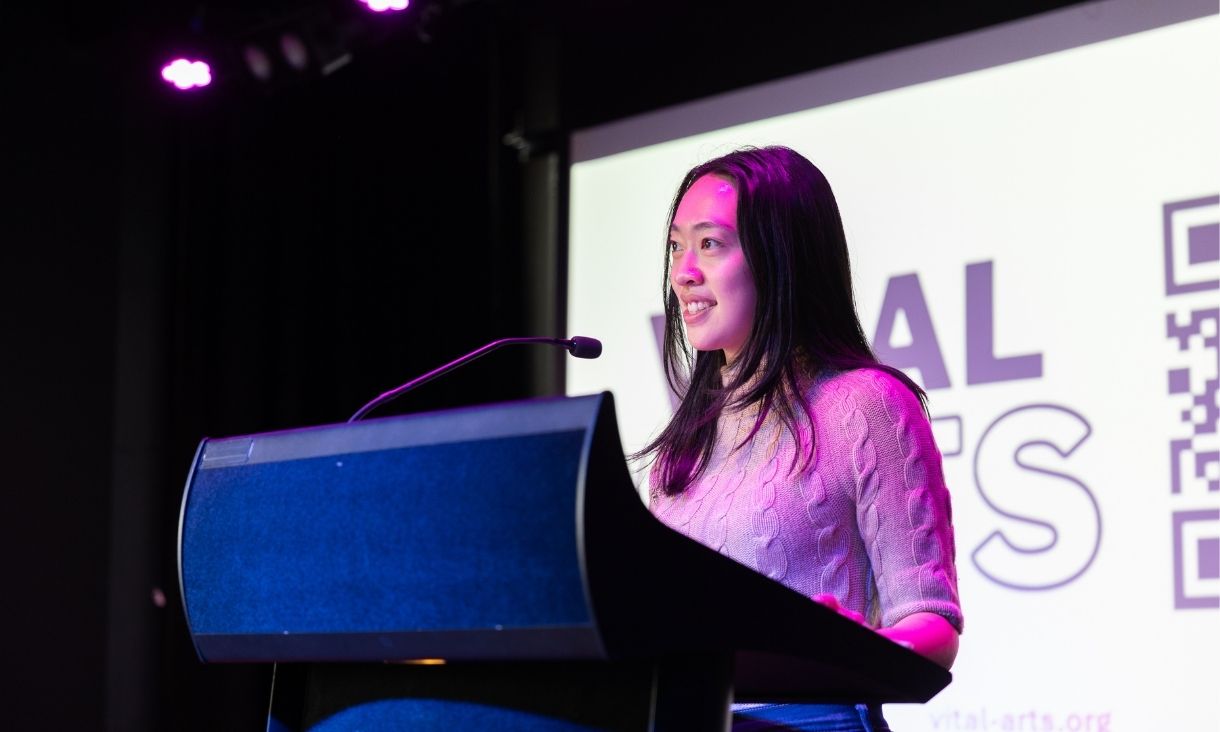
Claire Qian's journey illustrates the power of these skills. She began volunteering with The Push, a not-for-profit youth music organisation, at age 15. Now 23, she serves as a Board Director while working full-time in corporate law.

"When I finally decided to pivot to law a few years later, the HR team at every law firm and subsequent lawyers who interviewed me said that it was my journey from 15 to now, being involved in music – and NOT my law school GPA or ATAR – which formed the basis for why they wanted me to join their firm," Qian said.

Evrim Sen, a PhD Candidate on the VITAL ARTS project, brought her lived experience to the conversation. "I know what it feels like to be invited into spaces that weren't designed for me, and that experience shapes the way I build communities today," she said.

Sen works as a youth consultant at the Centre for Multicultural Youth, where she has developed skills that employers actively seek. "Adaptability, communication, and leadership are at the heart of everything. When I create inclusive spaces and design flexible engagement strategies, I'm practicing cultural competence and collaboration."

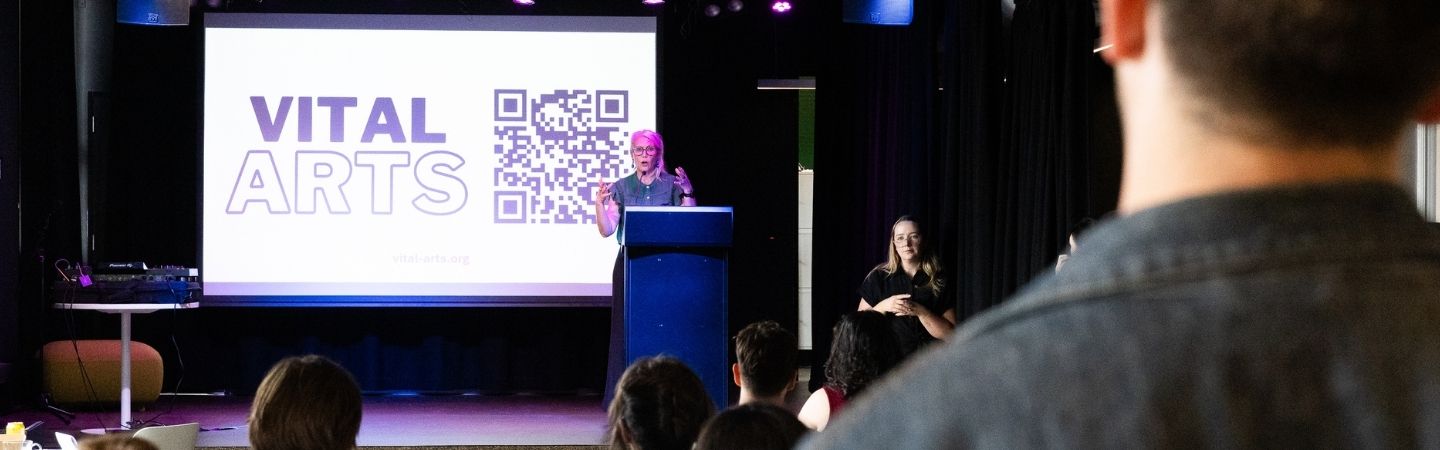
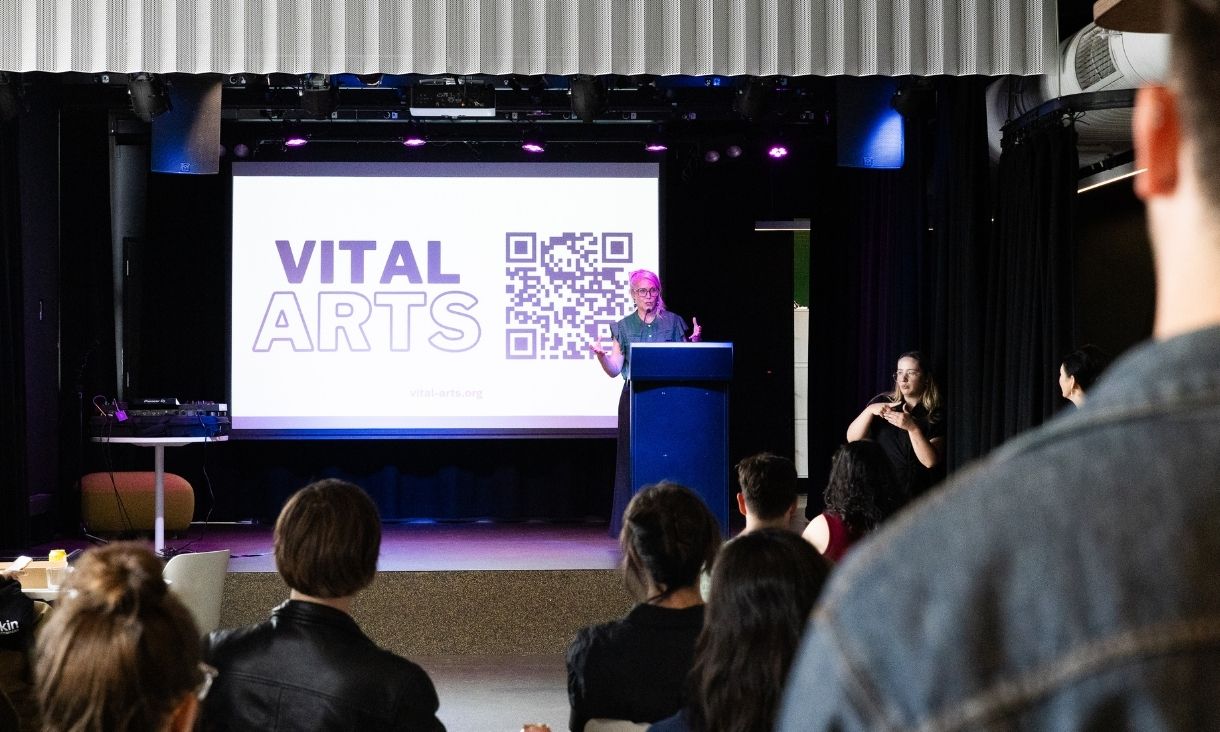
Professor Anna Hickey Moody, Project Lead, spoke at the launch event with assistance from an Auslan interpreter. Professor Anna Hickey Moody, Project Lead, spoke at the launch event with assistance from an Auslan interpreter.

VITAL ARTS recognises and values the practice-based skills that young people develop through arts engagement and creative practice. Rather than requiring additional academic study, the credentials are awarded based on existing participation, making visible the often overlooked but deeply valuable skills that the arts nurture.

"These skills are richly transferable into education, employment, and civic life," said Professor Anna Hickey-Moody, who leads the project.

The credentials focus on four key competencies aligned with UNESCO and World Health Organisation frameworks for 21st-century skills:

  • Critical Thinking

  • Creativity

  • Communication

  • Collaboration

And five character qualities:

  • Curiosity

  • Initiative

  • Persistence (or grit) 
  • Leadership
  • Social and cultural awareness

"Taken together, these competencies and qualities belong to people who employers and communities increasingly value: people who are adaptable, creative, collaborative, thoughtful; people who possess cultural sensitivity, initiative, and resilience. They can troubleshoot and make things work," Professor Hickey-Moody said.

"Our three credentials recognise skills that prepare young people not just for creative industries, but for a dynamic world of work, for ongoing learning, and for active participation in civic and community life. More than this, these credentials signal to employers that the people who have them are reliable, dexterous and practical. They are able to stage manage complex situations and to think critically about the world they belong to."

The micro credentials are ready to be used in community and arts education contexts. If you are working in this space, please get in touch with the project team: Vitalarts123@gmail.com.  

To learn more, visit Vital Arts: Home

Read the report Project Report - 2025 — Vital Arts: Home

Share

  • Industry
  • Announcements
  • Arts and culture
  • Society
  • DSC
  • Social services
  • Student experience

Related News

aboriginal flag float-start torres strait flag float-start

Acknowledgement of Country

RMIT University acknowledges the people of the Woi wurrung and Boon wurrung language groups of the eastern Kulin Nation on whose unceded lands we conduct the business of the University. RMIT University respectfully acknowledges their Ancestors and Elders, past and present. RMIT also acknowledges the Traditional Custodians and their Ancestors of the lands and waters across Australia where we conduct our business - Artwork 'Sentient' by Hollie Johnson, Gunaikurnai and Monero Ngarigo.

More information