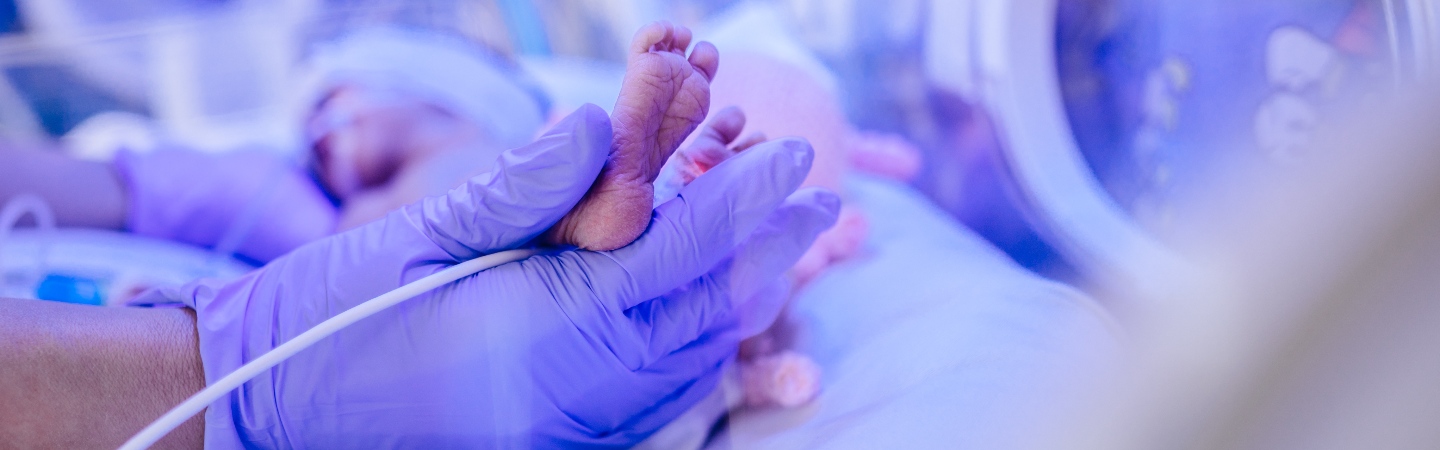
Besides cerebral palsy and ADHD, preterm birth is also a factor known to increase the likelihood of a diagnosis of autism spectrum disorder (ASD) by up to seven times the rate observed in people born at term.
RMIT's Bobbi Fleiss and long-term collaborator and PREMSTEM coordinator Pierre Gressens from Inserm are investigating this link alongside Professor Elisa Hill-Yardin from RMIT's School of Health and Biomedical Sciences.
This work is part of the INTEGRA project, which focuses on achieving a multi-modal integrative model of gut-microbiome-brain axis responses in autism.
As researchers continue to search for the reasons why autism comes about, there is a growing interest in characterising the key role of gene-environment interactions.
These are the interactions between environmental factors and a person’s genetic blueprint and the effect that these interactions may have on the way that their body – including the brain – develops, and the link to neurodevelopmental disorders such as ASD.
Inflammation occurring in the few weeks before and after birth is one environmental factor that can lead to a preterm birth and brain injury.
The risks of a baby being exposed to inflammation increases strikingly where there is limited access to healthcare during pregnancy or access to well-resourced neonatal intensive care facilities.
Inflammation alters the development and function of the nervous system both in the brain and in the gastrointestinal system, the gut.
Hill-Yardin's particular interest is in the relationship between gut bacteria and the brain among the preterm population, and how it links to future autism diagnoses.
“Gut-resident cells known as macrophages respond to perinatal inflammation that leads to gut injury,” said Hill-Yardin.
How these gut-resident cells respond is also influenced by a person’s genetic blueprint.
“This makes understanding the activation of these cells a valuable area to explore to understand gene-environment interactions in autism, especially in the context of the brain-gut relationship.”
Through continuing research into the impact of early life events on long-term outcomes, the hope is for healthier futures for society’s earliest arrivals.
This article has been published for World Prematurity Day, observed every year on 17 November and endorsed as an official global health campaign by the World Health Organisation.
Story: Hannah Tribe and Bobbi Fleiss