
Ultra-thin filters could help improve production of medicines and dyes

Ultra-thin filters could help improve production of medicines and dyes

Scientists in Australia have developed new ultra-thin filters that can separate valuable chemicals from liquid mixtures fast and efficiently to make medicines, dyes and other products, which could help industries cut waste, save energy and lower costs.

Led by RMIT University’s PhD scholar Yuxi Ma and senior researcher Professor Weiwei Lei, the team created hybrid filters that combine super-thin layers of boron nitride – a stable compound material – with tough synthetic fibres called aramid.

The result is a flexible but robust filter that stays stable even under high pressure.

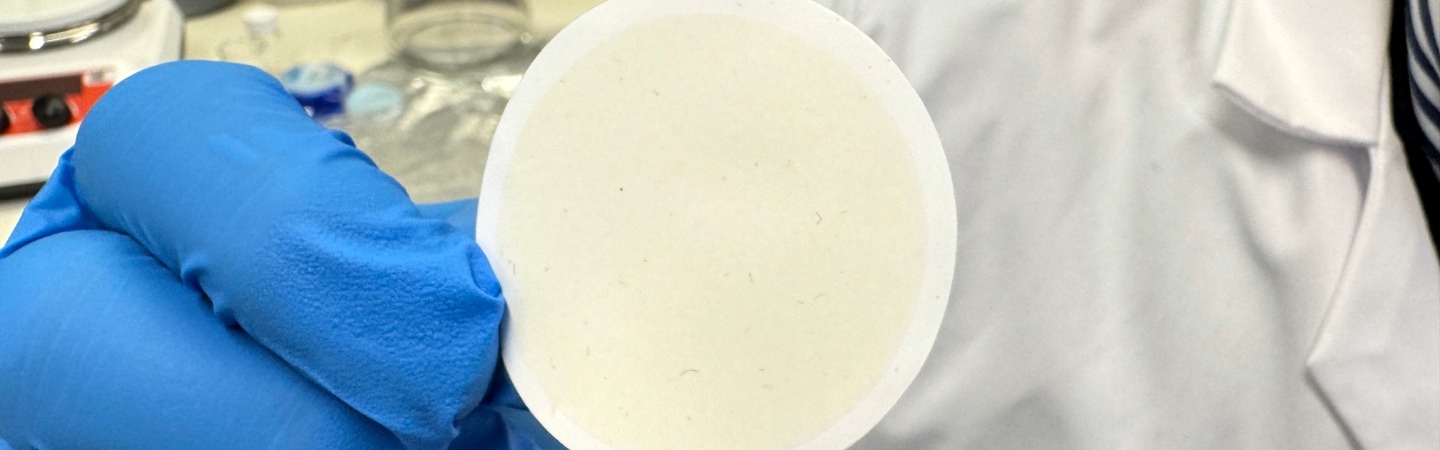
A researcher wearing safety glasses and blue gloves holds a small circular white filter in a laboratory. The background is softly blurred with lab equipment visible. Professor Weiwei Lei in the lab at RMIT University, holding one of the team’s new ultra-thin hybrid filters. Credit: Will Wright, RMIT University

“Boron nitride normally repels water, which makes it hard to combine with other materials,” Ma said.

“We altered its surface so that it attracts water instead. That allowed us to form a stable, even mix with the fibres and create a much stronger composite filter.”

Ma said the innovation could pave the way for cleaner, more efficient chemical manufacturing and recycling.

“Many industrial processes rely on solvents to produce or purify products, but separating out those solvents and re-using them can be slow and energy-intensive,” he said.

“Our filters let solvents pass through quickly while holding back larger molecules, offering a faster and more sustainable way to recover useful chemicals.”

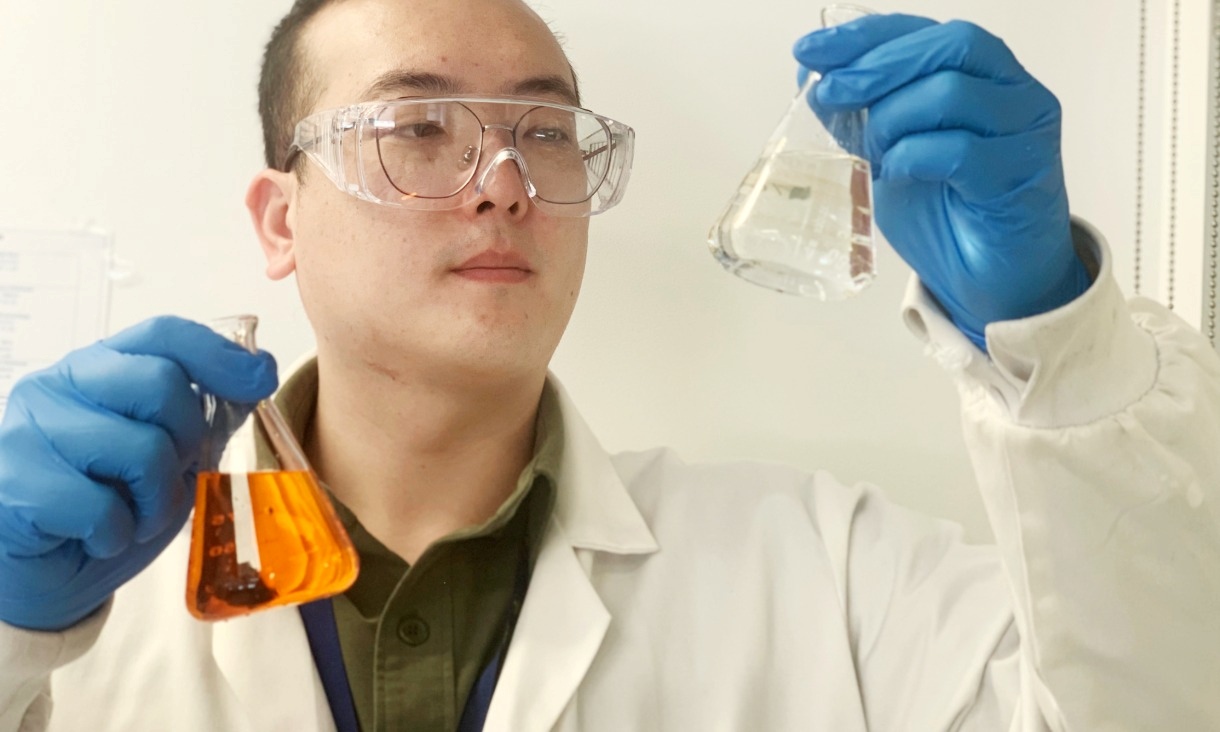
A researcher wearing safety glasses, a white lab coat and blue gloves holds up two glass flasks – one containing a clear liquid and the other an orange solution – examining them closely in a laboratory. PhD researcher Dr Yuxi Ma preparing solvents used to test the new ultra-thin filters, which could help industries recycle chemicals faster and cut waste. Credit: Supplied

In laboratory tests, the filters worked effectively with common solvents such as ethanol, methanol and acetone. They maintained stability under pressures up to 10 bar – around 10 times the pressure in a car tyre – and continued to perform consistently during 24 hours of continuous use.

By adjusting the thickness of the active layer, the researchers could control how selective the filter was. About 1 micrometre gave the best balance between fast flow and strong blocking performance, filtering out up to 96 per cent of larger dye molecules.

Ma said the simplicity of the design was one of its strengths.

“Because the layers bond through natural hydrogen interactions, we can fine-tune the structure without needing complex chemical treatments,” he said.

“That makes the process easier to scale and more adaptable for different solvents or applications.”

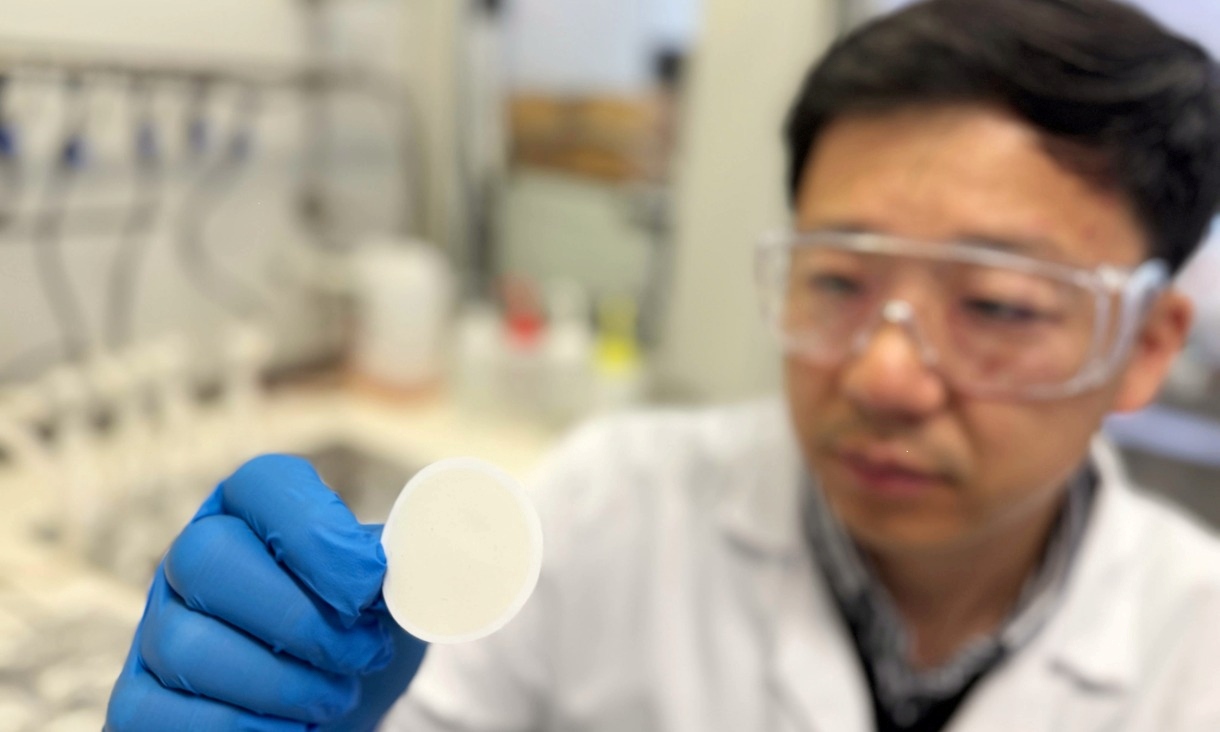
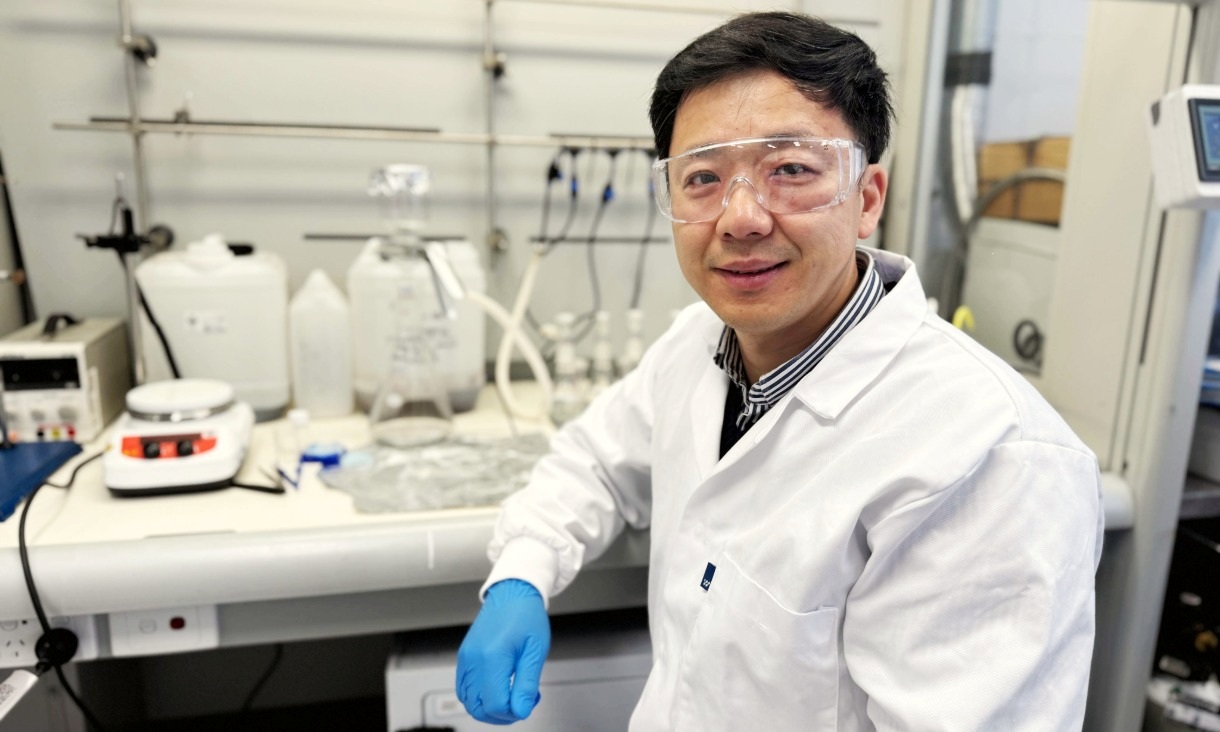
A researcher wearing a white lab coat, blue gloves and safety glasses sits at a laboratory bench with scientific equipment and bottles in the background, smiling at the camera. Professor Weiwei Lei in the lab at RMIT University. Credit: Will Wright, RMIT University

While the filters held up well in mild conditions, the team found that very alkaline environments reduced performance and some harsh solvents caused gradual swelling. They are now refining the chemistry to boost durability and testing larger sheets under real-world flow conditions.

Lei said the research brought advanced nanomaterials a step closer to industrial use.

“We’ve shown it’s possible to create an ultra-thin, pressure-resistant filter using materials that are lightweight and easy to handle,” said Lei, from the School of Science.    

“Our next goal is to work with industry partners to scale up production and test the technology in chemical recycling and purification systems.”

He said potential applications range from pharmaceutical and dye production to wastewater treatment.

“Improving filtration efficiency isn’t just about saving time – it’s about cutting waste and enabling circular manufacturing,” Lei said.

“With further development, we see strong potential for these filters to help industries transition to more sustainable processes.”

Organisations that want to partner with RMIT researchers can contact research.partnerships@rmit.edu.au

The research, ‘ANF/BN thin-film composite membranes for efficient organic solvent nanofiltration’, is published in the Journal of Membrane Science (DOI: 10.1016/j.memsci.2025.124540).

RMIT researchers from the School of Science and the School of Engineering collaborated on this study with a researcher from Deakin University in Geelong. 


Story: Will Wright

Share

  • Advanced Materials
  • STEM
  • Industry
  • Research
  • Nano & Microtechnology
  • Environment
  • Science and technology

Related News

aboriginal flag float-start torres strait flag float-start

Acknowledgement of Country

RMIT University acknowledges the people of the Woi wurrung and Boon wurrung language groups of the eastern Kulin Nation on whose unceded lands we conduct the business of the University. RMIT University respectfully acknowledges their Ancestors and Elders, past and present. RMIT also acknowledges the Traditional Custodians and their Ancestors of the lands and waters across Australia where we conduct our business - Artwork 'Sentient' by Hollie Johnson, Gunaikurnai and Monero Ngarigo.

More information