RMIT hosts public art event celebrating First Nations cultural resurgence

RMIT hosts public art event celebrating First Nations cultural resurgence

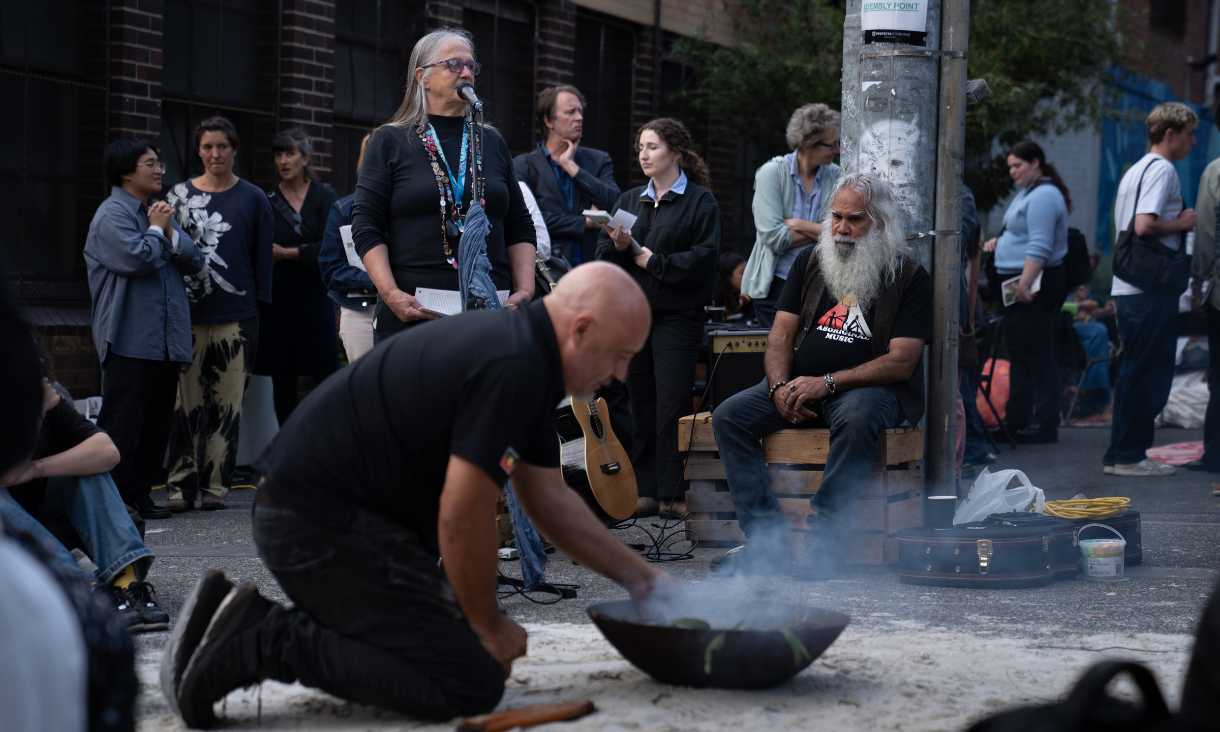
The University recently hosted Future Memorials: Truth-telling is a civic responsibility, a two-day public art program and keynote.

Supported by RMIT’s 2025 City North Activation Challenge, Future Memorials: Truth-telling is a civic responsibility invited audiences to imagine a future Naarm/Melbourne where truth-telling is embraced, and First Peoples' cultural resurgence is celebrated through bold, innovative public art for urban spaces. 

The program centred First Peoples leadership and methodologies, working with researchers from RMIT’s Yoonggama  First Nations Knowledge Creation Transdisciplinary Research Cohort, a new research initiative led by Associate Professor Aunty Vicki Couzens (Keeray Woorroong Gunditjmara).

The event was led by Couzens and fellow RMIT artist researchers Dr Jody Haines (Palawa) and Dr Amy Spiers (settler) and explored how creative practice can foster truth-telling and engender more inclusive civic spaces.

“We work across a few other projects and with other First Nations’ and settler peoples specifically in this 'memorial' space,” explained Couzens.  

“We have a shared collective interest, and we are all creative practitioners.”

Future Memorials responds to a stalemate in Australian cities where contentious monuments celebrating violent colonisers remain in prominent places, while there continues to be a lack of public commemorations acknowledging colonial injustices and its ongoing impact on First Peoples. 

The event and wider project brought together First Peoples and non-Indigenous, settler artists to pilot creative works which modelled innovative ways of acknowledging the past and promoting civic responsibility towards First Peoples’ lands and sovereignty.

Untitled design - 1

Couzens said creative practice can aid in creating a more truthful and inclusive society.

“Creative practice can bring people together in an environment of care and respect; an invitation to listen, learn, embody and enact,” she said. 

“It enables engagement in uncomfortable issues and supports processes of 'intellectual, emotional and social processing', and hopefully facilitates change.” 

The event was underpinned by Couzens’ ephemeral, one-night only contribution, laka weerreekanan ngeerang woorroong-ngeeye (‘talk all about our mother tongue’) (2026). 

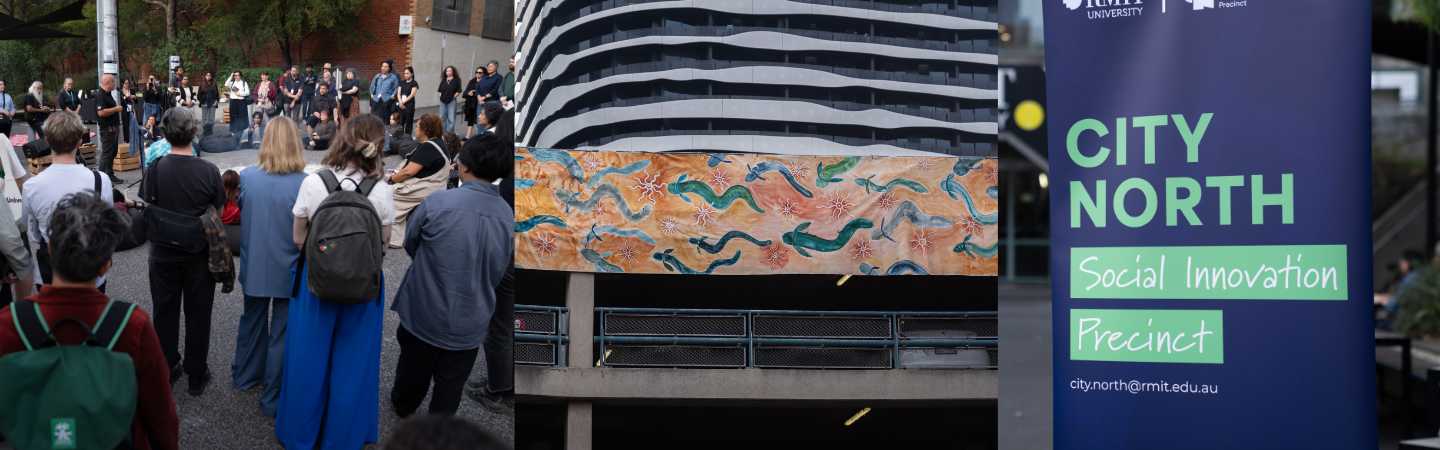
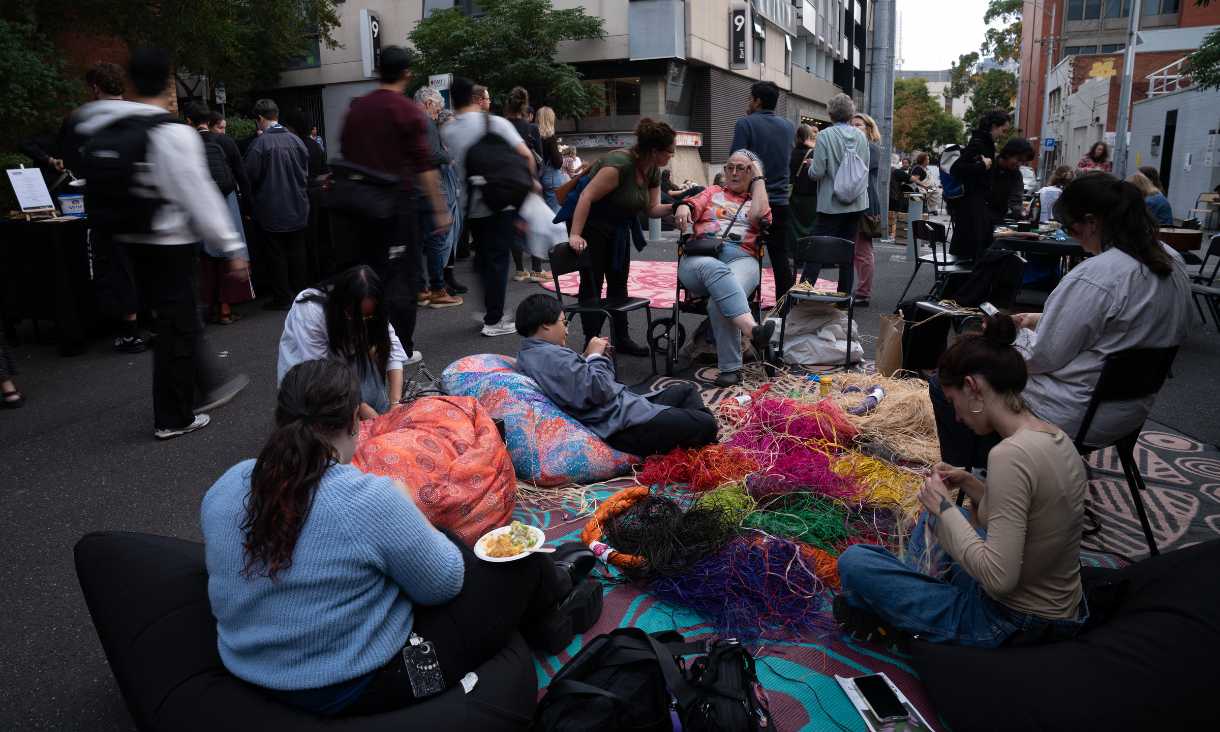
Closing Carlton’s Earl Street to traffic, Couzens’ invited audiences to participate in a yarning circle, community potluck, games and weaving workshops arranged around a fire in a public reclamation of First Peoples’ land-based knowledges and cultural practices.

“In my artwork, I invited my collective of family, friends and colleagues to come along and contribute,” she said. 

“My niece Tarryn Love facilitated the conversation around the campfire, my husband, Rob Bundle, and son-in-law, Quentin Haenga, did music and song, my son-in-law and I did the catering, my cousin and family senior weaver Bronwyn Razem did the weaving, and Ange Jeffery – a friend, extended family and colleague in Yoonggama – did the board games. Hinekura Smith, whanau from Aeteoroa also attended as an invited guest.”

Untitled design - 1

Additionally, Wurundjeri artist Brooke Wandin presented two new works installed at CARE Park (RMIT): a video projection, baanj yana (water travel) (2026), and a painted 15 metre banner made with RMIT School of Art painting students, yukbulok yana wariyt (many eels travel far) (2026), celebrating the Wurundjeri iuk (eel) season that marks the start of the extraordinary migration of short-finned eels from Wurundjeri waterways to the Coral Sea. 

Meanwhile, Haines reflected on the permanent public marker on the intersection of Victoria and Franklin Streets, Standing by Tunnerminnerwait and Maulboyheenner (2016) by Brook Andrew and Trent Walter, with a new video work displayed on the digital storytelling platform, STORYBOX (another project supported by the 2025 City North Activation Challenge created by RMIT researcher Dr. Sarah Barns with Michael Killalea). Entitled Three Heads (One for Van Diemen's Land) (2026), Haines’ video work honours the homelands of Palawa man, Tunnerminnerwait, who resisted colonisers and played a formative part in the early settlement that became Melbourne.

Spiers also presented, for the first time, her work First Peoples Reserved Parking (remembrance for unceded land) (2026), a creative commemoration and practical intervention in urban space which provided free of charge, reserved parking for First Peoples within the City North Social Innovation Precinct. Conceived as a material land acknowledgement, the work also speculates about the diverse forms that redress and reparation for colonial injustices might take.

“The work of the other artists was all amazing and I deeply respect and honour their perspectives and standpoint,” said Couzens.  

“Their works spoke to their knowledge, lived experience and expression as First Nations and non-Indigenous women. All our work wove an evocative, inviting and caring body of interconnected immersive story experience for our guests.”

Through temporary art installations and rigorous conversations, the project invited audiences to imagine how art can transform cities into places of truth-telling and healing while encouraging greater understanding of the impact of colonisation on First Peoples. 

The project was supported by the RMIT University’s 2025 City North Activation Challenge, Yoonggama Research Cohort, CAST Research Group, and the Australian Research Council (DE240100038).

Share

Share

  • Indigenous
  • Arts and culture
  • Indigenous Australia
  • Society

Related News

aboriginal flag float-starttorres strait flag float-start

Acknowledgement of Country

RMIT University acknowledges the people of the Woi wurrung and Boon wurrung language groups of the eastern Kulin Nation on whose unceded lands we conduct the business of the University. RMIT University respectfully acknowledges their Ancestors and Elders, past and present. RMIT also acknowledges the Traditional Custodians and their Ancestors of the lands and waters across Australia where we conduct our business - Artwork 'Sentient' by Hollie Johnson, Gunaikurnai and Monero Ngarigo.

More information